Hcf136 encodes a hydrophilic protein localized in the lumen of stroma thylakoids. Its mutational inactivation in Arabidopsis thaliana results in a photosystem II (PHII)-less phenotype. Under standard illumination, PSII is not detectable and the amount of photosystem I (PSI) is reduced, which implies that HCF136p may be required for photosystem biogenesis in general. However, at low light, a comparison of mutants with defects in PSII, PSI, and the cytochrome b(6)f complex reveals that HCF136p regulates selectively biogenesis of PSII. We demonstrate by in vivo radiolabeling of hcf136 that biogenesis of the reaction center (RC) of PSII is blocked. Gel blot analysis and affinity chromatography of solubilized thylakoid membranes suggest that HCF136p associates with a PSII precomplex containing at least D2 and cytochrome b(559). We conclude that HCF136p is essential for assembly of the RC of PSII and discuss its function as a chaperone-like assembly factor.
Summary Root cell wall proteins involved in the incompatible interaction between soybean (Glycine max L.) and the phytopathogenic oomycete Phytophthora sojae were investigated by a proteomic approach using ESI-MS/MS analysis. Success of infection and subsequently induced defence reactions was proven by staining the cell wall localized defence-related 1,3-beta-glucan, callose, in semi-thin sections of the roots. Cell wall proteins of roots were extracted three weeks post-infection, separated by SDS-PAGE and eight selected protein bands were digested with trypsin. The resulting peptides were subjected to mass spectrometry-based sequencing. For four proteins, amino acid sequence information was obtained and used to identify the corresponding proteins by a homology search in databases. All four proteins (cationic peroxidase, peroxidase precursor, amine oxidase and lipoxygenase) were defence-related and their involvement in the oxidative burst is discussed. Three of these proteins have not been described for soybean before.
Macrophage-dependent antitumoral activity is partly mediated by soluble factors including cytokines, reactive-oxygen intermediates (ROIs), and reactive-nitrogen intermediates (RNIs), Activation of macrophages for tumor cytotoxicity can be achieved with various bacterial compounds, such as lipopolysaccharides (LPSs), muramyl-dipeptides, and lipopeptides. We studied the production and release of oxygen radicals, nitric oxide, and tumor necrosis factor alpha (TNF-alpha) by bone marrow-derived macrophages (BMDMs) of different mouse inbred strains after they were stimulated with the lipopeptide P3CSK4, a water-soluble synthetic analogue of the lipidated N terminus of bacterial lipoprotein. The lipopeptide was able to induce a strong, long lasting release of oxygen radicals in BALB/c mouse macrophages, Furthermore, it induced nitric oxide release from BMDMs of several mouse strains (BALB/c, C57BI/6, C57BI/10ScSn, Sv129, NMRI, and LPS-nonresponder C57BI/10ScCr), Stimulation with P3CSK4 also resulted in comparable production of TNF-alpha in LPS-responder and nonresponder BMDMs from C57BI/10ScSn mice and C57BI/10ScCr mice, respectively. All three antitumoral mediators reached functional levels or concentrations as shown by the strong cytostatic/cytotoxic activity of lipopeptide-activated macrophages for the cell lines Abelson 8-1, M12.5/P815, and L929, which are sensitive to ROIs, nitric oxide, and TNF-alpha, respectively. We found that synthetic lipopeptides can induce the secretion of effective levels of soluble tumor-cytotoxic/cytostatic mediators in BMDMs of LPS-responsive and, of particular interest, also of LPS-unresponsive mice. This result could indicate that the highly effective bacterial-macrophage activators P3CSK4 and LPS use different receptors and/or different intracellular signal transduction pathways.
Quinic acid was transformed into phosphitamides 16, 25, and 36, which could be readily linked to 5′-O-unprotected cytidine derivative 17. Ensuing oxidation of the obtained phosphite triesters with tBuO2H and hydrogenolytic de-O-benzylation furnished the corresponding phosphate diesters 18, 26, and 38. Base catalyzed removal of acetyl protecting groups, and methyl ester hydrolysis furnished CMP-Neu5Ac analogues 1d, 1e, and 2. Quinic acid was also transformed into 1,2-unsaturated diallyl α-hydroxymethyl-phosphate derivatives (R)- and (S)-46, which on reaction with cytidine phosphitamide 47 afforded the phosphite triesters. Subsequent oxidation with tBuO2H and then treatment with NEt3 gave phosphate diester derivatives (R)- and (S)-48. Deallylation, acetyl group removal, and methyl ester hydrolysis furnished (R)- and (S)-3, respectively. Treatment of (R)- and (S)-48 with DBU as a base led to acetic acid elimination, thus yielding, after de-O-allylation, acetyl group cleavage, and ester hydrolysis, diene derivative (E)-4. Donor substrate analogues 1d and 1e exhibited good α(2-6)-sialyltransferase inhibition (Ki: 2.0·10−4 and 2.0·10−5 M). However, transition state analogues (R)-, and particularly (S)-3 showed excellent inhibition properties (Ki: 1.6·10−6 and 2.7·10−7 M).
The reaction of sialyl phosphites 1, 22a-d, 28, 39, and 45 with acyl-protected riboside 5-phosphorous acids 2a,b and 23 directly furnished, without addition of a catalyst, under phosphite/phosphate exchange the corresponding beta-configured sialyl riboside monophosphates 3a,b, 24a-d, 29, 46, and 47. The synthesis of the starting materials, formation of the products, and their treatment with sodium methanolate in methanol and subsequent hydrolysis of the sialic acid ester moiety to provide the unprotected target molecules 4a,b, 25a-d, 30, 48, and 49 is described. Investigations with alpha(2-6)-sialyl-transferase from rat Liver showed that base replacement in CMP-Neu5Ac (4a,b) is not tolerated by the enzyme but that modifications of the 5-, 8-, or g-position of the neuraminic acid residue (25a-d, 30, 48, 49) are tolerated.
Assembly of plastid-encoded chlorophyll binding proteins of photosystem II (PSII) was studied in etiolated barley seedlings and isolated etioplasts and either the absence or presence of de novo chlorophyll synthesis. De novo assembly of reaction center complexes in etioplasts was characterized by immunological analysis of protein complexes solubilized from inner etioplast membranes and separated in sucrose density gradients. Previously characterized membrane protein complexes from chloroplasts were utilized as molecular mass standards for sucrose density gradient separation analysis. In etiolated seedlings, induction of chlorophyll a synthesis resulted in the accumulation of D1 in a dimeric PSII reaction center (RCII) complex. In isolated etioplasts, de novo chlorophyll a synthesis directed accumulation of D1 precursor in a monomeric RCII precomplex that also included D2 and cytochrome b(559). Chlorophyll a synthesis that was chemically prolonged in darkness neither increased the yield of RCII monomers nor directed assembly of RCII dimers in etioplasts. We therefore conclude that in etioplasts, assembly of the D1 precursor in monomeric RCII precomplexes precedes chlorophyll a-triggered accumulation of reaction center monomers.
Quinic acid (4) was transformed into phosphitamides 6, 14, and 15, which could be readily linked to 5′-O-unprotected cytidine derivative 7; ensuing oxidation of the obtained phosphite triesters with tert-butylhydroperoxide furnished the corresponding phosphate triesters 8, 16, and 17, respectively. Hydrogenolytic debenzylation of the phosphate moiety, base catalysed removal of acetyl protective groups, and basic hydrolysis of the methylester of the quinic acid moiety furnished CMP-Neu5Ac analogues 1-3. In order to measure their inhibition of sialyltransferases, a nonradioactive sialyltransferase assay [employed for α(2-6)-sialyltransferase from rat liver (EC 2.4.99.1)] based on reversed-phase HPLC separation of UV-abelled acceptor 20 (p-nitrophenyl glycoside of N-acetyllactosamine) from the UV-labelled product 21 (p-nitrophenyl glycoside of sialyl α(2-6′)-N-acetyllactosamine) and p-nitrophenylalanine as internal standard was developed. The assay reproduced the reported KM values for CMP-Neu5Ac and N-acetyllactosamine and the Ki values for CDP. 1 and 2 turned out to be potent sialyltransferase inhibitors. © 1998 Rapid Science Ltd
Treatment of sialyl phosphites with TMSOTf as catalyst affords α- and β-sialyl phosphonates. This phospshite/phosphonate-exchange reaction was employed for the synthesis of sialylphosphonate dialkyl esters 5aα-5cα and 5aβ-5cβ. Monodemethylation of 5cα and 5cβ, linkage to 5′-O-unprotected cytidine derivative 7, and then deprotection furnished the phosphonate analogue 2β of CMP-Neu5Ac and the corresponding α-isomer 2α, respectively. Their structures could be assigned and inhibition of α(2–6)-sialyltransferase was determined.
Enzymatic sialyl transfer with CMP-Neu5Ac as donor can be inhibited by CDP. Therefore phosphonates 1a,b, 2 and 3 were synthesized as substrate analogues. With alpha(2-6)-sialyltransferase from rat liver (EC2.4.99.1) only moderate inhibition was found for these compounds. In order to obtain transition-state analogues of CMP-Neu5Ac different linkages between 2,3-dehydro-N-acetylneuraminol and CMP were generated, yielding 4, (R)-5 and (R)-6. Compound (R)-6, in which the CMP residue is attached to C-1 of 2,3-dehydro-N-acetylneuramin-1-yl phosphonate, exhibited excellent alpha(2-6)-sialyltransferase inhibition in the nanomolar range (K-i=350 nM), resulting in a 130-fold higher affinity for the enzyme than CMP-Neu5Ac (K-M = 46 mu M).
A 200- to 1000-fold higher affinity for sialyltransferase is shown by compounds 1 and 2 relative to the natural substrate. These inhibitors, which are derived from the transition state of SN 1-type sialyltransfer, contain a flat ring that is attached through a carbon atom with a phosphonate and a cytidine monophosphate group.
200- und 1000fach höhere Affinität als das natürliche Substrat haben die Verbindungen 1 und (Z)-2 gegenüber Sialyltransferase. Diese vom Übergangszustand der Neuraminsäure-Übertragung abgeleiteten Inhibitoren enthalten als Strukturmerkmal einen flachen Ring, der über ein Kohlenstoffatom mit einer Phosphonat- und einer Cytidinmonophosphateinheit verknüpft ist.
In diesem Beitrag wird der Frage nachgegangen, inwieweit die Bindungsqualitat von Kindern und die Intensitat ihrer Bindungsunsicherheit (erfast uber die Ainsworth Strange Situation mit 21 Monaten) sich auf ihre Testleistungen und ihre emotionale Befindlichkeit in der Testsituation (Bayley Scales of Infant Development mit 20 Monaten) auswirken. Die Bindungsqualitat von 75 Kindern wurde mit dem PAA (Preschool Assessment of Attachment) von Crittenden ausgewertet und nach den Strategien der sicheren Bindung (B), der unsicher-vermeidenden Bindung (A) und der unsicher-kontrollierenden Bindung (C) unterschieden. Quer zu dieser Einteilung wurde eine Einteilung nach Intensitat der Bindungsunsicherheit (sicher, unsicher, hochunsicher) vorgenommen. Die sicher gebundenen Kinder zeigten durchgangig die besten Testleistungen im Bayley-Test und waren dabei eher sozial aufgeschlossen und korperlich entspannt. Bei der Unterscheidung der unsicheren Kinder nach Bindungsqualitat oder Strategie hatten die unsicher-vermeidenden Kinder (A) eher mittlere Testleistungen, waren masig aufgeschlossen und masig belastet, wahrend die Kinder mit unsicher-kontrollierender Bindung nicht nur die schlechtesten Testleistungen aufwiesen, sondern sie waren auch haufig verschlossen, angstlich und motorisch unmoduliert und angespannt. Zusatzliche klinische Zeichen besonderer Belastetheit und Desorganisation in der Bayley-Testsituation verteilten sich unspezifisch auf alle Bindungsgruppen, besonders die der unsicheren Kinder. Bei der Gruppierung der Kinder nach Intensitat der Bindungsunsicherheit hauften sich diese klinischen Zeichen der Desorganisation jedoch vor allem bei den in der Arnsworth Strange Situation als hochunsicher klassifizierten Kindern. Kinder mit hochunsicherer Bindung, die zugleich Verhaltensbesonderheiten in der Testsituation zeigten, wiesen auch das niedrigste Ergebnis in der Mental Scale des Bayley-Tests auf. Die Ergebnisse werden im Sinne von Balance zwischen Testengagement des Kindes und emotionalen Kosten interpretiert.
Vor 10 Jahren haben Geanay et al. (1984), 5-HT2-Bindungsstellen an menschlichen Thrombozyten mittels LSD als Liganden nachgewiesen und ebenso wie später Elliott und Kent (1989) eine enge Korrelation der thrombozytären enzymkinetischen Parameter mit solchen von frontalem Cortex-Gewebe des Meschen wahrscheinlich gemacht. Vier verschiedene Arbeitsgruppen haben 1987 bis 1989 die 5-HT2-Rezeptorbindung an Thrombozyten depressiver Patienten im Vergleich zu gesunden Kontrollen untersucht. In 3 dieser Studien war Bmax erhöht, Kd unverändert. Entsprechende Veränderungen wurden bei Schizophrenen oder Zwangskranken zunächst nicht gefunden. (vgl. dagegen allerdings Panday et al. 1993). Besonderes Interesse haben anfänglich die Befunde von Biegon et al. (1987) hervorgerufen, weil sie unter einer antidepressiven Behandlung eine Normalisierung der anfangs erhöhten Bmax-Werte bei Depressiven beschrieben hatten. Eine kritische Überprüfung der von ihnen angewandten Bestimmungsmethodik mit Ketanserin als radioaktivem Liganden hat uns allerdings an ihren Ergebnissen grundsätzlich zweifeln lassen (Steckler et al. 1993). Unter den verschiedensten Versuchsbedingungen hat sich immer wieder gezeigt, daß die unspezifische Bindung mit 3H-Ketanserin viel zu hoch ist um valide Daten zu erhalten. Die Art des eingesetzten kalten Verdrängers spielt dabei keine Polle. Im Vergleich dazu erhält man bei Einsatz von 3H-LSD als Ligand und Spiperon als Verdränger sowohl für frische wie gefrorene Thrombozytenmembranen eine befriedigende spezifische Aktivität.
Chlorophyll a was compared with Zn-pheophytin a for stabilization of chlorophyll binding apoproteins, P700, CP47, CP43, D2, and D1, in intact etioplasts from barley (Hordeum vulgare L.). Intact etioplasts were shown to effectively translate the chlorophyll apoproteins, to take up and esterify the exogenously added substrates, chlorophyllide a and Zn-pheophorbide a, with geranylgeraniolpyrophosphate. For stabilization of P700, CP47, D2, and D1, the product, Zn-pheophytin a, was shown to substitute for chlorophyll a. Stabilization of CP43 was selectively increased in the presence of Zn-pheophytin a. The degree of stabilization was shown to depend on the amount of newly synthesized Zn-pheophytin a and on the central atom of the chlorophyll molecule.
Stabilization of chlorophyll a-binding apoproteins P700, CP47, CP43, D2, and D1 against proteolytic degradation has been investigated through in vitro synthesis of chlorophyll a or Zn-pheophytin a in intact etioplasts from barley. Stabilization of the apoproteins was dependent on the concentration of chlorophyll a or Zn-pheophytin a. Zn-pheophytin a was superior to chlorophyll a with respect to the concentration of pigment required for an equal yield of the stabilized chlorophyll a protein CP47, CP43, and P700 and for the total yield of chlorophyll a proteins. Zn-pheophytin a was most efficient for stabilizing CP47 and, at an increased concentration, efficient for stabilizing CP43, P700, and D1. Stabilization of apoproteins was highest after de novo synthesis of 90-300 pmol of Zn-pheophytin a or of about 400-600 pmol of chlorophyll a/4.2 x 10(7) etioplasts. The yield of stabilized chlorophyll proteins decreased at higher concentrations of Zn-pheophytin a, but was unaffected by higher concentrations of chlorophyll a.
In this article, the influence of quality of attachment (Ainsworth Strange Situation at 21 months) and of the intensity of attachment insecurity on test performance and emotional state in the test situation (Bayley-test at 20 months) are analyzed. The quality of attachment of 75 infants was classified according to Crittenden's PAA (Preschool Assessment of Attachment) as: secure (B), insecure defended (A) and insecure-coercive (C). Alternately, the infants were classified according to their intensity of insecurity of attachment across subtypes of qualities (secure, insecure, highly insecure). Securely attached (B) infants had the best Bayley Mental scores, were socially open and bodily relaxed. The insecure-defended (A) infants had moderate test results, were moderately open and tense, whereas the insecure-coercive (C) infants showed not only the worst test-results but were often withdrawn, fearful, tense, and poorly coordinated. Additional clinical signs of disorganization were spread unspecifically over all attachment groups particularly those of the insecure children. In the classification of children according to intensity of insecurity, these signs of disorganization accumulated particularly in the group of highly insecure infants. Children with highly insecure attachment who also exhibited unusual test situation behavior also had the lowest Bayley-test scores in the Mental Scale. These results are interpreted in the sense of balance between test engagement and emotional cost.
The characterization of the genomic organization of the B2 bradykinin receptor gene enabled us to systematically search for polymorphic markers in this gene in a South German cohort (N=179). We identified at least three polymorphic sites in each of the three exons existing: (i) in exon 1 next to the promoter region, a tandem repeat polymorphism consists of three common alleles, (ii) in exon 2 at nucleotide position 181 of the cDNA a C to T transition leads to an aminoacid substitution from arginine to cysteine in the receptor protein at position 14 (R14C), and (iii) a more complex repeat polymorphism, located in the 3′ not-translated region of exon 3, comprises at least two common alleles and two rare variants. These new genetic markers provide valuable tools to elucidate a potential role of a hereditary dysfunction of the B2 bradykinin receptor gene in disorders such as hypertension or ischemic heart disease.
Thomaes pessimistische Analyse der Entwicklungspsychologie und seine Prognoseihres weiteren Trends aus dem Jahre 1979 (35, 36) hat sich, möglicherweise auch durch den nachhaltigen Einfluβ seines Werkes und Wirkens, in der von ihm befürchteten Weise glücklicherweise nicht generell bestätigt. Sicherlich werden auch weiterhin primär allgemeinpsychochologische und differentielle For- schungsfragen, sofern sie nur an Kindern überprüft wurden, der Entwicklungspsychologie zugeordnet. Andererseits finden aber entwicklungspsychologische Konzepte und Ergebnisse ihrerseits zunehmend Eingang in die anderen psychologischen Disziplinen. Zwar gibt es auch heute noch viele Vertreter und Vertreterinnen der Entwicklungspsychologie, die sich eng auf einen Teilbereich eines Lebensabschnittes spezialisieren und den Zusammenhang im Insgesamt des Lebenslaufes nicht erkennen oder nicht wahrnehmen wollen; andererseits hat sich zumindest in Deutschland weitgehend eine Vorstellung von Entwicklungspsychologie durchgesetzt, die den gesamten Lebenslauf umfaβt. Inzwischen gibt es hier sogar mehr Forschung in der Gerontologie als in der frühen Kindheit, einem Lebensabschnitt, in dem der praktische Forschungszugang in Deutschland immernoch sehr schwierig ist. Längsschnittstudien, die in den 60er, 70er und 80er Jahren begonnen haben (nicht nur in den USA, sondern auch in Deutschland und anderen europaischen Ländern), tragen wesentlich dazu bei, die klassischen Al- tersabschnitte zu tiberschreiten, man denke nur an die Kauai-Studie von Honzik und Werner (39), die Längsschnittstudien von Magnusson (19) und von Pulkkinen (23), die Rostocker Längsschnittstudie (22) und die beiden Längsschnittgruppen der Grossmanns (14). Zwangsläufig wurden Kleinstkindforscher zu Jugendforschern und Spezialisten für das Schulalter zu Erforschern des frühen Er- wachsenenalters.
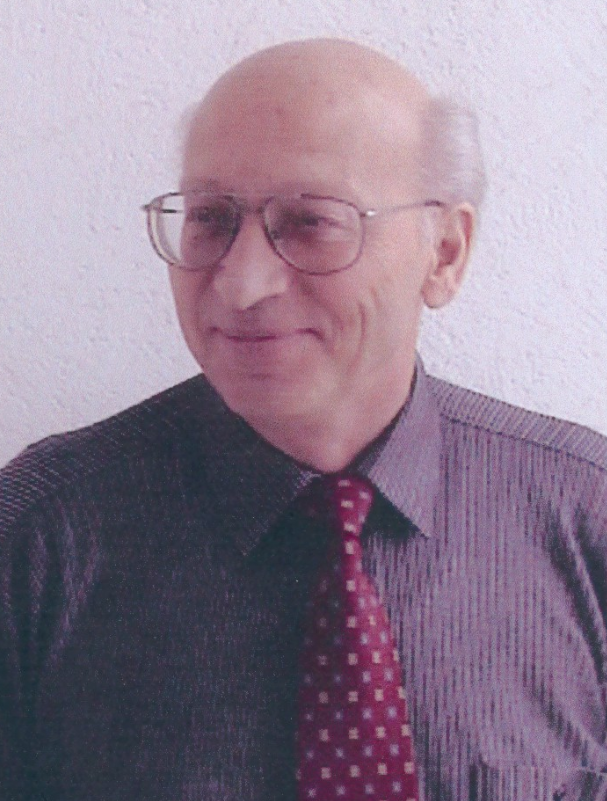 Richard R. Schmidt合作论文数Department of Chemistry, University of Konstanz7
 Christoph Schaub合作论文数6LA Eichacker合作论文数5Hellard Rauh合作论文数2
 Hellgard Rauh合作论文数2M Helfrich合作论文数2
 Lutz A Eichacker合作论文数Department of Biology I, LMU München2Pfannes S D合作论文数1E Böhme合作论文数1Wg Bessler合作论文数1B. Müller‐Oerlinghausen合作论文数1A Braun合作论文数1J Schley合作论文数1P Hoffmann合作论文数1
 Wolfhart Rüdiger合作论文数Department of Biology, Faculty of Biology, Ludwig-Maximilians-Universitat Munchen1Peter Westhoff合作论文数Department of Plant Molecular Biology, Heinrich Heine University Dusseldorf1Karin Thies-Flechtner合作论文数1Franz Amann合作论文数1
 Gerhard Wanner合作论文数1Ute Ziegenhain合作论文数1Adelbert A. Roscher合作论文数1Gesche Dufner合作论文数1Henning Plücken合作论文数1
 T.F.J. Martin合作论文数Department of Biochemistry, University of Wisconsin Madison1
 Axel Mithöfer合作论文数Forschungsgruppe Physiologie der Pflanzlichen Verteidigung, Max-Planck-Instituts fur Chemische Okologie1
 Dina Grohmann合作论文数1Stefan Kammerer合作论文数1Stephan Korner合作论文数1
 Ralf Schwörer合作论文数Fachbereich Chemie, Universitaet Konstanz1Ralf Uebelhack合作论文数1




