Isolated rat peritoneal mast cells release histamine when superfused with isoosmotic salt or sucrose solutions. The release was ascribed by us to an intracellular ion exchange between potassium and histamine at granule sites, resulting from a flux of cytoplasmic potassium across the granules secondary to the disturbance of the 'state of equilibrium' at the cell surface caused by the superfusion (Uvnäs et al. 1989). In the present article is shown that the histamine releasing effect is counteracted by the addition of histamine to the superfusion fluid. The inhibition is concentration-dependent and accompanied by concomitant changes in the potassium efflux. A 50% inhibition of the histamine release requires an external histamine concentration of 40 microM and extrapolation of the equilibrium curve hints at a total inhibition at concentrations around 170 microM. The observations are taken to indicate that reduction of the juxtacellular histamine concentration caused by the superfusion disturbs the histamine equilibrium at the mast cell surface resulting in the activation of the histamine secretory mechanism. In other words, the secretory activity of the mast cell is checked by the juxtacellular concentration of histamine. When the juxtacellular histamine is removed e.g. on isolation procedures, other experimental situations such as superfusion, or by consumption in vivo the mast cell delivers histamine to restore the juxtacellular equilibrium.
On superfusion of chromaffin granules from bovine adrenals with isotonic sodium and potassium salts, catecholamines and ATP were released in parallel and both in accordance with ion exchange kinetics. An artificial model was prepared by mixing a cationic (IRC-50) and an anionic (IR-4B) ion exchanger with COO- and NH+3 groups, respectively, as binding sites. This mixed ion exchanger showed in its storage and release of CA+ and ATP- striking similarities to the chromaffin granules. Within the pH range given for the interior of the granules--5.5-6--the artificial model even stored and released CA+ and ATP- within the same molar ratio as observed for the granules. We hypothesize that the chromaffin granule matrix in its storage and release functions operates as an amphoteric ion exchanger with COO- and NH+3 groups as the binding sites.
Isolated rat peritoneal mast cells released histamine on superfusion with isotonic salt solutions or isotonic deionized sucrose. The histamine release followed the kinetics of cation exchange characteristic of the release from similarly superfused isolated mast cell granules and histamine charged carboxylic resin IRC-50. The histamine release was accompanied by an efflux of potassium and ascribed to an endogenous cation exchange K+⇌Hi+ occurring on the passage of outflowing potassium ions over histamine storing granules.
Acta Physiologica ScandinavicaVolume 129, Issue 4 p. 587-588 A mixed cation (IRC-50)-anion (IR-4B) exchanger shows storage properties reminiscent of the storage of catecholamines (CA) and adenosine triphosphate (ATP) in chromaffin granules B. UVNÄS, Corresponding Author B. UVNÄS Department of Pharmacology, Karolinska Institute, Stockholm, SwedenDepartment of Pharmacology, Karolinska Institutet, Box 60400, S-10401 Stockholm, Sweden.Search for more papers by this authorC.-H. ÅBORG, C.-H. ÅBORG Department of Pharmacology, Karolinska Institute, Stockholm, SwedenSearch for more papers by this author B. UVNÄS, Corresponding Author B. UVNÄS Department of Pharmacology, Karolinska Institute, Stockholm, SwedenDepartment of Pharmacology, Karolinska Institutet, Box 60400, S-10401 Stockholm, Sweden.Search for more papers by this authorC.-H. ÅBORG, C.-H. ÅBORG Department of Pharmacology, Karolinska Institute, Stockholm, SwedenSearch for more papers by this author First published: December 1987 https://doi.org/10.1111/j.1748-1716.1987.tb08101.xAboutPDF ToolsRequest permissionExport citationAdd to favoritesTrack citation ShareShare Give accessShare full text accessShare full-text accessPlease review our Terms and Conditions of Use and check box below to share full-text version of article.I have read and accept the Wiley Online Library Terms and Conditions of UseShareable LinkUse the link below to share a full-text version of this article with your friends and colleagues. Learn more.Copy URL Share a linkShare onEmailFacebookTwitterLinkedInRedditWechat No abstract is available for this article. References Samuelsson , O. Ion Exchangers in Analytical Chemistry . Almqvist & Wiksell , Uppsala . Uvnäs , B. & ÅBorg , C.-H. 1980 . In vitro studies on a two-pool storage of adrenaline and noradrenaline in granule material from bovine adrenal medulla . Acta Physiol Scand 109 , 345 – 354 . Uvnäs , B. & ÅBorg , C.-H. 1983 . Cation exchange—a common mechanism in the storage and release of biogenic amines stored in granules (vesicles?). I. Comparative studies on the uptake of sodium and biogenic amines by the weak cation (carboxyl) exchangers Amberlite IRC-50 and Sephadex C-50 and by biogenic (granule-enriched) materials in vitro . Acta Physiol Scand 119 , 225 – 234 . Uvnäs , B. & ÅBorg , C.-H. 1984 . Cation exchange—a common mechanism in the storage and release of biogenic amines stored in granules (vesicles?). II. Comparative studies on sodium-induced release of biogenic amines from the synthetic weak cation-exchangers Amberlite IRC-50 and Duolite CS-100 and from biogenic (granules-enriched) materials . Acta Physiol Scand 120 , 87 – 97 . Uvnäs , B. & ÅBorg , C.-H. 1985 . Sodium-induced release of enkephalins from bovine chromaffin granules in vitro . Acta Physiol Scand 124 , 629 – 630 . Uvnäs , B. & ÅBorg , C.-H. 1987 . Concomitant release by ion exchange of catecholamines (CA) and adenosine triphosphate (ATP) from bovine chromaffin granules superfused with isotonic sodium or potassium salt solutions . Acta Physiol Scand 129 , 585 – 586 . Volume129, Issue4December 1987Pages 587-588 ReferencesRelatedInformation
Acta Physiologica ScandinavicaVolume 129, Issue 4 p. 585-586 Concomitant release by ion exchange of catecholamines (CA) and adenosine triphosphate (ATP) from bovine chromaffin granules superfused with isotonic sodium or potassium salt solutions B. UVNÄS, Corresponding Author B. UVNÄS Department of Pharmacology, Karolinska Institute, Stockholm, SwedenDepartment of Pharmacology, Karolinska Institutet, Box 60400, S-10401 Stockholm, Sweden.Search for more papers by this authorC.-H. ÅBORG, C.-H. ÅBORG Department of Pharmacology, Karolinska Institute, Stockholm, SwedenSearch for more papers by this author B. UVNÄS, Corresponding Author B. UVNÄS Department of Pharmacology, Karolinska Institute, Stockholm, SwedenDepartment of Pharmacology, Karolinska Institutet, Box 60400, S-10401 Stockholm, Sweden.Search for more papers by this authorC.-H. ÅBORG, C.-H. ÅBORG Department of Pharmacology, Karolinska Institute, Stockholm, SwedenSearch for more papers by this author First published: December 1987 https://doi.org/10.1111/j.1748-1716.1987.tb08100.xCitations: 2AboutPDF ToolsRequest permissionExport citationAdd to favoritesTrack citation ShareShare Give accessShare full text accessShare full-text accessPlease review our Terms and Conditions of Use and check box below to share full-text version of article.I have read and accept the Wiley Online Library Terms and Conditions of UseShareable LinkUse the link below to share a full-text version of this article with your friends and colleagues. Learn more.Copy URL Share a linkShare onEmailFacebookTwitterLinkedInRedditWechat No abstract is available for this article. References Carlsson , A. & Hillarp , N.-Å. 1956 . Release of adenosine triphosphate along with adrenaline and noradrenaline following stimulation of the adrenal medulla . Acta Physiol Scand 37 , 235 – 239 . Phillips , J.H. 1982 . Dynamic aspects of chromaffin granules structure . Neuroscience 7 , 1595 – 1609 . Poisner , A.M. & Trifaro , J.M. 1968 . Release of catecholamines from isolated adrenal chromaffin granules by endogenous ATP . Mol Pharmacol 4 , 196 – 199 . Samuelsson , O. 1952 . Ion Exchangers in Analytical Chemistry . Almqvist & Wiksell , Uppsala . Uvnäs , B. & ÅBorg , C.-H. 1980 . In vitro studies on a two-pool storage of adrenaline and noradrenaline in granule material from bovine adrenal medulla . Acta Physiol Scand 109 , 345 – 354 . Uvnäs , B. & ÅBorg , C.-H , 1984 . Cation exchange—a common mechanism in the storage and release of biogenic amines stored in granules (vesicles)? II. Comparative studies on sodium-induced release of biogenic amines from the synthetic weak cation-exchangers Amberlite IRC-50 and Duolite CS-100 and from biogenic (granule-enriched) materials . Acta Physiol Scand 120 , 87 – 97 . Uvnäs , B. & ÅBorg , C.-H. 1985 . Sodium-induced release of enkephalins from bovine chromaffin granules in vitro . Acta Physiol Scand 124 , 629 – 630 . Citing Literature Volume129, Issue4December 1987Pages 585-586 ReferencesRelatedInformation
Acta Physiologica ScandinavicaVolume 128, Issue 4 p. 657-658 Rat mast cells superfused with isotonic solutions release histamine, probably via intracellular cation exchange K+→ Hi+ions B. UVNÄS, Corresponding Author B. UVNÄS Departments of Pharmacology and Histology, Karolinska Institute, and Department of Analytical Chemistry, Tekniska Högskolan, Stockholm, SwedenDepartment of Pharmacology, Karolinska Institutet, Box 60400, S-104 01 Stockholm, SwedenSearch for more papers by this authorC.-H. ÅBORG, C.-H. ÅBORG Departments of Pharmacology and Histology, Karolinska Institute, and Department of Analytical Chemistry, Tekniska Högskolan, Stockholm, SwedenSearch for more papers by this authorL. LYSSARIDES, L. LYSSARIDES Departments of Pharmacology and Histology, Karolinska Institute, and Department of Analytical Chemistry, Tekniska Högskolan, Stockholm, SwedenSearch for more papers by this authorJ. THYBERG, J. THYBERG Departments of Pharmacology and Histology, Karolinska Institute, and Department of Analytical Chemistry, Tekniska Högskolan, Stockholm, SwedenSearch for more papers by this authorL.-G. DANIELSSON, L.-G. DANIELSSON Departments of Pharmacology and Histology, Karolinska Institute, and Department of Analytical Chemistry, Tekniska Högskolan, Stockholm, SwedenSearch for more papers by this author B. UVNÄS, Corresponding Author B. UVNÄS Departments of Pharmacology and Histology, Karolinska Institute, and Department of Analytical Chemistry, Tekniska Högskolan, Stockholm, SwedenDepartment of Pharmacology, Karolinska Institutet, Box 60400, S-104 01 Stockholm, SwedenSearch for more papers by this authorC.-H. ÅBORG, C.-H. ÅBORG Departments of Pharmacology and Histology, Karolinska Institute, and Department of Analytical Chemistry, Tekniska Högskolan, Stockholm, SwedenSearch for more papers by this authorL. LYSSARIDES, L. LYSSARIDES Departments of Pharmacology and Histology, Karolinska Institute, and Department of Analytical Chemistry, Tekniska Högskolan, Stockholm, SwedenSearch for more papers by this authorJ. THYBERG, J. THYBERG Departments of Pharmacology and Histology, Karolinska Institute, and Department of Analytical Chemistry, Tekniska Högskolan, Stockholm, SwedenSearch for more papers by this authorL.-G. DANIELSSON, L.-G. DANIELSSON Departments of Pharmacology and Histology, Karolinska Institute, and Department of Analytical Chemistry, Tekniska Högskolan, Stockholm, SwedenSearch for more papers by this author First published: December 1986 https://doi.org/10.1111/j.1748-1716.1986.tb08029.xCitations: 4AboutPDF ToolsRequest permissionExport citationAdd to favoritesTrack citation ShareShare Give accessShare full text accessShare full-text accessPlease review our Terms and Conditions of Use and check box below to share full-text version of article.I have read and accept the Wiley Online Library Terms and Conditions of UseShareable LinkUse the link below to share a full-text version of this article with your friends and colleagues. Learn more.Copy URL Share a linkShare onFacebookTwitterLinked InRedditWechat No abstract is available for this article.Citing Literature Volume128, Issue4December 1986Pages 657-658 RelatedInformation
Acta Physiologica ScandinavicaVolume 124, Issue 4 p. 629-630 Sodium-induced release of enkephalins from bovine chromaffin granules in vitro BÖRJE UVNÄS, Corresponding Author BÖRJE UVNÄS Department of Pharmacology, Karolinska Institute, SwedenFarmakologiska Institutionen, Karolinska Institutet, Box 60400, S-10401 Stockholm, Sweden.Search for more papers by this authorCARL-HUGO ÅBORG, CARL-HUGO ÅBORG Department of Pharmacology, Karolinska Institute, SwedenSearch for more papers by this author BÖRJE UVNÄS, Corresponding Author BÖRJE UVNÄS Department of Pharmacology, Karolinska Institute, SwedenFarmakologiska Institutionen, Karolinska Institutet, Box 60400, S-10401 Stockholm, Sweden.Search for more papers by this authorCARL-HUGO ÅBORG, CARL-HUGO ÅBORG Department of Pharmacology, Karolinska Institute, SwedenSearch for more papers by this author First published: August 1985 https://doi.org/10.1111/j.1748-1716.1985.tb00057.xCitations: 4AboutPDF ToolsRequest permissionExport citationAdd to favoritesTrack citation ShareShare Give accessShare full text accessShare full-text accessPlease review our Terms and Conditions of Use and check box below to share full-text version of article.I have read and accept the Wiley Online Library Terms and Conditions of UseShareable LinkUse the link below to share a full-text version of this article with your friends and colleagues. Learn more.Copy URL Share a linkShare onEmailFacebookTwitterLinkedInRedditWechat No abstract is available for this article. REFERENCES Costa, E., Digiulio, A.M., Kumakura, K. & Yang, H.Y.T. 1979. Difference in the enkephalin-like immunoreactivity present in gland cells and nerve terminals of adrenal medulla. Fed Proc 38, 1129. Viveros, O.H., Diliberto, Jr, E.J., Hazum, E. & Chang, K.-J. 1979. Opiate-like materials in the adrenal medulla: evidence for storage and secretion with catecholamines. Molec Pharmacol 16, 1101–1108. Poisner, A.M. & Trifaro, J.M. 1967. The role of ATP and ATPase in the release of catecholamines from the adrenal medulla. I. ATP-evoked release of catecholamines, ATP, and protein from isolated chromaffin granules. Molec Pharmacol 3, 561–571. Uvnäs, B. & ÅBorg, C.-H. 1980. In vitro studies on a cation-dependent catecholamine release from a two-compartment storage in bovine adrenal medullary granules. Acta Physiol Scand 109, 355–362. Uvnäs, B. & ÅBorg, C.-H. 1984. Cation exchange: a common mechanism in the storage and release of biogenic amines stored in granules (vesicles?). II. Comparative studies on sodium-induced release of biogenic amines from the synthetic weak cation-exchanger Amberlite IRC-50 and Duolite CS-100 and from biogenic (granule-enriched) materials. Acta Physiol Scand 120, 87–97. Citing Literature Volume124, Issue4August 1985Pages 629-630 ReferencesRelatedInformation
The synthetic carboxylic cation exchanger resin Amberlite IRC-50 was charged with histamine by suspension in histamine-containing solution with admixture of [14C]histamine. Mast cell granules were isolated from mast cells suspended in isotonic sucrose. The release of histamine induced from the two materials by superfusion with isotonic NaCl and KCL solutions showed identical kinetics, in accordance with the view that the release of histamine is due to a cation exchange: Na+ (K+) in equilibrium Hi+ at carboxyl groups in the granule heparin-protein complex.
Comparative studies between synthetic weak cation exchanger resins and rat mast cell granules have shown that the cation-induced release of histamine from both materials follows the kinetics characteristics of cation exchange. Since also cation-induced release of amines from chromaffin granulesin vitro and chromaffin cellsin vivo, as also nerve granules of peripheral and central neurons, run according to cation exchange kinetics, cation exchange might be a general principle in the storage and release of biogenic amines.
In eight anaesthetized cats, one dog and one pig the left adrenal was activated during a 5-15-min period by splanchnic nerve stimulation (10-30 V, 0.2-2 ms) at supramaximal frequencies (10-50 Hz) or by i.a. infusion of acetylcholine in high concentration (10(-4) M). The catecholamine (CA) release, as recorded in the adrenal venous outflow, was characterized by a very steep rise to a peak (within less than 10 s), followed by a rapid decline which after 5-10 min continued as a 'steady state' secretion, still above prestimulatory level. The initial release curve satisfied the straight line equation log B = K square root (sigma ml) + log Bmax, shown previously by us to be characteristic of the cation-induced amine release from amine-charged IRC 50 (a synthetic carboxyl cation exchanger resin) and from chromaffin granules in vitro which occurred on superfusion of these materials with isotonic NaCl solution (Uvnäs & Aborg 1984a). The initial CA-release, which depending on the intensity of the stimulus amounted to between 0.1 and approximately 5% of the adrenal CA content is suggested to reflect the rapid depletion of a CA pool for immediate release composed of granules 'lined up' for secretion adjacent to the plasma cell membrane. On depolarization of this membrane the granules are assumed to become attached to it and CA release to occur as a cation exchange, between CA+ in the granule matrix and Na+ in the plasma or possibly K+ in the cytoplasm. The transition from depletion to 'steady state' phase is assumed to reflect resynthesis or other compensatory refilling of the releasable depot evoked by its depletion. Cation exchange is suggested to be a general principle in the release of biogenic amines, including transmitter amines and other co-stored charged substances, e.g. polypeptides.
The matrices of the amine storing granules in mast cells, chromaffin cells and noradrenergic nerves show properties reminiscent of cation exchanger materials. In vitro, the amines are released from their granule storage sites on exposure of the granules to cations, e.g. sodium ions. The proposal is made that also in vivo the release of transmitter amines is the result of cation exchange Amine+ in equilibrium Na+ ions and that the release of transmitter amines occurs as a nonexocytotic fractional release engaging multiple granules instead of exocytotic emptying of a few. Some physiological and pharmacological implications of a fractional transmitter release are discussed.
The effect of different phosphodiesterase (PDE) inhibitors on the antigen or 48/80 induced histamine release from isolated Hooded Lister rat mast cells was tested. The unselective PDE inhibitors theophylline (2.5 mM) and IBMX (0.2 mM) and the selective cyclic GMP PDE inhibitor M & B 22948 (0.1 mM) inhibited the antigen induced histamine release by 50% while 48/80 induced release was inhibited by about 25%. The cyclic AMP selective PDE inhibitors ICI 63197 (0.5 mM) or Ro 20–1724 (0.2 mM) had no effect on 48/80 induced histamine release but tended to enhance antigen induced release. There was no correlation between the measured levels of cyclic AMP and the effect on histamine release by the
Acta Physiologica ScandinavicaVolume 113, Issue 2 p. 267-269 No effect of tetrodotoxin on catecholamine release from the perfused cat adrenal gland ELEONORA BLASCHKE, ELEONORA BLASCHKE Department of Pharmacology, Karolinska Institutet, Stockholm, SwedenSearch for more papers by this authorBÖRJE UVNÄS, BÖRJE UVNÄS Department of Pharmacology, Karolinska Institutet, Stockholm, SwedenSearch for more papers by this author ELEONORA BLASCHKE, ELEONORA BLASCHKE Department of Pharmacology, Karolinska Institutet, Stockholm, SwedenSearch for more papers by this authorBÖRJE UVNÄS, BÖRJE UVNÄS Department of Pharmacology, Karolinska Institutet, Stockholm, SwedenSearch for more papers by this author First published: October 1981 https://doi.org/10.1111/j.1748-1716.1981.tb06894.xCitations: 9AboutPDF ToolsRequest permissionExport citationAdd to favoritesTrack citation ShareShare Give accessShare full text accessShare full-text accessPlease review our Terms and Conditions of Use and check box below to share full-text version of article.I have read and accept the Wiley Online Library Terms and Conditions of UseShareable LinkUse the link below to share a full-text version of this article with your friends and colleagues. Learn more.Copy URL Citing Literature Volume113, Issue2October 1981Pages 267-269 RelatedInformation
We have investigated the influence of non-specific IgE on histamine release induced by antigen or compound 48/80. Our results indicate that increased amounts of IgE influence antigen mediated histamine release as well as release induced by a non-immunological stimulus like compound 48/80.
Adrenal medullary granules were isolated by millipore filtration according to Poisner & Trifaró (1967) and then lysed in deionized water. In a perfusion system the influence of concentration of pH was studied on the uptake of biogenic amines (PhEA, TA, DA, NA, A, Arch and Hi) and sodium ions by lysed and by dialyzed material. The results suggest a two-pool storage of A and NA in the granules. A minor pool with cation exchanger properties binds unselectively organic (biogenic amines) and inorganic cations with a Umax of 400-500 nmol/mg granules dry-weight. This minor pool (pool 1) was fully charged at amine concentrations greater than 10 mM. A larger pool binds selectively A and NA--possibly stereospecifically L-NA and L-A--with a Umax approximately 1500 nmol/mg granules. This larger pool (pool 2) required A and NA concentrations approximately 200-300 mM for maximal filling. In pool 2 CA+ ions are assumed to be electrostatically linked to carboxyl groups, which become available as hypothetical COO----+H3N salt bridges are successively forced open by increasing CA concentrations (greater than 10-30 mM). ATP- ions become attached to the concomitantly unmasked +NH3 groups.
Based on own observations concerning a two-compartment storage of CA in the adrenal medulla and a cation exchange dependent release of CA from perfused chromaffin granules in vitro, and encouraged by recent reports from other laboratories about the importance of sodium ions for the CA release from the adrenal gland, we propose a modification of the current quantal theory of CA secretion. Instead of secretion of quanta, each quantum corresponding to the content of one vesicle, we envisage a concomitant fractional release of CA from multiple vesicles adjacent to the chromaffin cell membrane. The CA secretion should be the result of a cation exchange across the contact area between the plasma membrane and the granule membrane during the period of depolarization caused by the nerve impulse. The size of the released quanta should be determined by the nerve impulse induced sodium ion flux and the number of such ions which reach the CA binding ionic sites in the cation exchanger pool (the release pool) of the granules.
Histamine release from isolated rat mast cells from non-immunized and immunized Hooded Lister rats was induced by compound 48/80. The histamine release was decreased with a lower maximum at the optimal concentration of 48/80 when using cells from immunized rats compared to non-immunized control rats. The stimulation of IgE antibody production, after immunization using B. pertussis as an adjuvant was also accompanied by an elevation of total serum IgW. The 48/80 induced histamine release from Sprague Dawley mast cells was not inhibited by immunization. Non-antibody IgE showed a non-competitive inhibition of 48/80 induced histamine release when myeloma IgE was incubated with mast cells from both Hooded Lister and Sprague Dawley rats. The results indicate the existence of different receptors for IgE and 48/80.
Perfusion of adrenal medullary granules, isolated according to Poisner & Trifaró, with isotonic cation‐containing solutions (NaCl, KCl, LiCl) caused a concentration dependent release of CA. The course of the release indicated the existence of a two‐compartment storage of CA. The minor compartment (pool 1) with a U max of ˜500 nmol/mg granule dry weight showed the characteristics of a cation exchanger and was assumed to be depleted on exposure to cations, e.g. sodium ions, as an ion exchange Na ‐ ← CA + . The major compartment (pool 2) with a U max of ˜1000 nmol/mg stored both CA and ATP. It was assumed to empty via the cation exchanger pool. The total storage capacity of the two compartments ˜1500 nmol/mg matched the in vivo storage capacity for CA (˜1300 nmol/mg according to Hillarp 1960).
The present observations indicate that sulfonuric drugs release gastrin both from peripheral nerves in striated muscles and from endocrine-like cells in the gastrointestinal tract. Gastrin appears in perfusates of extirpated cat legs after administration of tolbutamide or glibenclamide (5-50 mg/kg or 5-500 microgram/kg perfused tissue respectively) to the perfusion medium. Furthermore gastrin is released into the portal vein of cats after i.v. administration of glibenclamide (5-50 microgram/kg). The finding that sulfonuric drugs not only release insulin from beta-cells in the pancreas, but also gastrin from gastrin producing cells in the stomach as well as from nerve fibers in the skeletal muscles, indicate that sulfonuric drugs have more wide spread effects than previously assumed. Possible consequences of the drug induced release of peptides from peripheral nerves as well as of the release of gastrin from the gastrointestinal tract are discussed.
Five to six weeks after bilateral stellate ganglionectomy, noradrenaline (NA) levels in cats' atria were reduced to approximately 20% of controls. In vivo uptake of 3H-NA and of 35S-sulphate into gradient fractions containing noradrenergic vesicles from the atria decreased to approximately 30% and approximately 40%, respectively. The uptakes of 3H-NA and 35S-sulphate were significantly correlated in both control and ganglionectomized cats, and the distributions of 3H and 35S on the gradients were parallel. The findings suggest that sulphomucopolysaccharides (SMPSs) may be localized in noradrenergic vesicles, possibly participating in the storage of Na. in 10-week-old rats treated neonatally with either 6-hydroxydopamine (6-OH-DA) or guanethidine, levels of NA in the heart, spleen and salivary glands were decreased to less than 10% and to 10-20%, respectively; in the seminal ducts to 33% and 45%, respectively. 3H-NA uptake into noradrenergic-vesicle-enriched subcellular fractions from the heart, spleen and salivary glands of 6-OH-DA treated rats decreased almost to the extent of NA depletion but in the seminal ducts the decrease was less marked. Guanethidine treatment left the uptake unaffected, except for the spleen. The discrepancy between storage and uptake suggests that surviving neurons display during their outgrowth into tissues a high uptake capacity but lack full NA synthesis. 35S-sulphate incorporation into non-lipid compounds, presumably SMPSs, in the noradrenergic-vesicle-enriched fractions appeared unaffected or increased over corresponding control levels, possibly due to high synthetic activity in the growing neurons.
 C.-H. Åborg合作论文数17Björn Folkow合作论文数9SA SLORACH合作论文数8Bertil Högberg合作论文数7Anita Sydbom合作论文数6Gunnar Ström合作论文数5Per Anderson合作论文数5K. Uvnäs-Wallensten合作论文数5E Blaschke合作论文数4L. Lyssarides合作论文数4
 Bertil Fredholm合作论文数Department of Physiology and Pharmacology, Karolinska Institutet4Gunnar P. Nilsson合作论文数3Bergqvist U合作论文数3Pál Röhlich合作论文数3Sven Eliasson合作论文数3Percy Lindgren合作论文数3IL THON合作论文数2Sune Rosell合作论文数2Jørgen Frost合作论文数2Prits Jögi合作论文数2L.-G. Danielsson合作论文数2Marianne Frisk-Holmberg合作论文数2Li Larsson合作论文数1Jm Lundberg合作论文数1Kerstin Elwin合作论文数1
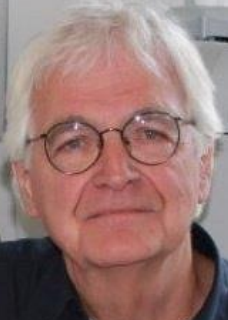 Jens Rehfeld合作论文数Department of Clinical Medicine, Faculty of Health and Medical Sciences, University of Copenhagen1
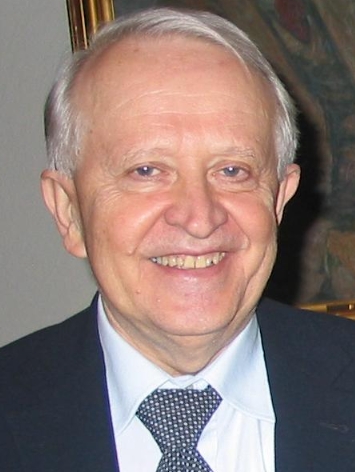 Suad Efendic合作论文数Department of Molecular Medicine, Karolinska Institutet1George Schwab合作论文数1Gilles Fillion合作论文数1Knut Haeger合作论文数1Michel Goiny合作论文数1G. Björkman合作论文数1Nirmal Chakravarty合作论文数1Peter G. Wright合作论文数1O. Fernö合作论文数1Lars Sjödin合作论文数1Jozef Novotný合作论文数1Sverre Emås合作论文数1Per Bolme合作论文数1Ingemar Erici合作论文数1Göran Südow合作论文数1Christopher Pycock合作论文数1Radomir Nosál合作论文数1Chester Hyman合作论文数1B FYRO合作论文数1Anders Bergendorff合作论文数1Gunnar Samuelsson合作论文数1Arvid Wretlind合作论文数1




