We present a comprehensive phylogeny derived from 5 genes, nucSSU, nucLSU rDNA, TEF1, RPB1 and RPB2, for 356 isolates and 41 families (six newly described in this volume) in Dothideomycetes. All currently accepted orders in the class are represented for the first time in addition to numerous previously unplaced lineages. Subclass Pleosporomycetidae is expanded to include the aquatic order Jahnulales. An ancestral reconstruction of basic nutritional modes supports numerous transitions from saprobic life histories to plant associated and lichenised modes and a transition from terrestrial to aquatic habitats are confirmed. Finally, a genomic comparison of 6 dothideomycete genomes with other fungi finds a high level of unique protein associated with the class, supporting its delineation as a separate taxon.
ABSTRACT Nonribosomal peptides, made by nonribosomal peptide synthetases, have diverse biological activities, including roles as fungal virulence effectors. Inspection of the genome of Cochliobolus heterostrophus , a fungal pathogen of maize and a member of a genus noted for secondary metabolite production, revealed eight multimodular nonribosomal peptide synthase ( NPS ) genes and three monomodular NPS -like genes, one of which encodes a nonribosomal peptide synthetase/polyketide synthase hybrid enzyme presumed to be involved in synthesis of a peptide/polyketide molecule. Deletion of each NPS gene and phenotypic analyses showed that the product of only one of these genes, NPS6 , is required for normal virulence on maize. NPS6 is also required for resistance to hydrogen peroxide, suggesting it may protect the fungus from oxidative stress. This and all other nps mutants had normal growth, mating ability, and appressoria. Real-time PCR analysis showed that expression of all NPS genes is low (relative to that of actin), that all (except possibly NPS2 ) are expressed during vegetative growth, and that expression is induced by nitrogen starvation. Only NPS6 is unfailingly conserved among euascomycete fungi, including plant and human pathogens and saprobes, suggesting the possibility that NPS6 activity provides oxidative stress protection during both saprobic and parasitic growth.
Insertional mutants of the fungal maize pathogen Cochliobolus heterostrophus were screened for altered virulence. One mutant had 60% reduction in lesion size relative to WT but no other detectable change in phenotype. Analysis of sequence at the insertion site revealed a gene ( CPS1 ) encoding a protein with two AMP-binding domains. CPS1 orthologs were detected in all Cochliobolus spp. examined, in several other classes of ascomycete fungi, and in animals but not in basidiomycete fungi, bacteria, or plants. Phylogenetic analysis suggested that CPS1 represents a previously undescribed subset of adenylate-forming enzymes that have diverged from certain acyl-CoA ligases, which in bacteria are involved in biosynthesis of nonribosomal peptides or polyketide/peptide hybrids. Disruption of CPS1 caused reduced virulence of both race T and race O of C. heterostrophus on maize, of Cochliobolus victoriae on oats, and of Gibberella zeae on wheat. These results suggest that CPS1 functions as a general fungal virulence factor in plant pathogenic ascomycetes.
The genome of the maize pathogen Cochliobolus heterostrophus encodes three unlinked monofunctional catalase-encoding (CAT) genes that singly or in combination could offer protection against the harmful effects of oxidative stress. Phylogenetic analysis placed the CAT2 and CAT3 proteins in a cluster with large subunit catalases (CAT3 has a secretory signal sequence and was grouped with known secreted catalases), whereas CAT1 clustered with small subunit catalases. Single, double, and triple cat mutants were created and screened for sensitivity to hydrogen peroxide and altered virulence on maize. All mutants deficient in CAT3 had enhanced sensitivity to hydrogen peroxide, as compared with wild type or with mutants deficient in CAT1, CAT2, or both. All catalase-deficient mutants had normal virulence to maize. Thus, the secreted CAT3 protein protects the fungus from oxidative stress during vegetative growth, but members of this enzyme family, alone or in combination, are not essential for virulence.
Various aspects of leaf scald disease, caused by Rhynchosporium secalis, are reviewed. Topics dealt with include the biology, symptomatology, epidemiology, host resistance, breeding strategies, fungicide sensitivity and molecular characterisation. Specific attention was given to the variable nature of R. secalis, with specific reference to pathogenesis-related proteins, virulence spectrum, variability of pathotypes and sources of variation.
An anonymous multilocus DNA probe was used to characterize the genotypic structure of Rhynchosporium secalis isolates previously characterized according to their virulence spectra on a set of differential barley cultivars. The maximum percentage of genotypic diversity of 47 R. secalis isolates from the Western Cape Province of South Africa was 46.5%. In comparison with diversity observed at DNA level, less variation was observed in pathogenicity for R. secalis. DNA polymorphisms in R. secalis seemed to be independent of variation in virulence. No correlation between any particular fingerprint pattern, race, district, field or lesion was observed. The two most frequently observed races, 4 and 7, did not share the same genotypes, even when isolated from the same field or lesion. The high level of genotypic variation observed in the South African R. secalis population resembles the genotypic diversity observed in other cereal pathotypes with known sexual states. Although no teleomorph has yet been observed, these data suggest that sexual recombination may operate within the South African population of R. secalis.
The virulence spectra of 50 Rhynchosporium secalis isolates from a population in the Western Cape province of South Africa were determined, and 21 races were detected when evaluated against 17 differential cultivars. The virulence spectrum of the R. secalis population shows considerable variation, and carries unnecessary virulence genes which is quite unexpected, since chiefly susceptible barley cultivars are grown in the south Western Cape. The two most prevalent races, namely races 4 and 7 had three and four virulence genes respectively. Both race 4 and 7 were virulent on the most susceptible cultivars, West China, Steudelli, C.I.8618 and C.I.2226. Considering the resistance genes reported for the cultivars Atlas 46, Turk, and C.I.3515 which showed no susceptible cultivar-pathogen interaction, it would appear that the Rh-Rh3-Rh4 complex is primarily involved in conferring resistance to the local R. secalis isolates
Isolates of R. secalis were collected yearly from the Rûens area of the Western Cape during the 1993–1995 growing seasons. These isolates were evaluated in vitro to determine sensitivity to triazole fungicides (triadimenol, tebuconazole, flusilazole and propiconazole). The sensitivity fluctuated but in 1995 isolates were significantly less sensitive towards triadimenol than in the previous two years. In a second experiment, isolates collected from two fields with a 5–6 year history of triadimenol seed treatments and tebuconazole applications were evaluated for their fungicide sensitivity. A significant positive correlation was observed between tebuconazole and triadimenol sensitivity among R. secalis isolates from these fields. However, such a correlation was not found within the R. secalis population collected during 1993–1995 where shorter crop rotation patterns and a range of fungicides were applied. In a third experiment, the fungicide sensitivity of local R. secalis isolates was evaluated towards two new triazole fungicides, namely bromuconazole and triticonazole. Correlation coefficients observed between these new triazoles and those previously applied in South Africa were not significantly positive. The lack of significant cross-resistance has important practical implications for management of fungicide resistance.
In a survey conducted during 1991–1992, single‐spored isolates of the eyespot fungus from the Swartland area were characterized and tested for sensitivity to carbendazim and ergosterol inhibiting fungicides. The 100 isolates tested were all fast growing, even marginate, and designated as Ramulispora herpotrichoides. Fungal growth was completely inhibit on PDA amended with carbendazim (1 μg/ml), indicating that the local population of the fungus is still at baseline sensitivity to benzimidazoles. The mean concentration of prochloraz calculated to inhibited growth by 50% (IC50 value) was 0.043 ± 0.029 μg/ml, which is comparable with the baseline sensitivity reported for European isolates. Of the 36 representative isolates screened against 2 μg/ml triadimenol, 44% were sensitive, while 36% were resistant. The triadimenol‐resistant isolates were sensitive to propiconazole and flusilazole. However, four of the triadimenol‐resistant isolates were also resistant to tebuconazole. These results indicate that South African isolates of R. herpotrichoides are sensitive towards carbendazim, prochloraz, propiconazole and flusilazole. They were found to differ, however, in sensitivity towards triadimenol and tebuconazole, where some isolates had an IC50 value greater than 2 μg/ml.
Three species and two varieties of Pseudocercosporella Deighton are known to be associated with the eyespot disease complex of graminicolous hosts. Based on the production of lateral conidial branches, and conidiogenous cells with flat to protuberant, unthickened scars, three species had been disposed to Ramulispora Miura. The description of the teleomorph in Tapesia (Pers.) Fuckel supported this view. Although these species are regarded as varieties of Ramulispora herpotrichoides (Fron) Arx by some workers, a clear distinction could be made between them in the present study based upon morphology and DNA banding patterns. Tapesia yallundae Wallwork & Spooner (anam. Ramulispora herpotrichoides) is distinguished from R. herpotrichoides var. acuformis Nirenberg. Furthermore, the latter variety is erected to species level as Tapesia acuformis (Boerema, Pieters & Hamers) Crous stat. nov. [anam. R. acuformis (Nirenberg) Crous comb. nov. Furthermore, P. aestiva does not represent a species of either Pseudocercosporella or Ramulispora, and its generic status remains uncertain.
Tapesia yallundae var.yallundae is newly recorded from wheat stubble collected near Moorresburg in the western Cape Province of South Africa. Apothecia were observed on wheat stubble incubated for 8 months at 10°C under near-ultraviolet light. Single ascospore isolates produced colonies typical of the Wheat (W)-type in culture. Apothecia were also induced after single-conidial isolates were mated on wheat stubble and incubated at 10–15°C for 6 months. All single-conidial isolates were of the W-pathotype (Ramulispora herpotrichoides var.herpotrichoides).
 P.W. (Pedro) Crous合作论文数Utrecht University;Crous Lab of Evolutionary Phytopathology, Westerdijk Fungal Biodiversity Institute;University of Pretoria Forestry and Agricultural Biotechnology Institute14
 G. Holz合作论文数5
 B. Gillian Turgeon合作论文数Plant Pathology and Plant-Microbe Biology Section, College of Agriculture and Life Sciences, Cornell University3
 O. C. Yoder合作论文数Department of Plant Pathology, Cornell University3Scott Kroken合作论文数2M van der Rijst合作论文数2C. L. Lennox合作论文数2
 Conrad L. Schoch合作论文数National Center for Biotechnology Information, National Library of Medicine, National Institutes of Health2
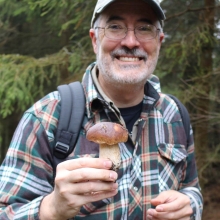 Joseph Spatafora合作论文数Department of Botany and Plant Pathology, College of Agricultural Sciences, Oregon State University2
 K Ntushelo合作论文数Department of Agriculture and Animal Health, School of Agriculture and Life Sciences, College of Agriculture & Environmental Sciences, University of South Africa2G.F. Campbell合作论文数2Gustav Holz合作论文数2T Shirouzu合作论文数1SM HUHNDORF合作论文数1George K. Mugambi合作论文数1H. Yonezawa合作论文数1S. Phongpaichit合作论文数1A. Kruys合作论文数1L. J. Dixon合作论文数1Godwin R.A. Mchau合作论文数1Ca Shearer合作论文数1P. Nelson合作论文数1Y. Zhang合作论文数1T Hosoya合作论文数1Yukio Harada合作论文数1
 Johannes Z. Groenewald合作论文数Lab of Evolutionary Phytopathology, Westerdijk Fungal Biodiversity Institute;Cbs-Knaw Fungal Biodiversity Centre, Royal Netherlands Academy of Arts and Sciences1
 Cécile Gueidan合作论文数Ctr Australian Natl Biodivers Res CANBR1Kazuyuki Hirayama合作论文数1
 Stephen Pointing合作论文数Department of Biological Sciences, Faculty of Science, National University of Singapore;Yale-NUS College, National University of Singapore1
 Treena Burgess合作论文数Harry Butler Institute, Murdoch University1
 Sybren De Hoog合作论文数Center of Expertise for Mycology, Radboud University Medical Center1
 Martin Grube合作论文数Institut für Biologie, Naturwissenschaftliche Fakultät, Karl-Franzens-Universität Graz1
 Kevin D. Hyde合作论文数School of Science, Mae Fah Luang University1Teruo Sano合作论文数1
 Evan B. Gareth Jones合作论文数Department of Botany and Microbiology, King Saud University1
 Thorsten Lumbsch合作论文数Integrative Research Center, The Field Museum1
 J.H.C. Woudenberg合作论文数1
 Matthew P. Nelsen合作论文数School of Forest Resources and Environmental Science, Michigan Technological University;Current address: Committee on Evolutionary Biology, University of Chicago;Committee on Evolutionary Biology, University of Chicago1
 Lucia Muggia合作论文数Institute of Plant Sciences, Karl-Franzens-Universität Graz1B. Volkmann-Kohlmeyer合作论文数1
 E. W. A. Boehm合作论文数Department of Biological Sciences;Kean University;National Museum of Kenya;Botany Department1
 Jariya Sakayaroj合作论文数National Center for Genetic Engineering and Biotechnology (BIOTEC), Thailand Science Park, Klong Luang, Pathumthani 12120, Thailand1
 Huzefa A. Raja合作论文数Department of Plant Biology Rm. 265 Morrill Hall, University of Illinois1A. B. Van Jaarsveld合作论文数1S. W. Lu合作论文数1E. R. Plata合作论文数1
 Robert Lücking合作论文数Botanic Garden and Botanical Museum Berlin-Dahlem, Free University of Berlin;Field Museum1
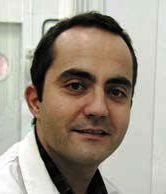 Constantino Ruibal合作论文数Laboratorio de Fisioloxía Animal, Universidade de Santiago de Compostela1
 Johannes De Gruyter合作论文数1




