A search has been made for exotic states produced in K−d interactions at 5.5 GeV/c. The reactions investigated were: K−d→X−−pp, K−d→Y∗−−π+p and K−d→ M−−Σ+p. Upper limits are set for the production cross sections.
We report on the reactions $A+p\ensuremath{\rightarrow}{\ensuremath{\pi}}^{\ensuremath{-}}+\ensuremath{\cdots}$ and $A+p\ensuremath{\rightarrow}{\ensuremath{\pi}}^{\ensuremath{-}}+{\ensuremath{\pi}}^{\ensuremath{-}}+\ensuremath{\cdots}$, where $A$ is either a 13-GeV/c ${K}^{+}$ or ${K}^{\ensuremath{-}}$ meson or a 7-GeV/c ${\ensuremath{\pi}}^{+}$ meson. We compare the distribution of final-state pions in the proton-fragmentation region with several theoretical predictions concerning limiting behavior and factorization.
The results presented in this paper are obtained from an analysis of bubble-chamber pictures of ${K}^{\ensuremath{-}}d$ interactions at an incident ${K}^{\ensuremath{-}}$ momentum of 5.5 GeV/c. Generally, the quasitwo-body final states are produced peripherally, with a small backward peak occurring in some of the final states. The final states ${\ensuremath{\Sigma}}^{\ensuremath{-}}\ensuremath{\omega}$, ${\ensuremath{\Sigma}}^{\ensuremath{-}}{\ensuremath{\rho}}^{0}$, and ${\ensuremath{\Sigma}}^{\ensuremath{-}}\ensuremath{\varphi}$ appear to be produced primarily by vector-meson exchange. In the final state $\ensuremath{\Lambda}(1520){\ensuremath{\pi}}^{\ensuremath{-}}$ the decay distributions of the $\ensuremath{\Lambda}(1520)$ hyperon are found to be consistent with a vector-exchagne production process with $M2$ coupling at the nucleon vertex. The predictions of the independent-quark model and of other symmetry schemes, namely that the forward cross sections for ${\ensuremath{\Sigma}}^{\ensuremath{-}}{\ensuremath{\rho}}^{0}$, ${\ensuremath{\Sigma}}^{\ensuremath{-}}\ensuremath{\omega}$, ${\ensuremath{\Sigma}}^{\ensuremath{-}}\ensuremath{\varphi}$ production be in the ratios 1: 1: 2, are not inconsistent with our experimental values.
We have carried out a study of ${\ensuremath{\pi}}^{\ensuremath{-}}{\ensuremath{\pi}}^{\ensuremath{-}}$ scattering using the reaction ${\ensuremath{\pi}}^{\ensuremath{-}}d\ensuremath{\rightarrow}\mathrm{pp}{\ensuremath{\pi}}^{\ensuremath{-}}{\ensuremath{\pi}}^{\ensuremath{-}}$ at an incident ${\ensuremath{\pi}}^{\ensuremath{-}}$ momentum of 7 GeV/c. We have extracted the isotopic-spin-2 $\ensuremath{\pi}\ensuremath{\pi}$ phase shifts and elastic cross section using a modified Chew-Low extrapolation. We obtain a value of - 7.7\ifmmode^\circ\else\textdegree\fi{} \ifmmode\pm\else\textpm\fi{} 1.2\ifmmode^\circ\else\textdegree\fi{} for the $s$-wave phase shift at the ${K}^{0}$ mass. Our measurements are in good agreement with current-algebra predictions.
We have performed a search for I = 2 multipion resonances in reactions of the type π−d → pp + x−− at an incident π− momentum of 7 GeV/c. We found no evidence for the existence of resonance-like states in the x−− system, and consequently present upper limits for the production of such resonances in these reactions.
We compare the inclusive reactions K−p→λ + anything, K+p→λ + anything and K+p→λ + anything at 13 GeV/c. We find that the first of these reactions includes significant contributions (⪆30%) from processes other than the annihilation reaction K−→λ + pions, and that this non-annihilation component contributes backward (target-like) and forward (beam-like) λ's whose dynamical origins may be related to those of backward λ's and forward λ's produced in K+p collisions. We suggest that diffractive processes are playing an important role in these reactions.
We confirm at 12.7 $\frac{\mathrm{GeV}}{c}$ a result previously reported at 10 $\frac{\mathrm{GeV}}{c}$, namely the production of a four-pion resonance at \ensuremath{\sim}1630 MeV with a width of \ensuremath{\sim}125 MeV in the reaction ${K}^{+}p\ensuremath{\rightarrow}{K}^{0}p{\ensuremath{\pi}}^{+}{\ensuremath{\pi}}^{+}{\ensuremath{\pi}}^{\ensuremath{-}}{\ensuremath{\pi}}^{0}$. No corresponding two-pion enhancement is observed in the reaction ${K}^{+}p\ensuremath{\rightarrow}{K}^{0}p{\ensuremath{\pi}}^{+}{\ensuremath{\pi}}^{0}$.
We present single-particle momentum spectra for ${\ensuremath{\pi}}^{\ensuremath{-}}$, ${K}^{0}$, ${\overline{\ensuremath{\Lambda}}}^{0}$, and ${\ensuremath{\Lambda}}^{0}$ particles produced in ${K}^{+}p$ collisions at 12.7 $\frac{\mathrm{GeV}}{c}$, and for ${\ensuremath{\pi}}^{\ensuremath{-}}$ mesons produced in ${\ensuremath{\pi}}^{+}p$ collisions at 7 $\frac{\mathrm{GeV}}{c}$. We examine the correlations between the transverse and longitudinal momentum components of these particles and compare them to those expected as a result of momentum conservation alone. We also investigate the transverse-momentum correlations in two-particle inclusive reactions and discuss the underlying kinematic constraints on these correlations.
We have measured the cross section for production of events in the ${A}_{1}$ mass region for two reactions: (1) ${\ensuremath{\pi}}^{+}p\ensuremath{\rightarrow}{\ensuremath{\pi}}^{+}{\ensuremath{\rho}}^{0}p$ and (2) ${\ensuremath{\pi}}^{\ensuremath{-}}n\ensuremath{\rightarrow}{\ensuremath{\pi}}^{\ensuremath{-}}{\ensuremath{\rho}}^{\ensuremath{-}}p$. The results of these experiments, both conducted at an incident pion momentum of \ensuremath{\sim}7 GeV/c, are interpreted within the framework of dual models of inelastic hadron collisions.
The reaction K−d → K−π+π−n ps was studied in a bubble chamber experiment. The cross section was measured to be 1.3 ± 0.2 mb. The final state is dominated by K∗0(890), K∗0(1420) and Δ−(1236) production. Partial cross sections, differential cross sections and decay angular distributions of the K∗0(890) δ−(1236) final state were found to give good agreement with the predictions of Białas and Zalewski obtained from the quark model. The final state K−π+Δ−(1236) is analyzed by use of the Van Hove plot.
 W. Kropac合作论文数32R. Ammar合作论文数30M. Derrick Et Al.合作论文数26B. Musgrave合作论文数23Harold Yarger合作论文数23Yanglai Cho合作论文数22R. Davis合作论文数19
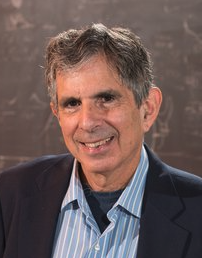 Sheldon Stone合作论文数Department of Physics, College of Arts and Sciences, Syracuse University17P. Slattery合作论文数16T. Ferbel合作论文数15D Slate合作论文数12Tp Wangler合作论文数11T. Wangler合作论文数11John E Mott合作论文数10Schweing.F合作论文数7J. Loken合作论文数7F. Schweingruber合作论文数7D Johnson合作论文数5
 C. Bromberg合作论文数Michigan State University, USA5Haru Yuta合作论文数5T. Fields合作论文数5W. Barletta合作论文数4Hd Taft合作论文数4JJ PHELAN合作论文数4
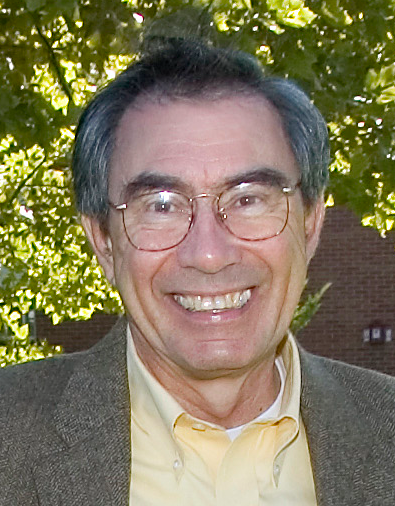 Thomas Ludlam合作论文数Physics Department, Brookhaven National Laboratory, U.S. Department of Energy4W Katz合作论文数3S. Dagan合作论文数3
 Joel Berlinghieri合作论文数2J. Wong合作论文数2
 Matthew Stanley Johnson合作论文数Department of Chemistry, University of Copenhagen2D Cohen合作论文数2A. J. Slaughter合作论文数2Pf Slattery合作论文数2M. Farber合作论文数2J Wong合作论文数2Linglie Chau Wang合作论文数2R. Holmes合作论文数2
 David C. Johnson合作论文数Institute for Energy and Environment, New Mexico State University2R. S. Panvini合作论文数2D. Reeder合作论文数2t h fields合作论文数2Yamanouc.T合作论文数1Fickinge.W合作论文数1a a seidl合作论文数1Cew Ward合作论文数1N Green合作论文数1F. DiBianca合作论文数1David Griffiths合作论文数1




