P. Adamson, T. Alexopoulos, W. W. M. Allison, G. J. Alner, K. Anderson, C. Andreopoulos, M. Andrews, R. Andrews, C. Arroyo, S. Avvakumov, D. S. Ayres, B. Baller, B. Barish, M. A. Barker, P. D. Barnes, Jr., G. Barr, W. L. Barrett, E. Beall, B. R. Becker, A. Belias, T. Bergfeld, R. H. Bernstein, D. Bhattacharya, M. Bishai, A. Blake, V. Bocean, B. Bock, G. J. Bock, J. Boehm, D. J. Boehnlein, D. Bogert, P. M. Border, C. Bower, S. Boyd, E. Buckley-Geer, A. Byon-Wagner, A. Cabrera, J. D. Chapman, T. R. Chase, S. K. Chernichenko, S. Childress, B. C. Choudhary, J. H. Cobb, J. D. Cossairt, H. Courant, D. A. Crane, A. J. Culling, J. W. Dawson, D. M. DeMuth, A. De Santo, M. Dierckxsens, M. V. Diwan, M. Dorman, G. Drake, R. Ducar, T. Durkin, A. R. Erwin, C. O. Escobar, J. Evans, O. D. Fackler, E. Falk Harris, G. J. Feldman, N. Felt, T. H. Fields, R. Ford, M. V. Frohne, H. R. Gallagher, M. Gebhard, A. Godley, J. Gogos, M. C. Goodman, Yu. Gornushkin, P. Gouffon, E. Grashorn, N. Grossman, J. J. Grudzinski, K. Grzelak, V. Guarino, A. Habig, R. Halsall, J. Hanson, D. Harris, P. G. Harris, J. Hartnell, E. P. Hartouni, R. Hatcher, K. Heller, N. Hill, Y. Ho, C. Howcroft, J. Hylen, M. Ignatenko, D. Indurthy, G. M. Irwin, C. James, L. Jenner, D. Jensen, T. Joffe-Minor, T. Kafka, H. J. Kang, S. M. S. Kasahara, J. Kilmer, H. Kim, G. Koizumi, S. Kopp, M. Kordosky, D. J. Koskinen, M. Kostin, D. A. Krakauer, S. Kumaratunga, A. S. Ladran, K. Lang, C. Laughton, A. Lebedev, R. Lee, W. Y. Lee, M. A. Libkind, J. Liu, P. J. Litchfield, R. P. Litchfield, N. P. Longley, P. Lucas, W. Luebke, S. Madani, E. Maher, V. Makeev, W. A. Mann, A. Marchionni, A. D. Marino, M. L. Marshak, J. S. Marshall, J. McDonald, A. McGowan, J. R. Meier, G. I. Merzon, M. D. Messier, D. G. Michael, R. H. Milburn, J. L. Miller, W. H. Miller, S. R. Mishra, P. S. Miyagawa, C. Moore, J. Morfı́n, R. Morse, L. Mualem, S. Mufson, S. Murgia, M. J. Murtagh, J. Musser, D. Naples, C. Nelson, J. K. Nelson, H. B. Newman, F. Nezrick, R. J. Nichol, T. C. Nicholls, J. P. Ochoa-Ricoux, J. Oliver, W. P. Oliver, V. A. Onuchin, T. Osiecki, R. Ospanov, J. Paley, V. Paolone, A. Para, T. Patzak, Z. Pavlovich, G. F. Pearce, N. Pearson, C. W. Peck, C. Perry, E. A. Peterson, D. A. Petyt, H. Ping, R. Piteira, A. Pla-Dalmau, R. K. Plunkett, L. E. Price, M. Proga, D. R. Pushka, D. Rahman, R. A. Rameika, T. M. Raufer, A. L. Read, B. Rebel, D. E. Reyna, C. Rosenfeld, H. A. Rubin, K. Ruddick, V. A. Ryabov, R. Saakyan, M. C. Sanchez, N. Saoulidou, J. Schneps, P. V. Schoessow, P. Schreiner, R. Schwienhorst, V. K. Semenov, S.-M. Seun, P. Shanahan, P. D. Shield, W. Smart, V. Smirnitsky, C. Smith, P. N. Smith, A. Sousa, B. Speakman, P. Stamoulis, A. Stefanik, P. Sullivan, J. M. Swan, P. A. Symes, N. Tagg, R. L. Talaga, E. Tetteh-Lartey, J. Thomas, J. Thompson, M. A. Thomson, J. L. Thron, R. Trendler, J. Trevor, I. Trostin, V. A. Tsarev, G. Tzanakos, J. Urheim, P. Vahle, M. Vakili, K. Vaziri, C. Velissaris, V. Verebryusov, B. Viren, L. Wai, C. P. Ward, D. R. Ward, M. Watabe, A. Weber, R. C. Webb, A. Wehmann, N. West, C. White, R. F. White, S. G. Wojcicki, D. M. Wright, Q. K. Wu, W. G. Yan, T. Yang, F. X. Yumiceva, J. C. Yun, H. Zheng, M. Zois, and R. Zwaska
We measure the horizontal (|cos(θz)|<0.14 corresponding to a slant depth cut 14 kmwe) neutrino-induced muon flux (Eμ>1.8 GeV) in Soudan 2 to be 4.01 ± 0.50 ± 0.30 × 10⁻¹³ cm−2 sr−1 s−1. From the absence of horizontal muons with large energy loss, we set a limit on the flux of muon neutrinos from active galactic nuclei.
An experiment performed at Fermilab used double-arm calorimeter triggers to study di-jet production by 400 GeV protons and 200 GeVπ− mesons incident on liquid hydrogen. The observed ratio of positive to negative leading particles in the jets was compared forpp andπp production using a tree level parton scattering model. The results are moderately sensitive to the form of the pion gluon distribution function and yieldx g(x)⋍(1−x)2.75±0.40±0.75.
This paper describes the pioneering role of the bubble chamber in measuring interesting atomic physics quantities such as the cascade time in mesic hydrogen and helium atoms.
The status of the Soudan 2 experiment is discussed. The detector parameters, running schedule, and physics program are presented. Limits on proton decay, the flux of highly ionizing magnetic monopoles and neutrinos from active galactic nuclei are given.
Atmospheric [nu][sub [mu]] and [nu][sub e] are created in cosmic ray interactions in the atmosphere, and can be detected in underground detectors. The Kamiokande and IMB water Cerenkov detectors have found fewer [nu][sub [mu]] interactions (relative to [nu][sub e]) than are expected. Results are usually expressed by the ratio: R[triple bond]([nu][sub [mu]]/[nu][sub [mu]]) measured ([nu][sub [mu]]/[nu][sub e]) predicted with R found to be less than 1. The Soudan 2 detector is an iron calorimeter, which has different systematic effects than the water Cerenkov counters. Results from the Frejus and NUSEX calorimeters do not suggest a deficit of [nu][sub [mu]]'s in iron, implying that perhaps there is a systematic effect in Cerenkov detectors or some unexpected nuclear effect. Here we report on a preliminary analysis of 0.5 kton-year of data in Soudan 2. We are presently analyzing our second 0.5 kt-year of data, and will present new results at the meeting.
We describe some implications for massive dihadron production experiments of recent observations in Fermilab experiments E609 and E557 of large nuclear rescattering effects in dijet production in hard pA collisions. Substantial upward corrections to alpha (in the A(alpha) cross section parametrization) are indicated for dihadron experiments which detect symmetric back-to-back hadrons with narrow acceptance in azimuth or p(T). Other consequences of the large nuclear rescattering are also discussed.
We have operated the Soudan 1 underground muon detector in coincidence with a 36-m2 detector situated at the Earth's surface. Such a combination of detectors can yield information on the composition of the primary cosmic rays at energies above approximately 3 x 10(15) eV, where there is an abrupt change in the slope of the energy spectrum. The present experiment was meant to test the feasibility of operating such a system, and to obtain a first sample of data before the complete installation of the much larger Soudan 2 detector. These initial data seem to favor a light composition in the energy range 10(15)-10(16) eV, but there are significant systematic uncertainties.
used in the SSC test beam fines. It follows a 20-m drift section of beam tube downstream of the last silicon strip detector. A bending dipole just in of the last silicon strip detector produces the synchrotron radiation that is detected in a 50-mm-square cross section NaI crystal. A secondary scintillator made of Bicron BC-400 plastic is used to discriminate whether it is synchrotron radiation or a stray particle that causes the triggering of the NaI crystal`s photo multiplier tube (PMT).
This is a progress report on multiple muon events recorded by the Soudan 2 detector. 6 refs.
A study has been made of the ability of the Soudan 2 nucleon decay detector to distinguish between showering and non-showering particles, utilizing several different pattern recognition techniques. This work has direct application in the determination of the {nu}{sub {mu}}/{nu}{sub e} ratio for atmospheric neutrino induced events. The results of the application of these techniques to Monte Carlo data and to calibration data from the ISIS test beam are presented.
A search for grand unified theory magnetic monopoles making highly ionizing tracks in argon gas has been conducted using the Soudan 2 nucleon decay detector. This underground detector is a large fine-grained tracking calorimeter comprised of long drift tubes read out by proportional wires. No monopole candidates were observed in data taken over almost three years, yielding an upper flux limit of 8.7 X 10(-15) cm-2s-1sr-1 for monopole velocities of beta > 2 x 10(-3).
The Soudan 2 nucleon decay detector has recorded data since Summer 1988 using a quarter (dimensions 4 m by 8 m by 5 m high) of the eventual detector. This iron-argon time projection chamber records extensive data on each event and has excellent angular and multi-track resolution. We describe the trigger, the event analysis procedure and the current status of the detector and the underground muon data sample. 1 ref.
A search for contained events in the Soudan 2 nucleon decay detector has been made for the initial exposure of the first quarter of the 1.1 kiloton detector. This corresponds to an exposure of 0.083 kiloton years in the fiducial volume. We observe 5 {nu}{sub mu} candidate events and 5 {nu}{sub e} candidate events. Results of Monte Carlo simulations of neutrino events and proton decay events in Soudan 2 are compared. 6 refs., 3 figs.
The Soudan 2 detector is located at a depth of 2090 meters-water equivalent (mwe). About 2 million muon events have been recorded. Here we report on our plans to analyze them for comparison with expectations from atmospheric cosmic ray models. Plans and capabilities to analyze multiple muons and monopoles are also discussed. 3 refs., 5 figs.
 M. Derrick Et Al.合作论文数39
 Don Rhines合作论文数24J. Whitmore合作论文数22LG HYMAN合作论文数17Tomas Kafka合作论文数17G. Keyes合作论文数17P. Border合作论文数15L. Hyman合作论文数15
 William L. Barrett合作论文数Department of Radiation Oncology, College of Medicine, University of Cincinnati;Cincinnati Cancer Center, College of Medicine, University of Cincinnati15Wwm Allison合作论文数14L. Voyvodic合作论文数14
 Marvin Marshak合作论文数School of Physics and Astronomy, College of Science and Engineering, University of Minnesota14H. Courant合作论文数14J. Dawson合作论文数13K. Ruddick合作论文数13R. Singer合作论文数13
 N. West合作论文数Department of Physics;University of Oxford;Department of Physics, University of Oxford13James F Mckenzie合作论文数13I. Ambats合作论文数13Ken A. Johns合作论文数12F Lopez合作论文数12Pearce G F合作论文数12N. Hill合作论文数12R. Ammar合作论文数12John E Mott合作论文数12W. Kropac合作论文数12I Tung Wang合作论文数12G. J. Alner合作论文数12Jh Cobb合作论文数11Mc Goodman合作论文数11
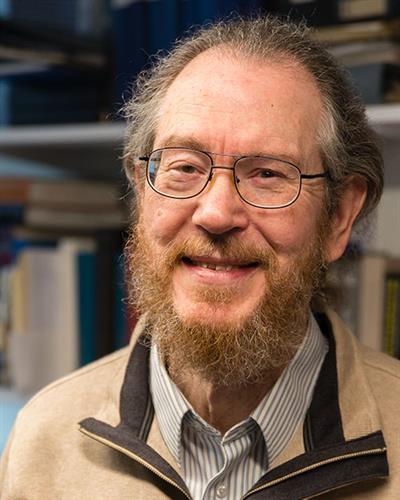 Austin Napier合作论文数Department of Physics and Astronomy, School of Arts and Sciences, Tufts University11R. Davis合作论文数11E. A. Peterson合作论文数11
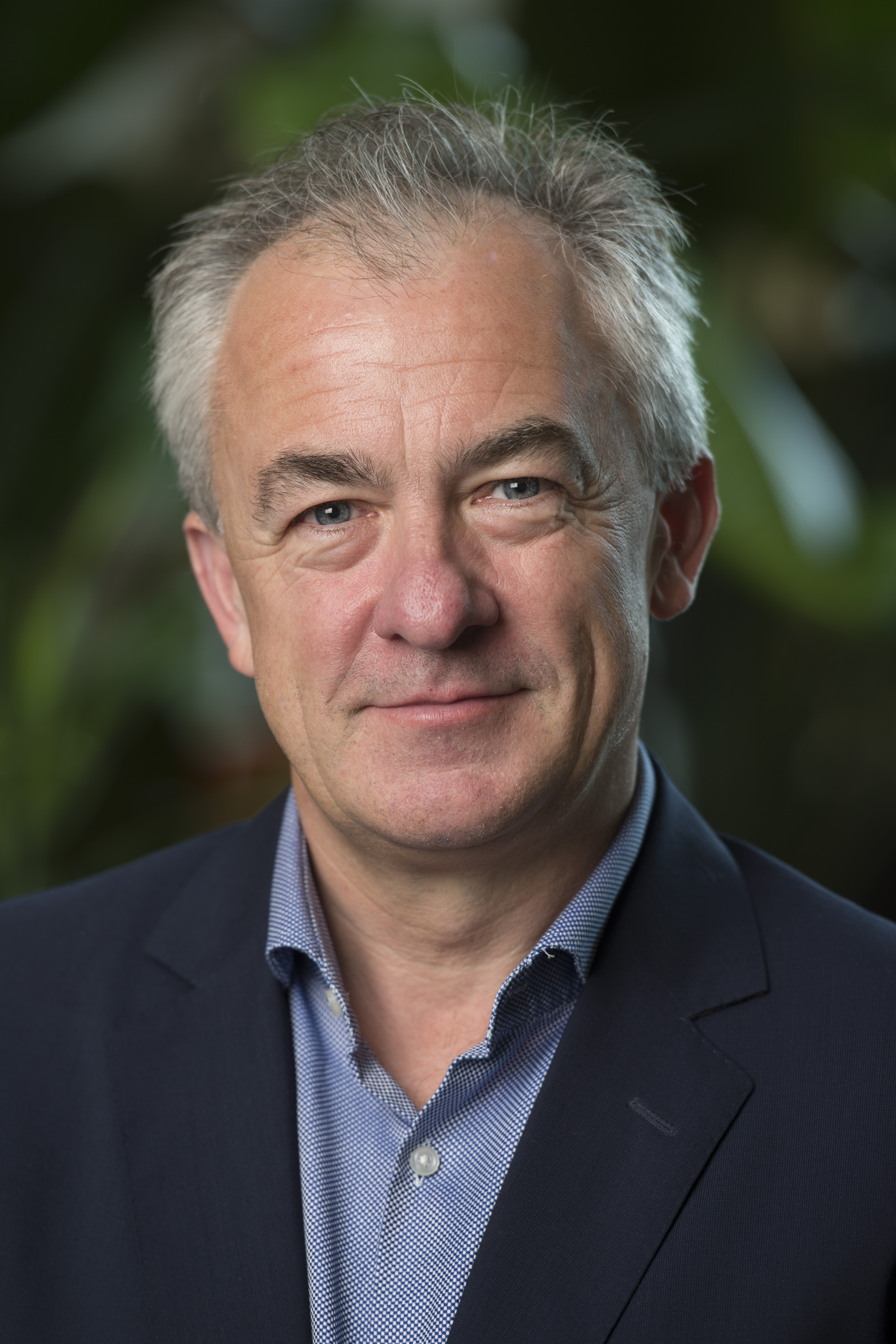 Mark Thomson合作论文数Department of Physics, University of Cambridge11J. L. Thron合作论文数11Peter J. Litchfield合作论文数11d j jankowski合作论文数10L Balka合作论文数10robert h giles合作论文数10Dh Perkins合作论文数10j schneps合作论文数10Yanglai Cho合作论文数10F. Schweingruber合作论文数10J. Schlereth合作论文数10v w edwards合作论文数9R. Engelmann合作论文数9R Milburn合作论文数9N Longley合作论文数9j g fetkovich合作论文数9




