Back in the heady days of 1999 and WWW8 (Toronto) we held a panel titled "Finding Anything in the Billion Page Web: Are Algorithms the Key?" In retrospect the answer to this question seems laughably obvious - the search industry has burgeoned on a foundation of algorithms, cloud computing and machine learning. As we move into the second decade of this millennium, we are confronted with a dizzying array of new paradigms for finding content, including social networks and location-based search and advertising. This panel pulls together senior experts from academia and the major search principals to debate whether search will continue to look anything like the 2-keywords-give-10-blue-links paradigm that Google has popularized. What do emerging approaches and paradigms - natural language search, social search, location-based search - mean for the future of search in general?
A general game playing system is one that can accept a formal description of a game and play the game effectively without human intervention. Unlike specialized game players, such as Deep Blue, general game players do not rely on algorithms designed in advance for specific games; and, unlike Deep Blue, they are able to play different kinds of games. In order to promote work in this area, the AAAI is sponsoring an open competition at this summer's Twentieth National Conference on Artificial Intelligence. This article is an overview of the technical issues and logistics associated with this summer's competition, as well as the relevance of general game playing to the long range-goals of artificial intelligence.
NASA has long supported research on intelligent control technologies that could allow space systems to operate autonomously or with reduced human supervision. Proposed uses range from automated control of entire space vehicles to mobile robots that assist or substitute for astronauts to vehicle systems such as life support that interact with other systems in complex ways and require constant vigilance. The potential for pervasive use of such technology to extend the kinds of missions that are possible in practice is well understood, as is its potential to radically improve the robustness, safety and productivity of diverse mission systems. Despite its acknowledged potential, intelligent control capabilities are rarely used in space flight systems. Perhaps the most famous example of intelligent control on a spacecraft is the Remote Agent system flown on the Deep Space One mission (1998 - 2001). However, even in this case, the role of the intelligent control element, originally intended to have full control of the spacecraft for the duration of the mission, was reduced to having partial control for a two-week non-critical period. Even this level of mission acceptance was exceptional. In most cases, mission managers consider intelligent control systems an unacceptable source of risk and elect not to fly them. Overall, the technology is not trusted. From the standpoint of those who need to decide whether to incorporate this technology, lack of trust is easy to understand. Intelligent high-level control means allowing software io make decisions that are too complex for conventional software. The decision-making behavior of these systems is often hard to understand and inspect, and thus hard to evaluate. Moreover, such software is typically designed and implemented either as a research product or custom-built for a particular mission. In the former case, software quality is unlikely to be adequate for flight qualification and the functionality provided by the system is likely driven largely by the need to publish innovative work. In the latter case, the mission represents the first use of the system, a risky proposition even for relatively simple software.
Contents include the following: Computing Information and Communications Technology (CICT) Systems Analysis. Our modeling approach: a 3-part schematic investment model of technology change, impact assessment and prioritization. A whirlwind tour of our model. Lessons learned.
The New Millennium Remote Agent (NMRA) vSll be the first AI system to control an actual spacecraft. The spacecraft domain raises a number of challenges for planning and execution, ranging from extended agency and long-term planning to dynamic recoveries and robust concurrent execution, all in the presence of tight real-time deadlines, changing goals, scarce resource constraints, and a v-ide variety of possible failures. We believe NMRA is the first system to integrate closed-loop planning and e.xecution of concurrent temporal plans, and the first autonomous ystem that v-ill be able to achieve a sustained multi-stage multiyear mission v-ithout communication or guidance from earth.
 Nicola Muscettola合作论文数10Erann Gat合作论文数Jet Propulsion Laboratory|California Institute of Technology7Giovanni Lorenzo Thione合作论文数6
 Brian C. Williams合作论文数Computer Science and Artificial Intelligence Laboratory, Schwarzman College of Computing, Massachusetts Institute of Technology;Department of Aeronautics and Astronautics, School of Engineering, Massachusetts Institute of Technology6P. Pandurang Nayak合作论文数Microsoft5willard h wattenburg合作论文数4allen l brown合作论文数4clarence t tegreene合作论文数4edward jung合作论文数4
 Eric Horvitz合作论文数Microsoft4
 Richard Zare合作论文数The Zarelab, Department of Chemistry, School of Humanities and Sciences, Stanford University4Roderick A. Hyde合作论文数4
 Chris D. Karkanias合作论文数Department of Biological Research, McNeil Pharmaceutical4
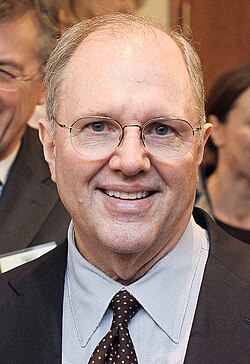 Craig Mundie合作论文数Mundie & Associates LLC4
 Doug Burger合作论文数Microsoft Research4
 John L. Manferdelli合作论文数Google;University of Washington4Jordin T. Kare合作论文数4Charles Whitmer合作论文数4Douglas E. Bernard合作论文数4Lowell L. Wood合作论文数4
 Eric C. Leuthardt合作论文数Department of Neurological Surgery, Washington University School of Medicine in St. Louis;Division of Neurotechnology, Washington University School of Medicine in St. Louis;Barnes-Jewish Hospital;St. Louis Children’s Hospital4
 Nathan Myhrvold合作论文数4
 Chad Walters合作论文数3
 Brendan T. O Connor合作论文数Manning College of Information and Computer Sciences, University of Massachusetts Amherst;Computational Social Science Institute, University of Massachusetts Amherst3
 Michael Georgeff合作论文数Precedence Health Care;Monash Institute of Health Services Research, Monash University;Faculty of Medicine, Nursing and Health Sciences, Monash University3Martin Van Den Berg合作论文数Intel Corporation3
 Martha E. Pollack合作论文数Cornell University3
 Richard Crouch合作论文数3
 Milind Tambe合作论文数Center for Research in Computation and Society, Harvard University;John A Paulson School of Engineering and Applied Sciences, Harvard University;Google Research3Benjamin D. Smith合作论文数3
 Lukas Biewald合作论文数Stanford University3Catherine Baudin合作论文数2David J. Musliner合作论文数Honeywell Technology Center2William Millar合作论文数2
 Steve A. Chien合作论文数Jet Propulsion Laboratory, California Institute Technology2
 Andrei Broder合作论文数Google2
 Marti A. Hearst合作论文数Department of Electrical Engineering and Computer Sciences, University of California, Berkeley;School of Information, University of California, Berkeley2
 Prabhakar Raghavan合作论文数Google2
 Elizabeth F. Churchill合作论文数Mohamed bin Zayed University of Artificial Intelligence;Friends of the University of Sussex2
 David Kortenkamp合作论文数TRACLabs Inc.2
 Michael D. Wagner合作论文数Naval Air Warfare Center Aircraft Division2
 Othar Hansson合作论文数Bitway, Inc.2Smadar Kedar合作论文数2
 Kanna Rajan合作论文数RAND Corporation;Faculdade de Engenharia, Universidade do Porto;Underwater Systems and Technology Laboratory, University of Porto2
 Andrew Tomkins合作论文数Google2
 Michael Wooldridge合作论文数Department of Computer Science, University of Oxford;Hertford College, University of Oxford2Edward B. Gamble合作论文数2David Ahn合作论文数Department of Economics, University of California, Berkeley2Christian Plaunt合作论文数2




