The first course of control is under a critical review. Both the teaching material covered and the teaching methods require new considerations. Introducing interactivity in the education process makes the learning more successful and enjoyable. MATLAB provides an effective environment for learning and applying different disciplines. Control101 is a new MATLAB toolbox under development which provides tools for interactive learning of control disciplines. This paper presents the framework for teaching discrete control algorithms applied for processes containing large dead times.
Automation means automatic control of various processes in different areas of life. Control is based mainly on the notion of negative feedback. Analysis and design of control systems is a complex field. Mathematical models of the processes to be controlled are needed, and effective control methods should exist to ensure the required performance of the controlled processes. In industrial environment besides continuous processes and continuous control systems, sampled data digital control systems gain more and more importance. In this chapter some basic knowledge on linear control systems with deterministic signals and some advanced control algorithms both for continuous and discrete-time systems are presented. In the second part of this chapter mainly continuous-time linear systems with multiple inputs and multiple outputs (MIMO systems) are considered. Specifically, stability, performance, and robustness issues, as well as optimal control strategies are discussed in details for MIMO linear systems using algebraic and numerical methods. As an important class for practical applications, predictive controllers are also discussed.
Isoflucypram (ISY) is a new cereal fungicide with an overall favorable toxicity profile. As the thyroid was identified as a target organ only in the rat, following repeat dosing; short term in vivo (rat) and in vitro mechanistic studies were conducted to substantiate the thyroid changes as being secondary to liver enzyme induction via PXR/CAR activation and to determine the human non-relevance of the thyroid effects. The in vivo studies established ISY as a weak prototypical hepatic PXR/CAR enzyme inducer (P450 and T4-UDP-glucuronosyltransferase (UDPGT-T4) activities), with the induction being associated with increased liver weight/hepatocellular hypertrophy/proliferation. Thyroid effects (minimal follicular cell hypertrophy/proliferation, slight, statistically significantly increased thyroid stimulating hormone) occurred at doses where liver stimulation was already established. Direct thyroid effects (in vitro thyroid peroxidase and sodium iodide symporter inhibition) were excluded. Marked quantitative species differences were identified when comparing rat and human hepatic enzyme activities in vitro, particularly for UDPGT-T4. Specifically, basal UDPGT-T4 was 4-fold lower in human compared to rat hepatocytes. In addition, UDPGT-T4 was induced in vitro in rat but not in human hepatocytes following ISY treatment. Overall, the weight of evidence supports a liver mediated mode of action for the isoflucypram-induced slight thyroid changes in the rat as well as the human non-relevance of these findings.
The cardiac embryonic stem cell test (ESTc) is a well-studied non-animal alternative test method based on cardiac cell differentiation inhibition as a measure for developmental toxicity of tested chemicals. In the ESTc, a heterogenic cell population is generated besides cardiomyocytes. Using the full biological domain of ESTc may improve the sensitivity of the test system, possibly broadening the range of chemicals for which developmental effects can be detected in the test. In order to improve our knowledge of the biological and chemical applicability domains of the ESTc, we applied a hypothesis-generating data-driven approach on control samples as follows. A genome-wide expression screening was performed, using Next Generation Sequencing (NGS), to map the range of developmental pathways in the ESTc and to search for a predictive embryotoxicity biomarker profile, instead of the conventional read-out of beating cardiomyocytes. The detected developmental pathways included circulatory system development, skeletal system development, heart development, muscle and organ tissue development, and nervous system and cell development. Two pesticidal chemical classes, the morpholines and piperidines, were assessed for perturbation of differentiation in the ESTc using NGS. In addition to the anticipated impact on cardiomyocyte differentiation, the other developmental pathways were also regulated, in a concentration-response fashion. Despite the structural differences between the morpholine and piperidine pairs, their gene expression effect patterns were largely comparable. In addition, some chemical-specific gene regulation was also observed, which may help with future mechanistic understanding of specific effects with individual test compounds. These similar and unique regulations of gene expression profiles by the test compounds, adds to our knowledge of the chemical applicability domain, specificity and sensitivity of the ESTc. Knowledge of both the biological and chemical applicability domain contributes to the optimal placement of ESTc in test batteries and in Integrated Approaches to Testing and Assessment (IATA).
The cardiac embryonic stem cell test (ESTc) originally used the differentiation of beating cardiomyocytes for embryotoxicity screenings of compounds. However, the ESTc consists of a heterogeneous cell population, including neural crest (NC) cells, which are important contributors to heart development in vivo. Molecular markers for NC cells were investigated to explore if this approach improved discrimination between structurally related chemicals, using the three organophosphates (OP): chlorpyrifos (CPF), malathion (MLT), and triphenyl phosphate (TPP). To decrease the test duration and to improve the objective quantification of the assay read-out, gene transcript biomarkers were measured on study day 4 instead of the traditional cardiomyocyte beating assessment at day 10. Gene expression profiling and immunocytochemistry were performed using markers for pluripotency, proliferation and cardiomyocyte and NC differentiation. Cell proliferation was also assessed by measurements of embryoid body (EB) size and total protein quantification (day 7). Exposure to the OPs resulted in similar patterns of inhibition of beating cardiomyocyte differentiation and of myosin protein expression on day 10. However, these three chemically related compounds induced distinctive effects on NC cell differentiation, indicated by changes in expression levels of the NC precursor (Msx2), NC marker (Ap2α), and epithelial to mesenchymal transition (EMT; Snai2) gene transcripts. This study shows that investigating NC markers can provide added value for ESTc outcome profiling and may enhance the applicability of this assay for the screening of structurally related test chemicals.
System view, understanding systems and how they are controlled, is an important discipline in engineering education. Nowadays considering the ever-increasing knowledge, the explosion of information, the available visual technics and software tools, and the requirement for online distance education, there is a need to revisit the content and the teaching methodology of the basic control course. Here we present our experience in renewing the basic control course. The topics of the course are given. The lectures are available electronically and can be used also in online teaching. The main ideas are explained on two levels: hopefully in an understandable way for everyone and precisely, using mathematical tools. In the lectures, some parts of the multilevel e-book, SYSBOOK, are referred, which has been developed to present the main principles on different levels, for everyone, for the students, and partly for researchers. Besides static teaching materials, some interactive demonstrations can also be used in the lectures contributing to the enjoyment of the learning process. During computer laboratory exercises using MATLAB/SIMULINK software, the students apply the analysis and synthesis methods discussed in the lectures. In the content of the control course, a new feature is the emphasis of the YOULA parameterization method for controller design showing that other methods can be considered as its special cases. Nowadays in education a new teaching-learning paradigm is Open Content Development (OCD) which means active participation of the teachers and students creating an up-to-date teaching material. Utilizing the experiences of these pilot efforts, the SYSBOOK platform has been connected to the OCD model providing the possibility for the students to develop their own control case studies. Besides it is also important to execute real-time experiments in laboratory work or using distant laboratories.
It is shown that the Smith predictor is a subclass of the Youla-parameterization based generic two-degree-of-freedom controllers. Comparing the algorithms, the application of the new approach is suggested.
The optimization of simple two-degree-of-freedom control systems is very easy with new parameterizations such as Youla and Keviczky-Bányász. The comparison of their model-based versions is important at the practical applications.
The cardiac embryonic stem cell test (ESTc) is an in vitro embryotoxicity screen which uses cardiomyocyte formation as the main differentiation route. Studies are ongoing into whether an improved specification of the biological domain can broaden the applicability of the test, e.g. to discriminate between structurally similar chemicals by measuring expression of dedicated gene transcript biomarkers. We explored this with two chemical classes: morpholines (tridemorph; fenpropimorph) and piperidines (fenpropidin; spiroxamine). These compounds cause embryotoxicity in rat such as cleft palate. This malformation can be linked to interference with retinoic acid balance, neural crest (NC) cell migration, or cholesterol biosynthesis. Also neural differentiation within the ESTc was explored in relation to these compounds. Gene transcript expression of related biomarkers were measured at low and high concentrations on differentiation day 4 (DD4) and DD10. All compounds showed stimulating effects on the cholesterol biosynthesis related marker Msmo1 after 24 h exposure and tridemorph showed inhibition of Cyp26a1 which codes for one of the enzymes that metabolises retinoic acid. A longer exposure duration enhanced expression levels for differentiation markers for cardiomyocytes (Nkx2-5; Myh6) and neural cells (Tubb3) on DD10. This readout gave additional mechanistic insight which enabled previously unavailable in vitro discrimination between the compounds, showing the practical utility of specifying the biological domain of the ESTc.
The optimization of simple two-degree-of-freedom control systems is very easy with the new parameterizations, as Youla, Keviczky-Banyasz, etc. The comparison of their model-based versions is important at the practical applications.
It is shown that the Smith predictor is a subclass of the Youla parameterization based generic two-degree of freedom controllers. Comparing the algorithms the application of the new approach is suggested.
System view, understanding systems and how they are controlled is an important discipline in engineering education. Nowadays considering the ever increasing knowledge, the explosion of information available at the internet, the available visual technics and software tools there is a need to revisit the content and the teaching methodology of the first control course. The IFAC Technical Committee on Control Education (9.4) is circulating a pilot survey addressing these questions. Here we present our experience related to renewing the control course. The topics of the course are given. The main ideas are explained on two levels: hopefully in an understandable way for everyone, and precisely, using mathematical tools. In the lectures some parts of the multilevel e-book, Sysbook are referred, which has been elaborated to present the main principles governing systems and control on different levels. Besides static teaching materials interactive demonstrations developed for Sysbook are also used in the lectures which enhance the effectiveness and also enjoyment of the learning process. At the last part of each lecture the students are active solving problems related to the topic of the lecture. They are motivated by the obtained extra evaluation points. Then the solutions of the problems are discussed. Computer laboratory exercises using MATLAB/SIMULINK software contribute to understanding and applying the analysis and synthesis methods discussed in the lectures. The course is supported by the recently published Springer books: Keviczky et al.: Control Engineering and Control Engineering: MATLAB Exercises. In the content of the control course a new feature is the emphasis of the YOULA parameterization method for controller design already in the first control course and showing that other controller design methods can be considered as its special cases. Nowadays in education a new teaching – learning paradigm is Open Content Development (OCD) which means active participation of the teachers and students creating an up-to-date teaching material. This project runs at the Department of Technical Education at the Budapest University of Technology and Economics since 2015 supported by the Hungarian Academy of Sciences. In the frame of vocational teacher training programs several so-called micro-contents have been developed. Utilizing the experiences of these pilot efforts the Sysbook platform has been connected to the OCD model. In a special surface Sysbook provides several case studies for systems and their control (e.g. driving, energy production and distribution, oil refinery, systems and control in the living organism, etc.). Teachers and students studying systems and control can elaborate new case studies in their areas of interest which means active application of the learned topics. After evaluation these projects can be uploaded in the student area of Sysbook. Summarizing: in the methodology of teaching a basic control course the motivation of the students can be increased by active participation in the learning process, including interactive demonstration of the principles, solving exercises at the end of the lectures and getting immediate feedback, solving analysis and synthesis problems in the computer laboratories, and developing their own case studies for Sysbook. It should be also emphasized that the examples of systems and their control should be chosen mainly from the area of the specialization of the students (electrical or software engineering, chemical engineering, biology, economics, etc.). Also it is important to provide real-time experiments in laboratory work or using distant laboratories. IFAC Repository would be also of great help reaching useful resources.
The PFC (Predictive Functional Control) algorithm is a very effective predictive controller with controller parameters having a physical meaning. The equivalence of PFC to PI and PID controllers with Smith predictor is shown for delayed first-, second- and higher-order process models. PI(D) controllers are tuned based on the equivalent PFC algorithms. Temperature control of a hot air blower pilot plant illustrates the proposed tuning method.
The optimality in a generic two-degree of freedom control system can be decomposed into three major steps, because the control error has three major parts: design-, realizability- and modeling-loss. The second term can be made zero for inverse stable processes only. This decomposition opens new ways for practical optimization of two-degree-of-freedom (TDOF) systems and helps the construction of new algorithms for robust identification and control. It is more reasonable to teach the optimization of control systems using these components.
 Robert Haber合作论文数43
 K. Laszlo合作论文数34Jeno Hetthessy合作论文数Department of Automation and Applied Informatics, Budapest University of Technology and Economics30Csilla Banyasz合作论文数24Ulrich Schmitz合作论文数23H. Tinwell合作论文数14
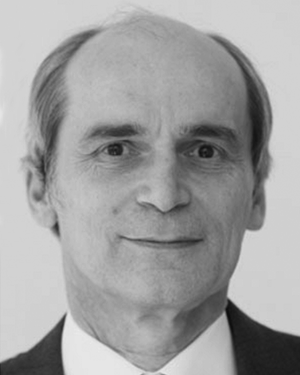 István Vajk合作论文数Department of Automation and Applied Informatics, Budapest University of Technology and Economics7Róbert Tuschák合作论文数6m habermayer合作论文数6
 Marc Pallardy合作论文数6M. Raschke合作论文数5J. Kuehnlenz合作论文数5T. Steger-Hartmann合作论文数5S. Bauer合作论文数5
 David Sik合作论文数5Cs. Bányász合作论文数5
 Tibor Vámos合作论文数Computer and Automation Research Institute, Hungarian Academy of Sciences;Budapest Technical University5Fakhredin Arousi合作论文数5
 David Rouquié合作论文数Bayer CropScience, Sophia Antipolis, France5Lengyel, O.合作论文数4Skultety, J.合作论文数4
 Eva Miklovicova合作论文数4D. Bigot-Lasserre合作论文数4Nina Hallmark合作论文数4D. Karwelat合作论文数3R H Mennen合作论文数3
 Andras Benedek合作论文数Mora Ferenc Museum3Richert Lysiane合作论文数3Al Khansa I合作论文数3Blanck O合作论文数3Aldert H. Piersma合作论文数3Uwe Marx合作论文数Tissuse Gmbh3
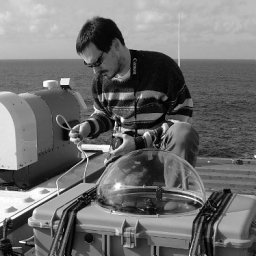 Andras Barta合作论文数Department of Automation and Applied Informatics, Budapest University of Technology and Economics3F. Schorsch合作论文数3D. Tsybulskyy合作论文数2E. Tourneur合作论文数2
 Luc Dugard合作论文数2
 Torkel Glad合作论文数2R. Nazaret合作论文数2A. Rogue合作论文数2Magali Boize合作论文数2Abderrazak Yahyaoui合作论文数2M. El Hage合作论文数2
 Alain Rouleau合作论文数2ch junot合作论文数2N. Buron合作论文数2A Jacqueson合作论文数2M Dufresne合作论文数2




