The role of primary tumour resection (PTR) in metastatic small intestinal (SiNETs) and pancreatic neuroendocrine tumours (PanNETs) remains debated. While retrospective studies suggest improved survival and possible reduction of local complications, the evidence is limited by heterogeneity, selection bias, and an absence of prospective validation. Under the auspices of the European Neuroendocrine Tumor Society (ENETS) Advisory Board, this position paper summarises current knowledge and expert consensus on the rationale, potential benefits, patient selection, timing, integration with systemic therapies, and future perspectives for PTR. PTR may be considered in selected patients with liver-limited or liver-dominant disease, indolent tumour biology, and good performance status, especially to prevent obstruction, bleeding, or ischaemia, to reduce symptomatic tumour burden, or to facilitate systemic and liver-directed therapies. However, the risks of major surgery, including intestinal and pancreatic resections, with long-term impact on digestion and nutrition, must be carefully considered. Decisions should be made in dedicated multidisciplinary tumour boards. Future directions include incorporation of molecular biomarkers, functional imaging, tumour growth rate, radiomics, and real-world data to refine patient selection. Quality of life and patient-reported outcomes remain underexplored and should be co-primary endpoints in prospective studies. PTR should not currently be regarded as standard of care for all cases but may have a role in carefully selected patients within integrated and individualised management strategies.
Bei gastrischen neuroendokrinen Neoplasien (gNEN) Typ I > 1 cm sollte eine endoskopische Resektion erfolgen, während bei Tumoren > 2 cm eine chirurgische Resektion durchgeführt werden sollte. Tumoren zwischen 1 und 2 cm werden in der Regel nach Endosonographie endoskopisch reseziert, allerdings sollte bei Vorliegen von Risikofaktoren wie G2/3-Tumor, Infiltration der Muscularis propria sowie Angioinvasion eine Operation diskutiert werden. Typ-II-gNEN werden analog zu den Typ-I-Tumoren endoskopisch oder chirurgisch behandelt. Unbedingt berücksichtigt werden müssen die Therapie der zugrunde liegenden Hypergastrinämie, verursacht durch Duodenalwandgastrinome, sowie die Behandlung eines potenziell synchron vorliegenden primären Hyperparathyreoidismus (pHPT). Bei gNEN Typ III wird prinzipiell die chirurgische Resektion empfohlen, bei ausgewählten Patienten mit einem kleinen (< 1 cm) G1-Tumor kann eine endoskopische Resektion angemessen sein.
For type I gastric neuroendocrine neoplasms (gNEN) larger than 1 cm endoscopic resection should be performed, whereas for tumors larger than 2 cm surgical resection should be carried out. Tumors between 1 and 2 cm in size are generally resected endoscopically following endosonography; however, surgery should be considered in the presence of risk factors such as G2/3 tumors, infiltration of the muscularis propria and vascular invasion. Type II gNENs are treated endoscopically or surgically in the same manner as type I tumors. It is essential to consider treatment of the underlying hypergastrinemia caused by duodenal wall gastrinomas as well as treatment of any potentially concurrent primary hyperparathyroidism (pHPT). For type III gNENs surgical resection is generally recommended. In selected patients with very rare, small (< 1 cm) G1 tumors, endoscopic resection can be appropriate.
BACKGROUND:Thyroid cancer, including carcinoma, metastases, sarcoma, and lymphoma of the thyroid gland, is much rarer (incidence of thyroid carcinoma, ca. 7 per 100 000 people per year in Germany) than benign nodular thyroid disease (prevalence: ca. 10% in young men to 80% in older women). The incidence of differentiated thyroid carcinoma has risen around the world in recent years. METHODS:This narrative review is based on publications retrieved by a search of PubMed. RESULTS:In Germany in 2022, approximately 4200 women and 1800 men received a diagnosis of thyroid carcinoma. The relative 10-year survival rate for this disease was 94% in women and 86% in men. Differentiated thyroid carcinoma (DTC), mainly of the papillary subtype (PTC), was the most common type of thyroid carcinoma in Germany (76% in women, 66% in men). Combined surgery and radio-iodine therapy are still the most common treatment for DTC, although initially available prospective studies currently cast doubt on the benefit of radio-iodine therapy in certain risk groups. The option of active surveillance has been introduced for selected patients with a small PTC. The treatment of radio-iodine-refractory, poorly differentiated, and anaplastic thyroid carcinoma has improved with the introduction of targeted molecular therapies and immunotherapeutic drugs. CONCLUSION:The treatment of thyroid carcinoma has become more individualized, with less aggressive approaches for small tumors and an expansion of systemic options for advanced cases.
Pancreatic ductal adenocarcinoma (PDAC) is an aggressive malignancy with limited therapeutic options, driven in part by its immunosuppressive tumor microenvironment (TME). Tumor-associated macrophages (TAMs) and neutrophils (TANs) contribute to tumor progression and immune evasion. A Disintegrin and Metalloproteinase 8 (ADAM8), a zinc-dependent protease, is strongly upregulated in PDAC and correlates with poor clinical outcomes, suggesting a regulatory role in tumor progression. Wild-type (WT) and Adam8 knockout (A8KO) PDAC cell lines were generated using the CRISPR-Cas9 technique, and PDAC mouse models with or without Adam8 expression were established to investigate the role of ADAM8 in tumor and immune cells. In vitro assays, including Western blotting, qPCR, migration and invasion assays, proliferation assays, ELISA, cytokine and proteome analyses, as well as co-culture experiments with PDAC cells and either macrophages or neutrophils, were employed to assess the effects of ADAM8 on tumor–immune cell crosstalk. In parallel, in vivo WT and A8KO KPC models were generated, genotyped, and monitored to evaluate the impact of ADAM8 on survival, tumor growth, and immune cell recruitment within the PDAC TME. ADAM8 deletion reduced tumor cell proliferation and migration, associated with reduced activation of FAK/Src/STAT3 signaling and altered secretion of cytokines including GM-CSF, M-CSF, ICAM-1, and TNF-α. Co-culture assays demonstrated that ADAM8 enhanced reciprocal signaling between tumor cells and TAMs/TANs, promoting pro-oncogenic activation. Migration assays and in vivo analyses revealed that ADAM8 facilitated recruitment of macrophages and neutrophils in PDAC TME, while Adam8KO tumors exhibited reduced immune infiltration and altered macrophage polarization. Our findings demonstrate that ADAM8 promotes PDAC aggressiveness by enhancing tumor cell proliferation and migration, activating FAK/Src/STAT3 signaling, and driving macrophage and neutrophil recruitment through cytokine regulation. By orchestrating both tumor-intrinsic pathways and tumor–immune interactions, ADAM8 emerges as a key determinant of PDAC progression and a systemic target for therapeutic intervention.
 Volker Fendrich合作论文数111
 Elisabeth Maurer合作论文数74
 Emily P Slater合作论文数72
 Jens Waldmann合作论文数61Sabine Wächter合作论文数48
 Pietro Di Fazio合作论文数Department of Medicine 1, University Hospital Erlangen46P Langer合作论文数45Thomas M. Gress合作论文数45
 Max Benjamin Albers合作论文数43
 Berthold Gerdes合作论文数39
 Peter Langer合作论文数39
 Ioannis Mintziras合作论文数38
 Matthias Rothmund合作论文数Fachbereichs Medizin, Philipps-Universität Marburg38
 Jerena Manoharan合作论文数35Andreas Kirschbaum合作论文数Department of Thoracic Surgery, University Hospital Freiburg, Freidburg, Germany34Annette Ramaswamy合作论文数33
 Anja Rinke合作论文数33Wiese Dominik合作论文数31Katharina Holzer合作论文数30
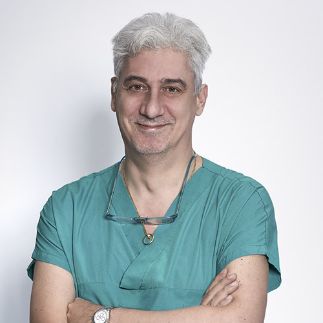 Falconi Massimo合作论文数Università Vita-Salute San Raffaele;Ospedale San Raffaele IRCCS30Elias Karakas合作论文数25P H Kann合作论文数22
 Harald Rieder合作论文数Institut für Humangenetik, Medizinische Universität zu Lübeck22
 Moritz Jesinghaus合作论文数21
 Stefano Partelli合作论文数19
 Tobias Keck合作论文数Department of Surgery, University of Lübeck;Department of Surgery, Universitätsklinikum Schleswig-Holstein;Bogomolets National Medical University;National Pirogov Memorial Medical University, Vinnytsya19Babette Simon合作论文数18
 Ralph Schneider合作论文数17Caroline L. Lopez合作论文数17Markus Luster合作论文数17C Nies合作论文数16Roth Silvia合作论文数15
 Malte Buchholz合作论文数Department of Gastroenterology and Endocrinology, University Hospital of Marburg15
 Katja Schlosser合作论文数15Anja Wild合作论文数15
 Thorsten Steinfeldt合作论文数15Brunhilde Chaloupka合作论文数14
 Stephan Hahn合作论文数Department of Molecular GI-Oncology, Ruhr University Bochum14
 Andreas Zielke合作论文数14Matthäi Elvira合作论文数13
 Ilhan Celik合作论文数13Michael Kersting合作论文数13M. Sina-Frey合作论文数12Peter E. Goretzki合作论文数12
 Carsten Denkert合作论文数Philipps-University Marburg12
 John P. Neoptolemos合作论文数Department of General, Visceral and Transplantation Surgery, Universität Heidelberg12Peter H. Kann合作论文数12




