BackgroundSocial isolation is prevalent after traumatic brain injury (TBI) and has negative implications for health and well-being. Interventions targeting social participation show promise for reducing social isolation. We adapted a social participation intervention, ENGAGE, to meet the needs of people with TBI. ENGAGE relies on social learning and guided problem-solving to achieve social participation goals.MethodsThis study was conducted in two phases. First, we conducted focus groups with 12 participants with TBI to inform adaptations. We then tested the adapted protocol (n = 6). Post-intervention interviews informed additional refinements. We collected preliminary data on feasibility and effects on social participation (Activity Card Sort, PROMIS Ability to Participate in Social Roles, PROMIS Satisfaction with Participation in Social Roles) and social isolation (PROMIS Social Isolation).ResultsIntervention adaptations included simplified processes for developing goals and plans, simplified workbook materials, greater time for reflection on lessons learned, and expanded peer mentorship. ENGAGE-TBI resulted in high satisfaction for 80% of participants and high engagement in intervention for 100% of participants. Attendance and retention benchmarks were achieved. Improvements in social participation exceeded the minimal clinically important difference on all measures.ConclusionsThe promising preliminary data support further investigation into the feasibility and effects of ENGAGE-TBI.
Understanding the experiences of stroke survivors with sleep disturbances is essential for developing effective interventions for addressing post-stroke sleep disturbances. To explore the experiences, coping strategies, and wishes and needs of stroke survivors with sleep disturbances. Semi-structured interviews were conducted with 15 community-dwelling stroke survivors experiencing sleep disturbances. The thematic content analysis was used to identify key themes. Nine themes about experiences emerged: (a)impact of stroke on sleep, (b)sleep aggravating factors, (c)sleep enhancing factors, (d)sleep disturbances, (e)consequences of sleep disturbances, (f)medication, (g)napping, (h)sleep partner, and (i)help-seeking behaviors. Three themes about coping strategies emerged: (a)adaptive strategies, (b)maladaptive strategies, and (c)health care provider recommended strategies. Three themes reflected wishes and needs: (a)sleep interventions and knowledge of sleep and stroke, (b)health care system communication and support, and (c)medication and equipment usage. These findings emphasize the need for tailored, multifaceted interventions and improved health care support to address post-stroke sleep disturbances effectively.
INTRODUCTION:Behavioral and psychiatric symptoms of dementia (BPSDs) and functional impairment have a major impact on quality of life for people living with dementia (PLWD). Development of caregiver-initiated interventions, including environmental assessment and modification, are priorities in the field. METHODS:An open-label study of 40 caregivers of PLWD with BPSDs that underwent a 6-week telehealth person-environment intervention, Harmony at HOME, was conducted. Feasibility was assessed by improved caregiver mastery. RESULTS:Twenty-eight caregivers completed the intervention, which increased caregiver mastery and decreased stress and burden. There were statistically significant improvements in functional performance of the person living with dementia (p < 0.005) and caregivers' satisfaction with the person living with dementia's functional performance (p < 0.001). DISCUSSION:The intervention increased caregivers' skills and knowledge in assessing and modifying the environment to address BPSDs. Although overall caregiver mastery was not changed significantly, additional clinical research assessing caregiver mastery in relation to specific caregiving tasks within the home environment is needed. CLINICAL TRIAL REGISTRATION:Clinicaltrials.gov NCT05202223 HIGHLIGHTS: Aging in place is difficult to achieve for individuals with dementia. A novel dyadic care intervention, Harmony at HOME, improved caregiver outcomes. Future care research should explore performance-based patient outcomes.
Objective:To investigate how participation changes over time among individuals with Parkinsondisease (PD) and identify factors influencing these changes, focusing on impairment level and social factors. Design:Secondary analysis of a 3-year prospective cohort study of social self-management of PD. Data were collected during 4 in-person assessments conducted at baseline and then annually thereafter. Multilevel modeling was used to analyze data from the 4 time points. Setting:Department of Occupational Therapy Research Laboratory and Department of Neurology Movement Disorder Clinic. Participants:A total of 86 individuals (N = 86) with idiopathic PD (Hoehn & Yahr stages I-IV; mean age ± SD, 65.0 ± 9.6y). Interventions:Not applicable. Main Outcome Measures:Participation was measured by the Activity Card Sort. Potential predictors contributing to changes in participation included motor impairment (Movement Disorder Society-Unified Parkinson Disease Rating Scale-III), depressive symptoms (Geriatric Depression Scale), cognitive function (Montreal Cognitive Assessment), social isolation (Nottingham Health Profile), and social support (Health Management Resources Survey). Results:There were no significant changes in overall activity participation over the 3-year period among the participants with PD. More severe depressive symptoms were associated with reduced participation in instrumental (β = -0.42, P < .01), high-demand leisure (β = -0.22, P = .04), and social activities (β = -0.41, P < .01). Greater social support from family and friends (β = 0.77, P = .03) and organizations (β = 1.07, P < .01) was associated with greater participation in social activities. Conclusions:Depressive symptoms were a significant within-person driver of restricted participation in instrumental, high-demand leisure, and social activities, as well as in the global domain, whereas higher social support from organizations, family, and friends predicted greater participation, particularly in social and global activity participation. Early detection of depressive symptoms and strategies to enhance social support resources may help promote sustained activity participation in this population.
Minimally obtrusive support for individuals with subjective cognitive decline (SCD) is important for fostering independence in completing daily tasks. In overseeing these tasks, occupational therapists may choose to help as errors arise and provide corrective courses of action. To accomplish this, therapists must be able to recognize task-specific actions, as well as the appropriate sequence for them to occur. However, manual monitoring by therapists is not always feasible in real-world environments, motivating the need for automated systems capable of recognizing actions and detecting sequencing errors. To address this, we present CHEF-VL, an online C ognitive H uman E rror Detection F ramework with V ision -L anguage Models in smart kitchen environments. CHEF-VL combines two novel vision-language models, with one fine-tuned for online human action recognition and the other specially engineered to track key environmental states. An Action-State Merger integrates these two streams of information to reduce prediction noise and correct misrecognized actions. A two-year occupational therapy project of over 100 participants with and without SCD was organized to collect video data for task evaluation. Empirical results demonstrate that CHEF-VL improves both action recognition and sequencing error detection performance, offering a promising solution for real-world assistive technologies in smart home settings.
OBJECTIVE:Common data elements (CDEs) help harmonize data collection across clinical trials and observational studies, allowing for cross-study and cross-condition comparisons. Although CDEs exist for multiple clinical conditions and diseases, this work was extended only recently to neurorehabilitation research. DESIGN:Subgroups of clinical neurorehabilitation investigators operationalized a domain definition, selected applicable CDEs from 23 existing National Institute of Neurological Disorders and Stroke (NINDS) CDE projects and National Institutes of Health (NIH) CDE repositories, and identified areas needing further development. The subgroups also reviewed public comments on the NeuroRehab-specific CDEs, which were provided from September 1, 2021 to October 7, 2021. In March 2022, version 1.0 of the NeuroRehab CDEs was completed and can be found on the NINDS CDE website: https://www.commondataelements.ninds.nih.gov/. SETTING:NINDS and the Eunice Kennedy Shriver National Institute of Child Health and Human Development/National Center for Medical Rehabilitation Research identified NeuroRehab CDEs across 12 different research domains: (1) assessments and examinations; (2) comorbid and behavioral conditions; (3) motor function; (4) treatment/intervention data: therapies; (5) treatment/intervention data: devices; (6) cognitive; (7) communication; (8) emotion/behavior/neuropsychology; (9) activities of daily living/instrumental activities of daily living; (10) quality of life; (11) participation; and (12) infant and pediatrics. Within each domain, corresponding subdomain experts identified instruments with good psychometric measurement properties. PARTICIPANTS:One hounded twenty experts (N=120) in rehabilitation across the 12 identified research domains and 2 cochairs with rehabilitation and measurement expertise provided oversight. INTERVENTIONS:Not applicable. MAIN OUTCOME MEASURES:CDEs from 23 existing NINDS CDE projects and NIH CDE repositories. RESULTS:Clinical investigators recommended NeuroRehab CDEs within 3 dimensions of the NINDS CDE classifications: Core, (Disease) Core, and Supplemental-Highly Recommended. Most measures were categorized as Supplemental-Highly Recommended; few were identified as Core or Disease Core. The subgroups also identified measurement gap areas to guide future initiatives because NeuroRehab CDEs will be developed in the future. CONCLUSIONS:These efforts are designed to accelerate rehabilitation research in neurologic disorders by allowing for cross-study and cross-condition comparisons and to encourage new CDE development.
BACKGROUND:White stroke survivors often experience better outcome compared to their counterparts. Poststroke discharge location influences the subsequent rehabilitation that can support recovery and improve outcomes. However, few studies have looked at the association of race and discharge to home. OBJECTIVE:To investigate the association between demographic and clinical characteristics of stroke survivors and their discharge location. DESIGN:Retrospective cohort. SETTING:Large, urban, academic medical center. PATIENTS:A total of 4633 stroke survivors admitted to the hospital with an acute onset diagnosis of ischemic stroke, hemorrhagic stroke, or transient ischemic attack between January 1, 2015 and April 30, 2023. INTERVENTIONS:Not applicable. MAIN OUTCOME MEASURE:Discharge location as reported in the electronic health record. The Social Vulnerability Index was used to examine the association between social vulnerability and discharge location from the hospital. SECONDARY OUTCOME MEASURE:Demographic and clinical characteristics of routine clinical care. RESULTS:The majority of participants were White (62.1%), followed by Black (21.6%). Most patients were discharged home from the hospital (58.5%). White patients had the highest percentage of transient ischemic attacks (24.4%), lowest scores on the National Institutes of Health Stroke Scale, (4.5), shortest lengths of stay (6.5 days), highest percentage of patients with no symptoms on the modified Rankin Scale (10.7%), and highest rates of home discharge (63.4%). Black stroke survivors had the highest rates of skilled nursing facility discharges (15.6%). Compared to White patients and patients of all other races, Black patients had a 27% lower odds of discharging home (odds ratio = 0.73, p = .001). Patients with higher levels of vulnerability in housing type and transportation had 35% lower odds of being discharged home compared to those with lower scores (odds ratio = 0.65, p = .002). CONCLUSIONS:Racial differences in stroke outcomes and home discharge were observed between stroke survivors in this study, emphasizing the importance of addressing these disparities in order to promote equitable health care delivery and optimal outcomes.
Young adults make up 10% of strokes that occur in the United States each year. Little research has shown the developmental and occupational disruption as a result of stroke for this population. The objective of this study was to describe young stroke survivors' perceived disruptions using developmental theory. A multiple methods study was conducted with community-dwelling stroke survivors between the ages of 18 and 40 using Patient-Reported Outcomes Measurement Information System (PROMIS) measures and qualitative interviews. Five themes were reported from the qualitative data: stroke and health, work and school, romantic relationships, parenting, and other social relationships. PROMIS measure results were not significantly different from the normed population despite challenges revealed during qualitative interviews. Qualitative data showed variations in post-stroke deficits and occupational performance that could not be meaningfully captured by the PROMIS measures alone. Occupational therapy practitioners should use developmental theory to guide their understanding of occupational disruptions in young stroke survivors.
Measuring occupational performance , Measuring occupational performance , کتابخانه دیجیتال جندی شاپور اهواز
BackgroundMild stroke affects more than half the stroke population, yet there is limited evidence characterizing cognition over time in this population, especially with predictive approaches applicable at the individual-level. We aimed to identify patterns of recovery and the best combination of demographic, clinical, and lifestyle factors predicting individual-level cognitive state at 3- and 12-months after mild stroke.MethodsIn this prospective cohort study, the Montreal Cognitive Assessment (MoCA) was administered at 3-7 days, 3- and 12-months post-stroke. Raw changes in MoCA and impairment rates (defined as MoCA<24 points) were compared between assessment time-points. Trajectory clusters were identified using variations of ≥1 point in MoCA scores. To further compare clusters, additional assessments administered at 3- and 12-months were included. Gamma and Quantile mixed-effects regression were used to predict individual MoCA scores over time, using baseline clinical and demographic variables. Model predictions were fitted for each stroke survivor and evaluated using model cross-validation to identify the overall best predictors of cognitive recovery.ResultsParticipants' (n = 119) MoCA scores improved from baseline to 3-months (p<0.001); and decreased from 3- to 12-months post-stroke (p = 0.010). Cognitive impairment rates decreased significantly from baseline to 3-months (p<0.001), but not between 3- and 12-months (p = 0.168). Nine distinct trajectory clusters were identified. Clinical characteristics between clusters at each time-point varied in cognitive outcomes but not in clinical and/or activity participation outcomes. Cognitive performance at 3- and 12-months was best predicted by younger age, higher physical activity levels, and left-hemisphere lesion side.ConclusionMore than half of mild-stroke survivors are at risk of cognitive decline one year after stroke, even when preceded by a significantly improving pattern in the first 3-months of recovery. Physical activity was the only modifiable factor independently associated with cognitive recovery. Individual-level prediction methods may inform the timing and personalized application of future interventions to maximize cognitive recovery post-stroke.
BackgroundHalf of all strokes are classified as mild, and most mild stroke survivors are discharged home after their initial hospitalization without any post-acute rehabilitation despite experiencing cognitive, psychosocial, motor, and mobility impairments.ObjectivesTo investigate the demographic and clinical characteristics of mild stroke survivors and their association with discharge location.MethodsThis is a retrospective analysis of mild stroke survivors from 2015-2023 in an academic medical center. Demographic characteristics, clinical measures, and discharge locations were obtained from the electronic health record. The Social Vulnerability Index was used to measure the community vulnerability. Associations between variables and discharge location were examined using bivariate logistic regression analysis.ResultsThere were 2,953 mild stroke survivors included in this study. The majority of participants were White (65.46%), followed by Black (19.40%). Black stroke survivors and individuals with higher social vulnerability had a higher proportion of discharges to skilled nursing facilities (p = 0.001). Black patients and patients with high vulnerability in housing type and transportation were less likely to be discharged home.ConclusionsMild stroke survivors have a high rate of home discharge, potentially because less severe stroke symptoms have a reduced need for intensive care. Racial disparities in discharge location were evident, with Black stroke survivors experiencing higher rates of institutionalized care and lower likelihood of being discharged home compared to White counterparts, emphasizing the importance of addressing these disparities for equitable healthcare delivery and optimal outcomes.
 Helene Polatajko Howell合作论文数Department of Occupational Science and Occupational Therapy, Temerty Faculty of Medicine, University of Toronto37
 Lisa Tabor Connor合作论文数Program in Occupational Therapy, Washington University School of Medicine;Department of Radiology, Washington University School of Medicine;Department of Neurology, Washington University School of Medicine;Washington University School of Medicine, Washington University School of Medicine34
 Dorothy Edwards合作论文数Program in Occupational Therapy, Washington University28
 Leeann Carey合作论文数27Misato Takada合作论文数27Elizabeth M. Maloney合作论文数27Brian Oldenburg合作论文数27Margaret E. Ottenbacher合作论文数27Leah Irish合作论文数27Ryan Garcia合作论文数27Kristen R Fox合作论文数27Adriana Carrillo合作论文数27
 Andrea F DiMartini合作论文数Department of Psychiatry, University of Pittsburgh27
 Amy F Sato合作论文数27
 Tracy Orleans合作论文数Robert Wood Johnson Foundation27Matthew Muldoon合作论文数26Pulgaron Elizabeth R合作论文数26Jacqueline Markowitz合作论文数25Ellen Wuest合作论文数25Miranda Hellman合作论文数25Yu Yamada合作论文数25J. Rick Turner合作论文数25Manjunath Harlapur合作论文数25Johannes Siegrist合作论文数25Orth-Gomér Kristina合作论文数25
 Wolf Timothy J合作论文数25
 Chad D. Jensen合作论文数North Tyneside Hospital25
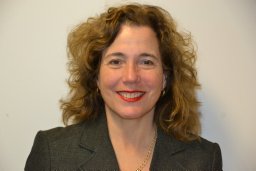 Karen Jacobs合作论文数Boston University;Department of Occupational Therapy;Department of Occupational Therapy, Boston University25Laura D. Kubzansky合作论文数24Elissa Jelalian合作论文数24Clare Hocking合作论文数24Mary Amanda Dew合作论文数24
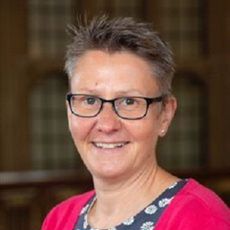 Sarah Aldred合作论文数School of Sport, Exercise and Rehabilitation Sciences, College of Life and Environmental Sciences, University of Birmingham24
 Daichi Shimbo合作论文数Department of Medicine, Columbia University College of Physicians and Surgeons24Eun-Shim Nahm合作论文数23Alan M. Delamater合作论文数23Kenneth J. Ottenbacher合作论文数21
 Joy Hammel合作论文数19
 Allen W Heinemann合作论文数Department of Physical Medicine & Rehabilitation, Feinberg School of Medicine, Northwestern University;Department of Medical Social Sciences, Feinberg School of Medicine, Northwestern University17
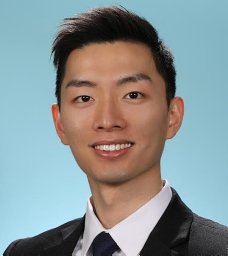 Stephen C L Lau合作论文数Sch Med, Washington Univ16
 Leeanne Carey合作论文数School of Allied Health Human Services and Sport, La Trobe University15
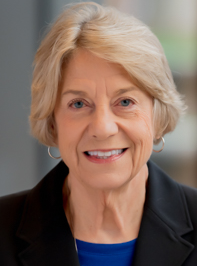 Nancy Morrow-Howell合作论文数Brown School, Washington University in St. Louis;Harvey A. Friedman Center for Aging, Institute for Public Health, Washington University in St. Louis12
 Mary Catherine Law合作论文数CanChild Centre for Childhood Disability Research, Faculty of Health Sciences, McMaster University11
 Erin R Foster合作论文数11
 Elizabeth Skidmore合作论文数Department of Occupational Therapy, University of Pittsburgh11
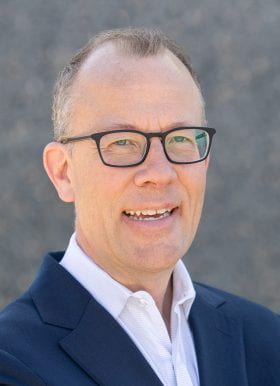 Eric J. Lenze合作论文数Healthy Mind Lab, Department of Psychiatry, Washington University School of Medicine in St. Louis11
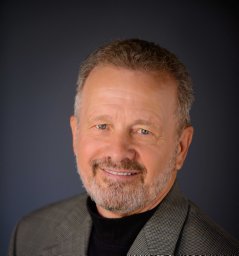 Charles Christiansen合作论文数9
 Alex Wong合作论文数Loyola Marymount University9Sara Mcewen合作论文数9




