BACKGROUND:The Anorexia Nervosa Treatment of OutPatients (ANTOP) randomized controlled trial (RCT) involved 242 adult patients with anorexia nervosa. Patients from 10 German university hospitals were randomly allocated to 10 months of treatment with focal psychodynamic therapy (FPT), enhanced cognitive behaviour therapy (CBT-E), or optimized treatment as usual (TAU-O). At the end of treatment and follow-up no significant BMI differences between groups were reported. The present study is an explorative, secondary analysis of moderators of weight gain for FPT and CBT-E. METHODS:N=160 patients - randomized to FPT and CBT-E - were included in the analysis. Moderator analysis was conducted by using a mixed model approach for repeated measures (MMRM). The outcome variable was BMI at the last follow-up T5 (mean time of 5·96 years after the beginning of the study). RESULTS:Low depression severity and high mental quality of life (QoL) at baseline moderated the outcome in favour of CBT-E, whereas high depression severity and low mental QoL was associated with a better outcome in FPT. Sensitivity analyses to predict BMI at earlier time points T1-T4 produced the same results. The direction of the moderator effects was the same for CBT-E and FPT across all time points. Graphical visualisation confirms that there is a wide range where both treatments perform similarly, while CBT or FPT perform differently in the extreme ranges of these two variables. INTERPRETATION:These findings suggest that baseline psychological burden may inform the selection of psychotherapy modality in anorexia nervosa, supporting a move toward personalized, mechanism-informed treatment allocation.
INTRODUCTION:More than 5 million people in Germany are living with cancer or a history of cancer, 40% of them aged 75 years or older. Cancer and its treatment may lead to reduced physiological reserves, multiple somatic comorbidities and a combination of functional and psychosocial health problems in addition to the long-term and late effects of cancer and its treatment. Therefore, providing tailored care and support through an interdisciplinary care network is crucial. The aim of the IMPULS-A (Implementation of a Support Programme for Long-Term Cancer Survivors in Old Age) study is to evaluate an innovative survivorship programme designed to address the specific needs of older cancer survivors by improving access to regional care networks. METHODS AND ANALYSIS:IMPULS-A is a prospective, two-arm, randomised controlled trial. Altogether, n=724 cancer survivors ≥70 years, who have completed the course of first line/primary treatment, with an expected lifespan of >3 years, identified support needs and live in proximity (≤100 km) of the National Center for Tumor Diseases Heidelberg, Germany, will be randomly allocated (1:1) to an intervention or control group. All eligible participants complete study evaluation questionnaires- either via LimeSurvey or paper-based - at three time points: T0 (at randomisation), T1 (T0+9 months) and T2 (T0+18 months). The primary outcome is health literacy. Secondary outcomes are digital health literacy, quality of life, effects on preventive health measures and healthcare utilisation, personal resources, treatment satisfaction, acceptability, appropriateness and feasibility of the survivorship care model and support needs of relatives in the long-term survival phase. For participants in the intervention group, a care navigator provides appropriate referrals and information based on a biannual biopsychosocial screening. Participants with complex needs are reviewed and discussed in an interdisciplinary survivor board. Participants in the control group receive the current standard treatment. Data analysis will be performed according to the intention-to-treat principle. The primary hypothesis will be analysed using a multilevel model. Missing values will be handled using the mixed models for repeated measures method. Additionally, qualitative, semi-structured interviews with patients from both study arms will explore which aspects are important to older people in relation to a life worth living after cancer. ETHICS AND DISSEMINATION:Written informed consent will be obtained from all participants prior to study enrolment. The protocol, informed consent forms and information letters have been approved by the Ethics Committee of the Medical Faculty of Heidelberg University (S-692/2024), the Ethics Committee of the State Medical Association of Baden-Württemberg (B-F-2025-056) and the Ethics Committee of the State Medical Association of Rhineland-Palatinate (2025-18207). The study is conducted in accordance with the current version of the Declaration of Helsinki. Study results will be disseminated through publication in peer-reviewed journals and presentations at relevant scientific congresses and conferences. TRIAL REGISTRATION NUMBER:ISRCTN14717755.
Background and aimThe Systemic Therapy Inventory of Change (STIC) is designed to measure changes in family, couple, and individual therapy from a multisystemic and multidimensional perspective. The aim of the present study was to translate the English version of the STIC into German and to evaluate the psychometric properties of the German version in a clinical sample of 309 patients starting outpatient psychotherapy covered by the German Statutory Health Insurance.MethodsPatients were recruited between July 2023 and November 2024 at Heidelberg Institute for Psychotherapy (HIP) of the University Hospital Heidelberg. In addition to the STIC, several other questionnaires were completed by the participants, including the Patient Health Questionnaire (PHQ-9), Childhood Trauma Questionnaire (CTQ), Experience in Close Relationships (ECR-RD-8), and the Systemic Clinical Outcome and Routine Evaluation (SCORE-15). Pearson correlation coefficients were calculated between the STIC subscales and the corresponding criterion measures.ResultsSignificant correlations with various outcome measures between 0.26 and 0.81 demonstrated the construct validity of the German version of the STIC. Multiple linear regression analyses showed that higher scores on the subscale IPS (Individual Problems and Strengths) and RWP (Relationship with Partner) were significantly associated with higher quality of life.ConclusionThe questionnaire could be used in psychotherapy settings for routine outcome monitoring and psychotherapy research.
Einsamkeit und soziale Isolation sind h & auml;ufig in allen Altersgruppen. Dabei wird deut-lich, dass subjektive und objektive Einsamkeit nicht nur mit psychischen Erkrankungen wie Depressionen, sondern auch mit einer Vielzahl k & ouml;rperlicher Beschwerdebilder in wechselseitiger Beziehung steht. Der in verschiedenen Studien belegte Einfluss von Einsamkeit auf eine erh & ouml;hte Gesamt-Mortalit & auml;t verdeutlicht den Bedarf nach Inter-ventionen, die nicht nur neue soziale Strukturen erm & ouml;glichen, sondern auch die negativen Kognitionen von Einsamkeit Betroffener adressieren. Loneliness and social isolation are common in all age groups. Hereby it becomes evi-dent that subjective and objective loneliness are not only mutually associated with mental diseases such as depression, but also with a variety of physical symptoms.Several studies describe the influence of loneliness on increased all-cause mortality und underline the need for interventions that not only enable new social structures but also address the negative cognitions of those affected by loneliness.
Einsamkeit und soziale Isolation sind häufig in allen Altersgruppen. Dabei wird deutlich, dass subjektive und objektive Einsamkeit nicht nur mit psychischen Erkrankungen wie Depressionen, sondern auch mit einer Vielzahl körperlicher Beschwerdebilder in wechselseitiger Beziehung steht. Der in verschiedenen Studien belegte Einfluss von Einsamkeit auf eine erhöhte Gesamt-Mortalität verdeutlicht den Bedarf nach Interventionen, die nicht nur neue soziale Strukturen ermöglichen, sondern auch die negativen Kognitionen von Einsamkeit Betroffener adressieren.
Hintergrund Patient*innen, die sowohl an einer psychischen Erkrankung als auch an einer chronischen körperlichen Erkrankung (komplex Erkrankte) leiden, stellen eine große (mehr als 5 Millionen in Deutschland) und besonders belastete Patient*innengruppe dar. Die vorliegende Studie beschreibt die Einschätzungen von Psychotherapeut*innen und Hausärzt*innen zur aktuellen Versorgungssituation sowie zu den Auswirkungen der Strukturreform der Richtlinienpsychotherapie aus dem Jahr 2017 in Bezug auf komplex Erkrankte. Methoden Psychotherapeut*innen (n = 2.015) und Hausärzt*innen (n = 1.364) wurden im Rahmen eines bundesweiten Surveys zu ihren Einschätzungen bezüglich der psychotherapeutischen Versorgung komplex Erkrankter befragt. Ergebnisse Komplex Erkrankte sind aus Sicht von Hausärzt*innen und Psychotherapeut*innen psychotherapeutisch nach wie vor unterversorgt (>80 % Zustimmung). Die Strukturreform hat nur eine geringe Verbesserung der Versorgung bewirkt. Aus Sicht der Leistungserbringer*innen könnten weitere strukturelle Optimierungen wie die Ausweitung therapeutischer Gruppenangebote, die Verstetigung videogestützter Therapieangebote und die Abrechenbarkeit konsiliarischer Fallbesprechungen die Versorgung dieser Patient*innengruppe verbessern. Schlussfolgerung Auch nach der Strukturreform ist die Versorgung komplex Erkrankter aus Sicht der Leistungserbringer*innen unzureichend. Psychotherapeut*innen zeigen eine hohe Bereitschaft, den besonderen Bedürfnissen dieser Patient*innen entgegenzukommen. Dennoch sind weitere niederschwellige und die beteiligten Berufsgruppen vernetzende Angebote erforderlich. Angesichts der Größe der Gruppe der komplex Erkrankten bedarf es eines stärkeren Fokus auf die Verbesserung von Versorgungsstrukturen.
BACKGROUND:Patients with both mental illness and chronic physical conditions (medically complex patients) represent a large (more than 5 million people in Germany) and particularly burdened group of patients. This study describes how psychotherapists and general practitioners perceive the current care for these patients and the impact of the 2017 structural reform of psychotherapy guidelines for patients with complex disorders. METHODS:We used a nationwide survey to assess the perceptions of psychotherapists (N = 2,015) and general practitioners (N = 1,364) regarding psychotherapeutic care for complex patients. RESULTS:Most psychotherapists and general practitioners agree that complex patients are still undersupplied with psychotherapy (>80 % agreement). The structural reform of the German psychotherapy guideline in 2017 has led to merely small improvements of care. From the perspective of care providers, further structural changes, such as the expansion of group therapy services, the consolidation of video-assisted therapy services, and the billability of consultative case discussions, could improve care. CONCLUSION:Even after the structural reform, providers continue to consider the care provided to patients with complex disorders to be inadequate. Psychotherapists show a great willingness to meet the special needs of these patients. Nevertheless, further low-threshold services and networking between the professional groups involved are required. Given the size of the group of complex patients, we need to focus more on improving care structures.
BACKGROUND:The proportion of older people is growing dramatically, implying that predictors of health-related quality of life (HRQoL) in older adults are of major interest within public health research. METHODS:Analyses were based on the ESTHER study, a German population-based cohort study conducted in the federal state of Saarland, Germany. The study was initiated in 2000-2002 and included 9940 community-dwelling older adults recruited via general practioners. At the 8-year follow-up (2008-2010), 6071 active participants were offered additional home visits, of whom 3124 agreed to participate. These 3124 participants (mean age (SD) 69.6 (6.3) years; 52.6 % female) served as baseline sample for our analysis. Predictions were made at 3-year intervals up to 12 years (20-year follow-up; 2020-2021, n = 1438). Physical and mental HRQoL was assessed using the Short Form Health Survey (SF-12). 47 features were investigated. Random forest regression was used to identify the most important predictors. RESULTS:Physical HRQoL was predictable up to 6 years, with top 5 predictors being: somatic symptom burden, bio-psycho-social (BPS) health care needs, frailty, age, and BMI class. For mental HRQoL, predictors consistently ranging among the top 5 across all time intervals were: somatic symptom burden, BPS health care needs, symptoms of depression, and symptoms of anxiety. There appeared to be a time-dependent shift in key predictors of mental HRQoL, with symptoms of depression and anxiety being most important in short-term, while somatic symtom burden and BPS health care needs were most important in long-term. CONCLUSION:Somatic symptom burden and bio-psycho-social health care needs emerged as key predictors of both, physical and mental HRQoL in older adults. These variables may be important to consider when developing future interventions aimed to improve HRQoL in older adults, and could also be relevant for policies concerned with successful aging.
Patients undergoing bariatric surgery have complex bio-psycho-social needs which require integrated care. This study aimed to evaluate changes of integrated care needs from pre- to one-year post-surgery and to identify baseline variables associated with integrated care needs at follow-up. A retrospective cohort study analyzed routinely collected data from a questionnaire-based psychosocial screening conducted prior to evaluation for bariatric surgery and annual follow-up. Integrated care needs were assessed using the INTERMED self-assessment questionnaire (IM-SA), which assesses care needs of four domains (biological, psychological, social, healthcare-related) and identifies patients with case complexity (total score ≥19). Multiple regression analysis examined associations between baseline variables and integrated care needs at follow-up. Out of 225 patients who were screened and underwent bariatric surgery between June 2020 and June 2022, 117 provided both pre- and one-year postsurgical data (52
OBJECTIVES:The aim of the PACT (Prioritization by pArticipation) study was to evaluate the 'Life and Vitality Assessment' (LAVA) in terms of visualizing and exploiting priorities, resources, and problem areas of elderly people. METHOD:In total, n = 164 older persons (mean age: 68.6, 51.8% females) with multimorbid conditions were included. All patients completed the LAVA, additional questionnaires, and the INTERMED for the Elderly interview. The LAVA is a non-normative approach, applied in two steps: First, participants assign 25 aspects of life to three groups (not important, important, most important). Second, they rate their current satisfaction with the most important aspects on a scale from 1 to 10. RESULTS:The majority of patients indicated that family (84.1%), mental health (84.8%), physical health (78.7%), and independent decision making (76.2%) were very important aspects of their life, mostly considered as resources. Variables related to negative well-being in older age-such as sleep quality and pain-were mostly considered as problem area. There was a high variability across patients regarding the number of resources and problem areas. CONCLUSION:The LAVA provides important information on resources and problem areas, which might be helpful to improve quality of life for multimorbid patients by considering their resources for treatment planning.
OBJECTIVES:To investigate gender-specific factors associated with case complexity in a population-based sample of middle-aged and older adults using a holistic approach to complexity. METHODS:Data were derived from the 8-year follow-up home visits of the ESTHER study-a German population-based study in middle-aged and older adults. Cross-sectional analyses were conducted for 2932 persons (aged 57-84). Complexity was assessed by the well-established INTERMED for the elderly interview, which uses a holistic approach to the definition of case complexity. The association between various bio-psycho-social variables and case complexity was analyzed using gender-specific logistic regression models, adjusted for sociodemographic factors (age, marital status, education). RESULTS:Prevalence of complexity was 8.3% with significantly higher prevalence in female (10.6%) compared to male (5.8%) participants (p < 0.001). Variables associated with increased odds for complexity in both, women and men were: being divorced (odds ratio [OR] women: 1.86, 95% CI 1.05-3.30; OR men: 3.19, 1.25-8.12), higher total somatic morbidity (women: 1.08, 1.04-1.12; men: 1.06, 1.02-1.11), higher depression severity (women: 1.34, 1.28-1.40; men: 1.35, 1.27-1.44), and higher loneliness scores (women: 1.19, 1.05-1.36; men: 1.23, 1.03-1.47). Women (but not men) with obesity (Body mass index [BMI] ≥30) had higher odds (1.79, 1.11-2.89) for being complex compared to those with a BMI <25. High oxidative stress measured by derivatives of reactive oxygen metabolites in serum was associated with 2.02 (1.09-3.74) higher odds for complexity only in men. CONCLUSIONS:This study provides epidemiological evidence on gender differences in prevalence and factors associated with case complexity in middle-aged and older adults. Moreover, this study adds to the holistic understanding of complexity by identifying novel variables linked to complexity among middle-aged and older individuals. These factors include loneliness for both genders, and high oxidative stress for men. These findings should be confirmed in future longitudinal studies.
 Wolfgang Herzog合作论文数136
 Hans-Christoph Friederich合作论文数Department of General Internal Medicine and Psychosomatics, University Hospital Heidelberg;Ruprecht-Karls-University of Heidelberg76
 Stephan Zipfel合作论文数Abteilung für Psychosomatische Medizin und Psychotherapie, Universitätsklinikum und Medizinische Fakultät Tübingen45
 Dieter Schellberg合作论文数39
 Hermann Brenner合作论文数Division of Clinical Epidemiology and Aging Research, German Cancer Research Center, Heidelberg University36
 Bernd Löwe合作论文数Department of Psychosomatic Medicine and Psychotherapy, Center for Internal Medicine, University Medical Center Hamburg-Eppendorf35Mechthild Hartmann合作论文数34
 Martin Teufel合作论文数24
 Maatouk Imad合作论文数Departments of General Internal Medicine and Psychosomatics, Medical University Hospital23Martina De Zwaan合作论文数21Boehlen Friederike合作论文数19Almut Zeeck合作论文数19Stephan Herpertz合作论文数16
 Joachim Szecsenyi合作论文数16
 Rainer Schaefert合作论文数Klinik für Allgemeine Innere Medizin und Psychosomatik, Universitätsklinikum Heidelberg16Markus Burgmer合作论文数16
 Andreas Dinkel合作论文数16
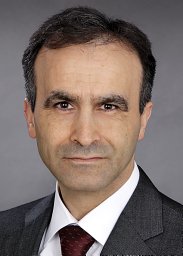 Sefik Tagay合作论文数Department of Psychosomatic Medicine and Psychotherapy, University Hospital of Essen16Wesche Daniela合作论文数15
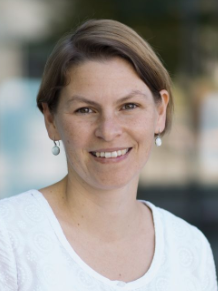 Katrin Giel合作论文数Department of Psychosomatic Medicine and Psychotherapy, Tübingen University Hospital15
 Hans-Helmut König合作论文数Department of Health Economics and Health Services Research, Center for Psychosocial Medicine, Universitätsklinikum Hamburg-Eppendorf14Resmark Gaby合作论文数14
 Walter E. Haefeli合作论文数Abteilung Klinische Pharmakologie und Pharmakoepidemiologie, Universitätsklinikum Heidelberg14
 Ben Schottker合作论文数13Bernhard Hain合作论文数12Kai-Uwe Saum合作论文数11
 Henning Schauenburg合作论文数Klinik für Psychosomatik und Psychotherapie, Universität Göttingen10N Sauer合作论文数10B. Loewe合作论文数9Kaufmann Claudia合作论文数9
 Nicole Lossnitzer合作论文数9Elke Raum合作论文数9Esther Stroe-Kunold合作论文数9
 Hanna Kampling合作论文数Joint last author.8
 Timo Brockmeyer合作论文数Centre for Psychosocial Medicine, University Hospital Heidelberg8Buckert Magdalena合作论文数8Jana Juenger合作论文数8Dorothea Niehoff合作论文数8
 Alexander Konnopka合作论文数8
 Markus Haass合作论文数Universität Heidelberg;Abteilung Innere Medizin II , Theresienkrankenhaus;St. Hedwig-Klinik gGmbH8
 Dirk Heider合作论文数Center for Composite Materials, University of Delaware8Manfred Nelles合作论文数8
 Heiko Muller合作论文数7
 Johannes Kruse合作论文数7Schultz Jobst-Hendrik合作论文数7Kopf Stefan合作论文数7
 Andrew Remppis合作论文数Heart and Vascular Centre Bad Bevensen7Joris P. J. Slaets合作论文数7




