The purpose of this study was to investigate the linkage between the quality of the learning environment and the quality of students' experience in seven high school classrooms in six different subject areas. The quality of the learning environment was conceptualized in terms of environmental complexity, or the simultaneous presence of environmental challenge and environmental support. The students (N = 108) in each class participated in the Experience Sampling Method (ESM) measuring their engagement and related experiential variables. Concurrently, environmental complexity and its subdimensions were observed and rated from video with a new observational instrument, The Optimal Learning Environments - Observational Log and Assessment (OLE-OLA). Using two-level HLM regression models, ratings from the OLE-OLA were utilized to predict student engagement and experiential variables as measured by the ESM. Results showed that environmental complexity predicted student engagement and sense of classroom self-esteem. Implications for research, theory and practice are discussed. (C) 2016 The Authors. Published by Elsevier Ltd.
This paper describes the factor structure of Persian version of Emotional creativity Inventory (ECI-Averill, 1999) among 650 Iranian undergraduate students in Tehran Universities. The findings of confirmatory factor analysis provided support for three factor structure of emotional creativity construct that is: Preparedness (understanding and learning from one's own and others’ emotion), Novelty (the ability to experience unusual emotions) and effectiveness/ Authenticity (the skill to express emotions adroitly and honestly) in Iranian community. These results are discussed in relation to possible cross-cultural similarities and differences in emotional creativity.
Parents (n=610) and teachers (n=228) of 292 girls and 318 boys answered the Social Skills Rating System-Parent and Teacher forms (Gresham & Elliot,1990) which aimed at investigating gender differences on social skills, problem behaviors and academic competences of Iranian kindergarten children. Results showed that girls scored higher than boys on social skills. Conversely, teachers and parents scored boys higher than girls on the externalizing and hyperactivity problem behaviors with no gender differences on internalizing. Also, girls scored higher than boys on academic competences.
The purpose of this study was to explore the patterns of most effective stressors reported by Iranian applicants to the national entrance exam to the university. Sample consisted of 450 (male=191, female=234) university candidates. Using semi-structural questions, participants were asked about their most frequent stressors. The responses were qualitatively analyzed. Results showed that the most frequently reported stressors were family and academic. These findings address the importance of planning of psychological programs including training coping strategies for applicant and their families. (C) 2010 Elsevier Ltd. All rights reserved.
This paper investigates the impact of assertiveness training on assertiveness, subjective well-being and academic achievement of 30 Iranian female secondary students which randomly were placed in experimental and control groups. For this aim, Assertiveness Questionnaire (Gambrill & Richy, 1975) a self-made open-ended questionnaire, Oxford Happiness Questionnaire (OHQ, 1990) and two math tests were used. The results showed a significant difference between assertiveness and well-being scores in pre-test, post-test and follow-up for the experimental group. In addition, assertiveness training improved math scores in post-test and in the follow-up for the experimental group. (C) 2010 Elsevier Ltd. All rights reserved.
 Brett Romeo Anderson合作论文数NewYork-Presbyterian/Morgan Stanley Children's Hospital, Columbia University3
 David J. Shernoff合作论文数Department of Leadership, Educational Psychology and Foundations, Northern Illinois University3
 maryam paeezy合作论文数2
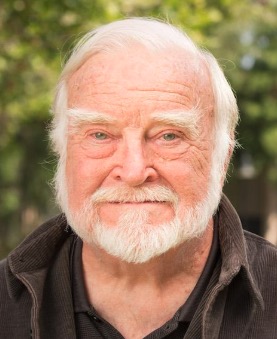 Mihaly Csikszentmihalyi合作论文数Claremont Graduate University2
 Fatemeh Ghadiri Nezhdyan合作论文数1Wendy K. Killam合作论文数1
 Robert F. Cavanagh合作论文数1
 Suzanne Degges-White合作论文数1Suparna Dutta Sinha合作论文数1
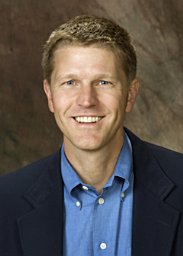 Stephen M. Tonks合作论文数Department of Human Development, University of Maryland College Park1Mehrnaz Shahraray合作论文数Tarbiat Moallem University, Teacher Training University1
 Seán Kelly合作论文数University of Pittsburgh1




