Internationally, a significant number of secondary school students present signs of disengagement in the classroom, having consequences for learning, achievement, and school completion. The instructional environment is a powerful vehicle to stimulate student engagement in the classroom. It can mitigate more distal bioecological influences such as gender, age, socioeconomic status, and cultural background. In this chapter, we discuss the key characteristics of instructional environments that support behavioral, emotional, and cognitive student engagement. These characteristics include meaningful classwork, the development of student competence, the support of student agency, the promotion of positive peer relationships, and the establishment of positive teacher–student relationships. We then conduct an international literature review identifying studies of interventions influencing student engagement, and profile selected intervention studies in more depth. The chapter concludes by discussing questions that emerge from our review and suggesting directions for future research.
Background: Given the growing interest in, and relevance of, integrated approaches to STEM (science, technology, engineering, and mathematics) education, there is an urgent desire to understand the challenges and obstacles to developing and implementing integrated STEM curricula and instruction. In this article, we present phase 1 of a two-phase needs assessment study to identify challenges and needs of promoting integrated approaches in STEM education. Utilizing a key informant approach, 22 K-12 teachers and four administrators selected as potential leaders in STEM education in an unidentified state on the East Coast of the USA were interviewed. Participants were asked to identify challenges and perceived supports to conduct integrated STEM education. Questions were open-ended in order to inform a larger, state-wide questionnaire study in phase 2 to be reported subsequently and were qualitatively coded. Results: Several distinctive themes were identified as described by teacher participants when discussing challenges and obstacles of implementing integrated STEM education, as well as supports that would be most helpful in overcoming them. Participants also provided specific suggestions for teacher education needed to support integrated STEM education. Conclusions: Preliminary findings suggest that many teachers are interested in integrated approaches to STEM, but do not believe they are well prepared to implement them. Teachers and administrators also suggest that adequate preparation in integrated STEM would entail a considerable rethinking and redesigning of pre-service courses and in-service workshops. Findings provide a starting point for better understanding teacher needs in integrated STEM and a springboard for further study.
In this study, we conducted a model of teacher professional development (PD) on the alignment of middle and high school curricula and instruction to the Next Generation Science Standards (NGSSs), and evaluated the impact of the PD on teacher participants’ development. The PD model included a 4-day summer academy emphasizing project-based learning (PBL) in the designing of NGSS-aligned curricula and instruction, as well as monthly follow-up Professional Learning Community meetings throughout the year providing numerous opportunities for teachers to develop and implement lesson plans, share results of lesson writing and implementation (successes and challenges), provide mutual feedback, and refine curricula and assessments. Following the summer academy, six female teachers were interviewed about their current conceptualizations of NGSS, the extent of curricular shifts made that are required by NGSS, their self-perceptions regarding their level of accomplishment in curriculum writing, and the benefits of the PD in reaching their goals related to NGSS. Interviews were supplemented with an analysis of lesson plans written while participating in the PD program. The interviewed teachers suggested that they had made important conceptual and pedagogical shifts required by NGSS as they participated in the PD, and also noted a variety of challenges as they made this shift. While all teachers were relative novices at NGSS curriculum writing before the PD, most of the teachers interviewed felt that they had achieved the status of an “accomplished novice” following the summer academy. An analysis of their written lessons suggested a great range in the extent to which teachers effectively applied their understanding of NGSS to write lessons aligned to NGSS. Interviewed teachers believed that the PD model was helpful to their development as science teachers, and all reported that there were no aspects of the PD that were not helpful. Even though most teachers obtained a basic understanding and conceptualization of NGSS and PBL, their application of this understanding in their curriculum writing varied. The present study may help to inform future efforts to support teachers to align curricula and instruction to NGSS through teacher PD.
In this paper, we share results from a classroom intervention that used a conceptual representation to support reasoning about ecosystems. Engaging students in modeling allows them to make their ideas visible while being malleable and available for discussion, which enables students to make meaning out of systems. Further, the Components-Mechanisms-Phenomena (CMP) conceptual representation was designed to enable students to construct coherent mental models. Following our intervention, students deepened their understanding of ecosystem dynamics when compared to students who engaged in traditional instruction without use of the CMP conceptual representation. We discuss our results in terms of data that helped guide the design of the intervention and we describe a theoretical perspective that can be used to guide future instruction.
Background Given the growing interest in, and relevance of, integrated approaches to STEM (science, technology, engineering, and mathematics) education, there is an urgent desire to understand the challenges and obstacles to developing and implementing integrated STEM curricula and instruction. In this article, we present phase 1 of a two-phase needs assessment study to identify challenges and needs of promoting integrated approaches in STEM education. Utilizing a key informant approach, 22 K-12 teachers and four administrators selected as potential leaders in STEM education in an unidentified state on the East Coast of the USA were interviewed. Participants were asked to identify challenges and perceived supports to conduct integrated STEM education. Questions were open-ended in order to inform a larger, state-wide questionnaire study in phase 2 to be reported subsequently and were qualitatively coded. Results Several distinctive themes were identified as described by teacher participants when discussing challenges and obstacles of implementing integrated STEM education, as well as supports that would be most helpful in overcoming them. Participants also provided specific suggestions for teacher education needed to support integrated STEM education. Conclusions Preliminary findings suggest that many teachers are interested in integrated approaches to STEM, but do not believe they are well prepared to implement them. Teachers and administrators also suggest that adequate preparation in integrated STEM would entail a considerable rethinking and redesigning of pre-service courses and in-service workshops. Findings provide a starting point for better understanding teacher needs in integrated STEM and a springboard for further study.
Classroom learning environments are frequently assumed to exert their influence on learning indirectly, via student engagement. The present study examined the influence of environmental challenge and support on learning in high school classrooms, and the potential for student engagement to act as a mediator in this relationship. Data were collected in seven classrooms in six different subjects in several US high schools. The 104 students in these classes participated in the Experience Sampling Method (ESM) and reported records (N=254) of engagement, learning, and related experiential variables. Measures of the learning environment were also rated from video footage. Variations in the learning environment observed and rated from video were linked to students' real-time reactions to instruction synchronously. Results indicated that environmental support, but not environmental challenge, was significantly related with perceived learning. Multi-level path analyses revealed that the association between environmental supports and learning was mediated by student engagement. This mediating relationship held specifically for two components of environmental support: Motivational supports and supportive relationships. Implications are discussed for the benefit of practicing school psychologists, including strategies for facilitating motivational and relational support to enhance student engagement.
The present paper proposes a novel method of quantification of the variation in biofilm architecture, in correlation with the alteration of growth conditions that include, variations of substrate and conditioning layer. The polymeric biomaterial serving as substrates are widely used in implants and indwelling medical devices, while the plasma proteins serve as the conditioning layer. The present method uses descriptive statistics of FESEM images of biofilms obtained during a variety of growth conditions. We aim to explore here the texture and fractal analysis techniques, to identify the most discriminatory features which are capable of predicting the difference in biofilm growth conditions. We initially extract some statistical features of biofilm images on bare polymer surfaces, followed by those on the same substrates adsorbed with two different types of plasma proteins, viz. Bovine serum albumin (BSA) and Fibronectin (FN), for two different adsorption times. The present analysis has the potential to act as a futuristic technology for developing a computerized monitoring system in hospitals with automated image analysis and feature extraction, which may be used to predict the growth profile of an emerging biofilm on surgical implants or similar medical applications.
In response to recent educational imperatives in the United States, modeling and systems thinking have been identified as being critical for science learning. In this paper, we investigate models in the classroom from two important perspectives: (1) from the teacher perspective to understand how teachers perceive models and use models in the classroom and (2) from the student perspective to understand how student use model-based reasoning to represent their understanding in a classroom setting. Qualitative data collected from 19 teachers who attended a professional development workshop in the northeastern United States indicate that while teachers see the value in teaching to think with models (i.e., during inquiry practices), they tend to use models mostly as communication tools in the classroom. Quantitative data collected about the modeling practices of 42 middle school students who worked collaboratively in small groups (4-5 students) using a computer modeling program indicated that students tended to engage in more mechanistic and function-related thinking with time as they reasoned about a complex system. Further, students had a typified trajectory of first adding and then next paring down ideas in their models. Implications for science education are discussed.
The purpose of this study was to investigate the linkage between the quality of the learning environment and the quality of students' experience in seven high school classrooms in six different subject areas. The quality of the learning environment was conceptualized in terms of environmental complexity, or the simultaneous presence of environmental challenge and environmental support. The students (N = 108) in each class participated in the Experience Sampling Method (ESM) measuring their engagement and related experiential variables. Concurrently, environmental complexity and its subdimensions were observed and rated from video with a new observational instrument, The Optimal Learning Environments - Observational Log and Assessment (OLE-OLA). Using two-level HLM regression models, ratings from the OLE-OLA were utilized to predict student engagement and experiential variables as measured by the ESM. Results showed that environmental complexity predicted student engagement and sense of classroom self-esteem. Implications for research, theory and practice are discussed. (C) 2016 The Authors. Published by Elsevier Ltd.
We present a study of the rheological properties of some visco-elastic materials of biological origin and an aqueous gel of the synthetic clay Laponite. The bacterial biofilms are (a) Staphylococcus epidermidis, (b) Pseudomonas aeruginosa, and (c) Bacillus subtilis. We model these materials using variations of a three element visco-elastic model and show that the use of fractional calculus incorporating non-integer time derivatives in the visco-elastic equations, provides the most appropriate framework for such a study. Using a single set of parameters, the complex visco-elastic modulus, creep compliance and modulus of complex viscosity, have been calculated for the systems under study and compared with available experimental results. The Laponite gel is modeled by the fractional Boltzmann model, while the biofilms have been modeled by a fractional 3-element fluid model. Replacing the non-integer order of the derivative in the equations by an integer completely reverses the theoretically predicted rheological behaviour from the experimental result. We conclude that incorporation of fractional time derivatives in the linear viscoelastic equations is an essential technique for modeling the rheological properties of these materials over a wide range of time and frequency scales. (C) 2016 Elsevier B.V. All rights reserved.
The purpose of this study was to examine the influence of students' seating location in a large, lecture style university course on student engagement, attention, classroom learning experience, and course performance. Participants (N = 407) were students in two cohorts of an undergraduate financial accounting course at a large university in the United States. They participated in the Experience Sampling Method measuring their self-reported seating location, engagement, attention, and other experiential dimensions throughout the one-semester course. Results showed that students reported lower engagement, attention, and quality of classroom experience when sitting in the back of the classroom than when sitting in the middle or front. Those sitting in the back of the classroom most of the time also received lower course grades. Engagement, attention, and other experiential factors mediated the influence of seating location on course grade. Multilevel models revealed both within-student and between-student effects of seating on classroom experience. (C) 2016 Elsevier Ltd. All rights reserved.
Computer-supported collaborative learning environments provide opportunities for students to collaborate in inquiry-based practices to solve authentic problems, using technological tools as a resource. However, we have limited understanding of the quality of engagement fostered in these contexts, in part due to the narrowness of engagement measures. To help judge the quality of engagement, we extend existing engagement frameworks, which have studied this construct as a stable and decontextualized individual difference. We conceptualize engagement as multi-faceted (including behavioral, social, cognitive and conceptual-to-consequential forms), dynamic, contextualized and collective. Using our newly developed observational measure, we examine the variation of engagement quality for ten groups. Subsequently, we differentiate low and high quality collaborative engagement through a close qualitative analysis of two groups. Here, we explore the interrelationships among engagement facets and how these relations unfolded over the course of group activity during a lesson. Our results suggest that the quality of behavioral and social engagement differentiated groups demonstrating low quality engagement, but cognitive and conceptual-to-consequential forms are required for explaining high quality engagement. Examination of interrelations indicate that behavioral and social engagement fostered high quality cognitive engagement, which then facilitated consequential engagement. Here, engagement is evidenced as highly interrelated and mutually influencing interactions among all four engagement facets. These findings indicate the benefits of studying engagement as a multi-faceted phenomenon and extending existing conceptions to include consequential engagement, with implications for designing technologies that scaffold high quality cognitive and conceptual-to-consequential engagement in a computer-supported collaborative learning environment.
Promoting student understanding of ecosystem processes is critical to biological education. Yet, teaching complex life systems can be difficult because systems are dynamic and often behave in a non-linear manner. In this paper, we discuss assessment results from a middle school classroom intervention in which a conceptual representation framework is embedded in a suite of technology tools. We use both hand-drawn models and open-ended written responses to evaluate student understanding. While we speculated that our intervention would help students use ecosystem mechanisms to describe broader processes, we found instead that students tended to express constructs in isolation (as opposed to a unified picture of ecosystem processes). In addition, students provided greater elaboration of ideas mostly when specifically prompted. Specific prompts also tended to produce more accurate representations of the ecosystem processes our curriculum covered. Our findings have allowed us to refine our intervention to better translate these critical concepts, and how they are interrelated, to young learners. As such, these findings have important implications for encouraging broader ecosystem thinking in K-12 classrooms.
A primary goal of instruction is to prepare learners to transfer their knowledge and skills to new contexts, but how far this transfer goes is an open question. In the research reported here, we seek to explain a case of transfer through examining the processes by which a conceptual representation used to reason about complex systems was transferred from one natural system (an aquarium ecosystem) to another natural system (human cells and body systems). In this case study, a teacher was motivated to generalize her understanding of the Structure, Behaviour, and Function (SBF) conceptual representation to modify her classroom instruction and teaching materials for another system. This case of transfer was unexpected and required that we trace back through the video and artefacts collected over several years of this teacher enacting a technology-rich classroom unit organized around this conceptual representation. We provide evidence of transfer using three data sources: (1) artefacts that the teacher created (2) in-depth semi-structured interview data with the teacher about how her understanding of the representation changed over time and (3) video data over multiple years, covering units on the aquatic ecosystem and the new system that the teacher applied the SBF representation to, the cell and body. Borrowing from interactive ethnography, we traced backward from where the teacher showed transfer to understand how she got there. The use of the actor-oriented transfer and preparation for future learning perspectives provided lenses for understanding transfer. Results of this study suggest that identifying similarities under the lens of SBF and using it as a conceptual tool are some primary factors that may have supported transfer.
 Cindy E. Hmelo Silver合作论文数Center for Research on Learning and Technology, School of Education, Indiana University Bloomington20
 Sujata Tarafdar合作论文数Condensed Matter Physics Research Centre;Physics Department;Jadavpur University;Condensed Matter Physics Research Centre, Jadavpur University20
 Rebecca Jordan合作论文数Rutgers University18
 Tapati Dutta合作论文数13
 Ashok K. Goel合作论文数School of Interactive Computing, Georgia Institute of Technology;College of Computing, Georgia Institute of Technology;Center for 21st Century Universities13
 Catherine Eberbach合作论文数13Steven Gray合作论文数10Swaroop Vattam合作论文数Technology Square Research Building9
 Spencer Rugaber合作论文数College of Computing;Georgia Institute of Technology9Sameer Honwad合作论文数9
 David J. Shernoff合作论文数Department of Leadership, Educational Psychology and Foundations, Northern Illinois University8Dibyendu Mal合作论文数Condensed Matter Physics Research Centre, Jadavpur University7
 Denise Bressler合作论文数East Carolina University6
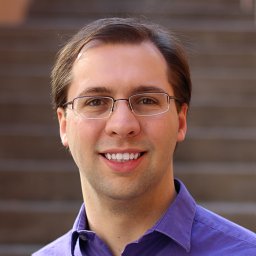 David A. Joyner合作论文数Georgia Institute of Technology6T. Middya合作论文数5
 Soma Nag合作论文数Dept Chem Engn, Natl Inst Technol Agartala3
 Simantini Majumdar合作论文数2Lina Sanchez-Wall合作论文数2
 Somasri Hazra合作论文数Condensed Matter Phys Res Ctr, Jadavpur Univ2
 Yawen Yu合作论文数2
 Shantanu Das合作论文数Reactor Control Division, Bhabha Atomic Research Centre2
 Erik Anthony Ruzek合作论文数Center for Advanced Study of Teaching and Learning, University of Virginia;350 Old Ivy Way;Center for Advanced Study of Teaching and Learning, University of Virginia2
 Roberta Y Schorr合作论文数Rutgers University2Alexander J. Sannella合作论文数The State University of New Jersey2
 Satabdi Mitra合作论文数2
 Moutushi Dutta Choudhury合作论文数Amity University;Department of Physics, Chandigarh University2
 Lynda Ginsburg合作论文数National Center on Adult Literacy;University of Pennsylvania2
 Toni Rogat合作论文数Rutgers, The State University of New Jersey2
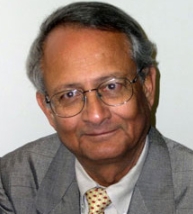 Sanjit K. Mitra合作论文数Department of Electrical & Computer Engineering, University of California, Santa Barbara1
 Nicolás Pino-James合作论文数1
 Sue Larson合作论文数Literacy Educ, Judson Univ1
 Saptarshi Das合作论文数Fac Environm Sci & Econ, Univ Exeter1
 Beheshteh Abdi合作论文数College of Education, Northern Illinois University1Karlyn R. Adams-Wiggins合作论文数1
 Amanda E. Sorensen合作论文数Dept Community Sustainabil, Michigan State Univ1
 Wesley R Brooks合作论文数1Gray Steven J合作论文数1
 Brett Romeo Anderson合作论文数NewYork-Presbyterian/Morgan Stanley Children's Hospital, Columbia University1Russell Schwartz合作论文数1
 Robert F. Cavanagh合作论文数1Electrostatic Field合作论文数1Heather Finkelstein合作论文数1Marylee Demeter合作论文数1Supti Sadhukhan合作论文数Physics Department;Chandra Chaudhuri College;Physics Department, Chandra Chaudhuri College1Subrata Kumar Kabiraj合作论文数1
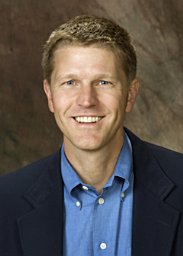 Stephen M. Tonks合作论文数Department of Human Development, University of Maryland College Park1Daniel Wolsten合作论文数1
 Seán Kelly合作论文数University of Pittsburgh1Heisawn Jeong合作论文数Learning Research and Development Center, University of Pittsburgh1




