The core element of machine learning is a flexible, universal function approximator that can be trained and fit into the data. One of the main challenges in modern machine learning is to understand the role of nonlinearity and complexity in these universal function approximators. In this research, we focus on nonlinear complex systems, and show their capability in representation and learning of different functions. Complex nonlinear dynamics and chaos naturally yield an almost infinite diversity of dynamical behaviors and functions. Physical, biological and engineered systems can utilize this diversity to implement adaptive, robust behaviors and operations. A nonlinear dynamical system can be considered as an embodiment of a collection of different possible behaviors or functions, from which different behaviors or functions can be chosen as a response to different conditions or problems. This process of selection can be manual in the sense that one can manually pick and choose the right function through directly setting parameters. Alternatively, we can automate the process and allow the system itself learn how to do it. This creates an approach to machine learning, wherein the nonlinear dynamics represents and embodies different possible functions, and it learns through training how to pick the right function from this function space. We report on how we utilized nonlinear dynamics and chaos to design and fabricate nonlinear dynamics based, morphable hardware in silicon as a physical embodiment for different possible functions. We demonstrate how this flexible, morphable hardware learns through learning and searching algorithms such as genetic algorithm to implement different desired functions. In this approach, we combine two powerful natural and biological phenomenon, Darwinian evolution and nonlinear dynamics and chaos, as a dynamics-oriented approach to designing intelligent, adaptive systems with applications. Nonlinear dynamics embodies different functions at the hardware level, while an evolutionary method is utilized in order to find the parameters to implement the right function.
The importance and the necessity of nonlinearity in Artificial Intelligence, AI, and deep learning are very well understood. A multi-layer neural network with linear activation function is equivalent to a single layer of neurons. It is nonlinearity of activation functions that adds complexity to each layer, transforming the network to a universal computing machine that can approximate any continuous function. However, nonlinearity and the complexity that it creates have not been investigated enough in AI and modern deep learning systems. NC State University’s Nonlinear Artificial Intelligence Lab focuses on nonlinearity and the complexity that comes with it, and investigates how this can be an engine of artificial intelligence. We peruse our research at different levels with different goals. In this article we explain our approach, and present an overview of our results.
Dramatically improved data from observatories like the CoRoT and Kepler spacecraft have recently facilitated nonlinear time series analysis and phenomenological modeling of variable stars, including the search for strange (aka fractal) or chaotic dynamics. We recently argued [Lindner et al., Phys. Rev. Lett. 114 (2015) 054101] that the Kepler data includes “golden” stars, whose luminosities vary quasiperiodically with two frequencies nearly in the golden ratio, and whose secondary frequencies exhibit power-law scaling with exponent near −1.5, suggesting strange nonchaotic dynamics and singular spectra. Here we use a series of phenomenological models to make plausible the connection between golden stars and fractal spectra. We thereby suggest that at least some features of variable star dynamics reflect universal nonlinear phenomena common to even simple systems.
Certain nonlinear systems can switch between dynamical attractors occupying different regions of phase space, under variation of parameters or initial states. In this work we exploit this feature to obtain reliable logic operations. With logic output 0/1 mapped to dynamical attractors bounded in distinct regions of phase space, and logic inputs encoded by a very small bias parameter, we explicitly demonstrate that the system hops consistently in response to an external input stream, operating effectively as a reliable logic gate. This system offers the advantage that very low-amplitude inputs yield highly amplified outputs. Additionally, different dynamical variables in the system yield complementary logic operations in parallel. Further, we show that in certain parameter regions noise aids the reliability of logic operations, and is actually necessary for obtaining consistent outputs. This leads us to a generalization of the concept of Logical Stochastic Resonance to attractors more complex than fixed point states, such as periodic or chaotic attractors. Lastly, the results are verified in electronic circuit experiments, demonstrating the robustness of the phenomena. So we have combined the research directions of Chaos Computing and Logical Stochastic Resonance here, and this approach has potential to be realized in wide-ranging systems.
In this paper we briefly review some recent results in the field of nonlinear dynamics-based computing and how it can be utilized to implement flexible, reprogrammable hardware. Then we propose that such internal flexibility can be utilized to compensate for the negative effects of both internal and external changes. More specifically, we report results of an experimental study that we performed on an integrated circuit fabricated for nonlinear dynamics-based computing, where we overheated the circuit to a point that its operation and performance changed, but then we reprogramed the circuit so that the overheated circuit could again perform the same operations reliably. This inherent flexibility and reprogrammability opens the door to implementing adaptive circuits and systems that can withstand both variable environments and adverse conditions.
We study chaos computing as a new approach for reconfigurable computing and present some of our latest results and discuss what this new direction to computing means and implies. We discuss the advantages and challenges that come with this new paradigm of computing and envision its future.
Nonlinear dynamics and chaos contribute flexibility and rich, complex behavior to nonlinear systems. Transistors and transistor circuits are inherently nonlinear. It was demonstrated that this nonlinearity and the flexibility that comes with it can be utilized to implement flexible, reconfigurable computing, and such approaches are called Nonlinear Dynamics-Based Computing. In nonlinear dynamics-based computing, a very same circuit can be reprogrammed to implement and perform many different types of computations, thereby increasing the amount of computing that can be obtained per transistor. For example, at the gate level, the same transistor circuit can implement all different logical gates, such as AND gate or XOR gate. Or at the system level, the same transistor circuit can implement a variety of different higher-level functions, such as addition or subtraction. Another remarkable feature of nonlinear dynamics-based computing is that because different types of functions or operations coexist within the dynamics of the circuit, reprograming and reconfiguring is nearly instant. A recently fabricated VLSI chip for nonlinear dynamics-based computing was shown to be capable of implementing a new function in each clock cycle, with no need for separate reprograming time in between clock cycles. In this paper we briefly review this new approach to computing, present some of our latest results, discuss the implications and possible advantages of nonlinear dynamics-based computing, and plot potential horizons for this exciting new approach to computing.
We propose an architecture to implement multi-input one-output Boolean functions using chaos computing in hybrid digital-analog systems consisting of a digital block of conventional AND gates and a nonlinear circuit. This architecture efficiently utilizes the superstable initial conditions of a nonlinear circuit and enables us to implement all possible 2(2m) Boolean functions of m data inputs in just m iterations of the nonlinear circuit, resulting in better operating speed and noise tolerance. In an ideal nonlinear map, this architecture eliminates the need for a decoder, as the outputs are mapped to maxima and minima of the map and can be fed directly to the next stage, enabling multilayer concatenation. We demonstrate the utility of this architecture in a three-transistor circuit.
Recent studies of variable stars have uncovered characteristic nonlinear features in flux of these stars and indicate the presence of quasi-periodicity. A common technique to study quasiperiodic systems is spectral scaling analysis which relies on the fact that different dynamical behaviors can be identified on the basis of distribution of peaks in the periodogram. Here we apply the spectral scaling technique to the OGLE-IV photometry of the RR Lyrae stars in the Galactic bulge. We find that spectra of the fundamental mode (RRab) and first overtone RR Lyrae stars (RRc) scales differently and thus the spectral scaling can be used to distinguish between different RR Lyrae sub classes. Furthermore, goodness of fit for RRc stars with multiple modes is better than other stars. The scaling exponent for stars observed in high cadence is close to the values reported using Kepler photometry. This analysis can help us to reclassify the stars based on their dynamical characteristics.
Control of chaos teaches that control theory can tame the complex, random-like behaviour of chaotic systems. This alliance between control methods and physics-cybernetical physics-opens the door to many applications, including dynamics-based computing. In this article, we introduce nonlinear dynamics and its rich, sometimes chaotic behaviour as an engine of computation. We review our work that has demonstrated how to compute using nonlinear dynamics. Furthermore, we investigate the interrelationship between invariant measures of a dynamical system and its computing power to strengthen the bridge between physics and computation.This article is part of the themed issue 'Horizons of cybernetical physics'.
The complex dynamics of a simple nonlinear circuit contains an infinite number of functions. Specifically, this brief shows that the number of different functions that a nonlinear or chaotic circuit can implement exponentially increases as the circuit evolves in time, and this exponential increase is quantified with an exponent that is named the computing exponent. This brief argues that a simple nonlinear circuit that illustrates rich complex dynamics can embody infinitely many different functions, each of which can be dynamically selected. In practice, not all of these functions may be accessible due to factors such as noise or instability of the functions. However, these infinitely many functions do exist within the dynamics of the nonlinear circuit regardless of accessibility or inaccessibility of the functions in practice. This nonlinear-dynamics-based approach to computation opens the door for implementing extremely slim low-power circuits that are capable of performing many different types of functions.
Dramatically improved data from observatories like the CoRoT and Kepler spacecraft have recently facilitated nonlinear time series analysis and phenomenological modeling of variable stars, including the search for strange (aka fractal) or chaotic dynamics. We recently argued [Lindner et al., Phys. Rev. Lett. 114 (2015) 054101] that the Kepler data includes "golden" stars, whose luminosities vary quasiperiodically with two frequencies nearly in the golden ratio, and whose secondary frequencies exhibit power-law scaling with exponent near -1.5, suggesting strange nonchaotic dynamics and singular spectra. Here we use a series of phenomenological models to make plausible the connection between golden stars and fractal spectra. We thereby suggest that at least some features of variable star dynamics reflect universal nonlinear phenomena common to even simple systems. (C) 2015 Elsevier B.V. All rights reserved.
We study the usefulness of coupled redundancy as a mechanism for reduction in local noise in coupled map lattices and investigate the role of network topology, coupling strength, and iteration number in this mechanism. Explicit numerical simulations to measure noise reduction in coupled units connected in different topologies such as ring, star, small-world, random, and grid networks have been carried out. We study both symmetric and asymmetric networks. Linear stability analysis is presented to identify an optimal symmetric topology. The effect of rewiring is also investigated, and we find that dynamic links enhance the noise reduction capabilities.
We illustrate through theory and numerical simulations that redundant coupled dynamical systems can be extremely robust against local noise in comparison to uncoupled dynamical systems evolving in the same noisy environment. Previous studies have shown that the noise robustness of redundant coupled dynamical systems is linearly scalable and deviations due to noise can be minimized by increasing the number of coupled units. Here, we demonstrate that the noise robustness can actually be scaled superlinearly if some conditions are met and very high noise robustness can be realized with very few coupled units. We discuss these conditions and show that this superlinear scalability depends on the nonlinearity of the individual dynamical units. The phenomenon is demonstrated in discrete as well as continuous dynamical systems. This superlinear scalability not only provides us an opportunity to exploit the nonlinearity of physical systems without being bogged down by noise but may also help us in understanding the functional role of coupled redundancy found in many biological systems. Moreover, engineers can exploit superlinear noise suppression by starting a coupled system near (not necessarily at) the appropriate initial condition.
We study the effect of additive colored noise on the evolution of maps and demonstrate that the deviations caused by such noise can be reduced using coupled dynamics. We consider both Ornstein–Uhlenbeck process as well as [Formula: see text] noise in our numerical simulations. We observe that though the variance of deviations caused by noise depends on the correlations in the noise, under optimal coupling strength, it decreases by a factor equal to the number of coupled elements in the array as compared to the variance of deviations in a single isolated map. This reduction in noise levels occurs in chaotic as well as periodic regime of the maps. Lastly, we examine the effect of colored noise in chaos computing and find that coupling the chaos computing elements enhances the robustness of chaos computing.
Inclusion of redundancy has been one of the primary techniques to reduce the probability of error and to achieve reliability in computing systems and many other engineered systems. Rather than using one system, a group of identical systems is typically used and the final output is determined based on the collective outputs of the redundant systems. A very common technique to obtain an output from a redundant set of systems is "majority wins" (MW) where the majority result is assumed to be the final output. Recently we have shown that the dynamical coupling (DC) of redundant, identical systems reduces local noise. In this approach, redundant systems actively and dynamically collaborate to reduce their combined noise level. Here we present a comparison between MW and DC and demonstrate that a well-designed, optimized DC has better performance in reducing error. In this paper, we mostly focus on noise in computing systems and study redundancy and MW and DC in this context. However, the results can be applied to other similar applications, such as data sensing, oscillators, etc. DC can be implemented with minimal overhead or extra computational complexity, which makes it a suitable mechanism for organizing redundancy to achieve noise robustness.
In this brief, a nonlinear integrated circuit to harvest different types of digital computation from complex dynamics is designed and fabricated. This circuit can be dynamically reconfigured to implement different two-input, one-output digital functions. The main advantage of the circuit is the ability to implement different digital functions in each clock cycle without halting for reconfiguration.
The unprecedented light curves of the Kepler space telescope document how the brightness of some stars pulsates at primary and secondary frequencies whose ratios are near the golden mean, the most irrational number. A nonlinear dynamical system driven by an irrational ratio of frequencies generically exhibits a strange but nonchaotic attractor. For Kepler's "golden" stars, we present evidence of the first observation of strange nonchaotic dynamics in nature outside the laboratory. This discovery could aid the classification and detailed modeling of variable stars.
We discuss the role and importance of dynamics in the brain and biological neural networks, and argue that dynamics is one of the main missing elements in conventional Boolean logic and circuits. We summarize a simple dynamics based computing method, and categorize different techniques that we have introduced to realize logic, functionality, and programmability. We discuss the role and importance of coupled dynamics in networks of biological excitable cells, and then review our simple coupled dynamics based method for computing. In this paper, for the first time, we show how dynamics can be used and programmed to implement computation in any given base, including but not limited to base two.
 William Ditto合作论文数Department of Physics, College of Sciences, NC State University;Nonlinear Artificial Intelligence Laboratory, NC State University27
 John Florian Lindner合作论文数20
 Kohar Vivek合作论文数Potsdam Institute for Climate Impact Research (PIK),, Indian Institute of Science Education and Research (IISER) Mohali12
 Sudeshna Sinha合作论文数Department of Physical Sciences, Indian Institute of Science Education and Research, Mohali7
 Michael Hippke合作论文数5
 Sarvenaz Kia合作论文数5
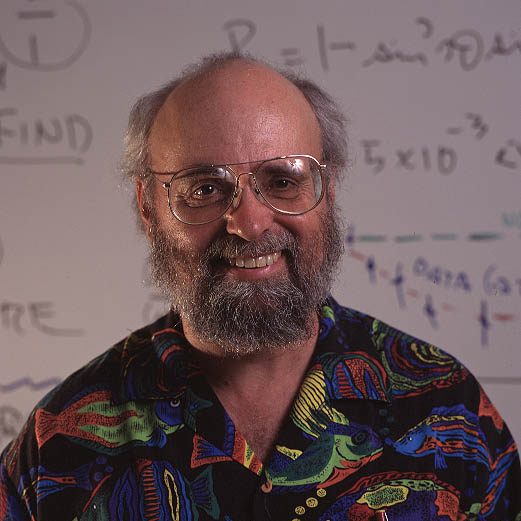 John Gregory Learned合作论文数Department of Physics and Astronomy, University of Hawaii, Manoa5Anna Dari合作论文数5
 Mohammad Reza Jahedmotlagh合作论文数4
 Adi R. Bulsara合作论文数Space and Naval Warfare Systems Center Pacific4Mark L. Spano合作论文数3Allen Mendes合作论文数2Akshay Parnami合作论文数2Kenneth Mobley合作论文数2Krishnamurthy Murali合作论文数Department of Physics, Anna University2
 Hamid Reza Pourshaghaghi合作论文数Eindhoven University of Technology, Eindhoven2Mohammad-Reza Jahed Motlagh合作论文数1D Quéré合作论文数1
 Xiangfan Xu (徐象繁)合作论文数School of Physics Science and Engineering, Tongji University1
 Xiao Wang合作论文数1
 Hanxin Yang (杨涵新)合作论文数College of Physics and Information Engineering, Fuzhou University1
 Antonio Helio Castro Neto合作论文数Department of Electrical and Computer Engineering, College of Design and Engineering, National University of Singapore;Karbohm;UrbaX1
 Haifeng Zhang (张海峰)合作论文数School of Mathematical Sciences, Anhui University1
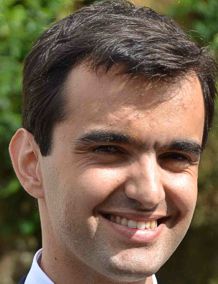 Aires Ferreira合作论文数University of York1
 Binghong Wang (汪秉宏)合作论文数Department of Modern Physics, University of Science and Technology of China1
 Anthony Zee (徐一鴻)合作论文数Kavli Institute for Theoretical Physics, University of California, Santa Barbara1
 Barbaros Ozyilmaz合作论文数Department of Materials Science and Engineering, College of Design and Engineering, National University of Singapore;Institute for Functional Intelligent Materials, National University of Singapore1
 Nuno Miguel Machado Reis Peres合作论文数Department of Physics, University of Minho;POLIMA, Syddansk Universitet1Sukang Bae合作论文数Advanced Institute of Nanotechnology;Center for Human Interface;Sungkyunkwan University;Advanced Institute of Nanotechnology, Sungkyunkwan University1
 Marie Le Merrer合作论文数1
 Christophe Clanet合作论文数Laboratoire de Combustion et Systèmes Réactifs, U.M.R. 138 du CNRS - Universités d'Aix-Marseille I et II1
 Reza Ahmadi合作论文数Sharif University of Technology, Sharif University of Technology1
 I. Stevens合作论文数1
 Run-Ran Liu合作论文数Department of Modern;Physics and Nonlinear Science Center;University of Science and Technology of China;Department of Modern|Physics and Nonlinear Science Center, University of Science and Technology of China1Guillaume Dupeux合作论文数1
 Guillaume Lagubeau合作论文数1
 William H. Edmondson合作论文数available - click to provide one
No description available of William H. Edmondson1
William H. Edmondson合作论文数available - click to provide one
No description available of William H. Edmondson1




