In many applications we want to find the number of clusters in a dataset. A common approach is to use a penalized k-means algorithm with an additive penalty term linear in the number of clusters. Obviously, the number of discovered clusters depends critically on the value of the coefficient of the penalty term, and an open problem is estimating the value of the coefficient in a principled manner. In this paper, we derive rigorous bounds for the coefficient of the additive penalty in k-means for ideal clusters. Although in practice clusters typically deviate from the ideal assumption, the ideal case serves as a useful guideline. Furthermore, we investigate k-means with multiplicative penalty, which generally produces a more reliable signature, compared to additive penalty, for the correct number of clusters in cases where the ideal cluster assumption holds. We also empirically investigate certain types of deviations from ideal cluster assumption. In such cases both types of penalties may suggest multiple, ambiguous solutions. We present a consensus-based approach to resolving these ambiguous solutions by combining the results of additive and multiplicative penalties.
Many digital signal and image processing methods involve computing the gradient of products of functions. However, the product rule for derivatives in continuous spaces, partial derivative(fg) = g partial derivative f + f partial derivative g, does not generally hold in discretized spaces. Hence, computing the gradient of products becomes ambiguous as the results depend on whether to treat the product fg as a single function or treat f and g as two separate functions and use the product rule. The two alternatives lead to different results, particularly for iterative solutions of differential equations since these small differences compound. Although this ambiguity is well-known, thus far a resolution has not been proposed in the literature. In this letter, we propose a mathematically rigorous procedure that selects the better alternative in the sense of yielding approximations that are closer to the continuous space results. As an example, we discuss the Perona-Malik anisotropic diffusion equation used in image processing.
This is a study on the development of a road following vision-based guidance system for unmanned air vehicles (UAV) in real world applications. Currently, autonomous navigation requires the use of GPS. In many applications, however, dependence on GPS is undesirable. GPS signals are weak and can be jammed easily. Also, GPS waypoints may not be up-to-date. In recent years, vision-based navigation has been gaining popularity. Vision-based guidance requires existence of visible paths or extended landmarks for air vehicles to detect and follow. Roads are the most commonly available path to follow. Moreover, the abundance of events that happen along roads make them appealing subjects of surveillance. Many road detection (single images) and road tracking (videos) algorithms have been proposed in the literature. Fast detection and tracking has been the emphasis of those intended for UAVs. Due to the complexity of road detection, we not only need advanced software but also the most effective sensors. In this paper, we propose a road following algorithm that uses both RGB camera and hyperspectral sensor and report the results of actual test flights conducted in different locations and different seasons.
We discuss the underlying physics of transport coefficients in the PDE image processing approach and present a more principled method for their construction. Transport coefficients in PDEs play important roles, e.g., the diffusion coefficient c in the Perona-Malik equation ∂u/∂t = ∇ T (c∇u). Hence different models for c have been proposed in the literature. We present a physics-based method for constructing c and compare its performance with existing models. We also clarify an issue that arises in implementing the PDE approach. It is well-known that the product rule for derivatives in continuous spaces, namely, ∂(fg) = g∂f + f∂g, does not hold in discrete spaces. Thus computing such quantities as ∇ T (c∇u) in spatially discretized images becomes ambiguous depending on which of the two alternatives we use, namely, whether to treat c∇u as a single function or treat c and ∇u as two functions and use the product rule. We examine this ambiguity and show which alternative is better in the sense of yielding approximations that are closer to the continuous space results.
Using an analogy between the density expansion of the transport coefficients of moderately dense gases and the inverse-Knudsen-number expansion of the drag on objects in nearly free molecular flows, we formulate the collision integrals that determine the first correction term to the free-molecular drag limit. We then show how the procedure can be applied to calculate the drag coefficients of an oriented disc and a sphere as a function of the speed ratio.
We revisit the problem of matching a set of lines in the 2D image to a set of corresponding lines in the 3D model for the following reasons. (a) Existing algorithms that treat lines as infinitely long contain a flaw, namely, the solutions found are not invariant with respect to the choice of the coordinate frame. The source of this flaw is in the way lines are represented. We propose a frame-independent representation for sets of infinite lines that removes the non-invariance flaw. (b) Algorithms for finding the best rigid transform are nonlinear optimizations that are sensitive to initialization and may result in unreliable and expensive solutions. We present a new recipe for initialization that exploits the 3D geometry of the problem and is applicable to all algorithms that perform the matching in the 3D scene. Experiments show that with this initialization all algorithms find the best transform. (c) We present a new efficient matching algorithm that is significantly faster than existing alternatives, since it does not require explicit evaluation of the cost function and its derivatives.
The interest in face recognition is moving toward real-world applications and uncontrolled sensing environments. An important application of interest is automated surveillance, where the objective is to recognize and track people who are on a watchlist. For this open world application, a large number of cameras that are increasingly being installed at many locations in shopping malls, metro systems, airports, etc., will be utilized. While a very large number of people will approach or pass by these surveillance cameras, only a small set of individuals must be recognized. That is, the system must reject every subject unless the subject happens to be on the watchlist. While humans routinely reject previously unseen faces as strangers, rejection of previously unseen faces has remained a difficult aspect of automated face recognition. In this paper, we propose an approach motivated by human perceptual ability of face recognition which can handle previously unseen faces. Our approach is based on identifying the decision region(s) in the face space which belong to the target person(s). This is done by generating two large sets of borderline images, projecting just inside and outside of the decision region. For each person on the watchlist, a dedicated classifier is trained. Results of extensive experiments support the effectiveness of our approach. In addition to extensive experiments using our algorithm and prerecorded images, we have conducted considerable live system experiments with people in realistic environments.
We suggest the use of extended landmarks, such as shorelines, creeks, tree lines, and railroads, as well as roads for autonomous navigation of an unmanned air vehicle (UAV). In particular, we recommend the use of shorelines, because of their common availability, their ease of detection, and their significance in terms of events happening along them. Monitoring coastlines and waterways from low flying UAVs has many applications for military and civilian use. We report the development of a vision system that has enabled a prototype UAV to follow shorelines autonomously (without requiring maps or GPS). Using a near-infrared sensor the vision system distinguishes water from land (irrespective of water's color) and issues commands to the autopilot to follow the coastline or the riverbank. One insight of this problem is that the control algorithm could be integrated deeply with the vision system. This has the benefit of delaying smoothing/regularization so that it could occur in the context of the control coordinate system rather than the image or ground coordinate system. The algorithm itself is simple, but it possibly points the way to future algorithms which could more closely couple image processing and control. Furthermore, the experience gained in this work may be of value in the development of vision systems for following other types of paths.
We report the development of a face recognition system which operates in the same way as humans in that it is capable of recognizing a number of people, while rejecting everybody else as strangers. While humans do it routinely, a particularly challenging aspect of the problem of open-world face recognition has been the question of rejecting previously unseen faces as unfamiliar. Our approach can handle previously unseen faces; it is based on identifying and enclosing the region(s) in the human face space which belong to the target person(s).
: Humans are extremely powerful in recognizing faces that they see often. During encounters, we either recognize a face or reject it as unfamiliar. Praise for this ability still echoes in the literature: The only system that seems to work well under challenging conditions is the human visual system. While humans do this routinely, a particularly challenging aspect of face-recognition research is the question of rejecting previously unseen faces as unfamiliar. A system with this ability has long been desired: The similarity measure used in a face-recognition system should be designed so that humans' ability to perform face recognition and recall are imitated as closely as possible by the machine. The prevailing approach is based on matching and ranking images. Given a test image, a face-recognition algorithm finds its closest match in a database of stored images based on some similarity measure. In 'closed-world' applications, where the test image/person is guaranteed to be in the database, if the closest match is found correctly, the test image/person will be identified correctly. By contrast, in 'open-world' applications, where the test image/person may not be in the database (as might occur with watchlist surveillance, where we are interested only in recognizing 'wanted' subjects), mis-identification may occur regardless of the outcome of the search. A threshold could be used to decide whether the best match is a correct match. However, establishing the proper threshold value that works well for previously unseen data is very difficult. We have developed an approach that uses an artificial neural network to replicate the human ability to recognize faces. In contrast to most existing approaches, our approach is particularly useful for open-world applications.
Recently (15) proposed anapproach forcaptur- inga humansimilarity measurewithin a classifier, e.g., an artificial neural network, forfacerecognition. Thisisdoneby automatically generating andlabeling arbitrarily large setsof morphedimages(typically tensofthousands) inagreement witha humancritic. One setiscomposedofimageswith reducedresemblance totheimagedperson, yetrecognizable byhumansasthatperson(positive exemplars); thesecond set consists ofimages withsomeresemblance totheimaged person, butnotenoughtoberecognizable asthatperson(negative exemplars). Foreachpersonofinterest, adedicated classifier isdeveloped. Fromapractical pointofview,itappears that themostchallenging aspect ofthatapproach istocompletely enclose thedecision region belonging tothepersonofinterest. Becauseofthehighdimensionality ofthehuamnfacespace, this isnotsimple matterespecially forcertain subjects. Inthis paper, we propose a newoperator thatmorphstheimageof thetarget person awayfromthose ofothers. Thenewoperator whenapplied together withtheprevious operator (morphing toward) helps toclose theconstructed decision region. Also, in this paperwepropose theutilization oftwonetworks foreach target person; theaddednetwork covers notjusttheeyesand nose, butpractically theentire facethoughinacoarse fashion. Thesecondnetwork, FaceNet, screens imagesbefore theyare presented tothefirst network, EyeNet. Thenewdevelopments havereduced thefalse accept ratebyorders ofmagnitude with minimal impact onfalse reject rate. Itnowappreas, morethan before, thatthefollowing important andlongdesired goalis within reach: Thesimilarity measureusedinafacerecognition systemshould bedesigned sothathumans'ability toperform facerecognition andrecall areimitated asclosely aspossible bythemachine(5).
Recently Behrooz et al., (2006) proposed an approach for capturing a human similarity measure within a classifier, e.g., an artificial neural network, for face recognition. This is done by automatically generating and labeling arbitrarily large sets of morphed images (typically tens of thousands) in agreement with a human critic. One set is composed of images with reduced resemblance to the imaged person, yet recognizable by humans as that person (positive exemplars); the second set consists of images with some resemblance to the imaged person, but not enough to be recognizable as that person (negative exemplars). For each person of interest, a dedicated classifier is developed. From a practical point of view, it appears that the most challenging aspect of that approach is to completely enclose the decision region belonging to the person of interest. Because of the high dimensionality of the human face space, this is not simple matter especially for certain subjects. In this paper, we propose a new operator that morphs the image of the target person away from those of others. The new operator when applied together with the previous operator (morphing toward) helps to close the constructed decision region. Also, in this paper we propose the utilization of two networks for each target person; the added network covers not just the eyes and nose, but practically the entire face though in a coarse fashion. The second network, FaceNet, screens images before they are presented to the first network, EyeNet. The new developments have reduced the false accept rate by orders of magnitude with minimal impact on false reject rate. It now appears, more than before, that the following important and long desired goal is within reach: "The similarity measure used in a face recognition system should be designed so that humans' ability to perform face recognition and recall are imitated as closely as possible by the machine" .
Abstract : Recent counterinsurgency combat operations in and around inland waters indicate the need for specialized technological capabilities to meet the unique challenges of warfighting in riverine theaters. The ability to conduct close surveillance of enemy activities in the riverine arena is of crucial importance to our warfighters. Over the past several years, the Information Technology Division, in collaboration with the Tactical Electronic Warfare Division, has been developing autonomous unmanned air vehicles (UAVs) capable of guiding their flight course along riverbanks and shorelines. Autonomous UAV guidance based on sensory input rather than GPS promises to increase the flexibility in tasking for single or multiple UAVs. This article describes a guidance and autopilot system that successfully navigated a curved shoreline. The project demonstrated that the near infrared spectrum is particularly good for navigating on shorelines since the land and water are easily distinguishable in these wavelengths, as are objects in the water. Also presented is a new control technique which is able to find control parameters in the image space. This overcomes the need for specialized edge extraction and path generation. Attitude control was maintained by the use of matched long wave infrared thermopiles.
Autonomous Unmanned Aerial Vehicle (UAV) guidance without resorting to preprogrammed GPS signals promises to increase the flexibility in tasking for single or multiple UAVs. This paper reports on a guidance and autopilot system which successfully navigated along a curved shoreline. The project demonstrated that the near infrared (NIR) spectrum is particularly good for navigating on shorelines, since the land and water are easily distinguishable in these wavelengths. Also presented is a new control technique which is able to find control parameters in the image space. This overcomes the need for specialized edge extraction and path generation. Attitude control was maintained by the use of matched long wave infrared thermopiles.
We propose an approach for capturing a human similarity measure (within an artificial neural network, SVM, or other classifiers) for face recognition. That is, the following important and long desired goal appears achievable: "The similarity measure used in a face recognition system should be designed so that humans' ability to perform face recognition and recall are imitated as closely as possible by the machine". For each person of interest, a dedicated classifier is developed. Within the classifier we effectively capture a human classification functionality. This is done by automatically generating and labeling two arbitrarily large sets of morphed images (typically tens of thousands). One set is composed of images with reduced resemblance to the imaged person, yet recognizable by humans as that person (positive exemplars); the second set consists of look-alikes, i.e. "others" who look almost like the imaged person (negative exemplars). Humans, unlike most face recognition systems, do not rank images as a precursor to recognition. Like humans, our system does not rank images, as it is capable of rejecting images of previously unseen faces (or faces which are not of interest) by simply examining their images, and recognizing faces for which it is trained to identify. We demonstrate this capability in our presented experiments, where a large set of impostor images that were not provided during training are consistently rejected by the system.
Information is in data. Classifiers cannot make up for inadequate data when performing recognition tasks. The approach presented here is an attempt aiming at increasing data for cases where adequate facial image data is not available, i.e., when only one or a few images of a subject is at hand. Due to significant natural facial variations, e.g., facial expression, and appearances due to lighting condition, and head pose (even when dealing with ‘‘frontal view’’), the use of a collection of images covering these variations and appearances will be of great help. We show that the expansion of the training set, by careful construction of synthetic images that capture all or most of the desired appearances can significantly improve the performance, especially when only one (or several, but very similar) real image(s) of a given individual are available. To have a better understanding of the issues involved, we address an inherently simpler problem, i.e., face/identity recognition/verification using only one eye and its associated eyebrow. Moreover, our experimental results indicate that the eye is rich in discriminative information, perhaps providing more information than what is normally utilized by humans. This wealth of information, however, can be exploited by machines for close-up images. Finally, we speculate that a similar improvement can be achieved when the training set is enriched with carefully generated synthetic images of the entire face. Issues concerning synthesis automation are also discussed.
Current appearance-based face recognition system encounters the difficulty to recognize faces with appearance variations, while only a small number of training images are available. We present a scheme based on the analysis by synthesis framework. A 3D generic face model is aligned onto a given frontal face image. A number of synthetic face images are generated with appearance variations from the aligned 3D face model. These synthesized images are used to construct an affine subspace for each subject. Training and test images for each subject are represented in the same way in such a subspace. Face recognition is achieved by minimizing the distance between the subspace of a test subject and that of each subject in the database. Only a single face image of each subject is available for training in our experiments. Preliminary experimental results are promising.
Existing algorithms for finding the best match between two sets of 3D lines are not completely satisfactory in the sense that they either yield approximate solutions, or are iterative which means they may not converge to the globally optimal solution. An even more serious shortcoming of the existing algorithms is that they are all non-invariant with respect to the translation of the coordinate system. Thus, any best match found becomes rather meaningless. In this paper, we discuss the source of this non-invariance and present a new algorithm that is invariant to coordinate transforms. Moreover, the algorithm is closed-form, which implies that it always yields the best global match.
Matching two sets of lines is a basic tool that has applications in many computer vision problems such as scene registration, object recognition, motion estimation, and others. Line sets may be composed of infinitely long lines or finite length line segments. Depending on line lengths, three basic cases arise in matching sets of lines: 1) finite-finite, 2) finite-infinite, and 3) infinite-infinite. Case 2 has not been treated in the literature. For Cases 1 and 3, existing algorithms for matching 3D line sets are not completely satisfactory in that they either solve special situations, or give approximate solutions, or may not converge, or are not invariant with respect to coordinate system transforms. In this paper, we present new algorithms that solve exactly all three cases for the general situation. The algorithms are provably convergent and invariant to coordinate transforms. Experiments with synthetic and real 3D image data are reported.
 Behzad Kamgar-Parsi合作论文数20
 Jan Vincent Sengers合作论文数Department of Chemical and Biomoleculr Engineering, School of Engineering, University of Maryland/Institute for Physical Science and
Technology, University of Maryland10
Jan Vincent Sengers合作论文数Department of Chemical and Biomoleculr Engineering, School of Engineering, University of Maryland/Institute for Physical Science and
Technology, University of Maryland10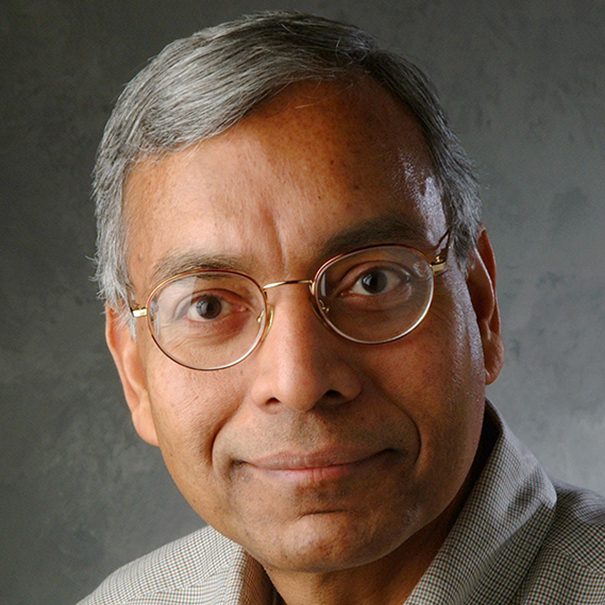 Anil K. Jain (阿尼尔·库马尔·贾恩)合作论文数Department of Computer Science & Engineering, College of Engineering, Michigan State University9
 Azriel Rosenfeld合作论文数Center for Automation Research, University of Maryland, College Park;College of Computer, Mathematical and Physical Sciences, University of Maryland in College Park4
 Joseph Kestin合作论文数Brown University4
 E.G.D. Cohen合作论文数The Rockefeller University4
 James Kellogg合作论文数4
 Judith Dayhoff合作论文数National Library of Science4J. A. Gualtieri合作论文数4
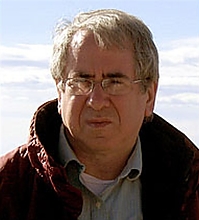 Larry Rosenblum合作论文数Institute for Advanced Computer Studies, University of Maryland;National Science Foundation3
 Ralph L Hartley合作论文数3John C. Sciortino合作论文数3
 Anneke Levelt Sengers合作论文数National Institute of Standards and Technology3J S Gallagher合作论文数2J.E. Devaney合作论文数2donald srull合作论文数2Belcher, Edward O.合作论文数2Jmhl Sengers合作论文数2Im Deschepper合作论文数2Korfali Oe合作论文数2G Morrison合作论文数2Kian Kamgar-Parsi合作论文数Department of Physics, University of Michigan2Frank Pipitone合作论文数2
 Kevin W. Bowyer合作论文数Department of Computer Science and Engineering, College of Engineering, University of Notre Dame2Jill P. Dahlburg合作论文数2Muralidhara Subbarao合作论文数Department of Electrical and Computer Engineering
State University of New York at Stony Brook2Christopher S. Bovais合作论文数2Donald L Folds合作论文数2Richard J. Foch合作论文数2Aaron D. Kahn合作论文数U. S. Naval Research Laboratory2hugh mcfarlane合作论文数2D.E. Diller合作论文数2Adam Sciambi合作论文数2Ravi Ramamurti合作论文数Laboratory for Computational Physics and Fluid Dynamics, Naval Research Laboratory2
Kevin W. Bowyer合作论文数Department of Computer Science and Engineering, College of Engineering, University of Notre Dame2Jill P. Dahlburg合作论文数2Muralidhara Subbarao合作论文数Department of Electrical and Computer Engineering
State University of New York at Stony Brook2Christopher S. Bovais合作论文数2Donald L Folds合作论文数2Richard J. Foch合作论文数2Aaron D. Kahn合作论文数U. S. Naval Research Laboratory2hugh mcfarlane合作论文数2D.E. Diller合作论文数2Adam Sciambi合作论文数2Ravi Ramamurti合作论文数Laboratory for Computational Physics and Fluid Dynamics, Naval Research Laboratory2 William M. Spears合作论文数Swarmotics LLC2
 Patrick Baker合作论文数University of Maryland Center for Automation Research2
 Diana F. Gordon合作论文数Computer Science Department2
 Wallace E. Lawson合作论文数2O ENGELSEN合作论文数1JL JONES合作论文数1RS BASU合作论文数1HJ Shyu合作论文数1F Pipitone合作论文数1Lj Rosenblum合作论文数1A Margalit合作论文数1C. A. Sullivan合作论文数1John Libert合作论文数1Am Waxman合作论文数1suzanne wendelken合作论文数1




