research-article Share on ACM Transactions on Interactive Intelligent Systems (TiiS) Special Issue on Trust and Influence in Intelligent Human-Machine Interaction Authors: Benjamin A. Knott The Office of Naval Research Global, Roppongi, Tokyo, Japan The Office of Naval Research Global, Roppongi, Tokyo, JapanView Profile , Jonathan Gratch University of Southern California, USA University of Southern California, USAView Profile , Angelo Cangelosi Plymouth University, USA Plymouth University, USAView Profile , James Caverlee Texas A8M University, USA Texas A8M University, USAView Profile Authors Info & Claims ACM Transactions on Interactive Intelligent SystemsVolume 8Issue 4December 2018 Article No.: 25pp 1–3https://doi.org/10.1145/3281451Published:16 November 2018Publication History 0citation395DownloadsMetricsTotal Citations0Total Downloads395Last 12 Months62Last 6 weeks1 Get Citation AlertsNew Citation Alert added!This alert has been successfully added and will be sent to:You will be notified whenever a record that you have chosen has been cited.To manage your alert preferences, click on the button below.Manage my AlertsNew Citation Alert!Please log in to your account Save to BinderSave to BinderCreate a New BinderNameCancelCreateExport CitationPublisher SiteGet Access
For nearly 75 years, the United States military has partnered with human factors researchers and practitioners to improve its effectiveness by designing better systems and contributing to a better understanding of human-system performance. Aviation, for example, has been one of several domains to reap numerous benefits from this partnership. Still, there is an enormous amount of research requiring human factors expertise in the years to come. This panel will discuss the current state and benefits of military human factors research and identify areas of future collaboration.
Despite the importance that human error in the cyber domain has had in recent reports, cyber warfare research to date has largely focused on the effects of cyber attacks on the target computer system. In contrast, there is little empirical work on the role of human operators during cyber breaches. More specifically, there is a need to understand the human-level factors at play when attacks occur. This paper views cyber attacks through the lens of suspicion, a construct that has been used in other contexts, but inadequately defined, in prior research. After defining the construct of suspicion, the authors demonstrate the role that suspicion plays as the conduit between computer operators' normal working behaviors and their ability to alter that behavior to detect and react to cyber attacks. With a focus on the user, rather than the target computer, the authors empirically develop a latent structure for a variety of types of cyber attacks, link that structure to levels of operator suspicion, link suspicion to users' cognitive and emotional states, and develop initial implications for cyber training.
How do people perceive team workload and stress? Is team workload and stress simply judged to be the sum of the constituent parts, or do people perceive interactive effects between task demands and the team member’s respective skill levels? The present study explored whether people have an intuitive theory of team stress and workload that they use to predict team’s stress and workload in performance contexts. Participants were trained for five weeks on a UAV team task, and then were asked to rate eight hypothetical scenarios for team stress and workload. The present results indicate the participants basically perceived team workload and stress as the sum of the constituent parts in regards to team members.
Objective: In the present study, we explored the state versus trait aspects of measures of task and team workload in a disaster simulation. Background: There is often a need to assess workload in both individual and collaborative settings. Researchers in this field often use the NASA Task Load Index (NASA-TLX) as a global measure of workload by aggregating the NASA-TLX’s component items. Using this practice, one may overlook the distinction between traits and states. Method: Fifteen dyadic teams (11 inexperienced, 4 experienced) completed five sessions of a tsunami disaster simulator. After every session, individuals completed a modified version of the NASA-TLX that included team workload measures. We then examined the workload items by using a between-subjects and within-subjects perspective. Results: Between-subjects and within-subjects correlations among the items indicated the workload items are more independent within subjects (as states) than between subjects (as traits). Correlations between the workload items and simulation performance were also different at the trait and state levels. Conclusion: Workload may behave differently at trait (between-subjects) and state (within-subjects) levels. Application: Researchers interested in workload measurement as a state should take a within-subjects perspective in their analyses.
Cyber operations offer a unique environment in which the lines between cognition and technology are constantly blurred. Within the greater research community, current work often focuses solely on the technology, often only acknowledging the human in passing, if at all. More recently, the Human Factors community has begun to address human-centered issues in cyber operations, but in comparison to technological communities, we have yet to scratch the surface. Even with publications on Cyber Human Factors gaining momentum, we still lack a complete and holistic understanding of the domain itself, creating a major gap in the field. The purpose of this panel is to continue to expand the role Human Factors in cyber research by introducing the community to current work being done, and to facilitate collaborations to drive future research. We have assembled a panel of scientists across multiple specializations in the Human Factors community to have an open discussion on how we can leverage previous work in human factors and current work in cyber operations to continue to push the bounds of the field.
Complex tasks in large and error-prone environments require unobtrusive, unbiased and real-time measurement of cognitive variables to promote safety and to achieve optimal performance. Despite the prevalence of physiological measurement of cognitive constructs and cognitive performance, such as workload, little has been done to justify the inference of cognitive states from physiological measures. We develop a framework based on the extant literature to provide the groundwork for further validation of physiological measurement. Specifically, we leverage theoretically-grounded conditions of measurement to aid in investigating the logical sampling and construct validity for use of such metrics. Further meta-analytic investigation is warranted to validate the model and justify use of physiological measures.
In the present paper we tested the utility of Team Workload Questionnaire (TWLQ) in a simulated uninhabited vehicle team (dyad) task. Despite extensive workload studies, little research has been conducted on the workload experienced by teams. The TWLQ measures three factors of team workload: Task Workload, Team Workload, and Task-Team Balancing. In the present study we found Task-Team Balancing significantly declined with increasing team experience and appears correlated with team cohesion. The TWLQ may be a useful subjective measure that can be used to assess the workload demand in team tasks. It provides researchers with a tool to advance the understating of team workload and gives practitioners the means to assess the workload demands of team tasks.
Extensive research has examined the effects of workload on individual performance. Despite the increasing prevalence of teams addressing complex tasks with high workload, less attention has focused on workload distributions beyond the individual to the team level, likely due to the inherent complexity of defining and measuring team workload. By drawing upon previous work by Funke et al. (2012), the authors synthesize existing literature detailing individual/team performance and workload theory and empirical findings across research domains. Based on this synthesis, a multilevel, theoretically derived framework of team workload, rooted in the science of individual/team performance in complex, dynamic environments is proposed.
When conducting team research, the experimental task can have major effects on the interpretation and overall success of the study. While some researchers chose to use high-fidelity tasks to simulate an operating environment, an alternative perspective uses more simplified, metacognitive tasks. The purpose of this paper is to present a new metacognitive task, the Resource Allocation Negotiation Task (RANT), which aims to elicit complex and rich collaborations between distributed team members.
There has been a dramatic increase in the total number of reported cyber security breaches and attacks in recent years. In response, government, and corporate entities have invested billions of dollars in funding research and development efforts for cyber operations, including computer network defense (CND) and computer network attack (CNA). While cyber operations have become an important national priority over the last decade, the Human Factors community has yet to approach it with critical mass. In its purest form, cyber operations are a complex sociotechnical system that can have effects across all levels of an organization. Due to a consistent interplay between human cognition, technology, and organizational constraints within the environment, the Human Factors community is particularly well-suited to address the problem space. We have assembled a panel of six scientists, technologists, and subject matter experts across multiple specializations in the Human Factors community to help begin this increasingly important discussion. The goal of this panel is to have an open discussion on how we can leverage our specializations and expertise to address the cyber operations landscape as a community.
Stories of cyber-attacks have been prevalent in the public media and the cyber security market has grown greatly to help meet this demand. However, much of the effort has been focused on development of better hardware and software solutions with little thought to the human factors of cyber security. This investigation sought to gain a better understanding of the influence cyber-attacks have on the decision-making and collaboration of distributed team members working together to solve a complex logic problem. Eight three-person teams worked together to piece together bits of information to solve a potential terrorist attack. The time and outcome scores were evaluated for the three experimental conditions, which varied the levels of information injected. The goal of the injected statements was to disrupt the decision-making and collaborative process. Injects that were explicitly negating true facts had the more detrimental effect on team performance while performance in the condition with injects that were more suggestive in nature were no different from the no inject condition. These results shed light into the breakdown in team decision-making when confronted with a contradictory fact thus aiding in our knowledge to build robust collaborative tools.
This paper describes an experiment on the effects of low and slow cyber attacks on team decision making. Specifically, the study focuses on how targeted communications, disguised as originating from reliable sources, can be used to disseminate false information and instantiate biases in a team to disrupt normal decision-making processes. Using a team consensus task (the Life Event Stress Test), we manipulated the presence of a shared anchor (the disguised communication), and the presence of individual anchors. Our results indicated that, while teams were able to utilize their collaborative processes to reject the shared anchors, they were still susceptible to individual anchors. While only an introductory study with a limited sample size, the results contribute to both the cyber security and team decision-making literature. Implications for future research are also discussed.
Objective: In the present study, we explored the state versus trait aspects of measures of task and team workload in a disaster simulation. Background: There is often a need to assess workload in both individual and collaborative settings. Researchers in this field often use the NASA Task Load Index (NASA-TLX) as a global measure of workload by aggregating the NASA-TLX’s component items. Using this practice, one may overlook the distinction between traits and states. Method: Fifteen dyadic teams (11 inexperienced, 4 experienced) completed five sessions of a tsunami disaster simulator. After every session, individuals completed a modified version of the NASA-TLX that included team workload measures. We then examined the workload items by using a between-subjects and within-subjects perspective. Results: Between-subjects and within-subjects correlations among the items indicated the workload items are more independent within subjects (as states) than between subjects (as traits). Correlations between the workload items and simulation performance were also different at the trait and state levels. Conclusion: Workload may behave differently at trait (between-subjects) and state (within-subjects) levels. Application: Researchers interested in workload measurement as a state should take a within-subjects perspective in their analyses.
Assessment of mental workload is an important aspect of many human factors and HCI applications. Not surprisingly, a number of workload measures have been proposed. This study examined the sensitivity, convergent and concurrent validity of several subjective self-report and EEG workload measures. Most measures displayed adequate sensitivity to task difficulty manipulations, but relatively modest convergent and concurrent validity. Overall, we believe these result serve to aid human factors practitioners in selecting measures of workload for varied applications.
 Robert R. Bushey合作论文数64john m martin合作论文数32
 Gregory J. Funke合作论文数General Dynamics Advanced Information Systems30kurt m joseph合作论文数19theodore pasquale合作论文数16
 Scott M. Galster合作论文数Air Force Research Laboratory, Wright-Patterson Air Force Base12
 Victor Finomore合作论文数Air Force Research Laboratory, Wright Patterson Air Force Base11sheldon m russell合作论文数Virginia Tech, Transportat Inst9
 Philip Kortum合作论文数Department of Psychological Sciences, Rice University9
 Adam Strang合作论文数Department of Psychology, Miami University8
 Vincent Francis Mancuso合作论文数Lincoln Lab, MIT7Scott H. Mills合作论文数7sarah korth合作论文数6Brent Miller合作论文数6DB Bell合作论文数5Rebecca Brown合作论文数5
 Walter R Schumm合作论文数Human Development and Family Studies, Kansas State University5
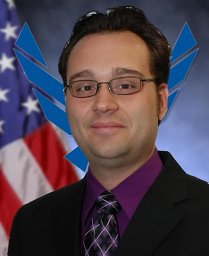 Allen W. Dukes合作论文数5
 Joel Warm合作论文数Warfighter Interface Division, Air Force Research Laboratory;United States Air Force;University of Cininnati5
 Eduardo Salas合作论文数Department of Psychological Sciences, School of Social Sciences, Rice University5Gregory W. Edwards合作论文数AT&T Design Technology, Austin, TX, USA4
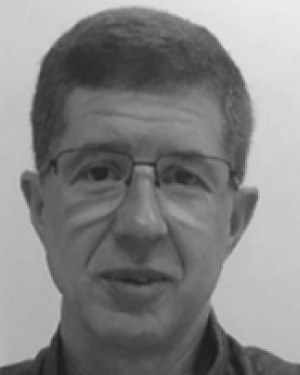 Robert S. Bolia合作论文数4michael grannan合作论文数3russell william white合作论文数3bruce edward stuckman合作论文数3Matthew E. Funke合作论文数3
 Marc M. Sebrechts合作论文数Department of Psychology, Wesleyan University3W. Todd Nelson合作论文数Air Force Research Laboratory3PATRON DAVID合作论文数2stephanie andrews合作论文数2james hyson合作论文数2Randolph Bias合作论文数2
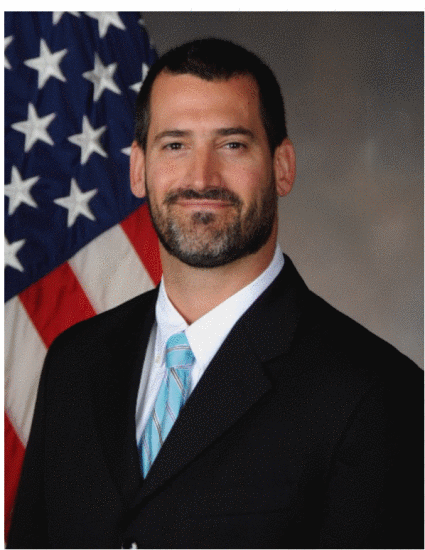 Lyons, J.合作论文数Organizational Effectiveness Res. Team, Wright-Patterson AFB;c;Organizational Effectiveness Res. Team, Wright-Patterson AFB2
 Gerald Matthews合作论文数IST, School of Modeling Simulation and Training, University of Central Florida2
 Carryl L. Baldwin合作论文数Department of Psychology;Old Dominion University;Department of Psychology, Dominion University2Davin Pavlas合作论文数2Raja Parasuraman合作论文数Department of Surgery, Division of Transplant and Hepatobiliary Surgery, Henry Ford Hospital2
 William S Helton合作论文数College of Humanities and Social Sciences, George Mason University2James C. Christensen合作论文数Research psychologist, Air Force Research Laboratory2Michael A. Vidulich合作论文数2
 Christopher K. Mcclernon合作论文数Department of Behavioral Sciences and Leadership, United States Air Force Academy2A. R. Panganiban合作论文数1marc andrew sullivan合作论文数1Katarina Näswall合作论文数1
 Camilla Knott合作论文数1James Oglesby合作论文数1Kevin Leyva合作论文数1Rebecca A. Grier合作论文数1april rose panganiban合作论文数1




