Auditory display research for driving has mainly focused on collision warning signals, and recent studies on auditory in-vehicle information presentation have examined only a limited range of tasks (e.g., cell phone operation tasks or verbal tasks such as reading digit strings). The present study used a dual task paradigm to evaluate a plausible scenario in which users navigated a song list. We applied enhanced auditory menu navigation cues, including spearcons (i.e., compressed speech) and a spindex (i.e., a speech index that used brief audio cues to communicate the user's position in a long menu list). Twenty-four undergraduates navigated through an alphabetized song list of 150 song titles---rendered as an auditory menu---while they concurrently played a simple, perceptual-motor, ball-catching game. The menu was presented with text-to-speech (TTS) alone, TTS plus one of three types of enhanced auditory cues, or no sound at all. Both performance of the primary task (success rate of the game) and the secondary task (menu search time) were better with the auditory menus than with no sound. Subjective workload scores (NASA TLX) and user preferences favored the enhanced auditory cue types. Results are discussed in terms of multiple resources theory and practical IVT design applications.
Graphs are an important part of mathematics education. 30 years of auditory graphs research has led to a better understanding of their potential. However, questions remain about the effectiveness of auditory graphs in a classroom setting. I will be defining success criteria for a system based on graphing problems from an introductory high school math class. These criteria will shape the development and evaluation of an auditory graphs system.
Auditory menus can supplement or replace visual menus to enhance usability and accessibility. Despite the rapid increase of research on auditory displays, more is still needed to optimize the auditory-specific aspects of these implementations. In particular, there are several menu attributes and features that are often displayed visually, but that are not or poorly conveyed in the auditory version of the menu. Here, we report on two studies aimed at determining how best to render the important concept of an unavailable menu item. In Study 1, 23 undergraduates navigated a Microsoft Word-like auditory menu with a mix of available and unavailable items. For unavailable items, using whisper was favored over attenuated voice or saying "unavailable". In Study 2, 26 undergraduates navigated a novel auditory menu. With practice, whispering unavailable items was more effective than skipping unavailable items. Results are discussed in terms of acoustic theory and cognitive menu selection theory.
Despite increased knowledge about how Information and Communications Technologies (ICTs) are used to support religious and spiritual practices, designers know little about how to design technologies for faith-related purposes. Our research suggests incorporating sacred imagery into techno-spiritual applications can be useful in guiding development. We illustrate this through the design and evaluation of a mobile phone application developed to support Islamic prayer practices. Our contribution is to show how religious imagery can be used in the design of applications that go beyond the provision of functionality to connect people to the experience of religion.
Using sound as part of the user interface in a typical software application is still extremely rare, despite the technical capabilities of computers to support such usage. The ICAD community has developed several interface concepts, patterns, and toolkits, and yet the overall software scene has remained dominated by the visual-only user interface. AudioPlusWidgets is a software library offering scientifically grounded audio enhancements to the standard Java Swing API. Through metaphors and transparency, AudioPlusWidgets can be inserted into existing code with minimal changes, easily adding auditory capabilities to the interface components in the system. This library uses an event-based model and an audio manager to render speech, MIDI, and prerecorded sounds.
We present the design and formative evaluation of Sun Dial, an application that supports Muslims' prayer practices. We report on a study that involved identifying prayer as an activity that can be supported with technology; the development of a prototype; and a short-term evaluation of Sun Dial conducted with our local Muslim community. In addition to presenting a novel design idea, our case study contributes to the growing corpus of research examining technology and religion.
We report on an overhaul to the Sonification Sandbox. The Sonification Sandbox provides a cross-platform, flexible tool for converting tabular information into a descriptive auditory graph. It is implemented in Java, using the Java Sound API to generate MIDI output. An improved modular code structure provides a strong user interface and model framework for auditory graph representation and manipulation. A researcher can integrate part or the entire program into a different experimental implementation. The upgraded Sonification Sandbox provides a rich description of the auditory graph representation that can be saved or exported into various file formats. This description includes data representations of pitch, timbre, polarity, pan, and volume, along with graph contexts analogous to visual graph axes. Applications for the Sonification Sandbox include experimentation with various sonification techniques, data analytics beyond visualization, science education, auditory display for the blind, and musical interpretation of data.
Members of the ICAD community might contend that auditory interfaces and even just well-designed sound in computer interfaces could be used more often than is currently the case. However, it is not entirely clear where, when, and how sound is actually being employed in everyday software. We discuss the development of a long-term research project aimed at identifying and categorizing sound use in software. Our mixedmethods approach explores software artifacts from three perspectives: detailed program behavior, source code word count of audio terms, and audio infrastructure. These complementary approaches could provide a deeper understanding of sound use today and, we hope, lead to predicting, guiding, and improving the future trajectory of its use.
Figure 22: Code for importing a saved graph file (abstraction), then exporting an image (reification). is a software library for developer implementation underneath end-user software. Danny could be using the Sonification Sandbox, a web-based alternative, or a completely separate program6. Part of this flexibility stems from a common model, the AGM, and part stems from the conversion tools found in the AGFC. Many abstractors and reifiers are provided as part of the core AGFC. Table 8 provides an overview. The translation architecture has a few major components. First, every translator object is either an Abstractor or a Reifier. An abstractor takes an argument which captures the input artifact, and outputs a graph model. A reifier takes in a graph model and an output target, and sets up the output at the target. As mentioned before, Abstractors and Reifiers are Translators, and have a lot in common. Translators must be triggered to begin. The translation can be threaded or unthreaded (in other words, it can be a background task, behind other software activities). The translator must provide its basic status, such as ready, translating, or done. The translator can also provide other information, such as the approximate completion percent. This can then be shown to the user, in user interface widgets such as progress bars. It may be apparent in the example above that it is common to convert to a lot of reified formats from a single model. During the process of understanding the data or saving it for Since the development of the AGE, the Sonification Sandbox code has become much simpler. Since it no longer has model or conversion functions, its major components make options visible to the user.
 Bruce Walker合作论文数School of Psychology, College of Sciences, Georgia Institute of Technology7
 Myounghoon Jeon合作论文数Michigan Technological University4
 Kelly Caine合作论文数Human-Centered Computing Division, School of Computing, Clemson University;Cybersecurity Center, Clemson University;Faculty of Industrial Engineering, Mechanical Engineering and Computer Science, University of Iceland2
 Michael Arteaga合作论文数2
 Susan Wyche合作论文数Department of Media and Information, Michigan State University2
 Beki Grinter合作论文数Scheller College of Business, Georgia Institute of Technology;College of Computing, Georgia Institute of Technology;GVU Center, Georgia Institute of Technology;Robotics and Intelligent Machines Center, Georgia Institute of Technology;School of Interactive Computing, Georgia Institute of Technology2Siddharth Gupta合作论文数1Jeff Wilson合作论文数Georgia Institute of Technology1
 Thomas M. Gable合作论文数Georgia Institute of Technology1
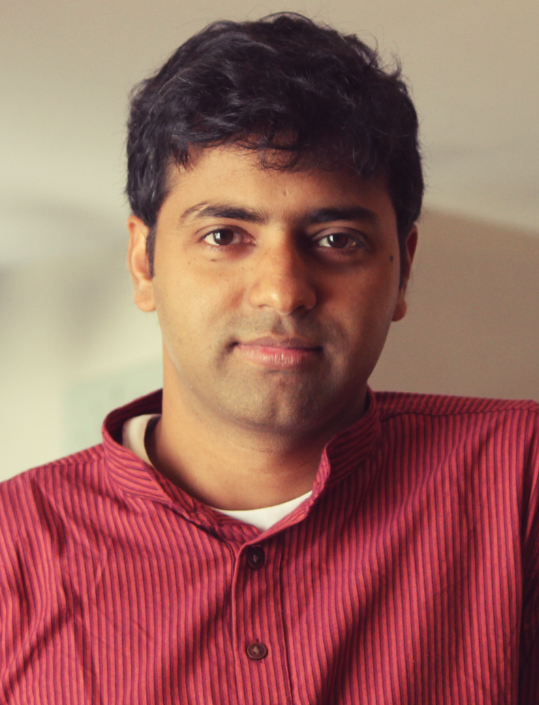 Parameswaran Raman合作论文数Amazon AWS AI1
 Shwetak Patel合作论文数Paul G. Allen School of Computer Science & Engineering, University of Washington1
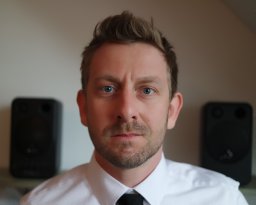 Michael A. Nees合作论文数Sonification Lab;School of Psychology;Georgia Institute of Technology;School of Psychology, Georgia Institute of Technology1




