A naphthalene imide (1) and a naphthalene (2) bearing two pyrrole units have been synthesized, respectively, as anion receptors. It was revealed by 1H NMR spectral studies carried out in CD3CN that receptors 1 and 2 bind various anions via hydrogen bonds using both C-H and N-H donors. Compared with receptor 2, receptor 1 shows higher affinity for the test anions because of the enhanced acidity of its pyrrole NH and naphthalene CH hydrogens by the electron-withdrawing imide substituent. Molecular mechanics computations demonstrate that the receptors contact the halide anions via only one of the two respective available N-H and C-H donors whereas they use all four donors for binding of the oxyanions such as dihydrogen phosphate and hydrogen pyrophosphate. Receptor 1, a push-pull conjugated system, displays a strong fluorescence centered at 625 nm, while receptor 2 exhibits an emission with a maximum peak at 408 nm. In contrast, upon exposure of receptors 1 and 2 to the anions in question, their fluorescence was noticeably quenched particularly with relatively basic anions including F−, H2PO4−, HP2O73−, and HCO3−.
A cyclo[2]carbazole[2]pyrrole (2) consisting of two carbazoles and two pyrroles has been synthesized by directly linking the carbazole 1- and 8-carbon atoms to the pyrrole α-carbon atoms. Macrocycle 2 is an extensively conjugated 16-membered macrocyclic ring that is fixed in a pseudo-1,3-alternate conformation. This provides a preorganized anion binding site consisting of two pyrrole subunits. 1H NMR spectroscopic analysis revealed that only the two diagonally opposed pyrrole NH protons, as opposed to the carbazole protons, take part in anion binding. Nevertheless, cyclo[2]carbazole[2]pyrrole 2 binds representative anions with higher affinity in CD2Cl2 than calix[4]pyrrole (1), a well-studied non-conjugated tetrapyrrole macrocycle that binds anions via four pyrrolic NH hydrogen bond interactions. On the basis of computational studies, the higher chloride anion affinity of receptor 2 relative to 1 is rationalized in terms of a larger binding energy and a lower host strain energy associated with anion complexation. In the presence of excess fluoride or bicarbonate anions, compound 2 loses two pyrrolic NH protons to produce a stable dianionic macrocycle [2-2H]2- displaying a quenched fluorescence.
Tripodal ion pair receptors 1 and 2 consisting of tris(pyridine-2-ylmethyl)amine as a cation binding site linked with nitrophenyl urea or amidonitroindole groups as anion binding motifs have been synthesized. H-1 NMR spectroscopic analyses carried out in 10 % DMSO in acetonitrile revealed that both ion pair receptors 1 and 2 are able to bind the LiCl ion pair with high selectivity over NaCl, KCl, RbCl, and CsCl. H-1 NMR spectroscopic analyses in combination with molecular mechanics calculations proved that the lithium cation is bound to the tris(pyridin-2-ylmethyl)amine subunit while the chloride anion interacts with the NHs of urea or amido indole groups via hydrogen bonds. The addition of fluoride to the lithium cation complexes of receptors 1 and 2 leads to the release of the lithium cation from the receptors whereas chloride and bromide are co-bound with lithium forming LiCl and LiBr ion pair complexes, respectively. The affinity of receptor 1 for the lithium cation was found to be improved by 5.0-fold when the counter anion of Cl- is co-bound within the receptor.
A molecular capsule (1) consisting of two calix[4]pyrroles connected via ethylene diamide linkers has been prepared as an anion receptor. 1H NMR spectroscopic studies carried out in CD2Cl2 revealed that receptor 1 recognizes a variety of anions with different binding modes and stoichiometries. For instance, receptor 1 binds fluoride and acetate with 1:2 receptor/anion stoichiometry and other test anions with 1:1 stoichiometry in solution when their respective tetrabutylammonium (TBA+) salts were used. In contrast, with tetraethylammnium (TEA+) salts, receptor 1 forms 1:2 complexes with chloride and bromide in addition to fluoride, overcoming expected Columbic repulsions between the anions co-bound in close proximity. Receptor 1 is also able to bind oxoanions, such as oxalate (C2O42-), dihydrogen phosphate (H2PO4-), sulfate (SO42-), and hydrogen pyrophosphate (HP2O73-), in the form of 1:1 complexes as the result of presumed cooperation between the two calix[4]pyrrole subunits. The selectivity of receptor 1 for fluoride versus dihydrogen phosphate varies depending on their relative concentrations. For instance, in the presence of less than 1.0 equiv of an equimolar mixture of fluoride and dihydrogen phosphate, receptor 1 shows high selectivity for dihydrogen phosphate. In contrast, in the presence of ≥2.0 anion equiv, receptor 1 binds fluoride preferentially, forming a 1:2 complex. Moreover, when treated with F-, the preformed 1:1 H2PO4- complex of receptor 1 is converted to the corresponding 1:2 receptor/fluoride complex with the release of the prebound dihydrogen phosphate anion. As inferred from gas-phase computations, this seemingly counterintuitive behavior is rationalized in terms of the precomplexed dihydrogen phosphate serving to reduce the reorganization energy required to bind two fluoride anions. The presence of a water molecule in addition to the bound fluoride anions may also favor the formation of the 1:2 F- complex. The present study provides a new approach for fine-tuning the binding selectivity of polytopic anion receptors.
Ce-bastnäsite is the single largest mineral source for light rare-earth elements. In view of the growing industrial importance of rare-earth minerals, it is critical to develop more efficient methods for separating the valuable rare-earth-containing minerals from the surrounding gangue. In this work, we employ a combination of periodic density functional theory (DFT) and molecular mechanics (MM) calculations together with the de novo molecular design program HostDesigner to identify bis-phosphinate ligands that preferentially bind to the (100) Ce-bastnäsite surface rather than the (104) calcite surface. DFT calculations for a simple phosphinate ligand were employed to qualitatively understand key behaviors involved in ligand-metal, ligand-solvent, and solvent-metal interactions. These insights were then used to guide the search for flexible, rigid, and semirigid hydrocarbon linkers to identify candidate bis-phosphinate ligands with the potential to bind preferentially to Ce-bastnäsite. Among the five most promising bis-phosphinate ligands suggested by theoretical studies, three ligands were synthesized and their adsorption characteristics to bastnäsite (100) interfaces were characterized using vibrational sum-frequency (vSFG) spectroscopy, attenuated total reflectance Fourier transform infrared (ATR-FTIR) spectroscopy, and isothermal titration calorimetry (ITC). The efficacy of the selective interfacial molecular binding was demonstrated by identifying a bis-phosphinate ligand capable of providing an overall higher surface coverage of alkyl groups relative to a monophosphinate ligand. The results highlight the interplay between adsorption binding strength and maximum surface coverage in determining ligand efficiency to render the mineral surface hydrophobic. DFT calculations further indicate that all tested ligands have higher affinity for Ce-bastnäsite than for calcite. This is consistent with the ITC data showing stronger adsorption enthalpy to bastnäsite than to calcite, making these ligands promising candidates for selective flotation of Ce-bastnäsite.
The location of intermolecular lone pair atom contacts with C6F5X, where X = any atom, was evaluated using the Cambridge Structural Database (CSD). The results establish that it is not possible to distinguish the distribution of lone pair atoms in contact with this arene surface from an isotropic distribution of van der Waals contacts. In other words, the CSD provides no evidence for either the directionality or the existence of the lone pair-pi interaction with this electron-deficient arene. The current findings are in stark contrast to prior reports that crystal structure data provide (i) examples of lone pair-pi interactions and (ii) evidence that lone pair-pi interactions are strongly directional. Examination of the previous CSD analyses reveals that in every case the data had been misinterpreted. The most common mistake involves using search criteria to select subsets of contacts and then attaching significance to these selected contacts without the context of the entire contact distribution.
Using fused [ n ]polynorbornane scaffolds functionalised at each end with a thiourea recognition unit a series of anion hosts of increasing length were constructed. The three longest [6]polynorbornyl hosts possessed central functionality to influence the binding cleft. The functional groups comprised (i) two methyl esters (ii) an unfunctionalised imide to introduce an additional N–H hydrogen‐bond donor and (iii) a large p ‐anisole group to provide negative steric interactions. The family of bisthiourea hosts were evaluated for their ability to bind five aromatic dicarboxylate guests of varying shapes and lengths.
Supramolecular assembly of well-defined discrete architectures has been of great interest due to the tunable properties of these structures in functional materials and bio-mimicking. While metal-coordination-driven assembly has been extensively studied, anion-coordination-driven assembly (ACDA) is just emerging for constructing complex supramolecular structures. Herein two A(2n)L(2n) (A = anion, L = ligand; n = 1 or 2) 'aniono'-supramolecular assemblies, i.e. double helicates and the first anion grid, have been constructed based on the coordination between phosphate (PO43-) anion and a bis-tris(urea) ligand. Moreover, the aniono-grid and double helicate motifs can be readily interconverted under ambient conditions by simply changing the counter-cation. These results redefine the power and scope of ACDA, which may represent a new approach in the assembly of well-defined architectures in parallel with the metal coordination-driven assembly of metallo-supramolecules.
The binding interactions between the azide anion (N3-) and the strapped calix[4]pyrroles 2 and 3 bearing auxiliary hydrogen bonding donors on the bridging moieties, as well as of normal calix[4]pyrrole 1, were investigated via 1H NMR spectroscopic and isothermal titration calorimetry analyses. The resulting data revealed that receptors 2 and 3 have significantly higher affinities for the azide anion in organic media as compared with the unfunctionalized calix[4]pyrrole 1 and other azide receptors reported to date. Single crystal X-ray diffraction analyses and calculations using density functional theory revealed that receptor 2 binds CsN3 in two distinct structural forms. As judged from the metric parameters, in the resulting complexes one limiting azide anion resonance contributor is favored over the other, with the specifics depending on the binding mode. In contrast to what is seen for 2, receptor 3 forms a CsN3 complex in 20% CD3OD in CDCl3, wherein the azide anion is bound only vertically to the NH protons of the calix[4]pyrrole and the cesium cation is complexed within the cone shaped-calix[4]pyrrole bowl. The bound cesium cation is also in close proximity to a naphthobipyrrole subunit present in a different molecule, forming an apparent cation-π complex.
Fused [3]polynorbornanes functionalised with flexible ethylenethiourea “arms” were investigated as hosts for binding the structural isomers terephthalate and isophthalate. It was intuitively thought that the flexibility of the arms would ensure strong binding of both species. However, both solution and in-silico experiments confirmed much stronger binding of isophthalate. Of interest, molecular modelling indicated that the arms possessed only limited flexibility. Counterintuitively this work indicates that this host, despite the flexible arms, is actually highly preorganised and adopts a remarkably similar structure when binding both guests and it is only the hydrogen bonding interactions that vary.
Computer-aided molecular design and high-throughput screening of viable host architectures can significantly reduce the efforts in the design of novel ligands for efficient extraction of rare earth elements. This paper presents a computational approach to the deliberate design of bis-phosphine oxide host architectures that are structurally organized for complexation of trivalent lanthanides. Molecule building software, HostDesigner, was interfaced with molecular mechanics software, PCModel, providing a tool for generating and screening millions of potential R-2(O)P-link-P(O)R-2 ligand geometries. The molecular mechanics ranking of ligand structures is consistent with both the solution-phase free energies of complexation obtained with density functional theory and the performance of known bis-phosphine oxide extractants. For the case where the link is -CH2-, evaluation of the ligand geometry provides the first characterization of a steric origin for the,`anomalous aryl strengthening" effect. The design approach has identified a number of novel bis-phosphine oxide ligands that are better organized for lanthanide complexation than previously studied examples.
An entry from the Cambridge Structural Database, the world’s repository for small molecule crystal structures. The entry contains experimental data from a crystal diffraction study. The deposited dataset for this entry is freely available from the CCDC and typically includes 3D coordinates, cell parameters, space group, experimental conditions and quality measures.
The ability to predict the equilibrium constants for the formation of 1:1 uranyl/ligand complexes (log K1 values) provides the essential foundation for the rational design of ligands with enhanced uranyl affinity and selectivity. We use density functional theory (B3LYP) and the integral equation formalism polarizable continuum model (IEF-PCM) to compute aqueous stability constants for UO2(2+) complexes with 18 donor ligands. Theoretical calculations permit reasonably good estimates of relative binding strengths, while the absolute log K1 values are significantly overestimated. Accurate predictions of the absolute log K1 values (root-mean-square deviation from experiment <1.0 for log K1 values ranging from 0 to 16.8) can be obtained by fitting the experimental data for two groups of mono- and divalent negative oxygen donor ligands. The utility of correlations is demonstrated for amidoxime and imide dioxime ligands, providing a useful means of screening for new ligands with strong chelating capability to uranyl.
Aryl CH hydrogen bonds (HBs) are now commonly recognized as important factors in a number of fields, including molecular biology, stereoselective catalysis, and anion supramolecular chemistry. As the utility of CH HBs has grown, so to has the need to understand the structure activity relationship for tuning both their strength and selectivity. Although there has been significant computational effort in this area, an experimental study of the substituent effects on CH HBs has not been previously undertaken. Herein we disclose a systematic study of a single CH HB by using traditional urea donors as directing groups in a supramolecular binding cavity. Experimentally determined association constants are examined by a combination of computational (electrostatic potential) and empirical (am and ad values for substituent effects. The dominance of electrostatic parameters, as observed in a computational DFT study, is consistent with current CH HB theory; however, a novel anion dependence of the substituent effects is revealed in solution.
Cone- and conformationally mobile calix[4]arene-strapped calix[4]pyrroles bind cesium salts via various different binding modes.
A novel ligand-functionalized adsorbent material was prepared using a combination of radiation-induced graft polymerization (RIGP) and click chemistry (1,3 cycloaddition reaction). The design of the ligand-containing amidoxime functionality is based on its chelating efficiency with uranium. In this process, RIGP is used to graft polymer chains on fiber substrates, where the fibers are prepared by irradiating and treating polyethylene (PE) with different bulk ratios of vinyl benzyl chloride and acrylic acid or itaconic acid. Furthermore, chemical modifications of these fibers are performed using a two-step process, where novel bisimidoxime ligands are incorporated into fibers. These ligands contain imidedioxime, which is known to be a uranophile. Also, the core structure of the ligand containing three donor atoms facilitates the formation of chelate with uranyl ion in media such as seawater. Density functional theory calculations were performed to quantify the binding strength with the uranyl ion. When tested with simulated seawater with a uranium concentration of 6 ppm at pH 8.0-8.3, the developed materials showed moderate to high uranium (similar to 35-50 g U/kg adsorbent) adsorption capacity.
Syntheses and spectroscopic characterization data for two new hybrid chelating ligands, 4,6-bis[(diphenyl-N,N-diethylcarbamoylmethylphosphine oxide)methyl]dibenzothiophene (2) and 4,6-bis[(diphenyl-N,N-diethylcarbamoylmethylphosphine oxide)methyl]dibenzothiophene 5,5-dioxide (3), that contain two CMPO fragments grafted onto dibenzothiophene and dibenzothiophene sulfone platforms, respectively, are presented. Coordination chemistry with selected lanthanide nitrates is described along with a X-ray crystal structure determination for an unexpected Eu(III) complex, Eu(4)(NO3)3 that contains the intermediate ligand oxidation species 4,6-bis[(diphenyl-N,N-diethylcarbamoylmethylphosphine oxide)methyl]dibenzothiophene 5-oxide (4).
Selective extraction of minor actinides from lanthanides is a critical step in the reduction of radiotoxicity of spent nuclear fuels. However, the design of suitable ligands for separating chemically similar 4f- and 5f-block trivalent metal ions poses a significant challenge. First-principles calculations should play an important role in the design of new separation agents, but their ability to predict metal ion selectivity has not been systematically evaluated. In this work, we examine the ability of several density functional theory methods to predict selectivity of Am(iii) and Eu(iii) with oxygen, mixed oxygen-nitrogen, and sulfur donor ligands. The results establish a computational method capable of predicting the correct order of selectivities obtained from liquid-liquid extraction and aqueous phase complexation studies. To allow reasonably accurate predictions, it was critical to employ sufficiently flexible basis sets and provide proper account of solvation effects. The approach is utilized to estimate the selectivity of novel amide-functionalized diazine and 1,2,3-triazole ligands.
 Bruce A. Moyer合作论文数Chemical Sciences Division, Oak Ridge National Laboratory28
 Radu Custelcean合作论文数Oak Ridge National Laboratory25
 Laetitia H Delmau合作论文数Radioisotope Science and Technology Division, Isotope Science and Enrichment Directorate, Oak Ridge National Laboratory22
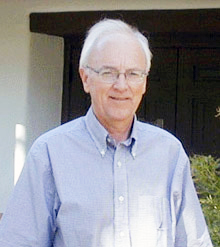 Bob Paine合作论文数Department of Chemistry and Chemical Biology, University of New Mexico21
 Vyacheslav Bryantsev合作论文数Oak Ridge National Laboratory19
 Jonathan L Sessler (乔纳森·塞斯乐)合作论文数Department of Chemistry, College of Natural Sciences, The University of Texas at Austin17
 Sabrina Ouizem合作论文数15
 Bm Rapko合作论文数15Diane A. Dickie合作论文数Department of Chemistry, Simon Fraser University15
 David A. Dixon合作论文数Department of Chemistry and Biochemistry, College of Arts & Sciences, The University of Alabama14Rosario-Amorin Daniel合作论文数14
 Gregg Lumetta合作论文数Pacific Northwest National Laboratory14Sung Kuk Kim合作论文数13
 Mark L. Dietz合作论文数Department of Chemistry and Biochemistry, University of WI-Milwaukee13
 Jorge Garza合作论文数Departamento de Quı́mica, Universidad Autónoma Metropolitana Iztapalapa13
 Rubicelia Vargas合作论文数Departamento de Quı́mica, Universidad Autónoma Metropolitana Iztapalapa13
 Sylvie Pailloux合作论文数12Eileen N. Duesler合作论文数12Jr Rustad合作论文数11Jc Bryan合作论文数11
 Richard G. Finke合作论文数Department of Chemistry, Colorado State University11Sinisa Vukovic合作论文数11Vincent M. Lynch合作论文数Department of Chemistry and Biochemistry, The University of Texas at Austin11Tk Firman合作论文数10
 Robin D. Rogers合作论文数Department of Chemistry and Biochemistry, College of Arts & Sciences, The University of Alabama;525 Solutions, Inc.10
 David R. Walt合作论文数Wyss Institute for Bioinspired Engineering, Harvard University;Department of Biologically Inspired Engineering, Harvard Medical School;Brigham and Women's Hospital;Protillion Biosciences;Vizgen;Sherlock Biosciences;Arbor Biotechnologies;Ultivue;Gloucester Marine Genomics Institute;Quanterix10Ra Sachleben合作论文数9
 James Hutchison合作论文数College of Arts and Sciences, University of Oregon9Sung Ok Kang合作论文数9neil j young合作论文数8Podair Julien合作论文数8
 Andrew D. Bond合作论文数Department of Chemistry, University of Cambridge8
 Chuandong Jia (贾传东)合作论文数Colledgl of Chemistry & Materials Science, Northwestern University7Gilbertson Robert D合作论文数7Jeffrey C. Bryan合作论文数7
 Renato Chiarizia合作论文数Argonne National Laboratory7
 Kenneth N. Raymond合作论文数Department of Chemistry, College of Chemistry, University of California Berkeley7Albert W Herlinger合作论文数7
 Brian M Rapko合作论文数7
 Lori A. Watson合作论文数Department of Chemistry;Molecular Structure Center;Indiana University;Molecular Structure Center, Indiana University7Darren C Johnson合作论文数6
 John Nicholas合作论文数Molecular Science Research Center, Pacific Northwest Laboratory6Alisha D. Ray合作论文数Department of Chemistry, The University of New Mexico6Vj Huber合作论文数5Bk Mcnamara合作论文数5
 Jong Seung Kim合作论文数Department of Chemistry, College of Science, Korea University5
 De-en Jiang合作论文数Department of Chemical and Biomolecular Engineering, Vanderbilt University5Richard A. Sachleben合作论文数5
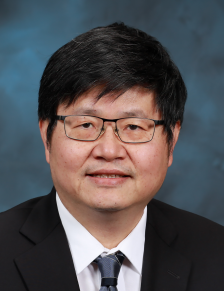 Sheng Dai合作论文数Department of Chemistry, College of Arts & Sciences, The University of Tennessee, Knoxville;Nanomaterials Chemistry Group, Chemical Sciences Division, Oak Ridge National Laboratory5




