The N atoms of the title compound, C 18 H 16 N 2 O 4 S 2 , are not preorganized for metal cation binding. The N—H groups form hydrogen bonds with symmetry-equivalent sulfonamide groups.
The crystal structure of hexaaquazinc triflate is reported. The zinc center is surrounded by an octahedral environment of aqua ligands. The triflate anions occupy the second coordination sphere forming O–H⋅⋅⋅O hydrogen bonds with the aqua ligands. Thermogravimetric analysis is consistent with six water molecules binding to the cation.
Bis-cage-annulated 18-crown-6 and 20-crown-6 macrocyclic ethers (i.e., 1 and 2 , respectively) have been synthesized, and their alkali metal picrate extraction profiles have been determined. Host system 1 proved to be a significantly more avid alkali metal cation complexant than 2 and somewhat more avid than 18-crown-6. Both 1 and 18-crown-6 display modest selectivity toward K + and Rb + . A stable host–guest complex was prepared by slow evaporation of a CH 2 Cl 2 –hexane solution of an equimolar mixture of 2 and potassium picrate. The X-ray crystal structure of this complex reveals that picrate anion functions as a bidentate ligand therein. The gas-phase interaction energy between the 2 ⋅ K + complex and picrate anion was calculated to be ca. −64.9 kcal mol −1 , thereby indicating that participation of picrate anion as an additional bidentate ligand results in significant stabilization of complex 10 .
The podand, bis(2-methoxyphenoxy)m-xylene (1), was designed and synthesized as a potential host for the cesium ion. Its structure was determined by single crystal X-ray diffraction. It crystallizes in P21/c with cell dimensions: a = 8.5723(7) Å, b = 8.3931(14) Å, c = 25.2879(26) Å, β = 96.224(9)○, and V = 1808.7(4) Å3. A crown derivative, tribenzo-21-crown-6 (2), was also prepared and structurally characterized. It also crystallizes in P21/c with cell dimensions: a = 15.5825(13) Å, b = 15.8648(16) Å, c = 8.8266(7) Å, β = 95.247(6)○, and V = 2172.9(3) Å3. The structures exhibit hydrogen bonding, and are evaluated in terms of complementarity and preorganization for cesium binding.
Reactions of W(CO)3(phen)(EtCN) with butane thiols, thiophenol, 1,2-benzenedithiol, and 3,4-toluenedithiol have been investigated. Reaction of butanethiol results in simple ligand exchange to form the thiol complex W(CO)3(phen)(nortBuSH). Reaction with thiophenol results in oxidative addition to form the W(II) thiolate hydride complex W (CO)3(phen)(SPh)(H). The lower reducing power of Mo compared to W is demonstrated in that simple ligand binding of PhSH to Mo(0) occurs forming Mo(CO)3(phen)(PhSH). Reactions of arene dithiols with W(CO)3(phen)(EtCN) were found to proceed with initial oxidative addition of one S–H bond of the chelating dithiols to form W(CO)3(phen)(H)[S–arene(SH)]. These complexes slowly eliminate H2 and CO to form W(CO)2(phen)(arenedithiolate) complexes. The same complexes can be formed by thiol/thiolate exchange reactions: W(CO)2(phen)(SR)2 (R=tBu, Ph) react quantitatively with arene dithiol to yield W(CO)2(phen)(arenedithiolate). The crystal structure of W(CO)2(phen)(3,4-toluenedithiolate) has been determined and is trigonal prismatic rather than octahedral. Values for ΔH° (thiol/thiolate exchange) have been measured by solution calorimetry relative to W(CO)2(phen)(StBu)2=0.0 kcal mol−1; (CO)2(phen)(SPh)2=−7.2±0.4 kcal mol−1 and W(CO)2(phen)(3,4-toluenedithiolate)=−12.5±0.6 kcal mol−1.
The crown ether portion of the title complex, C 50 H 66 O 6 ·C 3 H 7 NO, is not pre-organized for metal binding to the four calix[4]arene O atoms. N,N -Dimethylformamide forms a hydrogen-bond bridge between two calix[4]arene–crown molecules.
anti -25,27-Bis- n -octyloxycalix[4]arene, the paco -isomer of25,27-bis- n -octyloxycalix[4]arene crown-6 ether, and the paco - and1,3- alt isomers of 25,27-bis- n -octyloxycalix[4]arene t -butylbenzocrown-6 ether were prepared. The crystal structures of anti -25,27-bis- n -octyloxycalix[4]arene, paco -25,27-bis- n -octyloxycalix[4]arene crown-6, and 1,3- alt -25,27-bis- n -octyloxycalix[4]arene crown-6 were determined and thesolution structure of anti -25,27-bis- n -octyloxycalix[4]arene was studied by 2D- and VT-NMR. The extraction of alkali metal nitrates by the paco -25,27-bis- n -octyloxycalix[4]arene crown-6 and t -butylbenzocrown-6 ethers in 1,2-dichloroethane was compared to that of the corresponding 1,3- alt isomers.
Three 25,27-dihydrocalix[4]arene derivatives, bearing benzonitrile and acetone groups on the oxygens, were prepared and structurally characterized. All three structures crystallize in \(P\bar 1\), with cell dimensions: bis(benzonitrile)calix[4]arene·toluene, a = 11.530(2) Å, b = 12.013(2) Å, c = 14.089(4) Å, α = 103.555(18)°, β = 94.341(18)°, γ = 104.704(16)°, and V = 1815.9(7) Å3; anti-bis-acetone-calix[4]arene, a = 7.5847(8) Å, b = 12.0948(17) Å, c = 15.3375(16) Å, α = 78.982(10)°, β = 76.932(9)°, γ = 73.129(10)°, and V = 1299.6(3) Å3; syn-bis-acetone-calix[4]arene, a = 9.080(3) Å, b = 10.391(3) Å, c = 14.816(3) Å, α = 96.998(19)°, β = 100.02(2)°, γ = 103.93(3)°, and V = 1299.6(3) Å3.
The crown ether portion of the title complex, C50H66O6·C3H7NO, is not pre-organized for metal binding to the four calix[4]arene O atoms. N,N-Dimethylformamide forms a hydrogen-bond bridge between two calix[4]arene–crown molecules.
The structure of N , N ′-diphenyl-1,3-benzenedisulfonamide ( 1 ) was determined by single crystal X-ray diffraction. It crystallizes in P 2 1 / n with cell dimensions: a = 11.8390(6) Å, b = 12.3950(10) Å, c = 12.1184(10) Å, β = 94.388(6)°, and V = 1773.1(2) Å 3 . Its di- t -butyl derivative, N , N ′-bis(4- t -butylphenyl)-1,3-benzenedisulfonamide ( 2 ), was prepared and structurally characterized as two solvated structures. Both crystallize in P 1 with cell dimensions: 2 ⋅ CF 3 CH 2 OH, a = 9.469(2) Å, b = 10.0039(18) Å, c = 16.385(3) Å, α = 85.561(16)°, β = 83.035(18)°, γ = 72.459(16), and V = 1467.7(5) Å 3 ; 2 ⋅ ClCH 2 CH 2 Cl, a = 9.559(2) Å, b = 9.8125(12) Å, c = 17.100(6) Å, α = 82.495(19)°, β = 83.47(2)°, γ = 70.100(15), and V = 1491.1(6) Å 3 . The structures exhibit hydrogen-bonding, and are evaluated in terms of preorganization for anion binding.
Single crystal X-ray diffraction analyses of calix[4]arene-bis-crown-6 ( 1 ) and calix[4]arene-bis-benzocrown-6⋯1,2-dichloroethane ( 2 ) are reported. Thesestructures offer an opportunity to study the conformation of calix[4]arene-bis-crown-6 molecules in the absence of solvent, and when very weakly solvated. These structures exhibit different conformations of the crown ring, and limited flexibility of the calix[4]arene,but do not show solvent or crown inclusion in the calix[4]arene cavity. Comparisons to similar structures are made, and the implications for cesium binding are discussed.
The structure of the title compound, C 40 H 44 O 8 , differs from previously determined structures of triptyceno–crown ether molecules as its longer crown ether chain does not congest a triptycene cavity.
Two Tc-containing products were isolated from the reaction between CS 2 and the electron-deficient complex TcCl(dppe) 2 . The title dithioformate complex, [Tc(S 2 CH)(dppe) 2 ]·3C 6 H 6 , where dppe is 1,2-bis(diphenylphosphino)ethane (C 26 H 24 P 2 ), exhibits Tc—P bond lengths ranging from 2.3566 (14) to 2.3884 (14) Å, which are little shorter than normally found. The other product is [TcCl(CS)(dppe) 2 ], and is the first reported Tc–thiocarbonyl complex.
Compound 5, a cage-annulated monoaza-18-crown-6 macrocyclic polyether, has been synthesized, and its alkali metal picrate extraction capabilities have been assessed relative to those of the parent monoaza-18-crown-6 host system. It was observed that both 5 and monoaza-18-crown-6 are selective K+ picrate extractants; however, 5 appears generally to be a somewhat more efficient alkali metal picrate extractant than monoaza-18-crown-6. Interestingly, both the avidity and selectivity of 5 toward extraction of alkali metal picrates from aqueous solution into CHCl3 appears to be pH dependent. In addition, the X-ray crystal structure of an unusual hydronium ion complex of 5 [i.e., 5(HCl)(H2O)-(CHCl3)2] has been determined. The X-ray structure thus determined is compared with the corresponding structure of 5(HCl)(H2O) that has been calculated via application of B3LYP Density Functional Theory.
An entry from the Cambridge Structural Database, the world’s repository for small molecule crystal structures. The entry contains experimental data from a crystal diffraction study. The deposited dataset for this entry is freely available from the CCDC and typically includes 3D coordinates, cell parameters, space group, experimental conditions and quality measures.
Tribenzo-18-crown-6 binds two acetonitrile ligands, i.e. C 24 H 24 O 6 ·2C 2 H 3 N, one to each face of the crown ring. The crown conformation is relatively low in energy, but does not appear optimized for cation binding. Few significant intermolecular interactions are observed.
Two Tc-containing products were isolated from the reaction between CS 2 and the electron-deficient complex TcCl(dppe) 2 . The title dithioformate complex, [Tc(S 2 CH)(dppe) 2 ]·3C 6 H 6 , where dppe is 1,2-bis(diphenylphosphino)ethane (C 26 H 24 P 2 ), exhibits Tc—P bond lengths ranging from 2.3566 (14) to 2.3884 (14) Å, which are little shorter than normally found. The other product is [TcCl(CS)(dppe) 2 ], and is the first reported Tc–thiocarbonyl complex.
 Richard A. Sachleben合作论文数17
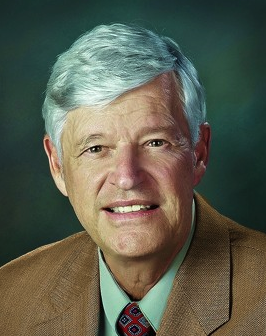 Gregory J Kubas合作论文数Chemistry Division, Los Alamos National Laboratory12Anthony K. Burrell合作论文数Mat Phys & Applicat Div, Los Alamos Natl Lab8
 Benjamin P. Hay合作论文数Supramolecular Design Institute7
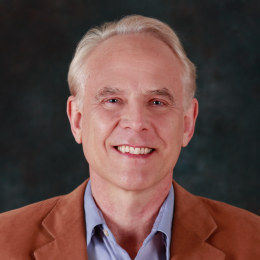 Bruce A. Moyer合作论文数Chemical Sciences Division, Oak Ridge National Laboratory6Tatiana G. Levitskaia合作论文数6
 Carl D. Hoff合作论文数College of Arts and Sciences, University of Miami5Russell F. Lang合作论文数5Alan P. Marchand合作论文数University of North Texas4
 Konstantinos Kavallieratos合作论文数Yale Chemistry Dept.4Td Ju合作论文数3
 Carol Burns合作论文数3
 Cassandra Eagle合作论文数3Anna Hazlewood合作论文数3
 David R. Walt合作论文数Wyss Institute for Bioinspired Engineering, Harvard University;Department of Biologically Inspired Engineering, Harvard Medical School;Brigham and Women's Hospital;Protillion Biosciences;Vizgen;Sherlock Biosciences;Arbor Biotechnologies;Ultivue;Gloucester Marine Genomics Institute;Quanterix3
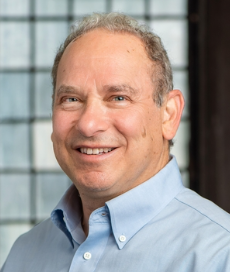 James Mayer合作论文数Department of Chemistry, Yale Faculty of Arts and Sciences, Yale University3Trevor D. Power合作论文数3
 Nancy L. Engle合作论文数Chemical Separations Group;Chemical and Analytical Sciences Division;Oak Ridge National Laboratory;Chemical Separations Group, Oak Ridge National Laboratory3Zilin Huang合作论文数2
 Alfred P. Sattelberger合作论文数Chemical Sciences and Engineering Division, Argonne National Laboratory;College of Sciences, University of Central Florida2
 Jeffrey B. Arterburn合作论文数Department of Chemistry and Biochemistry, New Mexico State University2
 Butts Matthew合作论文数2
 Raymond John Butcher合作论文数Department of Chemistry, College of Arts & Sciences, Howard University2Andrei A. Gakh合作论文数The N. D. Zelinsky Institute of Organic Chemistry, 117418, Leninsky Pr. 47, Moscow, Russia2Telvin D. Ju合作论文数2Gerard J. Bunick合作论文数2Ian M. Fogarty合作论文数2
 Laetitia H Delmau合作论文数Radioisotope Science and Technology Division, Isotope Science and Enrichment Directorate, Oak Ridge National Laboratory2Xiao-Liang Luo合作论文数2Keith A. Hall合作论文数2Kevin C. Ott合作论文数2Re Barrans合作论文数1V. Lamare合作论文数1Lada Klaić合作论文数1Shaoguang Feng合作论文数1Gabor Kiss合作论文数1Od Espetia合作论文数1
 Steven Haefner合作论文数bridgewater state university1
 David L Clark合作论文数1Lm Rogers合作论文数1Gj Kubas合作论文数1G Kiss合作论文数1
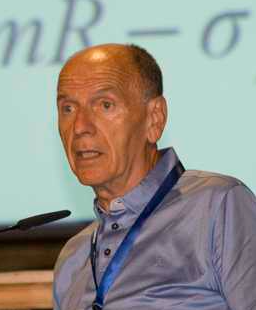 Carmelo Giacovazzo合作论文数Dipartimento Geomineralogico della Facolta di Scienze, Bari University;Istituto di Cristallografia, Consiglio Nazionale delle Ricerche1
 Gary J. Van Berkel合作论文数Mass Spectrometry and Laser Spectroscopy Group, Oak Ridge National Laboratory/Bredesen Center for Interdisciplinary Research and Graduate Education, University of Tennessee, Knoxville1Zhang Cungen合作论文数1
 Thomas Cundari合作论文数Department of Chemistry, College of Science, University of North Texas1
 Robin D. Rogers合作论文数Department of Chemistry and Biochemistry, College of Arts & Sciences, The University of Alabama;525 Solutions, Inc.1
 Paul R. Sharp合作论文数Department of Chemistry, University of Missouri-Kansas City1
 Renato Chiarizia合作论文数Argonne National Laboratory1




