We present rosbridge, a middleware abstraction layer which provides robotics technology with a standard, minimalist applications development framework accessible to applications programmers who are not themselves roboticists. Rosbridge provides a simple, socket-based programmatic access to robot interfaces and algorithms provided (for now) by ROS, the open-source “Robot Operating System”, the current state-of-the-art in robot middleware. In particular, it facilitates the use of web technologies such as Javascript for the purpose of broadening the use and usefulness of robotic technology. We demonstrate potential applications in the interface design, education, human-robot interaction and remote laboratory environments.
In this article we investigate the representation and acquisition of Semantic Objects Maps (SOMs) that can serve as information resources for autonomous service robots performing everyday manipulation tasks in kitchen environments. These maps provide the robot with information about its operation environment that enable it to perform fetch and place tasks more efficiently and reliably. To this end, the semantic object maps can answer queries such as the following ones: "What do parts of the kitchen look like?", "How can a container be opened and closed?", "Where do objects of daily use belong?", "What is inside of cupboards/drawers?", etc.The semantic object maps presented in this article, which we call SOM+, extend the first generation of SOMs presented by Rusu et al. [1] in that the representation of SOM+ is designed more thoroughly and that SOM+ also include knowledge about the appearance and articulation of furniture objects. Also, the acquisition methods for SOM+ substantially advance those developed in [1] in that SOM+ are acquired autonomously and with low-cost (Kinect) instead of very accurate (laser-based) 3D sensors. In addition, perception methods are more general and are demonstrated to work in different kitchen environments.
Robot manipulator designs are increasingly focused on low cost approaches, especially those envisioned for use in unstructured environments such as households, office spaces and hazardous environments. The cost of angular sensors varies based on the precision offered. For tasks in these environments, millimeter order manipulation errors are unlikely to cause drastic reduction in performance. In this paper, estimates the joint angles of a manipulator using low cost triaxial accelerometers by taking the difference between consecutive acceleration vectors. The accelerometer-based angle is compensated with a uniaxial gyroscope using a complementary filter to give robust measurements. Three compensation strategies are compared: complementary filter, time varying complementary filter, and extended Kalman filter. This sensor setup can also accurately track the joint angle even when the joint axis is parallel to gravity and the accelerometer data does not provide useful information. In order to analyze this strategy, accelerometers and gyroscopes were mounted on one arm of a PR2 robot. The arm was manually moved smoothly through different trajectories in its workspace while the joint angle readings from the on-board optical encoders were compared against the joint angle estimates from the accelerometers and gyroscopes. The low cost angle estimation strategy has a mean error 1.3° over the three joints estimated, resulting in mean end effector position errors of 6.1 mm or less. This system provides an effective angular measurement as an alternative to high precision encoders in low cost manipulators and as redundant measurements for safety in other manipulators.
This paper documents the technology developed during the creation of the PR2 Remote Lab and the process of using it for shared development for Learning from Demonstration. Remote labs enable a larger and more diverse group of researchers to participate directly in state-of-the-art robotics research and will improve the reproducibility and comparability of robotics experiments. We present solutions to interface, control, and design difficulties in the client and server-side software when implementing a remote laboratory architecture. We describe how researchers can interact with the PR2 and its environment remotely through a web interface, as well as develop similar interfaces to visualize and run experiments remotely. Additionally, we describe how the remote lab technology was used by researchers participating in the Robot Learning from Demonstration Challenge (LfD) held in conjunction with the AAAI-11 Conference on Artificial Intelligence. Teams from three institutions used the remote lab as their primary development and testing platform. This paper reviews the process as well as providing observations and lessons learned.
Building robots capable of long term autonomy has been a long standing goal of robotics research. Such systems must be capable of performing certain tasks with a high degree of robustness and repeatability. In the context of personal robotics, these tasks could range anywhere from retrieving items from a refrigerator, loading a dishwasher, to setting up a dinner table. Given the complexity of tasks there are a multitude of failure scenarios that the robot can encounter, irrespective of whether the environment is static or dynamic. For a robot to be successful in such situations, it would need to know how to recover from failures or when to ask a human for help. This paper, presents a novel shared autonomy behavioral executive to addresses these issues. We demonstrate how this executive combines generalized logic based recovery and human intervention to achieve continuous failure free operation. We tested the systems over 250 trials of two different use case experiments. Our current algorithm drastically reduced human intervention from 26% to 4% on the first experiment and 46% to 9% on the second experiment. This system provides a new dimension to robot autonomy, where robots can exhibit long term failure free operation with minimal human supervision. We also discuss how the system can be generalized.
In this paper, we describe a remote lab system that allows remote groups to access a shared PR2. This lab will enable a larger and more diverse group of researchers to participate directly in state-of-the-art robotics research and will improve the reproducibility and comparability of robotics experiments. We identify a set of requirements that apply to all web-based remote laboratories and focus on solutions to these requirements. Specifically, we present solutions to interface, control and design difficulties in the client and server-side software when implementing a remote laboratory architecture. The combination of shared physical hardware and shared middleware software allows for experiments that build upon and compare against results on the same platform and in the same environment for common tasks. We describe how researchers can interact with the PR2 and its environment remotely through a web interface, as well as develop similar interfaces to visualize and run experiments remotely.
This paper presents a robotic system for autonomously scanning wall surfaces by means of inductive, capacitive and AC measurements in order to gather information about flush-mounted power lines, water pipes and cavities. From these data the system generates a 3D map with in-wall information. Algorithms for surface scanning are described enabling robust methods for data acquisition and fusion of the scanning and localization data. The paper describes and evaluates two methods for reconstructing surface and in-wall information: The first one uses occupancy grid mapping along with the elaborated sensing model of the wall scanner, the second is a combination of scanning and mapping. The created 3D map is made available to a second system that projects the map onto the wall surface, removing distortions induced by the lack of a perpendicular projection. That system provides craftsmen the additional information to prevent hitting wires or water pipes when performing drilling tasks. The utilized robots make use of the robot software framework ROS. Keywords: Autonomous wall scanning, in-wall information, flush-mounted piping and electric installations, sensor fusion and localization to a 3D-map, projection of in-wall information, SLAM, occupancy grid mapping, ROS
We present the representation and acquisition of semantic objects maps (SOMs) that can serve as information resources for autonomous service robots performing everyday manipulation tasks in kitchen environments. These maps provide the robot with information about its operation environment that enable it to perform fetch and place tasks more efficiently and reliably. To this end, the semantic object maps can answer queries such as the following ones: “What do parts of the kitchen look like?”, “How can a container be opened and closed?”, “Where do objects of daily use belong?”, “What is inside of cupboards/drawers?”, etc.
A Real-Time-capable Hard- and Software Architecture for Joint Image and Knowledge Processing in Cognitive Automobiles The section Software Architecture includes the KogMo-RTDB, other sections describe the specified real-time system (hard- and software of the reference platform) … Interfaces for Integrating Cognitive Functions into Intelligent Vehicles The section Simulation and Logging is KogMo-RTDB specific, other sections provide the larger context for its application … Design and Capabilities of the Munich Cognitive Automobile This shows the application of the KogMo-RTDB and its architecture within a cognitive automobile (including pictures and GUI screenshots) … Matthias Goebl. Eine realzeitfähige Architektur zur Integration kognitiver Funktionen. Dissertation, Lehrstuhl für Realzeit-Computersysteme, Technische Universität München, 2009. (urn:nbn:de:bvb:91-diss-20090731-795552-1-3) Available as printed …
The physical properties of highly deformable objects such as clothing poses a challenging problem for autonomously acting systems. Especially, grasping and manipulation require new approaches that can accommodate for an object's variable and changing appearance. In this paper, we present a system that is capable of fully autonomously transforming a clothing item from a random crumpled configuration into a folded state. We describe a method to compute valid grasp poses on the cloth which accounts for deformability. Our algorithm includes a novel fold detection and grasp generation strategy, which suggests grasp poses on cloth folds. Machine learning techniques are used to evaluate these grasp poses. In our experiments, we use a stock PR2 robot whose two arms alternatingly perform grasps on a T-shirt equipped with fiducial markers. The goal of this grasp sequence is to bring the T-shirt into a configuration from which the robot can fold it. In several experiments, we demonstrate the performance of our approach.
In this work we report about our efforts to equip service robots with the ability to robustly operate articulated containers such as refrigerators and drawers in kitchen environments. We identified three important aspects for such systems: (1) the ability to detect fixtures on an articulated object, (2) to robustly open and close them and (3) to store and retrieve information about these objects in the map. In particular, we detect grasping fixtures such as handles and knobs in 3D point clouds using a RANSAC-based plane detection and subsequent clustering approach. Further, we developed two types of controllers to operate articulated objects: the first controller is model-free and incrementally opens articulated models. The second controller is model-based and estimates both the kinematic structure and the kinematic parameters. Finally, we store the inferred articulation models into our knowledge processing system KnowRob readily available for later interactions. All software components have been tested on two PR2 (Personal Robot 2) robots located at TUM and Bosch and are freely available on ros.org.
Reliability and availability are major concerns for autonomous systems. A personal robot has to solve complex tasks, such as loading a dishwasher or folding laundry, which are very difficult to automate robustly. In order for a robot to perform better in those applications, it needs to be capable of accepting help from a human operator. Shared autonomy is a system model based on human-robot dialogue. This work aims at bridging the gap between full human control and full autonomy for tasks in the domain of personal robotics. One of the hardest problems for personal robotic systems is perception: perceiving and inferring about objects in the robot's environment. We present a system capable of solving the perceptual inference in combination with a human, such that a human operator functions as a resource for the robot and helps to compensate for limitations of autonomy. In this paper, we show how a human-robot team can work together effectively to solve complex perception tasks. We present a system that asks a human operator to identify objects it doesn't recognize or find. In various experiments with the PR2 robot we show that this shared autonomy system performs more robustly than the robot system alone and that it is capable of tasks which are difficult to accomplish by an autonomous agent.
 Soeren Kammel合作论文数9
 Jan Becker合作论文数Institute of Pathology, Medical School Hannover8
 Charles Duhadway合作论文数Stanford University6Sarah Osentoski合作论文数Science Department, Computer;University of Massachusetts Amherst;Computer Science Department, University of Massachusetts Amherst6
 Moritz Werling合作论文数BMWGroup5
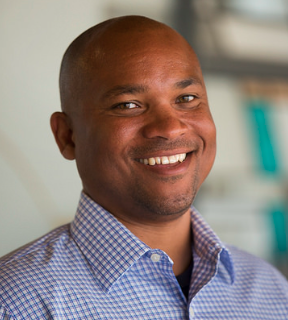 Chad Jenkins合作论文数Electrical Engineering and Computer Science Department, University of Michigan;Robotics Institute, University of Michigan5Graylin Jay合作论文数5
 Christopher Crick合作论文数Computer Science Department,Oklahoma State University5Christian Frese合作论文数4
 Christoph Stiller合作论文数Institute of Measurement and Control Systems, Karlsruher Institut fur Technologie4
 Tobias Gindele合作论文数Bosch Center for Artificial Intelligence4Matthias Goebl合作论文数4
 Christian Bersch合作论文数3
 Michael Beetz合作论文数Institute for Artificial Intelligence, University of Bremen;Faculty for Mathematics & Informatics, University Bremen3Daniel Jagszent合作论文数3
 Dejan Pangercic合作论文数Apex.AI3Julius Ziegler合作论文数Karlsruher Institut fur Technologie3Sören Kammel合作论文数3Stefan Vacek合作论文数3matthias roland合作论文数2
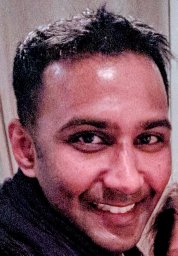 Bharath Sankaran合作论文数Department of Computer Science, University of Southern California2Joachim Schroder合作论文数2Michael Thuy合作论文数2
 Felix Von Hundelshausen合作论文数Institute for Autonomous Systems Technology (TAS),, University of the Bundeswehr Munich2
 Oliver Pink合作论文数2
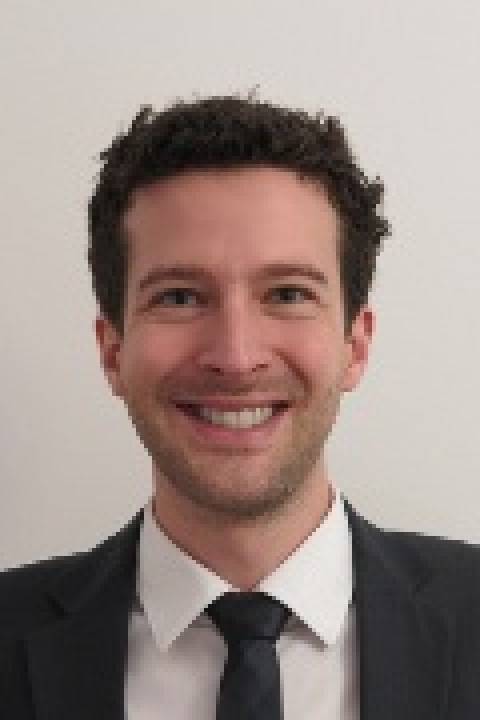 Moritz Tenorth合作论文数Universitat Bremen2sebastian jackisch合作论文数1
 Shuonan DONG合作论文数1Sebastian Drossler合作论文数1
 Jonathan Vorndamme合作论文数Leibniz Univ Hannover, Inst Automat Control, Hanover, NH USA1Sven Kraus合作论文数1
 Klaus Diepold合作论文数Department of Electrical and Computer Engineering, Technische Universitat Munchen1
 Jürgen Sturm合作论文数Intrinsic1Karl-Friedrich Kraiss合作论文数1
 Martin Buss合作论文数School of Computation, Information and Technology, Technical University of Munich1Cheng Wang合作论文数1Michael Schweitzer合作论文数1Georg Färber合作论文数1
 Wolfram Burgard合作论文数Department of Computer Science & Artificial Intelligence, University of Technology Nuremberg1
 Cyrill Stachniss合作论文数Photogrammetry & Robotics Lab, Institute of Geodesy and Geoinformation, University of Bonn;Pheno-Inspect GmbH1
 Rüdiger Dillmann合作论文数Humanoids and Intelligence Systems Lab, Institute for Anthropomatics and Robotics, Karlsruhe Institute of Technology;Department of Computer Science, Karlsruhe Institute of Technology;FZI Forschungszentrum Informatik1Joachim Schröder合作论文数Institut fur Biologie II, Schanzlestr, Universitat Freiburg1
 Nikhil Deshpande合作论文数Dept. of Advanced Robotics
Istituto Italiano di Technologia
(Italian Institute of Technology)1Thomas Rühr合作论文数Institute of Parallel and Distributed Systems, Universität Stuttgart1Stephan Neumaier合作论文数1Youssef Naous合作论文数1Robert Nagel合作论文数1Florian Obermeier合作论文数1
Nikhil Deshpande合作论文数Dept. of Advanced Robotics
Istituto Italiano di Technologia
(Italian Institute of Technology)1Thomas Rühr合作论文数Institute of Parallel and Distributed Systems, Universität Stuttgart1Stephan Neumaier合作论文数1Youssef Naous合作论文数1Robert Nagel合作论文数1Florian Obermeier合作论文数1




