Decomposing outgoing surface radiance into material and illumination during inverse rendering is essential for applications such as relighting and augmented reality, yet it is severely ill-posed since multiple combinations can result in the same observed colour. Capturing an object under multiple lighting conditions usually helps resolve this ambiguity as it constrains the optimization towards correct solutions. In this work, we explore the potential of reconstructing rigidly moving objects – which provides observations of diverse light-surface interactions – to resolve the material-lighting ambiguity in inverse rendering. For this purpose, we introduce a relightable approach that marries object tracking and reconstruction with inverse rendering for general rigidly moving objects. Our experimental analysis on synthetic data demonstrates that motion can be an advantage for disentangling material and lighting: the reconstructed material is significantly more accurate when the object is observed under rigid motion than when it is static. Moreover, results on RGB videos of real hand-held objects show that our pipeline preserves this advantage even under noisy real-world conditions.
Digitizing the physical world into accurate simulation‑ready virtual environments offers significant opportunities in a variety of fields such as augmented and virtual reality, gaming, and robotics. However, current 3D reconstruction and scene-understanding methods commonly fall short in one or more critical aspects, such as geometry completeness, object interactivity, physical plausibility, photorealistic rendering, or realistic physical properties for reliable dynamic simulation. To address these limitations, we introduce HoloScene, a novel interactive 3D reconstruction framework that simultaneously achieves these requirements. HoloScene leverages a comprehensive interactive scene-graph representation, encoding object geometry, appearance, and physical properties alongside hierarchical and inter-object relationships. Reconstruction is formulated as an energy-based optimization problem, integrating observational data, physical constraints, and generative priors into a unified, coherent objective. Optimization is efficiently performed via a hybrid approach combining sampling-based exploration with gradient-based refinement. The resulting digital twins exhibit complete and precise geometry, physical stability, and realistic rendering from novel viewpoints. Evaluations conducted on multiple benchmark datasets demonstrate superior performance, while practical use-cases in interactive gaming and real-time digital-twin manipulation illustrate HoloScene's broad applicability and effectiveness.
We present PBR-SR, a novel method for physically based rendering (PBR) texture super resolution (SR). It outputs high-resolution, high-quality PBR textures from low-resolution (LR) PBR input in a zero-shot manner. PBR-SR leverages an off-the-shelf super-resolution model trained on natural images, and iteratively minimizes the deviations between super-resolution priors and differentiable renderings. These enhancements are then back-projected into the PBR map space in a differentiable manner to produce refined, high-resolution textures. To mitigate view inconsistencies and lighting sensitivity, which is common in view-based super-resolution, our method applies 2D prior constraints across multi-view renderings, iteratively refining the shared, upscaled textures. In parallel, we incorporate identity constraints directly in the PBR texture domain to ensure the upscaled textures remain faithful to the LR input. PBR-SR operates without any additional training or data requirements, relying entirely on pretrained image priors. We demonstrate that our approach produces high-fidelity PBR textures for both artist-designed and AI-generated meshes, outperforming both direct SR models application and prior texture optimization methods. Our results show high-quality outputs in both PBR and rendering evaluations, supporting advanced applications such as relighting.
Reconstructing an object from photos and placing it virtually in a new environment goes beyond the standard novel view synthesis task as the appearance of the object has to not only adapt to the novel viewpoint but also to the new lighting conditions and yet evaluations of inverse rendering methods rely on novel view synthesis data or simplistic synthetic datasets for quantitative analysis. This work presents a real-world dataset for measuring the reconstruction and rendering of objects for relighting. To this end, we capture the environment lighting and ground truth images of the same objects in multiple environments allowing to reconstruct the objects from images taken in one environment and quantify the quality of the rendered views for the unseen lighting environments. Further, we introduce a simple baseline composed of off-the-shelf methods and test several state-of-the-art methods on the relighting task and show that novel view synthesis is not a reliable proxy to measure performance. Code and dataset are available at https://github.com/isl-org/objects-with-lighting .
We present Mesh2NeRF, an approach to derive ground-truth radiance fields from textured meshes for 3D generation tasks. Many 3D generative approaches represent 3D scenes as radiance fields for training. Their ground-truth radiance fields are usually fitted from multi-view renderings from a large-scale synthetic 3D dataset, which often results in artifacts due to occlusions or under-fitting issues. In Mesh2NeRF, we propose an analytic solution to directly obtain ground-truth radiance fields from 3D meshes, characterizing the density field with an occupancy function featuring a defined surface thickness, and determining view-dependent color through a reflection function considering both the mesh and environment lighting. Mesh2NeRF extracts accurate radiance fields which provides direct supervision for training generative NeRFs and single scene representation. We validate the effectiveness of Mesh2NeRF across various tasks, achieving a noteworthy 3.12dB improvement in PSNR for view synthesis in single scene representation on the ABO dataset, a 0.69 PSNR enhancement in the single-view conditional generation of ShapeNet Cars, and notably improved mesh extraction from NeRF in the unconditional generation of Objaverse Mugs.
We present a novel method for guaranteeing linear momentum in learned physics simulations. Unlike existing methods, we enforce conservation of momentum with a hard constraint, which we realize via antisymmetrical continuous convolutional layers. We combine these strict constraints with a hierarchical network architecture, a carefully constructed resampling scheme, and a training approach for temporal coherence. In combination, the proposed method allows us to increase the physical accuracy of the learned simulator substantially. In addition, the induced physical bias leads to significantly better generalization performance and makes our method more reliable in unseen test cases. We evaluate our method on a range of different, challenging fluid scenarios. Among others, we demonstrate that our approach generalizes to new scenarios with up to one million particles. Our results show that the proposed algorithm can learn complex dynamics while outperforming existing approaches in generalization and training performance. An implementation of our approach is available at https://github.com/tum-pbs/DMCF.
3D semantic segmentation is a fundamental building block for several scene understanding applications such as autonomous driving, robotics and AR/VR. Several state-of-the-art semantic segmentation models suffer from the part-misclassification problem, wherein parts of the same object are labelled incorrectly. Previous methods have utilized hierarchical, iterative methods to fuse semantic and instance information, but they lack learnability in context fusion, and are computationally complex and heuristic driven. This paper presents Segment-Fusion, a novel attention-based method for hierarchical fusion of semantic and instance in-formation to address the part misclassifications. The presented method includes a graph segmentation algorithmfor grouping points into segments that pools point-wise features into segment-wise features, a learnable attention-based net-work to fuse these segments based on their semantic and instance features, and followed by a simple yet effective connected component labelling algorithm to convert seg-ment features to instance labels. Segment-Fusion can be flexibly employed with any network architecture for semantic/instance segmentation. It improves the qualitative and quantitative performance of several semantic segmentation backbones by upto 5% on the ScanNet and S3DIS datasets.
We propose generalized convolutional kernels for 3D reconstruction with ConvNets from point clouds. Our method uses multiscale convolutional kernels that can be applied to adaptive grids as generated with octrees. In addition to standard kernels in which each element has a distinct spatial location relative to the center, our elements have a distinct relative location as well as a relative scale level. Making our kernels span multiple resolutions allows us to apply ConvNets to adaptive grids for large problem sizes where the input data is sparse but the entire domain needs to be processed. Our ConvNet architecture can predict the signed and unsigned distance fields for large data sets with millions of input points and is faster and more accurate than classic energy minimization or recent learning approaches. We demonstrate this in a zero-shot setting where we only train on synthetic data and evaluate on the Tanks and Temples dataset of real-world large-scale 3D scenes.
3D semantic segmentation is a fundamental building block for several scene understanding applications such as autonomous driving, robotics and AR/VR. Several state-of-the-art semantic segmentation models suffer from the part misclassification problem, wherein parts of the same object are labelled incorrectly. Previous methods have utilized hierarchical, iterative methods to fuse semantic and instance information, but they lack learnability in context fusion, and are computationally complex and heuristic driven. This paper presents Segment-Fusion, a novel attention-based method for hierarchical fusion of semantic and instance information to address the part misclassifications. The presented method includes a graph segmentation algorithm for grouping points into segments that pools point-wise features into segment-wise features, a learnable attention-based network to fuse these segments based on their semantic and instance features, and followed by a simple yet effective connected component labelling algorithm to convert segment features to instance labels. Segment-Fusion can be flexibly employed with any network architecture for semantic/instance segmentation. It improves the qualitative and quantitative performance of several semantic segmentation backbones by upto 5% when evaluated on the ScanNet and S3DIS datasets.
We present a system for dense keyframe-based camera tracking and depth map estimation that is entirely learned. For tracking, we estimate small pose increments between the current camera image and a synthetic viewpoint. This formulation significantly simplifies the learning problem and alleviates the dataset bias for camera motions. Further, we show that generating a large number of pose hypotheses leads to more accurate predictions. For mapping, we accumulate information in a cost volume centered at the current depth estimate. The mapping network then combines the cost volume and the keyframe image to update the depth prediction, thereby effectively making use of depth measurements and image-based priors. Our approach yields state-of-the-art results with few images and is robust with respect to noisy camera poses. We demonstrate that the performance of our 6 DOF tracking competes with RGB-D tracking algorithms.We compare favorably against strong classic and deep learning powered dense depth algorithms.
We present an approach to Lagrangian fluid simulation with a new type of convolutional network. Our networks process sets of moving particles, which describe fluids in space and time. Unlike previous approaches, we do not build an explicit graph structure to connect the particles but use spatial convolutions as the main differentiable operation that relates particles to their neighbors. To this end we present a simple, novel, and effective extension of N-D convolutions to the continuous domain. We show that our network architecture can simulate different materials, generalizes to arbitrary collision geometries, and can be used for inverse problems. In addition, we demonstrate that our continuous convolutions outperform prior formulations in terms of accuracy and speed.
Single-view depth estimation suffers from the problem that a network trained on images from one camera does not generalize to images taken with a different camera model. Thus, changing the camera model requires collecting an entirely new training dataset. In this work, we propose a new type of convolution that can take the camera parameters into account, thus allowing neural networks to learn calibration-aware patterns. Experiments confirm that this improves the generalization capabilities of depth prediction networks considerably, and clearly outperforms the state of the art when the train and test images are acquired with different cameras.
Convolutional networks trained on large RGB-D datasets have enabled depth estimation from a single image. Many works on automotive applications rely on such approaches. However, all existing methods work on a frame-by-frame manner when applied to videos, which leads to inconsistent depth estimates over time. In this paper, we introduce for the first time an approach that yields temporally consistent depth estimates over multiple frames of a video. This is done by a dedicated architecture based on convolutional LSTM units and layer normalization. Our approach achieves superior performance on several error metrics when compared to independent frame processing. This also shows in an improved quality of the reconstructed multi-view point clouds.
We present a system for keyframe-based dense camera tracking and depth map estimation that is entirely learned. For tracking, we estimate small pose increments between the current camera image and a synthetic viewpoint. This significantly simplifies the learning problem and alleviates the dataset bias for camera motions. Further, we show that generating a large number of pose hypotheses leads to more accurate predictions. For mapping, we accumulate information in a cost volume centered at the current depth estimate. The mapping network then combines the cost volume and the keyframe image to update the depth prediction, thereby effectively making use of depth measurements and image-based priors. Our approach yields state-of-the-art results with few images and is robust with respect to noisy camera poses. We demonstrate that the performance of our 6 DOF tracking competes with RGB-D tracking algorithms.We compare favorably against strong classic and deep learning powered dense depth algorithms.
We present a variational approach for surface reconstruction from a set of oriented points with scale information. We focus particularly on scenarios with nonuniform point densities due to images taken from different distances. In contrast to previous methods, we integrate the scale information in the objective and globally optimize the signed distance function of the surface on a balanced octree grid. We use a finite element discretization on the dual structure of the octree minimizing the number of variables. The tetrahedral mesh is generated efficiently with a lookup table which allows to map octree cells to the nodes of the finite elements. We optimize memory efficiency by data aggregation, such that robust data terms can be used even on very large scenes. The surface normals are explicitly optimized and used for surface extraction to improve the reconstruction at edges and corners.
In this paper we formulate structure from motion as a learning problem. We train a convolutional network end-to-end to compute depth and camera motion from successive, unconstrained image pairs. The architecture is composed of multiple stacked encoder-decoder networks, the core part being an iterative network that is able to improve its own predictions. The network estimates not only depth and motion, but additionally surface normals, optical flow between the images and confidence of the matching. A crucial component of the approach is a training loss based on spatial relative differences. Compared to traditional two-frame structure from motion methods, results are more accurate and more robust. In contrast to the popular depth-from-single-image networks, DeMoN learns the concept of matching and, thus, better generalizes to structures not seen during training.
3D reconstruction deals with the problem of finding the shape of an object from a set of images. Thin objects that have virtually no volume pose a special challenge for reconstruction with respect to shape representation and fusion of depth information. In this paper we present a dense point-based reconstruction method that can deal with this special class of objects. We seek to jointly optimize a set of depth maps by treating each pixel as a point in space. Points are pulled towards a common surface by pairwise forces in an iterative scheme. The method also handles the problem of opposed surfaces by means of penalty forces. Efficient optimization is achieved by grouping points to superpixels and a spatial hashing approach for fast neighborhood queries. We show that the approach is on a par with state-of-the-art methods for standard multi view stereo settings and gives superior results for thin objects.
In this paper we present a method for dense 3D reconstruction from videos where object silhouettes are hard to retrieve. We introduce a close coupling between sparse bundle adjustment and dense multi-view reconstruction, which includes surface constraints by the sparse point cloud and an implicit loop closing via the dense surface. The surface is computed in a volumetric framework and guarantees a dense surface without holes. We demonstrate the flexibility of the approach on indoor and outdoor scenes recorded with a commodity hand-held camera.
 Thomas Brox合作论文数Department of Computer Science, Faculty of Engineering, University of Freiburg8
 Huizhong Zhou合作论文数Department of Computer Science, University of Freiburg5
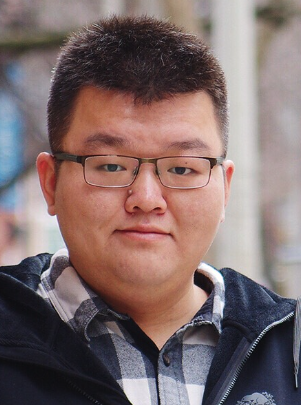 Shenlong Wang (王申龙)合作论文数Department of Computer Science, The Grainger College of Engineering, University of Illinois at Urbana-Champaign3
 Vladlen Koltun合作论文数Apple3
 Lukas Prantl合作论文数2
 Om Ji Omer合作论文数2Prashant Laddha合作论文数Intel Labs, Processor Architecture Res Lab, Hillsboro, OR 97124 USA2
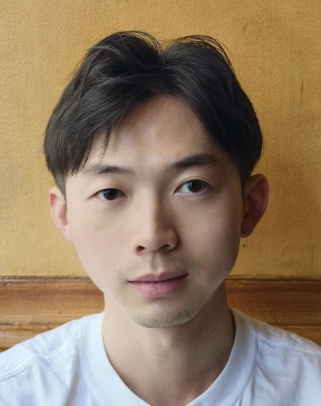 Yujin Chen (陈雨劲)合作论文数Visual Computing Lab, Technical University of Munich2
 Eddy Ilg合作论文数Department Computer Science & Artificial Intelligence, University of Technology Nuremberg;Computer Vision and Machine Perception Lab, University of Technology Nuremberg2
 Yinyu Nie合作论文数Huawei Technologies Research & Development (UK) Ltd;Noah’s Ark Lab, Huawei (UK)2
 Anirud Thyagharajan合作论文数Intel Labs2
 Nils Thuerey合作论文数School of Computation, Information and Technology, Technische Universitat Munchen2
 Matthias Nießner合作论文数Department of Informatics, Technical University of Munich;Visual Computing Lab, Technical University of Munich;Synthesia Technologies;SpAItial AI2
 Sreenivas Subramoney合作论文数NVIDIA2
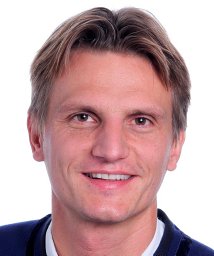 Michael Paulitsch合作论文数EADS Innovation Works, Munich, Germany2Reiner Birkl合作论文数2Katelyn Gao合作论文数1Quentin Leboutet合作论文数1Hao-Yu Hsu合作论文数1Chih-Hao Lin合作论文数1
 Hongchi Xia (夏鸿驰)合作论文数University of Illinois Urbana-Champaign;NVIDIA1
 Yixing Lao合作论文数University of Hong Kong1
 Tianhang Cheng (程天航)合作论文数Department of Computer Science, University of Illinois Urbana-Champaign1Denis Tananaev合作论文数Univ Freiburg, Freiburg, Germany1
 Jonas Uhrig合作论文数Daimler AG R&D, Stuttgart, Germany1
 Nikolaus Mayer合作论文数Computer Vision Lab, Department of Computer Science, Faculty of Engineering, University of Freiburg1
 Germán Ros合作论文数Simulation Ecosystem Development, NVIDIA1
 Kai Zhang合作论文数Google DeepMind1
 Jose M. Facil合作论文数University of Zaragoza1
 Matthias Müller合作论文数Apple1
 Jan Eric Lenssen合作论文数Department of Computer Vision and Machine Learning, Max Planck Institute for Informatics;Kumo.AI1
 Luis Montesano合作论文数Computer Science Department of the University of Zaragoza1
 Javier Civera合作论文数Departamento de Informática e Ingeniería de Sistemas, Universidad de Zaragoza1
 Sanskar Agrawal合作论文数Meta1
 Alexey Dosovitskiy合作论文数Recursive1




