A novel and scalable synthesis route for DBUHFSI protic organic ionic plastic crystal , validated as a conductive matrix for all-solid-state batteries.
Rechargeable lithium ion batteries (LIBs) have been successfully developed and widely used to power today’s portable electronic devices. The long term success in electric vehicles and energy storage system relies on rising the energy density, low temperature efficiency, safety and increased cycle life. In parallel, lithium metal batteries (LMBs), described as a system with Li 0 as anode and metal oxide as cathode (NMC, LFP, LMO) are arising as aim of research for a plethora of groups. Lithium metal anode is considered as ideal anode due to high theoretical capacity (3860 mAhg -1 ), lower negative electrochemical potential and lower density (0.534 g.cm -3 ). Researchers used complex liquid electrolyte (ionic liquid, etc.) systems in order to avoid lithium dendrite and degradation, conventional liquid electrolyte (LiPF 6 , carbonate solvants) degraded faster than expected, and consequently, generated cells fading. Therefore conventional liquid electrolyte in such cell was not used. All-solid-state batteries are viable alternatives to conventional batteries employing organic electrolytes because of their benefits, i.e., high power density, high energy density, long-life operation and safety. Ceramic solid electrolytes or polymer solid electrolyte have been considered to be the ideal solution to prevent dendrite growth because of their high shear modulus and high lithium transference number. At the same time, the chemical nature and composition of solid electrolyte can affect the dendrite growth by the interfacial chemical and electrochemical stability with lithium metal. Use organic additive in electrolyte and/or electrodes is considered as one of the most economical and effective’s approaches for solved many problems as cited previously. The additive can interact with electrolyte or negative electrode to prevent degradation or enhanced cell performances. This presentation will outline commercial organic compounds: Indigo and his derivatives use as single additive in NMC/Li batteries with conventional liquid electrolyte, which considerably increased the cycle life of Li metal batteries. Dyes such Indigoïd contain electron density donor (-NH-) and acceptor (-C=O) groups linked by conjugated bonds, which participate to their versatile electrochemical properties. Comparison between conventional liquid electrolyte and solid electrolyte will be presented with advanced electrochemical measurements to understand interaction ang aging.
All-solid-state batteries are viable alternatives to conventional batteries employing organic electrolytes because of their benefits, i.e., high power density, high energy density, long-life operation and safety. These advantages stem from the great features of inorganic solid electrolytes, which are single ion conductor, so a high lithium-ion transport number, and no-liquid nature. Solid oxide or sulfide are largely studied to allow the emergence of all-solid-state batterie based on solid electrolyte ceramic. In particular, the sulfide-based solid electrolytes possess favorable mechanical properties and low temperature synthesis compared to oxide, high ionic conductivity comparable to liquid electrolytes but suffer of moisture exposure that could induce H 2 S generation and very expensive precursor. Sulfide-based solid-electrolytes can potentially be employed in conjunction with a lithium metal negative electrode and 5V-class high voltage positive electrode material. Different families of sulfide electrolyte as glass ceramic, thio-LISICON, LGPS, argyrodites are synthesized by similar precursor as Li 2 S-P 2 S 5 and other components in function of composition. Among these families, argyrodites are promising due to their high ionic conductivity and no rare element. However, there are still several issues to overcome with argyrodite: reactivity with lithium metal and positive electrolyte material (active material, electronic conductor, binder, current collector...), moisture stability and use of expensive and unsafe Li 2 S. O-doped argyrodites are known strategy to enhance stability against cathode material, lithium metal and moisture stability. In this field and since a few years, Hydro-Quebec has decided to conduct specific research on all-solid ceramic batteries and especially in the field of sulfide-based ceramic electrolytes. We develop the synthesis of argyrodite type oxysulfide with one-step ball milling process. We use a low-cost oxygen precursor (Li 2 SO 4 ) to partially substitute Li 2 S. A specific study has been carried out to (1) optimize the composition of sulfide solid electrolyte to lower the cost and maintain or increase the properties as ionic conductivity, electrochemical and moisture stability, (2) better understand the reactivity at various dewpoints, (3) evaluated the stability in dry room. The complementarity between synthesis process, compositions, NMR analyses, XRD analyses, Raman’s analysis, ionic conductivity, electrochemical stability, and safety measurements will be presented on sulfides prepared at Hydro-Quebec.
Advanced lithium-ion batteries are under development, but they still suffer from safety issues. Solid state batteries present a good solution as they are safer than lithium-ion ones and they can respond to the high energy need for the electromobility. A huge effort is applied to batteries with sulfide ceramic electrolytes due to their high ionic conductivity at room temperature. But the use of this electrolyte results in some challenges such as the incompatibility with high voltage positive material, the incompatibility with lithium metal, the H 2 S generation, ... Since a few years, Hydro Québec has made research on solid state batteries and particularly on batteries with sulfide ceramic electrolytes. An innovative solution was developed to manage the interfacial incompatibility of sulfide with LiNi x Mn y Co z O 2 material. A protective layer was obtained on sulfide particles. In solid state batteries, the contact between particles in the positive electrodes must be maintained all along the cycling. For this reason, a specific binder was designed to maintain a good contact upon cycling of NMC 622. Several configurations were considered and compared to standard binder to find the best configuration. This solution can be adjusted to NMC with higher Ni content that suffer from a higher volumetric change at high end of charge voltage due to structural changes. Lots of patents were made by Hydro Québec on this technology to address a solution to each challenge related to sulfide ceramic electrolytes. This presentation will focus on the development of a positive electrode that faced all challenges given by sulfide ceramic electrolytes and more particularly on the binder developed for this technology. Performances obtained in pouch cells with optimized positive electrodes will be also presented.
Despite some progress performed, state-of-the-art lithium ion batteries still require improvements in energy and power to extend the range of electric vehicles and reduce charging time. In this domain, all-solid-state batteries are viable alternatives to conventional batteries employing organic electrolytes because of their benefits, i.e., high power density, high energy density, long-life operation and safety. These advantages stem from the great features of inorganic solid electrolytes, which are single ion conductor, so a high lithium ion transport number, and no-liquid nature. In particular, the sulfide-based solid electrolytes possess favorable mechanical properties, high ionic conductivity allowing improved all-solid-state batteries performances at room temperature but suffer of moisture exposure that could induce H 2 S generation. Sulfide-based solid-electrolytes can potentially be employed in conjunction with a lithium metal negative electrode and 5V-class high voltage positive electrode material. Indeed, lithium metal is believed to be the most promising negative electrode due to its specific large capacity (3862 mAh.g -1 ) and the lowest electrochemical potential (-3.03V vs ENH). Ceramic solid electrolytes and especially sulfide composite solid electrolyte have been considered to be the ideal solution to prevent dendrite growth because of their high shear modulus and high lithium transference number. At the same time, the chemical nature and composition of ceramic solid electrolyte can affect the dendrite growth by the interfacial chemical and electrochemical stability with lithium metal. In parallel, the sulfide solid electrolyte reacts with all components constituting the positive electrode as active material, electronic conductor, binder, current collector... Hence, all interfaces can generate side reaction, increase of polarisation, and so rapid battery fading. As demonstrated in literature, an important average pressure increase during cycling and aging can’t allow a future commercialisation of this technology. The safety is a crucial point and the generation of H 2 S in the case of all-solid-state battery based on sulfide electrolyte during scale-up phase and operation must be take into account and evaluated specifically. In this field and since a few years, Hydro-Quebec has decided to conduct specific research on all-solid ceramic batteries and especially in the field of sulfide-based ceramic electrolytes. Based on Hydro-Québec's knowledge with polymers, a solution of all-solid composite battery with ceramic tendency has been developed by generating several industrial properties at the different levels of the battery. The interaction previously observed in positive electrode mixture without binder have been resolved and integrated in slurry. In parallel, the impact between solid electrolyte ceramic film composition, density, reactivity with lithium metal and flexibility were studied to offer high conductivity and easily manipulation. Unlike the general perception that the sulfide electrolyte is not compatible with lithium metal, we successfully stabilized the lithium metal interface reaching the cycle life more than 700 cycles under industry-relevant pressure conditions at moderate temperature under pouch-cell configuration. The constraints of the use of li-ion equipment’s, cost reduction and safety have been considered at each level with quantitative measurements. Different parameters can influence the performances and aging of all solid state ceramic battery. To explore them, various electrochemical technics and associated specific treatments can be developed to extract and identify each phenomenon and ensure the better development of this technology. A specific sequential methodology will be presented with different examples from the materials, interfaces with lithium metal, pseudo-composites and temperature effects up to aging of total all-solid–state ceramic battery based on sulfide technology. The different improvements in positive composite electrode, in solid electrolyte ceramic film and in lithium metal interfaces will be explained. The presentation will show how technical and economical issues of sulfide electrolyte can be addressed to bring the technology closer to the market
Li3PS4 is an attractive solid-electrolyte material that possesses high RT ionic conductivity (10(-4) S.cm(-1) ) but the effects of specific synthesis parameters on the material's local structure and transport properties still demand clarifications. Herein, we highlight the substantial effects of cooling breaks in the mechanochemical synthesis procedure on the formation of a variety of PxSya- moieties and on the transport properties of Li3PS4, through Raman and impedance spectroscopy measurements. We show that ball-milled Li3PS4 (with no subsequent annealing), which is often regarded as "amorphous/glass/glassy Li3PS4 ", is not fully amorphous using X-ray diffraction and transmission electron microscopy. Upon subsequent annealing for 1 h above 190 degrees C, beta-Li3PS4 is crystallized and our P-31 magic angle spinning nuclear magnetic resonance spectra suggest that 3 distinct PS43- moieties form, which we refer to as amorphous-, beta-and gamma-type units. Herein, we present a hypothesis to explain the correlation between the ionic conductivity and the distinct PS43- units as a function of the annealing temperature. Our results consolidate the recent reports noting that crystallization of beta-Li3PS4 is not necessary to obtain a high conductivity in ball-milled Li3PS4. Finally, we introduce a phase mixture between beta-Li3PS4 and gamma-Li3PS4 synthesized at 200 degrees C, which is the lowest synthesis temperature yet for gamma-Li3PS4.
Physics-based models of the Li-ion battery are promising to decipher and quantify the electrode limitations, thereby providing valuable insights for choosing the optimal electrode design for a specific application. However, to obtain relevant results from the models, a reliable set of input parameters is required. This work presents a combined experimental/modeling approach relying on the Newman pseudo-2D model for a complete characterization of a set of LiNi0.5Mn0.3Co0.2O2 electrodes. Intrinsic properties of the active materials are determined and validated using low-loading electrodes having negligible porous-electrode limitations. Then, high-energy-density electrode properties are characterized using appropriate experimental methods, which are widely reported in the literature. In the second part of this series of papers, parameters obtained from this part serve as input parameters in the Newman pseudo-2D model as well as in its extension in order to simulate the rate capability during discharge of the aforementioned set of high-energy-density electrodes. List of symbols a i m i 2 / m PE 3 interfacial surface area of phase i c s , surf mol m − 3 concentration at the surface of the AM particle c s , max mol m − 3 maximum concentration of intercalated Li in AM particle c s mol m − 3 solid-phase Li concentration within the AM particle c ¯ s mol m − 3 local volume-averaged solid Li concentration of AM phase within the PA c mol m − 3 salt concentration in a binary electrolyte d 50 μ m median diameter of AM particles D m 2 s − 1 bulk diffusion coefficient of the liquid phase D s m 2 s − 1 diffusion coefficient of Li in the AM particles F C mol − 1 Faraday’s constant i coexisting phase presented in the PE i n 0 A m − 2 exchange current density i Li 0 A m − 2 exchange current density at the Li foil I app A / m CC 2 discharge current density j n mol / m AM 2 · s pore-wall flux across the sandwich k 0 mol m 2 · s · mol m − 3 1.5 − 1 reaction rate constant of the AM k 0 , Li mol m 2 · s · mol m − 3 0.5 − 1 reaction rate constant of Li foil L el μ m PE thickness L sep μ m separator thickness Q th Ah kg − 1 electrode theoretical capacity R J mol · K − 1 ideal gas constant r μ m radial dimension along the AM particle T K absolute temperature t s time t + 0 transference number of Li+ in the electrolyte with respect to the solvent velocity U V equilibrium potential of the AM Δ V V voltage drop between the two inner contacts in the μ4-probe experiment x μ m dimension across the sandwich x 0 initial stoichiometry Greek Symbols α thermodynamic factor β charge transfer coefficient ε m elyte 3 / m PE 3 PE porosity ε sep m elyte 3 / m sep 3 separator porosity κ eff S m − 1 effective ionic conductivity of the liquid phase ρ el g cm − 3 electrode density σ eff S m − 1 effective electronic conductivity of the solid phase of the electrode τ Br tortuosity factor by Bruggeman τ e electrode tortuosity factor τ sep tortuosity factor of the separator Φ 1 , Li V electric potential at Li foil Φ i V electric potential of phase i
HAL is a multi-disciplinary open access archive for the deposit and dissemination of scientific research documents, whether they are published or not. The documents may come from teaching and research institutions in France or abroad, or from public or private research centers. L’archive ouverte pluridisciplinaire HAL, est destinée au dépôt et à la diffusion de documents scientifiques de niveau recherche, publiés ou non, émanant des établissements d’enseignement et de recherche français ou étrangers, des laboratoires publics ou privés. Mg 3 (BH 4 ) 4 (NH 2 ) 2 as Inorganic Solid Electrolyte with High Mg 2+ Ionic Conductivity Ronan Le Ruyet, Benoit Fleutot, Romain Berthelot, Yasmine Benabed, Geoffroy Hautier, Yaroslav Filinchuk, Raphael Janot
This paper describes the simple, highly reproducible, and robust synthesis of a new solid organic/inorganic electrolyte based on the ionic liquid (IL) 1-butyl-3-(carboxyundecyl)imidazolium bis(trifluoromethylsulfonyl)imide tethered to zirconia nanoparticles (15-25 nm) by coordination and named ZrO2@IL. The IL monolayer formation, ensured by two-dimensional solid-state NMR, at the nanoparticles' surface considerably reduces both the IL's consumption and the IL amount at the ZrO2 surface compared to the IL-based hybrid electrolytes reported in the literature. After LiTFSI, used as a lithium source, content optimization (26 wt %), the hybrid exhibits unprecedented stable conductivity passing from 0.6 × 10⁻⁴ S.cm-1 to 0.15 × 10⁻⁴ S.cm-1, respectively, from 85 °C to room temperature (25 °C). Unlike silica which is commonly adopted for this type of hybrid material, zirconia makes it possible to produce more impact-resistant pellets that are easier to compact, thus being favorable for accurate conductivity studies and battery development by electrode/composite/solid electrolyte layer stacking. The ZrO2@IL/LiTFSI solid hybrid electrolyte's thermal stability (up to 300 °C) and performance make this electrolyte suitable for lithium conduction in all-solid-state batteries.
Despite significant progress in the field of tomography, capturing the carbon binder domain (CBD) morphology presented in the Li-ion electrode remains challenging, due to its low attenuation coefficient. In this work, quantitative phase contrast X-ray nano-holotomography is used as a straightforward approach that provides a large reconstructed volume, where the CBD can be resolved along with the active materials and the pore space. As a result, a complete quantitative analysis of the microstructures of three LiNi0.5Mn0.3Co0.2O2 high energy density electrodes, including the characterization of each phase separately along with the statistical quantification of their inter-connectivity at particle scale, is performed. The microstructural heterogeneities are quantified and comparison between different electrodes is done. The results from this work suggest reasons for the negative impacts of the CBD excess on the electrode performance at high C-rates. Those results are true in the case of high energy density electrodes, and are due to the reduction of the electrochemical active surface area. This sheds light on the optimization of the electrode design to improve the power rate of high energy density electrodes.
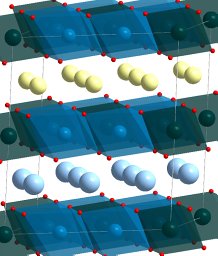
Mg-3(BH4)(4)(NH2)(2) compound was synthesized through the investigation of the Mg(BH4)(2)-Mg(NH2)(2) phase diagram; its crystal structure was solved in a tetragonal unit cell with the space group I (4) over bar. Interestingly, Mg-3(BH4)(4)(NH2)(2) has a high thermal stability with a decomposition temperature above 190 degrees C and exhibits a high Mg2+ ionic conductivity of 4.1 x 10(-5) S.cm(-1) at 100 degrees C with a low activation energy (0.84 eV). The reversible Mg deposition/stripping was demonstrated at 100 degrees C when using Mg-3(BH4)(4)(NH2)(2) as solid electrolyte. Thus, Mg-3(BH4)(4)(NH2)(2) is a compound that could help to develop rechargeable Mg-ion solid-state batteries.
In parallel with the considerable investigations on renewable energy sources, electrical energy storage systems used to store the energy produced now and to provide it when needed have received much attention lately.1 Amongst them, lithium-ion batteries (LIB) are today the most employed in a huge range of purposes including cellphones, laptops or even electric vehicles. Current LIB consists in a planar arrangement (2D) in which the different parts of the battery (positive and negative electrodes, separator, current collectors) are rolled or stacked. Unfortunately, in this type of 2D configuration, lithium ions diffuse only along one dimension. Additive manufacturing (AM) technologies, also called 3D-printing processes, could enable the production of much more complex 3D architectures thus allowing diffusion of the lithium cations towards two or three-dimensions. Advantage of those 3D designs is that the electrochemical active surface area is expected to increase as well as the battery specific capacity and power.2 On the other hand, AM could also allow the direct incorporation of LIB within the final object, thus enabling the possibility to maximize the energy storage capabilities while reducing the dead volume and weight. Amongst the various AM available technologies, we focused our work on the Fused Deposition Modeling (FDM) process using a thermoplastic filament as material source for the 3D-printer. In this presentation, the formulation of composite PLA-based filaments specially designed to print each parts of the LIB (with liquid electrolyte) will be described.3,4 The active material composition within the negative and positive electrodes (graphite and lithium iron phosphate (LiFePO4) respectively), was increased as high as possible in order to enhance the electrochemical performances. Furthermore, the addition of a plasticizer was required to maintain enough mechanical strength while, in the meantime, carbon black was added to confer adequate electrical properties. The impact of ceramic additives on ionic conductivity in the separator was also investigated. From the optimized filaments compositions, stepwise and then “one-shot” 3D-printing of complete LiFePO4/graphite battery cells of any shapes were carried out (Figure 1). In order to prevent short-circuits, classical 3D-printing parameters such as the infill patterns and infill density were investigated for the LIB separator improvement. Finally, this presentation will introduce our latest results5 regarding the printability of a polyethylene oxide/lithium bis(trifluoromethanesulfonyl)imide (PEO/LiTFSI) filament (2.18 × 10⁻³ S cm−1 at 90 °C) optimized to be used as solid polymer electrolyte in a lithium-ion battery. This presentation, by combining both battery and 3D-printing understandings, will tackle various electrochemical (thickness, electronic and ionic conductivity, liquid electrolyte uptake) and 3D-printing parameters (infill density, infill pattern, perimeters, over and under-extrusion, retraction), which clearly paves the way for enhanced 3D-printed LIB. References: [1] Tarascon, J. M. & Armand, M. Issues and challenges facing rechargeable lithium batteries. Nature 414, 359-367, doi:10.1038/35104644 (2001). [2] Long, J. W., Dunn, B., Rolison, D. R. & White, H. S. Three-dimensional battery architectures. Chemical Reviews 104, 4463-4492, doi:10.1021/cr020740l (2004). [3] Maurel, A. et al. Highly Loaded Graphite-Polylactic Acid Composite-Based Filaments for Lithium-Ion Battery Three-Dimensional Printing. Chemistry of Materials 30, 7484-7493, doi:10.1021/acs.chemmater.8b02062 (2018). [4] Maurel, A. et al. Three-Dimensional Printing of a LiFePO4/Graphite Battery Cell via Fused Deposition Modeling. Scientific Reports 9, 18031, doi:10.1038/s41598-019-54518-y (2019). [5] Maurel, A. et al. Poly(Ethylene Oxide)−LiTFSI Solid Polymer Electrolyte Filaments for Fused Deposition Modeling Three-Dimensional Printing. Journal of The Electrochemical Society 167, 070536, doi:10.1149/1945-7111/ab7c38 (2020). Figure 1
Additive manufacturing technologies open the way to the direct-integration of electronics and solid-state battery within the final 3D object. Here, a 3D printable polyethylene oxide/lithium bis(trifluoromethanesulfonyl)imide (PEO/LiTFSI) filament (2.18 × 10⁻³ S cm−1 at 90 °C) optimized to be used as solid polymer electrolyte in a lithium-ion battery is produced to feed a fused deposition modeling (FDM) 3D-printer. Due to its relatively poor mechanical properties compared to classical polymer filament such as polylactic acid (PLA), deep modifications of the 3D-printer were implemented in order to facilitate its printability. The solid polymer electrolyte thermal, structural, morphological, mechanical and electrical characterization is reported. Interestingly, using three different electrochemical impedance spectroscopy sample holders (lateral, sandwich and interdigitated-comb), we demonstrate that conductivity values differs for a same sample, highlighting the PEO chains orientation effect on the conductivity measurements.
The tortuosity factor of porous electrode microstructure is a crucial input parameter for numerical models of batteries as it strongly influences the electrode performance. As such, it is very important to have a method to determine this parameter accurately, based on a definition that reflects the design of the cell. Various experimental methods have been developed for either directly measuring or indirectly inferring the tortuosity factor; however, numerical approaches, based on 3D image data, are now gaining interest in the battery community, due to the advances in nanoscale tomographic imaging methods. The standard definition of the tortuosity factor solves the Fick diffusion equation at steady-state, i.e., between two parallel constant-value boundaries. Although this approach has been widely used for porous materials, including both electronic insulators (e.g., a battery separator), and electronic conductors (e.g., battery porous electrodes), it may be the case that the definition needs to be adjusted depending on the scenario being observed. In this study, we intend to give an insight into the appropriate way to determine the tortuosity factor of battery porous electrodes and the impact of various tortuosity determination methods is investigated. An additional module that relies on the symmetric cell method [1] [2] was implemented in the TauFactor software package [3] to compare with the already-implemented diffusion-based method [4]. This symmetric cell method refers to the measurement of the ionic current distribution inside the pores using AC impedance based on a symmetric cell setup. Figure 1 shows the workflow for tortuosity determination applied in this study. The integration of this module in TauFactor might be interesting for tortuosity determination at the microscale since it is the same method as at macroscopic scale observed in various experimental approaches. Figure 1 . Illustration of the workflow for tortuosity determination applied in this work. The module recently implemented in TauFactor allows calculation based directly on tomographic data in symmetric cell configuration, and generates a simulated impedance spectrum. A macroscopic model such as TLM or Newman’s model is used to extract the tortuosity value of the electrode. References: [1] Landesfeind, J. et al.; J. Electrochem. Soc. 2016, 163 (7), A1373–A1387 [2] Malifarge, S. et al.; J. Electrochem. Soc. 2017, 164 (11), E3329–E3334 [3] Cooper, S. J. et al.; SoftwareX 2016, 5, 203–210 [4] Cooper, S. J. et al.; Electrochimica Acta 251 (2017) 681–689 [5] Pouraghajan, F. et al.; J. Electrochem. Soc. 2018, 165 Figure 1
Reliable electrochemical models are necessary for performing numerical battery-related studies. These models must be comprehended with a number of input parameters. Many literature papers deal with the determination of electrolyte transport properties [1- 4] but only a minority of them proposes an exhaustive characterization (namely the determination of the transference number, the conductivity, the diffusion coefficient and the thermodynamic factor, for the simplest case of a binary electrolyte). Furthermore, when comparison can be made[5], it is often the case that data gathered from different sources for a same electrolyte are not in good quantitative agreement with each other [1,6]. The most commonly used experimental methods for a complete determination of the set of properties are: The Hittorf method [2,3] (for transference number), the restricted diffusion method [7] (for diffusion coefficient), the electrochemical impedance spectroscopy (for conductivity) and the concentration cell (for the activity coefficient). Back in 2016 [6], Farkhondeh and coworkers proposed to alleviate the tedious multi-experimental protocol by introducing a novel multi-electrode cell design, in which the potential between inner Li reference electrodes is measured during and after a current pulse applied between two outer Li working electrodes. The measured potential is free of any electrode polarization and can be fitted with a mathematical model of the electrolyte so that conductivity, salt diffusion coefficient, and lithium transference number are simultaneously determined in single experiment. Our current work builds on the prior art by Farkhondeh and coworkers. It deals with the use of a “multi-electrode electrochemical cell”. Different routes are being explored and will be discussed in the presentation, namely: Using more reference electrodes for the method to gain accuracy, and possibly to evaluate the composition dependence of parameters in a limited number of experiments (fig.1). Bypassing metallic-lithium-related problems by finding alternatives to be used as active electrodes. Theoretical and practical aspects will be discussed and LiPF 6 dissolved in 1:1 weight proportions EC:DEC will be investigated as a benchmark electrolyte and compared with already-published data [1]. Our work aims at (i) showing how the parameters evaluation process could be simplified, and (ii) reduce drastically the number of experiments needed for fully characterizing a liquid electrolyte. This is an essential step towards the elaboration of an electrolyte-property database, supplying valuable information for modeling, as well as formulation-engineering, purposes. Fig. 1 : Representation of voltage measured between reference electrodes (blue red and orange crosses), during a current-pulse (black dashed line) of 1.9 A/m² and following relaxation. These experimental data were used to fit the electrolyte transport parameters using a mathematical model (in purple, green and cyan). Determined parameters are the following : . D = 2.85×10 -10 m²/s , t + 0 = 0.217 and κ eff = 0.602 S/m. The gradient-colored strip at the bottom highlights the parts of the signal where the different transport parameters have the largest sensivity. The multi-reference cell is represented in inset: (dark-grey: Li metal reference electrodes, dark grey: polyethylene spacers). References : [1] H. Lundgren, M. Behm, and G. Lindbergh, “Electrochemical Characterization and Temperature Dependency of Mass-Transport Properties of LiPF6 in EC:DEC,” J. Electrochem. Soc. , vol. 162, no. 3, pp. A413–A420, 2014. [2] L. O. Valo̸en and J. N. Reimers, “Transport Properties of LiPF[sub 6]-Based Li-Ion Battery Electrolytes,” J. Electrochem. Soc. , vol. 152, no. 5, p. A882, 2005. [3] T. Hou and C. W. Monroe, “Composition-Dependent Thermodynamic and Mass-Transport Characterisation of Lithium Hexafluorophosphate in Propylene Carbonate,” Manuscr. Submitt. Publ. , p. 135085, 2019. [4] Yanping Ma, Marc Doyle, Thomas F Fuller, Marca M. Doeff, Lutgard C. De Jonghe, and John Newman. The measurement of a complete set of transport properties of a concentrated solid polymer electrolyte solution. Journal of The Electrochemical Society, 142(6):1859–1868, 1995 [5] A. Ehrl, J. Landesfeind, W. A. Wall, and H. A. Gasteiger, “Determination of Transport Parameters in Liquid Binary Electrolytes: Part II. Transference Number,” J. Electrochem. Soc. , vol. 164, no. 12, pp. A2716–A2731, 2017. [6] FARKHONDEH, Mohammad, PRITZKER, Mark, FOWLER, Michael, et al. Transport property measurement of binary electrolytes using a four-electrode electrochemical cell. Electrochemistry Communications, 2016, vol. 67, p. 11-15.. [7] Herbert S. Harned and Douglas M. French. A conductance method for the determination of the diffusion coefficients of electrolytes. Annals of the New York Academy of Sciences, 46(1):267–284, 1945 Figure 1
Post Li-ion technologies such as Li-air, lithium sulphur or all-solid-state batteries have in common the use of lithium metal as negative electrode. Known from decades, dissolution and deposition of lithium induce the growth of inactive lithium moss or more critically the dendritic growth that can lead to short circuit phenomenon. Therefore, researchers try to tackle this problem by adding functional layers at the Li surface that may generate an improvement in capacity, lifetime and performances at high current rates. There are different ways to protect lithium such as ALD inorganic coating1,2, grafting of organic materials3,4,5, polymers6 or deposition of inorganic alloys7,8. In this work, by dip coating (a simple and cheap process) a lithium foil into a solution of glyme with phosphorus trichloride (DME-PCl3), we succeeded in obtaining a thin and protective phosphorus-based layer. Through electrochemical characterization techniques (EIS, GITT in 2 or 3 electrodes) and surface characterization techniques (SEM, and more importantly XPS), we were able to determine its morphology and chemical composition, its influence on the lithium plating and stripping processes and the mechanism of lithium diffusion through the protective layer. Cycling results in lithium symmetric cells but also full cells (Li-ion, Li-S) will be presented. Finally, since our results were very promising with lithium, we extended this type of protection to sodium since the reactivity of this metal with electrolyte is ever more pronounced. With the same methodology, we will demonstrate that our protection nicely improves the use of Na metal in liquid cells. 1 A. C. Kozen and al., Next-generation lithium metal anode engineering via Atomic Layer Deposition, acsnano, 2015, 9, 6, 5884-5892 2 C-F Lin, and al., ALD protection of Li-metal anode surfaces – Quantifying and preventing chemical and electrochemical corrosion in organic solvent, Adv. Mater. Interfaces, 2016, 3, 1600426 3 F. Marchioni and al., Protection of lithium metal surfaces using chlorosilanes, Langmuir, 2007, 23, 11598 - 11602 4 S. Neuhold and al., Effect of surface preparation and R-group size on the stabilization of lithium metal anode with silanes, Journal of Power Sources, 2012, 206, 295 -300 5 S. Neuhold and al., Enhancement in cycle life of metallic lithium electrodes protected with Fp-silanes, Journal of Power Sources, 2014, 254, 241-248 6 Y. Liu and al., Lithium-coated polymeric matrix as a minimum volume-change and dentrite-free lithium metal anode, Nature communications, 2016, 7, 10992 7 X. Liang and al., A facile surface chemistry route to a stabilized lithium metal anode, Nature Energy, 2017, 2, 17119 8 L-L. Kong and al., Lithium-Magnesium alloy as a stable anode for Lithium-sulfur battery, Adv. Funct. Mater., 2019, 29, 1808756 9 L. Lin and al., Lithium phosphide/lithium chloride coating on lithium for advanced lithium metal anode, J. Mater. Chem. A, 2018, 6, 15859
Among the various additive manufacturing processes, material extrusion techniques recently emerged as an encouraging option in order to 3D-print lithium-ion battery components. In this work, an overview of the recent advances and progress on the ink material extrusion, known as liquid deposition modeling (LDM), as well as the thermoplastic material extrusion process, known originally as the trademark Fused Deposition Modeling (FDM), is discussed. Representing a promising route to achieve complete lithium-ion batteries in a single print without the necessity to perform any post-processes, a particular consideration is devoted to the FDM process. Trends, prospects as well as an exhaustive list of the parameters still requiring further investigations are provided, thus paving the way towards the next generation of FDM 3D-printed lithium-ion batteries.
The tortuosity factor of porous battery electrodes is an important parameter used to correlate electrode microstructure with performance through numerical modeling. Therefore, having an appropriate method for the accurate determination of tortuosity factors is critical. This paper presents a numerical approach, based on simulations performed on numerically-generated microstructural images, which enables a comparison between two common experimental methods. Several key issues with the conventional “flow through” type tortuosity factor are highlighted, when used to characterise electrodes. As a result, a new concept called the “electrode tortuosity factor” is introduced, which captures the transport processes relevant to porous electrodes better than the “flow through” type tortuosity factor. The simulation results from this work demonstrate the importance of non-percolating (“dead-end”) pores in the performance of real electrodes. This is an important result for optimizing electrode design that should be considered by electrochemical modelers. This simulation tool is provided as an open-source MATLAB application and is freely available online as part of the TauFactor platform.
Among the 3D-printing technologies, fused deposition modeling (FDM) represents a promising route to enable direct incorporation of the battery within the final 3D object. Here, the preparation and characterization of lithium iron phosphate/polylactic acid (LFP/PLA) and SiO2/PLA 3D-printable filaments, specifically conceived respectively as positive electrode and separator in a lithium-ion battery is reported. By means of plasticizer addition, the active material loading within the positive electrode is raised as high as possible (up to 52 wt.%) while still providing enough flexibility to the filament to be printed. A thorough analysis is performed to determine the thermal, electrical and electrochemical effect of carbon black as conductive additive in the positive electrode and the electrolyte uptake impact of ceramic additives in the separator. Considering both optimized filaments composition and using our previously reported graphite/PLA filament for the negative electrode, assembled and "printed in one-shot" complete LFP/Graphite battery cells are 3D-printed and characterized. Taking advantage of the new design capabilities conferred by 3D-printing, separator patterns and infill density are discussed with a view to enhance the liquid electrolyte impregnation and avoid short-circuits.
 Matthieu Courty合作论文数10
 Christian Masquelier合作论文数Laboratoire de Réactivité et de Chimie des Solides, Université de Picardie Jules Verne8
 Carine Davoisne合作论文数Laboratoire de Catalyse de Lille – UMR CNRS 8010, Université des Sciences et Technologies de Lille8
 Sylvie Grugeon合作论文数Laboratoire de Réactivité et de Chimie des Solides, Université de Picardie Jules Verne7
 Virginie Viallet合作论文数Lab React & Chim Solides LRCS, Univ Picardie Jules Verne6Chisu Kim合作论文数Mat Sci & Engn Program, Univ Texas Austin6
 L. Dupont合作论文数Laboratoire de Réactivité et de Chimie des Solides, Univerisity of Picardie Jules Verne6
 Saiful Islam合作论文数Department of Materials, University of Oxford6Hugues Tortajada合作论文数5
 Theodosios Famprikis合作论文数Faculty of Applied Sciences, Delft University of Technology5
 Alexis Maurel合作论文数Department of Aerospace and Mechanical Engineering, The University of Texas at El Paso5
 Jean-Noël Chotard合作论文数Laboratoire de Réactivité et Chimie du Solid, Université de Picardie Jules Verne5
 Michel Armand合作论文数CIC Energigune5
 Arnaud Demortiere合作论文数5
 Stephane Panier合作论文数Polymers and Composites Technology and Mechanical Engineering Department, Ecole des Mines de Douai5
 Charles Delacourt合作论文数Laboratoire de Reactivite et de Chimie des Solides, Université de Picardie Jules Verne5
 Yasmine Benabed合作论文数4Bruno Delobel合作论文数4
 Nguyen Tuan Tu合作论文数4
 Kalappa Prashantha合作论文数Department of Industrial Chemistry, Kuvempu University4
 Jean-Christophe Daigle合作论文数NanoQAM Research Center, Université du Québec à Montréal4Raphael Janot合作论文数4
 Ronan Le Ruyet合作论文数Angstrom Lab, Uppsala Univ3
 Dawson James A合作论文数Department of Materials Science and Engineering, Kyoto University3
 Rene Berthelot合作论文数CNRS, Université de Bordeaux 1 873Charlotte Mallet合作论文数3Francois Fauth合作论文数European Synchrotron Radiation Facility (ESRF), BP 220/6, Rue Jules Horowitz, F-38043 Grenoble, France3Emmanuelle Suard合作论文数3
 Armand Soldera合作论文数2Jennifer Bidal合作论文数2Marc-David Braida合作论文数2Sébastien Cavalaglio合作论文数2
 Ulas Kudu合作论文数Lab Reactivite & Chim Solides LRCS, Univ Picardie Jules Verne2Caroline Hadad合作论文数2
 Benjamin Porcheron合作论文数Reseau Stockage Electrochim Energie RS2E, Amiens, France2
 Yue Deng合作论文数Cornell Univ, Dept Mat Sci & Engn, Ithaca, NY 14853 USA2
 Samuel Cooper合作论文数Dyson School of Design Engineering, Faculty of Engineering, Imperial College London2David Rénald合作论文数UCCS USTL, Univ. Lille Nord de France2
 Clare Grey合作论文数Yusuf Hamied Department of Chemistry, University of Cambridge2Albert Nguyen Van Nhien合作论文数Laboratoire des Glucides, Université de Picardie-Jules Verne2Thierry Le Mercier合作论文数2Gregory Gachot合作论文数2Mathieu Morcrette合作论文数Laboratoire de Reactivite et Chimie des Solides, Universite de Picardie Jules Verne2
 Matthieu Becuwe合作论文数Laboratoire de Synthèse Organique et Environnement, Université du Littoral Côte d’Opale2Brigitte Pecquenard合作论文数2
 Christopher Eames合作论文数Dept Chem, Univ Bath2
 Elodie Salager合作论文数Centre de RMN à très hauts champs, Université de Lyon2
 Sadollah Ebrahimi合作论文数Iranian National Center for Laser Science and Technology No. 82Yaroslav Filinchuk合作论文数Institute of Condensed Matter and Nanosciences, University Catholique de Louvain2




