Fused Filament Fabrication (FFF) offers a promising solution for manufacturing customized smart parts by directly embedding fibre Bragg grating (FBG) sensors during the 3D printing process. However, embedding FBG sensors into polyetheretherketone PEEK remains challenging due to its high printing temperature and crystallinity. Additionally, although FBG coating significantly affect sensor performance, its influence on embedding quality, along with the maximum strain the sensor can endure before detachment, remains unclear. These factors are critical to the functional reliability of smart parts. The purpose of this study is to develop a method to embed FBG sensors into biocompatible PEEK via FFF process. Moreover, the influence of FBG coating condition on embedding quality is investigated, with a focus on strain transfer efficiency and the maximum strain load the sensor can withstand before detachment. FBG sensors were tested with four coating conditions: polyimide (PI) or acrylate coating, with the grating region either bare or coated. The fully PI coated FBG sensor shows the best performance, achieving a strain transfer efficiency of 96.2 % and withstanding 3 % tensile strain before detachment. The findings indicate that FBG sensor performances after embedding are highly related to the coating material and diameter of the FBG sensor. This technique enables the fabrication of patient-specific smart implants, capable of monitoring healing and loading of fractured bones. A case study of a smart radius fixation plate implant is presented, demonstrating the potential of this method for orthopedic applications.
The Computational Wine Wheel (CWW) emerged in 2014 as a response to the limitations of the traditional Wine Aroma Wheel. This innovative tool, blending the concepts of wine aroma classification and natural language processing, introduced a novel approach to analyzing wine attributes. Initially developed with a focus on the top 100 wines from Wine Spectator in 2011, the CWW underwent successive iterations, culminating in the latest version, CWW 3.0. With expanded categories and subcategories, as well as the inclusion of reviews from multiple sources including Robert Parker’s Wine Advocate, the CWW has evolved into a comprehensive resource for wine analysis. Through the creation of significant datasets like the Elite Bordeaux dataset and the Big dataset, the CWW has facilitated extensive research on wine attributes and trends. The ongoing development of the CWW underscores its importance as a dynamic tool in the field of Wineinformatics, promising continued advancements in wine analysis and understanding.
Wineinformatics is a new field that applies data science to wine-related data. The goal of this paper is to determine whether incorporating wine price can improve the accuracy of score prediction. To explore the relationship between wine price and wine score, naive Bayes classifier and support vector machine (SVM) classifier are employed to predict the scores as either equal to or above 90 or below 90. The price values are normalized using four different methods: mean, median, boxplot mean, and boxplot median. To conduct a proper comparison, the original dataset from previous research, which includes a total of 14,349 wine reviews, was preprocessed by filtering all null price values, resulting in 9721 wine reviews. Using this dataset, classifiers, and normalization methods, the models with and without the price feature were compared. SVM classifier with mean normalization method (USD 50.04) achieved the best accuracy of 87.98%, while naive Bayes classifier with boxplot median normalization method (USD 28.00) showed the greatest improvement of 0.99%. From all the results, we concluded that boxplot median normalization (USD 28.00) is the most effective method in this study. These results indicate that incorporating price as an attribute enhances machine learning algorithms’ ability to recognize the correlation between wine reviews and scores.
Wineinformatics involves the application of data science techniques to wine-related datasets generated during the grape growing, wine production, and wine evaluation processes. Its aim is to extract valuable insights that can benefit wine producers, distributors, and consumers. This study highlights the potential of neural networks as the most effective black-box classification algorithm in wineinformatics for analyzing wine reviews processed by the Computational Wine Wheel (CWW). Additionally, the paper provides a detailed overview of the enhancements made to the CWW and presents a thorough comparison between the latest version and its predecessors. In comparison to the highest accuracy results obtained in the latest research work utilizing an elite Bordeaux dataset, which achieved approximately 75% accuracy for Robert Parker's reviews and 78% accuracy for the Wine Spectator's reviews, the combination of neural networks and CWW3.0 consistently yields improved performance. Specifically, this combination achieves an accuracy of 82% for Robert Parker's reviews and 86% for the Wine Spectator's reviews on the elite Bordeaux dataset as well as a newly created dataset that contains more than 10,000 wines. The adoption of machine learning algorithms for wine reviews helps researchers understand more about quality wines by analyzing the end product and deconstructing the sensory attributes of the wine; this process is similar to reverse engineering in the context of wine to study and improve the winemaking techniques employed.
The level of hearing restoration in patients with severe to profound sensorineural hearing loss by means of cochlear implants (CIs) has drastically risen since the introduction of these neuroprosthetics. The proposed CI integrated with polymer optical fiber Bragg gratings (POFBGs) enables real-time evaluation of insertion forces and trajectory determination during implantation irrespective of the speed of insertion, as well as provides high signal quality, low stiffness levels, minimum induced stress even under forces of high magnitudes and exhibits significant reduction of the risk of fiber breakage inside the constricted cochlear geometry. As such, the proposed device opens new avenues towards atraumatic cochlear implantations and provides a direct route for the next generation of CIs with intraoperative insertion force assessment and path planning capacity crucial for surgical navigation. Hence, adaptation of this technology to clinical reality holds promising prospects for the hearing impaired.
Femur diaphysis fractures almost always require surgery to heal. The femur recovery process may take 3-6 months or even longer. The current femur recovery assessment methods are qualitative and mainly rely on physicians' clinical experience. A better methodology to quantify the healing status will help the physicians counsel their patients on the appropriate load-bearing activities accordingly. This paper numerically and experimentally demonstrates a femur healing assessment methodology using fibre Bragg grating (FBG) sensors. Finite Element (FE) analysis was conducted to confirm the feasibility of the used epoxies. For the experiments, a fourth-generation composite femur (4GCF) sample fixated with an implant plate was prepared. The sample was instrumented with a total of six FBGs on the proximal and distal posterior, mid-shaft, and implant surfaces. The prepared sample was then subjected to cyclic loading on a hydraulic tensile machine in various situations including (1) intact, (2) fractured (mid-shaft transverse and wedge), and (3) epoxy-healed. Epoxies with different curing times were applied on the fractured femur to mimic bone regeneration stages as they harden. FBGs were used to monitor the alterations in the strain values during the healing stages. The results demonstrated that the strain values measured by FBGs were able to justify the non-union, mal-union, delayed union, and fully union conditions on the femur shaft compared to the intact and fractured conditions. The proposed assessment tech-nique can potentially be used on long bones with various fracture types and for patients of different ages and recovery rates.
Although a number of studies attempt to classify human fatigue, most models can only identify fatigue after fatigue has already occurred. In this paper, we propose a novel time series approach to forecasting wearable sensor data and associated fatigue progression during exercise. The proposed framework consists of spatio-temporal attention-based Transformer with an auxiliary critic and a fatigue classifier. The Transformer network is used to analyze the person-independent pattern underlying the past kinematic sequence obtained from wearable sensors and generate short term predictions of the human motion. Adversarial training is employed to regularize the Transformer and improve the time series forecasting performance. A fatigue classifier is used to estimate person-independent fatigue levels based on the forecasted wearable sensor data from the Transformer model. The proposed approach is validated with simulated and real squat datasets which were collected from young healthy participants. The proposed network can accurately forecast a time horizon of up to 80 timesteps for motion signal forecasting and fatigue classification. In terms of fatigue prediction, an accuracy of 83% and a Pearson correlation coefficient of 0.92 were achieved on forecasted motion data with unseen participant data. The experimental results show that our model can predict fatigue progression and outperforms other state-of-the-art techniques, achieving 95% correlation compared to 83% for the best performing baseline method. Successfully predicting fatigue progression can help a patient or athlete monitor and adjust their exercise session to prevent overexertion and fatigue-induced injury.
“Can wine grade, price and region being predicted altogether with higher accuracy?” In previous chapters, bi-class classification and regression were discussed in grade class prediction, evaluation of wine reviewers and price prediction independently; that is, each classifier was given one task at a time. This chapter introduces an advanced computer science topic, multi-label and multi-target techniques, to Wineinformatics. Independent single-label problems, including wine grade, price and origin predictions, are merged together so that the trustworthy labels can also become attributes to provide more information for other labels.
Wineinformatics is among the new fields in data science that use wine as domain knowledge. To process large amounts of wine review data in human language format, the computational wine wheel is applied. In previous research, the computational wine wheel was created and applied to different datasets of wine reviews developed by Wine Spectator. The goal of this research is to explore the development and application of the computational wine wheel to reviews from a different reviewer, Robert Parker. For comparison, this research collects 513 elite Bordeaux wines that were reviewed by both Robert Parker and Wine Spectator. The full power of the computational wine wheel is utilized, including NORMALIZED, CATEGORY, and SUBCATEGORY attributes. The datasets are then used to predict whether the wine is a classic wine (95 + scores) or not (94 − scores) using the black-box classification algorithm support vector machine. The Wine Spectator’s dataset, with a combination of NORMALIZED, CATEGORY, and SUBCATEGORY attributes, achieves the best accuracy of 76.02%. Robert Parker’s dataset also achieves an accuracy of 75.63% out of all the attribute combinations, which demonstrates the usefulness of the computational wine wheel and that it can be effectively adopted in different wine reviewers’ systems. This paper also attempts to build a classification model using both Robert Parker’s and Wine Spectator’s reviews, resulting in comparable prediction power.
Although wine has been produced for several thousands of years, the ancient beverage has remained popular and even more affordable in modern times. Among all wine making regions, Bordeaux, France is probably one of the most prestigious wine areas in history. Since hundreds of wines are produced from Bordeaux each year, humans are not likely to be able to examine all wines across multiple vintages to define the characteristics of outstanding 21st century Bordeaux wines. Wineinformatics is a newly proposed data science research with an application domain in wine to process a large amount of wine data through the computer. The goal of this paper is to build a high-quality computational model on wine reviews processed by the full power of the Computational Wine Wheel to understand 21st century Bordeaux wines. On top of 985 binary-attributes generated from the Computational Wine Wheel in our previous research, we try to add additional attributes by utilizing a CATEGORY and SUBCATEGORY for an additional 14 and 34 continuous-attributes to be included in the All Bordeaux (14,349 wine) and the 1855 Bordeaux datasets (1359 wines). We believe successfully merging the original binary-attributes and the new continuous-attributes can provide more insights for Naïve Bayes and Supported Vector Machine (SVM) to build the model for a wine grade category prediction. The experimental results suggest that, for the All Bordeaux dataset, with the additional 14 attributes retrieved from CATEGORY, the Naïve Bayes classification algorithm was able to outperform the existing research results by increasing accuracy by 2.15%, precision by 8.72%, and the F-score by 1.48%. For the 1855 Bordeaux dataset, with the additional attributes retrieved from the CATEGORY and SUBCATEGORY, the SVM classification algorithm was able to outperform the existing research results by increasing accuracy by 5%, precision by 2.85%, recall by 5.56%, and the F-score by 4.07%. The improvements demonstrated in the research show that attributes retrieved from the CATEGORY and SUBCATEGORY has the power to provide more information to classifiers for superior model generation. The model build in this research can better distinguish outstanding and class 21st century Bordeaux wines. This paper provides new directions in Wineinformatics for technical research in data science, such as regression, multi-target, classification and domain specific research, including wine region terroir analysis, wine quality prediction, and weather impact examination.
This paper extends our previous work on a pneumatic bending module and presents two more modules for rotational and translational motions. In these modules, antagonistic chambers enveloped by rigid shells are adopted to realize bidirectional actuation, and they are characterized by safe actuation, enhanced torque/force output, independent stiffness tuning, and real-time position control. Due to their mechanical modularity, they can be conveniently assembled into robotic systems with multiple degrees of freedom (DoFs) according to different requirements. A complete workflow is presented including the module design, fabrication, theoretical modelling, controller design, and experimental validation. A reconfigurable robotic arm with high dexterity is also assembled using these modules, demonstrating the effectiveness of the proposed modules to develop robotic systems for safe, forceful, and precise tasks.
Wineinformatics is a new and emerging data science that uses wine as domain knowledge and integrates data systems and wine-related data sets. Wine reviews from Wine Spectator usually include the aging information, at the end of the review, in the form of “Best from YearA through YearB”; with the vintage of the wine included, the suggested holding year (YearA—vintage), shelf-life (YearB—vintage) and aging capacity (YearB—YearA) can be calculated and provide crucial information in the study of wineinformatics. The goal of this paper is to test whether wine reviews describing olfactory and gustatory information reveal wines’ suggested holding-year information. Wine reviews from Wine Spectator are extracted and processed by a natural language processing tool named the Computational Wine Wheel for categorizing and mapping various wine terminologies from wine reviews into a consolidated set of descriptors. The suggested aging capability is also calculated from the review and served as a label for classification problems. The study uses different learning algorithms, analyzing their performances and using the best-performing algorithm(s) to build a model for the prediction of a wine’s aging properties. The results of the study suggest that both support vector machine (SVM) and the K-nearest neighbor (KNN) algorithms achieved more than 70% accuracy. These results suggest that the algorithms are able of capturing a hidden informational relationship between a wine’s reviews and its aging capability.
Experimental testing of flash-butt welded premium rail steel samples was undertaken to quantify the variation in strength through the cross-section of the weld, with results showing a general correlation between the width of the heat-affected-zone and the ultimate tensile strength. Microstructural examination and fractography revealed the presence of defects in some samples. Large defects can be identified by non-destructive testing methods as part of routine structural integrity assessment; however, small defects may escape detection but could propagate under cyclic loading in service leading to catastrophic failures. This work demonstrates the requirement for stringent control of heat input to prevent the development of defects in premium rail steels with high alloying content.
Wineinformatics is a new data science research area that focuses on large amounts of wine-related data. Most of the current Wineinformatics researches are focused on supervised learning to predict the wine quality, price, region and weather. In this research, unsupervised learning using K-means clustering with optimal K search and filtration process is studied on a Bordeaux-region specific dataset to form clusters and find representative wines in each cluster. 14,349 wines representing the 21st century Bordeaux dataset are clustered into 43 and 13 clusters with detailed analysis on the number of wines, dominant wine characteristics, average wine grades, and representative wines in each cluster. Similar research results are also generated and presented on 435 elite wines (wines that scored 95 points and above on a 100 points scale). The information generated from this research can be beneficial to wine vendors to make a selection given the limited number of wines they can realistically offer, to connoisseurs to study wines in a target region/vintage/price with a representative short list, and to wine consumers to get recommendations. Many possible researches can adopt the same process to analyze and find representative wines in different wine making regions/countries, vintages, or pivot points. This paper opens up a new door for Wineinformatics in unsupervised learning researches.
This experimental study evaluates the early-age properties of one-part alkali-activated cement (AAC) and class G cement (GC) under three subsurface curing conditions of water, brine, and carbon dioxide (CO2)-saturated water. The novel one-part AAC used in this study consist of fly ash and slag as the mineral precursors activated by a waste glass/sodium hydroxide-based solid alkali activator. The fresh and hardened properties of AAC and GC were characterised using rheology, strength, and microstructural tests. AAC showed relatively lower flow and setting time than GC under ambient conditions. Both the yield stress and plastic viscosity of AAC were reduced at elevated temperatures. AAC showed comparable strengths under water, higher strengths under brine, and lower strengths under CO2 saturation conditions compared to GC. Microstructural tests of GC evidenced the precipitation of chloride salt and leaching of Portlandite under brine conditions. A higher total porosity of AAC was reported with poorly crystalline calcium carbonate deposits under CO2 saturation. The early strength of one-part AAC should be improved by using suitable additives before their use for oil well-cementing, especially in CO2-rich conditions. (C) 2020 Elsevier Ltd. All rights reserved.
OBJECTIVE:User-independent recognition of exercise-induced fatigue from wearable motion data is challenging, due to inter-participant variability. This study aims to develop algorithms that can accurately estimate fatigue during exercise.METHODS:A novel approach for wearable sensor data augmentation was used to generate (via OpenSim) a large corpus of simulated wearable human motion data, based on a small corpus of human motion data measured using optical sensors. Simulated data is generated using detailed kinematic modelling with variations based on human anthropometry datasets. Using both the recorded and generated data, we trained three different neural networks (Convolutional Neural Network (CNN), Recurrent Neural Network (RNN), DeepConvLSTM) to perform person-independent fatigue estimation from wearable motion data.RESULTS:The estimation performance increased with the amount of simulated training data. Accuracy and correlation values were higher with the proposed data augmentation method as compared to other general time series augmentation methods (e.g, rotation, jettering, magnitude wrapping) with the same amount of training data. An accuracy of 87% and a Pearson correlation coefficient of 90% were achieved on unseen data when the DeepConvLSTM model was trained with the proposed augmented dataset.CONCLUSION:The enlarged dataset significantly improves the prediction of inter-individual fatigue.SIGNIFICANCE:Appropriate augmentation techniques for biomechanical data can improve model accuracy and reduce the need for expensive data collection.
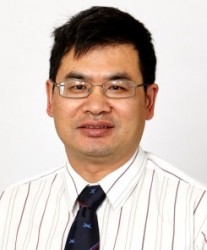 Wenyi Yan合作论文数Department of Mechanical and Aerospace Engineering, Monash University11
 Yi Pan (潘毅)合作论文数11Yong Pang合作论文数9
 Dongsheng Che合作论文数Department of Computer Science, East Stroudsburg University9
 Wencheng Liu (刘文城)合作论文数School of Civil Aviation, Northwestern Polytechnical University8
 Sinan Kockara合作论文数Department of Computer Science, University of Central Arkansas;University of Arkansas at Little Rock;Biomedical Image Processing and High Performance Computing Lab8Siva N. Lingamanaik合作论文数8
 Travis Atkison合作论文数7
 Ranjith Pathegama Gamage (兰吉特·帕伽玛·加米奇)合作论文数Department of Civil and Environmental Engineering, Faculty of Engineering, Monash University;College of Civil and Transportation Engineering, Shenzhen University7
 Ton Tran合作论文数6
 TAM Hwa-yaw合作论文数Department of Electrical Engineering, Faculty of Engineering, The Hong Kong Polytechnic University6
 Hoam Chung合作论文数Department of Mechanical and Aerospace Engineering, Faculty of Engineering, Monash University5
 Gunawardena Dinusha S合作论文数5Yaohui Chen (陈耀晖)合作论文数College of Engineering, Huazhong Agricultural University5
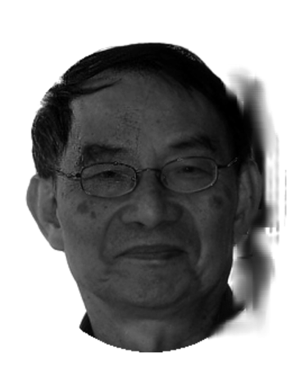 Phang C. Tai合作论文数Department of Biology, Georgia State University5
 Louis Chiu合作论文数Department of Materials Science and Engineering, Faculty of Engineering, Monash University5
 Brian G. Falzon合作论文数Centre for Advanced Manufacturing Technology, Western Sydney University;School of Engineering, Design and Built Environment, Western Sydney University5Rodney S. Thomson合作论文数5
 Jieyue He (何洁月)合作论文数School of Computer Science and Engineering, Southeast University5
 Ali Najafzadeh合作论文数4
 Pabasara Kumari Wanniarachchige合作论文数School of Civil, Mining, and Environmental Engineering, University of Wollongong4
 John Wang合作论文数Aerospace Division, Defence Science and Technology (DST) Group, Melbourne, Australia4Yonghang Sun合作论文数4
 Mandadige Samintha Anne Perera合作论文数Department of Infrastructure Engineering, School of Electrical, Mechanical and Infrastructure Engineering, The University of Melbourne4
 Zhengyong Liu (刘正勇)合作论文数School of Electronics and Information Technology, Sun Yat-sen University4
 Jing Fu合作论文数Department of Mechanical and Aerospace Engineering, Faculty of Engineering, Monash University4
 Robert W. Harrison合作论文数computer science, georgia state university4
 Cody Hudson合作论文数4Enrique Blanco合作论文数3Jeremy Buhler合作论文数3Daniel Brown合作论文数3
 Yanran Jiang合作论文数3Aaron Crawford合作论文数3Valentin Velchev合作论文数3Doina Caragea合作论文数3Vladimir Brusic合作论文数3Vikas Bansal合作论文数3
 Mete Mutlu合作论文数Transocean3
 Gary W Beecham合作论文数Department of Human Genetics, Miller School of Medicine, University of Miami;John P. Hussman Institute for Human Genomics, Miller School of Medicine, University of Miami3Christopher Rhodes合作论文数3
 Michael Beckstette合作论文数3Kha Hung合作论文数3
 Asa Ben-Hur合作论文数Colorado State University3
 Dana Kulic合作论文数Department of Mechanical and Aerospace Engineering, Faculty of Engineering, Monash University3Min-Woo Kim合作论文数3
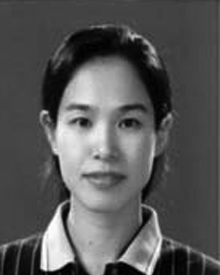 Hae-Jin Hu合作论文数3
 Stephen Pellicer合作论文数3
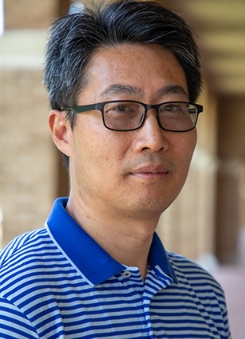 Victor S. Sheng合作论文数Department of Computer Science, Whitacre College of Engineering, Texas Tech University3
 Chris Bystroff合作论文数Department of Biological Sciences, Rensselaer Polytechnic Institute;Department of Computer Science, Rensselaer Polytechnic Institute3




