The landscape surrounding female entrepreneurs has transformed significantly over the past 50 years. In 1972, there were 400,000 female owned businesses, a number that has risen to 13 million today (Poggesi, Mari, De Vita, and Foss, 2020; Women in Business Statistics, 2022). Indeed, female entrepreneurs and the businesses they run contribute significantly to economic growth and social development (GEM, 2016). To capitalize further on this growth, the literature advocates that females should play an even larger role in entrepreneurial endeavors (Yadav and Unni, 2016; Sarfaraz, Faghih and Majd, 2014). Despite the progress realized for female entrepreneurs, there remain ongoing challenges (Panda, 2018; Jennings and Brush, 2013). For instance, female entrepreneurs only account for 22.4% of entrepreneurial businesses overall, and the majority of these are small in scale, home-based and in non-technical disciplines focused on service and retail (Poggesi, Mari, De Vita, and Foss, 2020; Women in Business Statistics, 2022). Further, although women have made extraordinary strides in more technical related fields (Lee, Sugimoto, Zhang, and Cronin, 2013; Wang et al., 2020), females face persistent inequalities in entrepreneurial activities involving science, technology, engineering, and math (STEM) (Ding, Murray, and Stuart, 2006; Gans, Hsu and Stern, 2008; Thelwall, Bailey, Tobin, and Bradshaw, 2019; Wang et al., 2020). The inequalities facing female entrepreneurs are attributed to both psychological factors such as gender stereotypes and perceptions of STEM fields as masculine-typed; and structural factors, such as the lack of role models, limited access to networks, and engrained organizational cultures (Botella, Rueda, López-Iñesta and Marzal, 2019; Hardey, 2019; Vitores and Gil-Juárez, 2016; Vorley et al., 2022). Extant research demonstrates that female entrepreneurs’ talents are often underestimated and even discounted (Tesfaye and Wainikka, 2022), which creates considerable difficulties in obtaining the financial and infrastructural support necessary for launching and growing new ventures (Panda, 2018). The challenges are exacerbated further for female entrepreneurs in developing countries, due to the lack of opportunities and resource constraints (Panda and Dash, 2014; 2016; Verhuel et al., 2006; Panda, 2018), and for female minority entrepreneurs, who encounter challenges based on both their gender and racioethnic identities (Smith et al., 2019; Rosette et al., 2018). While the landscape for female entrepreneurs has improved over the past five decades, significant obstacles to success undoubtedly remain; so, what now? The goal of this symposium is to dig into the challenges female entrepreneurs continue to face as the frontiers and boundaries of business expand. Drawing on a core concept in the entrepreneurship literature coined by Geoffrey A. Moore, we aim to shed light on how female entrepreneurship can collectively “cross the chasm” (Moore, 1991) and transition into more significant growth and success in the coming decades. To do so, we bring together accomplished scholars to share their novel empirical findings about the contexts facing female entrepreneurs and the factors that contribute to, and detract from, their ongoing effectiveness and success. Such a discussion is necessary if we are to reshape the entrepreneurial landscape for future generations of women. From Family to Family Business?: The Interplay of Relationships & Identity in a New Family Firm Author: Eliana Crosina; Babson College The Entrepreneurial Orientation of Women CEOs in Family vs NonFamily Firms Author: Kimberly A. Eddleston; Northeastern U. Author: Remedios Hernández-Linares; U. de Extremadura Author: María Concepción López-Fernández; U. de Cantabria Author: Franz Kellermanns; U. of North Carolina, Charlotte Unpacking female minority founders’ intersectional identity work in startup context Author: Pisitta Vongswasdi; WHU Otto Beisheim School of Management Author: Julia Katharina de Groote; WHU Otto Beisheim School of Management Author: Janine Vanessa Heinrich; - Author: Jamie Jocelyn Ladge; Northeastern U. It’s a guy thing: How the gender imbalance in VC produces gender bias investment effects Author: Lakshmi Balachandra; Babson College
This symposium seeks to understand the experience of working fathers – from opportunities and constraints to support and stereotypes. The default for many working fathers is to fulfill the “ideal worker”—fully devoted to and available for the job, with no personal responsibilities or interests that interfere with this commitment to work – in their organizations and a “bread winner” – the sole or primary financial provider in their families. However, many working men also want to be engaged fathers. Given the competing pulls between roles at home and in organizations, many men are left feeling, as Erin Reid (2015) wrote: “over-worked and under-familied.” Diving into the research on working fathers at this point in time is an opportune moment for scholars to support working fathers fulfilling their professional and caregiving ambitions, which can benefit them, their organizations and their families.
AbstractMany questions remain with respect to what it actually means to be an involved father today and the ways in which organizations can encourage a more holistic view of men as ideal parentsandprofessionals. In this chapter, we reflect on these considerations by drawing from prior research and set an agenda for further examining fatherhood in an organizational context.
Pregnancy reflects a common experience for women in today's workforce, yet recent data suggest that some women scale back or leave the workforce following childbirth. Considering these effects on women's careers, researchers have sought to understand the underlying dynamics of these decisions. Here, we explore a paradoxical reason for weakened postpartum career attitudes: help that women receive during pregnancy. We integrate stereotype threat and benevolent sexism theories to explain how the effects of help on postpartum intentions to quit may be transmitted through reductions in work self-efficacy. In doing so, we consider the role ofperceived impact-or the extent to which help interferes with versus enables women's perceived ability to continue performing their work role. Results of a weekly diary study of 105 pregnant employees suggest that work-interfering help led to decreased self-efficacy for work during the following week. Furthermore, there was an indirect effect of average help received at work during pregnancy on postpartum intentions to quit the workforce through reductions in work self-efficacy that was stronger insofar as help was work-interfering versus work-enabling. Taken together, our results highlight unintended negative consequences that occur when others provide ineffective support to women at work during pregnancy.
Although a growing number of women are entering leadership positions, they are still exposed to stereotype threat (i.e., “being at risk of confirming, as self–characteristics, a negative stereotype about one’s group” (Steele & Aronson, 1995, p.797)), gender bias, and an underestimation of women’s leadership potential, both of which impede their leader emergence and create male-dominated leadership teams in organizations (Eagly & Karau, 2002; Hoyt & Murphy, 2016). In addition to existing studies regarding gender–based discrimination and bias in formal employment decisions and interpersonal outcomes, there is a growing call for an advanced understanding of what gender discrimination and bias is experienced by women leaders under different conditions as well as how organizations can mitigate the threats to women’s positioning in leadership roles (Colella, Hebl, & King, 2017). To address this call, the presentations in this symposium contribute to the literature on women’s leader emergence in two main ways. First, two studies investigate when and how women’s leadership behaviors are undermined by stereotype threat in comparison to men and compared to other women such as women of color. Second, the other two studies investigate which organizational interventions reduce stereotype threat by comparing the efficacy of different practices and policies while considering dynamics among professional women. Finally, this symposium contributes to AOM’s 2019 theme, “Understanding the Inclusive Organization” by introducing paths for organizations to include women as valued, high–performing leaders in inclusive organizations. Gender, Dominant Personality, and Perceptions of Leadership: The Role of Normality Evaluations Presenter: Ning Hsu; U. of Illinois at Urbana-Champaign INTERSECTIONAL PENALTIES FOR WOMEN LEADERS: CONSIDERING RACE IN BACKLASH EFFECTS Presenter: Elizabeth Johnson; Harvard Business School Women’s Responses to Gender-Aware and Gender-Blind Organizational Approaches:The Importance of Caree Presenter: Ashley E. Martin; Stanford Graduate School of Business Ameliorating Stereotype Threat to Increase Women’s Work Satisfaction: The Importance of Role Models Presenter: Clarissa Cortland; INSEAD
Traditional systems for categorizing individuals into demographic groups have become increasingly misaligned with how individuals understand their own demographic identities. For organizational scholars, considering this misalignment has significant implications for theory and empirical research on demographic diversity in organizations; misalignments between traditional categorization systems and individuals' demographic identities also have important implications for managers who seek to create inclusive work environments. In this article we offer a conceptual framework articulating four types of demographic identities that are misaligned with traditional categorization systems, which are not adequately recognized in existing organizational diversity research or in organizations: intracategorical multiplicity, intracategorical mobility, intracategorical uncertainty, and identities that are acategorical in nature. We build from this framework to theorize that individuals who identify demographically in these nonnormative ways may experience categorization threat, a particular form of identity threat infrequently studied in diversity scholarship, because their needs for identity autonomy and identity legitimacy are likely to be frustrated in organizations whose categorization systems are based on traditional assumptions. We also theorize about how variations in individuals' demographic identities and in organizational contexts can affect experiences of categorization threat.
In this multimethod study, we explore why some new mothers may “opt out” of the workforce while others stay after the birth of their first child. Findings from a qualitative study of 40 professionally employed new mothers revealed the importance of maternal confidence, managerial support, and work hours to their experience of work–family conflict (WFC) and subsequent intent to stay with their organization. We tested these relationships in a follow‐up survey‐based study of 802 professionally employed first‐time mothers and found that the relationship between maternal confidence and intent to stay is mediated by WFC, suggesting that WFC acts as an important cross‐domain mechanism that links confidence in a nonwork role to women's intent to stay with their organization. We also found that for women who work full‐time, those who lack maternal confidence experience significantly greater WFC than those with strong maternal confidence. While we did not find support for managerial support as a moderator in the quantitative study, our analysis revealed that it directly affects WFC and intent to stay. To increase professionally employed new mothers’ intent to stay with their organization, our study therefore emphasizes the importance of nurturing maternal confidence and encouraging managers to display support for working parents.
While prior research recognizes that women struggle to maintain legitimacy for their successes and that self-narratives play a key role in building such legitimacy, theory provides limited insight into how women build legitimacy through their self-narratives. Our findings from an inductive, qualitative study of 40 women who rose to elite levels in corporations or entrepreneurial ventures during the latter half of the 20th century, despite considerable underrepresentation by women in similar roles, shed new light on how women narrate their own legitimacy. We build a theoretical framework showing how women legitimate their successes in the face of gender-based challenges, identifying six discursive legitimation strategies women use to explain and justify success against the odds. We also explore why women differ in the constellations of strategies they present in their self-narratives. While women universally pull upon multiple discursive legitimation strategies to explain their successes, we find that women’s social class origins and the organizational sector in which women ascended, either corporate or entrepreneurial, relate to the discursive strategies women employ in their legitimacy narratives.
Identification is integral to mentoring relationships, yet we know relatively little about the process through which mentors and proteges identify with each other, how this mutual identification shifts through the phases of the mentoring relationship, and how identification impacts the quality of the relationship over time. In this article we integrate theories of the self, relationships, and relational mentoring to consider the role of identification in informal mentoring. Specifically, we theorize how the process of personal identification occurs in mentoring from the perspective of both the mentor and protege and offer a model that demonstrates how shifts in identification relate to the quality of the relationship that develops over time. We conclude with a discussion of implications for research and theory in mentoring.
This symposium showcases recent research projects investigating novel insights into the constructs of diversity and inclusion and how they can be bridged. The topics addressed in the proposed symposium include: the unintended consequences of diversity initiatives; integrating different processes of diversity and inclusion; individual capabilities for inclusion; and new theory highlighting ways of understanding social identities beyond binary social categories. The studies are, therefore, not only diverse in content but also representative of the diversity-inclusion continuum. Overall, the symposium will accomplish three goals: (1) shed light on new emerging theory on the different points of the diversity and inclusion continuum; (2) shed light on new research that discusses how members of particular groups can be included; and (3) provide a forum for discussion of the challenges and opportunities of conducting research on the bridge between diversity and inclusion. How the Inclusion of Migrants Can Facilitate International Acculturation Presenter: Sabrina D Volpone; U. of New Mexico Presenter: Dennis John Marquardt; Abilene Christian U. Presenter: Wendy J. Casper; The U. of Texas at Arlington Presenter: Derek R. Avery; Wake Forest U. Inclusive Workplaces: Moving Beyond Inequality and Diversity Management Presenter: Lynn Shore; Colorado State U. Presenter: Jeanette N. Cleveland; Colorado State U. Presenter: Diana Sanchez; Colorado State U. Toward a Theory of the Unintended Consequences of Diversity Initiatives Presenter: Lisa M. Leslie; New York U. Navigating Beyond the Categorical Perspective for Understanding Demographic Social Identities Presenter: Judith A. Clair; Boston College Presenter: Beth K. Humberd; U. of Massachusetts, Lowell Presenter: Elizabeth D. Rouse; Boston U. Presenter: Elise Bair Jones; Boston College
Building from existing theory and research on gender and work and leader identity development, this dissertation informs our understanding of professional women's experiences with coming to see themselves as leaders as they move along the leadership path in organizations. Given limited work that considers variation among women at a similar point in their development, I introduce the construct of a gender-leadership frame to capture the various ways in which women construct their gender as relevant to their leadership. I consider how these constructions are both shaped by the organizational context and have implications for leader identity development. I conducted a qualitative, inductive field study of women developing as leaders (n=55) in a large, global bank to explore these ideas. I found that women hold different constructions of gender and leadership (gender-leadership frames) and that various elements of the organizational context prompt women to shift their frames, feel conflicted in their frames, or remain within one reinforcing frame. Further, I found that these different frame experiences orient women toward certain types of self-questioning and enactment of their leader identities. Together, these findings demonstrate that different ways of thinking about one's gender in relation to one's leadership may help explain women's different choices, aspirations, and development on the leadership path. Coming to see oneself as a leader does not happen in a vacuum, but rather is a complex process in which non-work identities (here, gender) play a role in one's understanding of who she is and can be as a leader. Not only does gender play a role in women's self-views as leaders, but scholars and organizations must appreciate women's different experiences and perspectives which have tangible implications for their motivations to pursue leadership opportunities and growth within their organizations.
This study takes an identity lens to explore how men experience fatherhood in the context of their work amid shifting ideologies of fathering.
While the organization man was once synonymous with being an "ideal worker" who prioritized work over family, men's increased involvement in childrearing has changed the meaning and value placed on fatherhood. Little, however, is known about how this "involved fathering" shapes identities, work experiences, and work-related outcomes for fathers. Drawing on qualitative and quantitative studies, we explore the complexities associated with how men experience fatherhood in the context of their work, and examine workplace and professional norms that may inhibit them from being the kinds of involved fathers they espouse a desire to be. We find that involved fathering has positive work-related outcomes that can benefit organizations. More involved fathers experience greater job satisfaction and work-family enrichment and less work-family conflict, and they are less likely to think about quitting their jobs. Although we find that more involved fathers have lowered career identity, this is offset by perceived managerial support. Our findings offer important practical insights into the benefits of fostering supportive workplaces for fathers.
Purpose– The purpose of this paper is to build insight into how the local community impacts an organization’s ability to develop an inclusive culture. The paper introduces the concept of inclusion disconnects as incongruent experiences of inclusion between an organization and its community. Then, using the case of teaching hospitals, the paper empirically demonstrates how individuals and organizations experience and deal with inclusion disconnects across the boundaries of organization and community.Design/methodology/approach– A multi-method qualitative study was conducted in hospitals located in the same city. Focus groups were conducted with 11 medical trainees from underrepresented backgrounds and semi-structured interviews were conducted with ten leaders involved with diversity efforts at two hospitals. Data analysis followed an iterative approach built from Miles and Huberman (1994).Findings– The findings demonstrate how boundary conflicts arise from disconnected experiences of organizational and community inclusiveness. Such disconnects create challenges for leaders in retaining and supporting minority individuals, and for trainees in feeling like they could build a life within, and outside of, their organizations. Based on findings from the data, the paper offers insights into how organizations can build their capacity to address these challenges by engaging in boundary work across organizational and community domains.Research limitations/implications– Future research should build upon this work by further examining how inclusion disconnects between communities and organizations impact individuals and organizations.Practical implications– The paper includes in-depth insight into how organizations can build their capacity to address such a deep-rooted challenge that comes from a less inclusive community.Originality/value– This paper contributes to an understanding of how forces from the community outside an organization can shape internal efforts toward fostering inclusion and individuals’ experiences of inclusion.
Recent research shows that most fathers today seek roles that are much more integrated and engaged with the lives of their families than fathers in previous generations. However, society in general, and workplaces in particular, have been slow to adapt to these new fatherhood roles. This situation causes increased work–family conflict for fathers and leaves them in a situation in which their aspirations are often inconsistent with their realities. Although these changes are beginning to be noted, existing research in the work–family field has focused much more on the issues women face in integrating work and family than it has on the issues facing men. This predominantly gendered approach to work and family integration has a number of deleterious effects on both men and women, and also inhibits moving this critical conversation forward. This chapter reviews the current state of research on work–family issues for men and suggests areas for additional research.
Despite the belief that similarity plays a fundamental role in the development of relationships, research on the role of similarity in mentoring relationships has been inconclusive. Motivated by these inconclusive findings, we leverage insights from theories of identity and positive organizational scholarship to advance an alternative view of similarity, perceived salient similarity, which accounts for multiple identities and the important role that context plays in shaping perceptions. Then, we propose a model that illustrates the role that perceived similarity plays in the development and sustainment of high-quality mentoring relationships, which gives equal weight to both protege and mentor perceptions and outcomes.
In workplace interactions, professionals who are demographically different from the majority of others in their profession (e.g., one of a few African Americans in a predominately White group of doctors) often experience "identity ambiguity''- the sense and feeling that one's claims to a professional identity are questioned or not fully accepted in an interaction because of one's atypical demographic background. We assert here that identity ambiguity can have meaningful psychological and behavioral effects on the demographically atypical professional. We offer a model which explores how such experiences of identity ambiguity evoke identity threats and negative emotions. In turn, we describe how these reactions can impact work role engagement and in-role and extra-role performance for demographically atypical professionals. We discuss the implications for organizations and for individuals who have trouble claiming and/or being granted an identity in work interactions.
Although a large body of literature examines women in leadership, surprisingly little research has focused on women’s internal, subjective experiences as they move along the leadership path. Therefore, drawing from recent theory on leader identity, this study examines how the experience of one’s identity as a woman relates to seeing herself as a leader. Findings from interviews with 23 women who recently transitioned to a mid-to-upper level leadership role reveal four distinct identity types that reflect how women understand themselves as women leaders and three common concerns that women had in seeing themselves as leaders in their transitions. Further, a relationship between the identity types and concerns is found, which suggests that how women see their gender as relating to their leadership is important to their developing identities as leaders. The paper concludes with a discussion of the contributions and implications of this study for future research and practice.
 Judith a Clair合作论文数6
 Jamie Ladge合作论文数Northeastern University5
 Elizabeth D. Rouse合作论文数McLean Hospital, Harvard Medical School4
 Brad Harrington合作论文数Boston College;Center for Work & Family;Center for Work & Family, Boston College4
 Elise Bair Jones合作论文数Boston College2
 Kimberly A. Eddleston合作论文数D'amore-mckim School of Business, Northeastern University2
 fred van deusen合作论文数1Sabrina Tanquerel合作论文数1Jun-Yeob Kim合作论文数1
 Eliana Crosina合作论文数Babson College1Yun-Kyoung Kim合作论文数Salisbury Univ1
 Serenity Sai-Lai Lee合作论文数1
 Pisitta Vongswasdi合作论文数WHU Otto Beisheim Sch Management1
 Ning Hsu合作论文数Department of Psychology, Virginia Polytechnic Institute and State University1
 Jegoo Lee合作论文数University of Rhode Island1
 David F Arena Jr.合作论文数1
 Bobbi Thomason合作论文数Pepperdine Graziadio Business Sch, Pepperdine Univ1Kristen P. Jones合作论文数1
 Denise R. Dunlap合作论文数University of Massachusetts Lowell1Diana R. Sanchez合作论文数San Francisco State University, USA1
 Marc Grau-Grau合作论文数Fac Educ Sci, Univ Int Catalunya1
 Lisa Leslie合作论文数Department of Management and Organizations, Leonard N. Stern School of Business, New York University1
 Stephanie Creary合作论文数Management Department, The Wharton School, University of Pennsylvania1
 Rachel Arnett合作论文数Management Department, The Wharton School, University of Pennsylvania1Clarissa Cortland合作论文数School of Management, Faculty of Engineering Sciences, University College London1
 Laura Morgan Roberts合作论文数Princeton University1
 Eden King合作论文数Department of Psychological Sciences, School of Social Sciences, Rice University1
 Phillips K合作论文数Section of Paediatrics, Imperial College London1
 Marquardt Dennis J合作论文数1
 Daniel A Newman合作论文数Department of Psychology, College of Liberal Arts & Sciences, University of Illinois at Urbana-Champaign1Gündemir Seval合作论文数Department of Psychology, University of Amsterdam;Department of Social and Organizational Psychology, VU University Amsterdam;University of Amsterdam, VU University Amsterdam1
 Ashley Martin合作论文数Graduate School of Business, Stanford University1
 WOLF E合作论文数1Scott Latham合作论文数1
 Derek R. Avery合作论文数University of Houston1
 Hannah Riley Bowles合作论文数Harvard Kennedy School, Harvard University1Heather M. Caruso合作论文数1
 Dustin Wood合作论文数Wake Forest University1
 Peter Glick合作论文数VMware Women's Leadership Innovation Lab, Stanford University;Department of Psychology, Lawrence University1Marcy Crary合作论文数1
 Lakshmi Ramarajan合作论文数Harvard Business School, Harvard University1
 Sarah Thebaud合作论文数1
 Jeanette Cleveland合作论文数Pennsylvania State University1
 Astrid C. Homan合作论文数Work & Org Psychol, Univ Amsterdam1
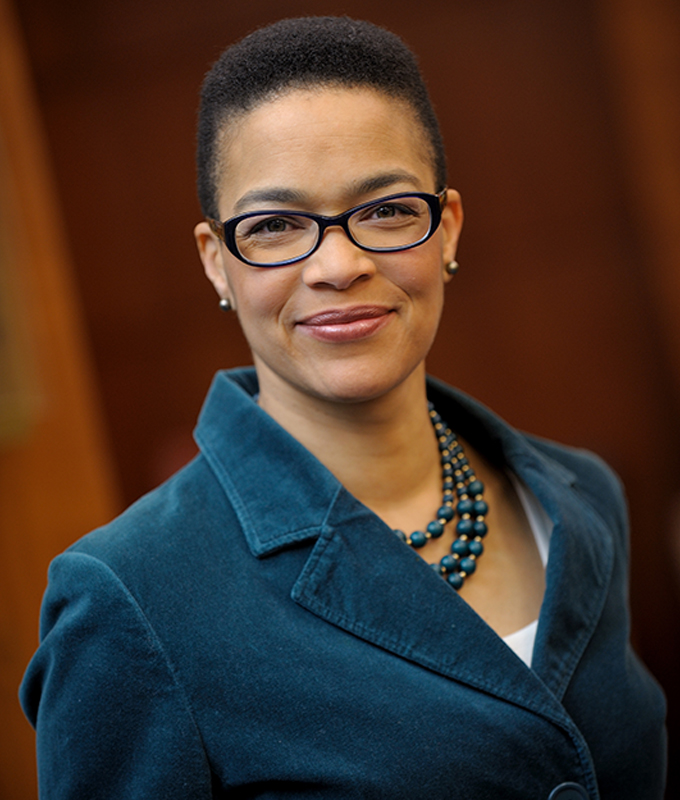 Denise Lewin Loyd合作论文数Department of Finance, Gies College of Business, University of Illinois at Urbana-Champaign1
 Zoe Kinias合作论文数Kellogg School of Management, Northwestern University1
 Aparna Joshi合作论文数Department of Management & Organization, Smeal College of Business, Pennsylvania State University1
 Marcus M. Stewart合作论文数1Marla Baskerville Watkins合作论文数College of Business Administration, Northeastern University1




