During mixed-motive intrateam conflicts, wherein members must balance cooperative and competitive motives, negative emotions, such as anger and frustration, often arise and derail effective conflict resolution. To help teams navigate this important challenge, we develop and test theory about how, why, and when responses to expressed emotions can enable effective resolution of intrateam conflict. Although prior intrateam conflict research has shown that managing these emotions is critical for conflict resolution, the focus has been on broad conceptualizations of team emotion management that aggregate across discrete emotion-response strategies with both potentially divergent effects (e.g., acknowledgment, reframing, and suppression) and different actors (e.g., members and leaders). This aggregation masks tensions and trade-offs between different strategies and actors, and it offers team members limited guidance on how to respond to emotions during conflict. Therefore, responding to calls to focus on discrete emotion-response strategies, we identify emotional acknowledgment (i.e., the verbal recognition of another member’s emotional display) as a particularly effective strategy within intrateam conflicts because it addresses simultaneously cooperative motives by helping expressers feel seen and valued and competitive motives by creating an opportunity for expressers to advocate for their unique interests and priorities. We propose and find in two laboratory experiments of 496 three-person teams that emotional acknowledgment, particularly when coming from team leaders, reduces the intensity of negative emotional expression, thereby improving team conflict resolution. Funding: The authors thank the University of Michigan and INSEAD for research funding. Supplemental Material: The online appendix is available at https://doi.org/10.1287/orsc.2024.19578 .
Agentic behaviors are a critical pathway to power in contemporary organizations. Paradoxically, employees who lack power are the least likely to think and act agentically-creating a self-perpetuating cycle of disadvantage. Existing research on facilitating employee agentic behaviors relies on structural solutions that are often out of reach for individual employees. Yet, anecdotal evidence suggests that this view may be incomplete, as some individuals seem to be able to overcome the challenges powerlessness poses without relying on external resources, control, or organizational change. Integrating research on powerlessness and cognitive reappraisal, the present research proposes that cognitively reappraising powerless situations as opportunities can help individuals cope with the negative effects low power has on agency. A negotiation simulation (Study 1) and two experience-sampling field experiments (Studies 2-3) support our predictions: cognitive reappraisal attenuates the negative effects of low-power experiences on approach-related orientation (i.e., the Behavioral Approach System), which subsequently facilitates several indicators of agentic behavior, including employees' propensity to negotiate (Study 1) and their tendency to engage in voice and task proactivity at work (Studies 2-3). This research proposes a way to break the power-inaction link, suggesting that individuals may regulate their reactions to powerless experiences and offering an empowering and accessible strategy for sustaining agency.
This symposium seeks to understand the experience of working fathers – from opportunities and constraints to support and stereotypes. The default for many working fathers is to fulfill the “ideal worker”—fully devoted to and available for the job, with no personal responsibilities or interests that interfere with this commitment to work – in their organizations and a “bread winner” – the sole or primary financial provider in their families. However, many working men also want to be engaged fathers. Given the competing pulls between roles at home and in organizations, many men are left feeling, as Erin Reid (2015) wrote: “over-worked and under-familied.” Diving into the research on working fathers at this point in time is an opportune moment for scholars to support working fathers fulfilling their professional and caregiving ambitions, which can benefit them, their organizations and their families.
While research has documented positivity biases in workplace feedback to women versus men, this phenomenon is not fully understood. We take a motivational perspective, theorizing that the gender stereotype of warmth shapes feedback givers' goals, amplifying the importance placed on kindness when giving critical feedback to a woman versus a man. We found support for this hypothesis in a survey of professionals giving real developmental feedback (Study 1, N = 4,842 raters evaluating N = 423 individuals) and five experiments with MBA students, lab participants, and managers (Studies 2-5, N = 1,589). Across studies, people prioritized the goal of kindness more when they gave, or anticipated giving, critical feedback to a woman versus a man. Studies 1, 3, and 5 suggest that this kindness bias relates to gendered positivity biases, and Studies 4a and 4b tested potential mechanisms and supported an indirect effect through warmth. We discuss implications for the study of motivation and workplace gender bias.
Verbal communication about emotions, such as talking about one’s own emotional experiences or inquiring about the emotions of others, is often seen as a taboo topic in the workplace. However, emerging work suggests that verbalization of the emotions of oneself and others can affect important outcomes at the individual, dyadic, team, and organizational levels, such as social learning, engagement, and cooperation. In this symposium, we highlight different perspectives on why, how, and when to verbally communicate about the emotions of yourself or others in organizational contexts. The five papers presented cover a broad range of inter-related topics (e.g., verbal emotional acknowledgment, explicit collective emotion regulation, and verbal emotional expression) and represent different theoretical and empirical perspectives (e.g., including both laboratory and field work). Our discussant, Hillary Anger Elfenbein, a leading scholar in the study of emotions, will close our session by offering a synthesis of the papers and discussing with the audience future directions for the study of verbal communication about emotions at work. Through this symposium, we aim to generate new insights about how we can study verbal communication about emotions at work. Thanks for Nothing: Expressing Gratitude Invites Exploitation by Competitors Presenter: Jeremy Yip; McDonough School of Business Georgetown U. Presenter: Kelly Lee; - Presenter: Cindy Chan; U. of Toronto Presenter: Alison Wood Brooks; Harvard U. The Epistemic Value of Being a Complaint Recipient: A Social Learning Perspective Presenter: Casher Belinda; Kenan-Flagler Business School, U. of North Carolina at Chapel Hill Presenter: Salvatore J. Affinito; Harvard Business School Presenter: Michael Christian; U. of North Carolina, Chapel Hill The Social Effects of Emotional Expressions are Functionally Equivalent across Expressive Modalities Presenter: Gerben Alexander Van Kleef; U. of Amsterdam Why Followers Don’t Acknowledge the Emotions of their Leaders (and Why they Should) Presenter: Christina Bradley; U. of Michigan, Ross School of Business Presenter: Lindred L. Greer; U. of Michigan, Ross School of Business Presenter: Alisa Yu; Stanford U. Explicit Collective Emotion Regulation and its Influence on Team Process and Viability Presenter: Elizabeth Baily Wolf; INSEAD Presenter: Jacob Levitt; The Wharton School, U. of Pennsylvania Presenter: Sigal Barsade; The Wharton School, U. of Pennsylvania
The purpose of this symposium is to promote research that represents the new frontiers of teamwork. Specifically, we bring together research that examines “invisible” structural elements in teams, with the aim of starting a dialogue about how to study these structures. Structures may be invisible because they are extremely novel and therefore uncommon, or because we currently lack frameworks to “see” them. We hope that by bringing together cutting edge team research on topics such as Temporal Brokerage, Team-Level Algorithmic Control, Hierarchical Flexing, and Collective Emotion Culture Crafting, we can 1) establish a need for “seeing” invisible structures, 2) encourage the study of novel structural phenomena, and 3) reinvigorate the broader full-cycle OB research paradigm. A Network Perspective on Temporal Dispersion in Global Teams Presenter: Sujin Jang; INSEAD Presenter: Julija Mell; Rotterdam School of Management, Erasmus U. Presenter: Sen Chai; ESSEC Business School Group-Level Responses to Algorithmic Management Systems in Distributed, High-Skill Work Settings Presenter: Katharina Lix; Engineering Dept., Stanford U. Presenter: Melissa Valentine; Stanford U. Team Hierarchical Flexing: How Start-Up Teams Create Fluid Intra-Team Hierarchies Presenter: Lindred L. Greer; U. of Michigan, Ross School of Business Presenter: Nicole Abi-Esber; Stanford GSB Presenter: Charles Chu; Stanford GSB Building an Affective Team: An Experimental Intervention for Crafting Explicit Emotion Culture Presenter: Elizabeth Baily Wolf; INSEAD Presenter: Jacob Levitt; The Wharton School, U. of Pennsylvania Presenter: Sigal Barsade; The Wharton School, U. of Pennsylvania
Individuals often rely on other people, typically other members of their organization, for performance feedback. Unsurprisingly, decades of organizational research have been dedicated to understanding the determinants of effective feedback exchange. Yet, not much attention has been given to when, how, and why feedback givers may provide varying types of feedback that may be deemed as more or less helpful. Without understanding this crucial piece of the feedback exchange process – feedback giving – it would be impossible to promote effective feedback exchange. This symposium is designed to advance our understanding of feedback exchange from the giver's perspective by bringing together leading scholars examining various factors that affect feedback giving. By considering characteristics of the feedback giver, feedback recipient, and the feedback giving situation, this symposium is intended to provide a holistic view about the dynamics of feedback giving. Our presentations touch upon both a wide range of approaches of exploring the phenomenon of feedback giving, from empirical description to proposing and testing novel interventions. The presentations were also selected to exhibit the breadth of methodologies that are being applied to explore feedback giving. The papers include findings from surveys, archival field data, lab experiments, and field experiments. Together, these presentations propose theories and offer practical implications that will advance the collective understanding of this important workplace challenge. The program begins by considering how and why feedback givers provide input that may be considered as less helpful by their recipients. The next two presentations offer potential solutions for the various shortcomings of feedback identified earlier in the session. The symposium will conclude with an integrated discussion by Sue Ashford, who will comment on the papers, explore how they relate, and share her perspective on feedback giving. Kind or Candid? A Bias toward Kindness Goals in Feedback to Poorly Performing Women Presenter: Lily E. Jampol; London Business School The Detrimental Effects of High-Status Mentors: Formal Mentors' Relative Status and Mentee Turnover Presenter: Paul Isaac Green; U. of Texas, McCombs Presenter: Ting Zhang; Harvard Business School Presenter: Bradley R. Staats; U. of North Carolina, Chapel Hill Presenter: Francesca Gino; Harvard U. Think or Feel before Delivering Feedback?: Perspective Taking & Empathy Result in Different Feedback Presenter: Kian Siong Tey; INSEAD Presenter: Elizabeth Baily Wolf; INSEAD Presenter: Roderick Ingmar Swaab; INSEAD Presenter: Michael Schaerer; Singapore Management U. Asking for Advice (vs. Feedback) Yields More Critical, Specific, and Actionable Input Presenter: Jaewon Yoon; Harvard Business School Presenter: Hayley Blunden; Harvard Business School Presenter: Ariella Kristal; Harvard Business School Presenter: Ashley Whillans; Harvard Business School
Emotions are powerful tools that enable employees to navigate their organizational environments and shape their relationships with others. In this symposium, we highlight the sustaining, empowering, and motivating potential of emotions by showcasing novel research from both intrapersonal and interpersonal perspectives. Across five empirical papers, our symposium covers a broad range of topics on emotions (e.g., emotional intelligence, emotional regulation, emotional expression, emotional acknowledgment) using a diverse set of research settings and methodologies. Our discussant, Sigal Barsade, will conclude the session by synthesizing these papers and offering practical implications and potential future directions in the study of workplace emotions. Through this symposium, we seek to challenge existing assumptions and generate novel and important insights about how we manage our own emotions and the emotions of others at work. Is Self-Insight into Emotional and Cognitive Abilities Related to Adjustment? Presenter: Joyce He; U. of Toronto Presenter: Stephane Côté; U. of Toronto Surface Acting Can be Good... or Bad: Exploring the Influence of Expressing Inauthentic Emotion Presenter: Matthew LaPalme; The Wharton School, U. of Pennsylvania Presenter: Felipe Rojas; Pontificia U. Católica de Chile Presenter: Julio A. Pertuze; Pontificia U. Católica de Chile Presenter: Pilar Espinoza; U. San Sebastian, Chile How Music Teachers' Emotional Expressions Shape Students' Musical Performance Presenter: Gerben Alexander Van Kleef; U. of Amsterdam Presenter: Eftychia Stamkou; U. of Amsterdam Emotion as Performance Feedback: (Mis)inferring Work Quality from Evaluators' Expressions Presenter: Elizabeth Baily Wolf; INSEAD Signaling Recognition of Emotions: The Influence of Emotional Acknowledgment on Interpersonal Trust Presenter: Alisa Yu; Stanford U. Presenter: Julian Jake Zlatev; Harvard Business School Presenter: Justin M. Berg; Stanford GSB
From negotiations to customer interactions, individuals glean critical information from the emotional displays of others. The emotions individuals display offer important insight into how others appraise a situation. As scholars, however, we know surprisingly little about the social consequences of emotional displays. In this symposium, we break new ground by documenting the interpersonal effects of emotional displays. We explore emotional displays in customer interactions, we explore how different frames of the same expression influence perceptions, we explore cross-cultural differences, we explore expressions of emotional ambivalence, and we consider the critical role of context in moderating our understanding of emotional expressions. Our symposium explores several interpersonal dynamics, but two of papers focus particular attention on the relationship between emotional expressions and the key organizational construct of trust.
This chapter focuses on stereotypes about and typical behavior toward members of envied groups. It summarizes the theoretical principles of the Stereotype Content Model (SCM) and the Behaviors from Intergroup Affect and Stereotypes (BIAS) map and describes how these theories relate to intergroup envy in organizations. The SCM proposes that people perceive both individuals and groups along two dimensions: those of competence (determined by status) and warmth (determined by competition for resources). High-status, competitive groups are seen as highly competent, but lacking warmth. These competent but cold groups tend to be envied. Envy often elicits passive facilitation (e.g., tolerating business exchange), but that facilitation has an undercurrent of resentment. Therefore, envy may also elicit active harm (e.g., harassing, looting). Envious stereotypes can influence perceptions of individuals within organizations (e.g., Asian American or female professionals) and of organizations themselves (e.g., for-profit organizations, luxury brands).
This paper investigates whether humans avert their gaze from individuals engaging in nonverbal displays of dominance. Although past studies demonstrate that both humans and nonhuman primates direct more visual attention to high-status others than low-status others, non-human primates avert their gaze when high-status conspecifics engage in nonverbal dominance displays (e.g., chest pounding). In two experiments, participants were eye-tracked while viewing photographs of men and women adopting either dominant, high-power (i.e., expansive and open) or submissive, low-power (i.e., contractive and closed) nonverbal postures. Results demonstrated that humans, like primates, avert their gaze from the faces and upper bodies of individuals displaying dominance compared to those displaying submissiveness. Not only did participants look less often at the faces and upper bodies of dominance-displaying individuals, they also fixated on these regions for shorter durations. Our findings ultimately suggest that nonverbal dominance displays influence humans' visual attention in ways that are likely to shape how social interactions unfold.
Expressing distress at work can have negative consequences for employees: observers perceive employees who express distress as less competent than employees who do not. Across five experiments, we explore how reframing a socially inappropriate emotional expression (distress) by publicly attributing it to an appropriate source (passion) can shape perceptions of, and decisions about, the person who expressed emotion. In Studies 1a-c, participants viewed individuals who reframed distress as passion as more competent than those who attributed distress to emotionality or made no attribution. In Studies 2a-b, reframing emotion as passion shifted interpersonal decision-making: participants were more likely to hire job candidates and choose collaborators who reframed their distress as passion compared to those who did not. Expresser gender did not moderate these effects. Results suggest that in cases when distress expressions cannot or should not be suppressed, reframing distress as passion can improve observers' impressions of the expresser. (C) 2016 Elsevier Inc. All rights reserved.
Four studies tested whether cultural values moderate the content of gender stereotypes, such that male stereotypes more closely align with core cultural values (specifically, individualism vs. collectivism) than do female stereotypes. In Studies 1 and 2, using different measures, Americans rated men as less collectivistic than women, whereas Koreans rated men as more collectivistic than women. In Study 3, bicultural Korean Americans who completed a survey in English about American targets rated men as less collectivistic than women, whereas those who completed the survey in Korean about Korean targets did not, demonstrating how cultural frames influence gender stereotype content. Study 4 established generalizability by reanalyzing Williams and Best's (1990) cross-national gender stereotype data across 26 nations. National individualism-collectivism scores predicted viewing collectivistic traits as more-and individualistic traits as less-stereotypically masculine. Taken together, these data offer support for the cultural moderation of gender stereotypes hypothesis, qualifying past conclusions about the universality of gender stereotype content.
Working papers are in draft form. This working paper is distributed for purposes of comment and discussion only. It may not be reproduced without permission of the copyright holder. Copies of working papers are available from the author.
 Peter Glick合作论文数VMware Women's Leadership Innovation Lab, Stanford University;Department of Psychology, Lawrence University5
 Amy Cuddy合作论文数Kellogg Sch Management, Northwestern Univ4
 Gerben A. Van Kleef合作论文数Department of Social Psychology, Faculty of Social and Behavioural Sciences, University of Amsterdam4
 Michael I. Norton合作论文数Harvard Business School, Harvard University3
 lily jampol合作论文数2
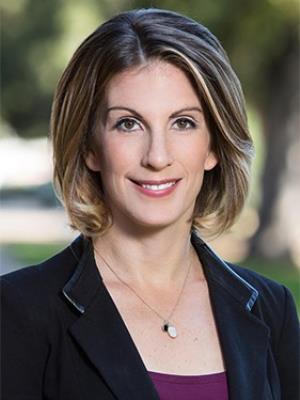 Lindred Greer合作论文数Stephen M. Ross School of Business, University of Michigan-Ann Arbor2
 Elise Holland合作论文数2
 Michael Schaerer合作论文数Organizational Behavior Area, INSEAD2
 Sigal G. Barsade合作论文数Management Department, The Wharton School, The University of Pennsylvania2Jooa Julia Lee合作论文数1jihye chong合作论文数1Sabrina Tanquerel合作论文数1
 Kian Siong Tey合作论文数INSEAD, Fontainebleau, France1
 Katharina Lix合作论文数Engineering Dept., Stanford U."1
 Polly Kang合作论文数Corresponding author: Kang, Polly1
 Santosh B. Srinivas合作论文数Dept Management & Human Resources, HEC Paris1
 Casher Belinda合作论文数University of North Carolina at Chapel Hill1
 Nicole Abi-Esber合作论文数Organizational Behavior.1Jaewon Yoon合作论文数Harvard Business School, Boston, MA 02163, USA1
 Alisa Yu合作论文数1Ariella Kristal合作论文数Dept Org Behav, Harvard Sch Business1Hayley Blunden合作论文数Kogod School of Business, American U.1
 Sen Chai合作论文数ESSEC Business Sch1
 Jegoo Lee合作论文数University of Rhode Island1
 Matthew LaPalme合作论文数Yale Ctr Emot Intelligence, Yale Univ1Shelly Ashtar合作论文数Technion - Israel Institute of Technology, Haifa, Israel1
 Pilar Espinoza合作论文数Fac Med & Sci, Univ San Sebastian1
 Julio A. Pertuze合作论文数Sch Engn, Pontificia Univ Catolica Chile1
 Charles Chu合作论文数Org Behav, Stanford Univ1Joyce C. He合作论文数1
 Beth K. Humberd合作论文数Manning Sch Business, Univ Massachusetts Lowell1
 Bobbi Thomason合作论文数Pepperdine Graziadio Business Sch, Pepperdine Univ1
 Christina Bradley合作论文数Yale Ctr Emot Intelligence, Yale Child Study Ctr1Paul Isaac Green合作论文数1
 Julija Mell合作论文数Rotterdam Sch Management, Erasmus Univ1
 Marc Grau-Grau合作论文数Fac Educ Sci, Univ Int Catalunya1
 Eftychia Stamkou合作论文数Dept Psychol, Univ Amsterdam1
 Jeffrey Sanchez-Burks合作论文数Stephen M. Ross School of Business, University of Michigan-Ann Arbor1
 Michael Parke合作论文数Management Department, The Wharton School, University of Pennsylvania1
 Niranjan Srinivasan Janardhanan合作论文数Department of Management, London School of Economics and Political Science1
 Rattan Aneeta合作论文数Department of Psychology, Stanford University1
 Nadav Klein合作论文数Booth School of Business, University of Chicago1
 Stéphane Côté合作论文数Rotman School of Management, University of Toronto1
 Julian J. Zlatev合作论文数Harvard Business School, Harvard University1
 Looser Christine合作论文数1
 Ashley V. Whillans合作论文数Harvard Business School, Harvard University1
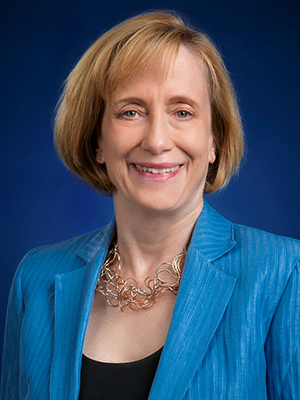 Sue Ashford合作论文数Stephen M. Ross School of Business, University of Michigan1
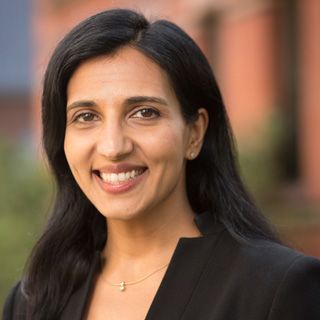 Sunita Sah合作论文数Samuel Curtis Johnson Graduate School of Management, SC Johnson College of Business, Cornell University1
 Melissa Valentine合作论文数Management Science & Engineering Department, Stanford University1




