Despite their low contribution to forest carbon stocks, lianas (woody vines) play an important role in the carbon dynamics of tropical forests. As structural parasites, they hinder tree survival, growth and fecundity; hence, they negatively impact net ecosystem productivity and long‐term carbon sequestration. Competition (for water and light) drives various forest processes and depends on the local abundance of resources over time. However, evaluating the relative role of resource availability on the interactions between lianas and trees from empirical observations is particularly challenging. Previous approaches have used labour‐intensive and ecosystem‐scale manipulation experiments, which are infeasible in most situations. We propose to circumvent this challenge by evaluating the uncertainty of water and light capture processes of a process‐based vegetation model (ED2) including the liana growth form. We further developed the liana plant functional type in ED2 to mechanistically simulate water uptake and transport from roots to leaves, and start the model from prescribed initial conditions. We then used the PEcAn bioinformatics platform to constrain liana parameters and run uncertainty analyses. Baseline runs successfully reproduced ecosystem gas exchange fluxes (gross primary productivity and latent heat) and forest structural features (leaf area index, aboveground biomass) in two sites (Barro Colorado Island, Panama and Paracou, French Guiana) characterized by different rainfall regimes and levels of liana abundance. Model uncertainty analyses revealed that water limitation was the factor driving the competition between trees and lianas at the drier site (BCI), and during the relatively short dry season of the wetter site (Paracou). In young patches, light competition dominated in Paracou but alternated with water competition between the wet and the dry season on BCI according to the model simulations. The modelling workflow also identified key liana traits (photosynthetic quantum efficiency, stomatal regulation parameters, allometric relationships) and processes (water use, respiration, climbing) driving the model uncertainty. They should be considered as priorities for future data acquisition and model development to improve predictions of the carbon dynamics of liana‐infested forests. Synthesis. Competition for water plays a larger role in the interaction between lianas and trees than previously hypothesized, as demonstrated by simulations from a process‐based vegetation model.
DIBBs Brown Dog is a recent cyberinfrastructure effort which aims to create two new services to aid users in the searching, accessing, and usage of digital data and provide these services in a manner that is as broadly and easily accessible as possible. At its lowest level, the Data Access Proxy (DAP) providing file format conversion capabilities and the Data Tilling Service (DTS) providing content based extractions, will be accessible via a deliberately compact REST interface. On top of this a number of client libraries and applications can and are being constructed to even further reduce the overhead of accessing the provided functionality (e.g. libraries in Javascript, Python, R, Matlab and interfaces such as bookmarklets, browser extensions, and other standalone applications). At the heart of the two services, however, is their extensibility, allowing one to potentially incorporate any library or tool as a conversion or extraction component within the services towards both the leveraging of the functionality they provide as well as the preservation of the tools themselves.
 Michael Dietze合作论文数Department of Earth & Environment, College of Arts & Sciences, Boston University11
 jeremy kemball合作论文数10
 Rob Kooper合作论文数Center for Supercomputing Applications, National;University of Illinois at Urbana-Champaign;National Center for Supercomputing Applications, University of Illinois at Urbana-Champaign10
 Shawn Serbin合作论文数Environmental Sciences Department, Brookhaven National Laboratory10
 Lebauer David S合作论文数Energy Biosci Inst, Univ Illinois8
 Ann Raiho合作论文数Earth System Science Interdisciplinary Center, University of Maryland7Afshin Pourmokhtarian合作论文数7
 B. M. Raczka合作论文数7
 Xiaohui Feng合作论文数7michael marshall合作论文数6
 Alexey Shiklomanov合作论文数Goddard Space Flight Center, NASA6
 Kenton Guadron McHenry合作论文数Department of Computer Science, The Grainger College of Engineering, University of Illinois at Urbana-Champaign5
 Anthony Gardella合作论文数2James Simkins合作论文数2
 Ankur Desai合作论文数Department of Civil and Environmental Engineering, College of Engineering, University of Wisconsin-Madison2
 Deepak Jaiswal合作论文数Dep. of Agricultural and Biological Engineering, The Pennsylvania State Univ.2
 Christine R. Rollinson合作论文数School of Forest Resources, The Pennsylvania State University2Dave Mattson合作论文数1Jason Votava合作论文数1Inna Zharnitsky合作论文数1Chris Navarro合作论文数1
 Hannes P. T. De Deurwaerder合作论文数Dept Ecol & Evolutionary Biol, Princeton Univ1
 Chris M. Smith-Martin合作论文数Dept Ecol Evolut & Environm Biol, Columbia Univ1Qina Yan合作论文数1
 Marcus Slavenas合作论文数National Center of Supercomputing Applications, University of Illinois at Urbana-Champaign1
 Greg Jansen合作论文数College Pk, Univ Maryland1
 Ankit Rai合作论文数1Rui Liu合作论文数1
 Matteo Detto合作论文数Department of Ecology and Evolutionary Biology, Princeton University1Edgar F. Black合作论文数1
 Slot Martijn合作论文数Department of Biology, University of Florida1
 Xiangtao Xu合作论文数Ecology and Evolutionary Biology, College of Arts and Sciences, Cornell University1
 Felicien Meunier合作论文数PhytoSYSTEMS, Université de Liège;School of Biosciences, University of Nottingham;Cirad, Institut National de la Recherche Agronomique;Institut de Biologie Computationnelle, F-34095 Montpellier, France (C.P.);Earth and Life Institute, Université Catholique de Louvain;Institut für Bio- und Geowissenschaften: Agrosphäre, Forschungszentrum Jülich;Computational Science Center, University of Vienna;Institut de Biologie Intégrative des Plantes, Centre National de la Recherche Scientifique/Institut National de la Recherche Agronomique/SupAgro-M/UM2;School of Computer Science, University of Nottingham;University of Nottingham, University of Nottingham1
 Martin De Kauwe合作论文数School of Biological Sciences, University of Bristol1
 Luigi Marini合作论文数1
 Praveen Kumar合作论文数Department of Civil & Environmental Engineering, The Grainger College of Engineering, University of Illinois at Urbana-Champaign;Prairie Research Institute, University of Illinois at Urbana-Champaign1
 Barbara S. Minsker合作论文数Ven Te Chow Hydrosystems Laboratory, University of Illinois at Urbana-Champaign1
 Ben Bond-Lamberty合作论文数Joint Global Change Research Institute, Pacific Northwest National Laboratory1
 Liana Diesendruck合作论文数Vicomi1
 Marcos Longo合作论文数Department of Earth and Planetary Sciences, Harvard University1
 Stefan Schnitzer合作论文数Department of Biological Sciences, Klingler College of Arts & Sciences, Marquette University1
 Damien Bonal合作论文数1
 Smruti Padhy合作论文数LASIGE, University of Lisbon1
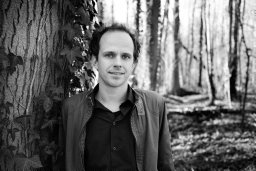 Hans Verbeeck合作论文数Faculty of Bioscience Engineering, Ghent University1
 Jong Sung Lee合作论文数School of Civil and Environmental Engineering, Georgia Institute of Technology1
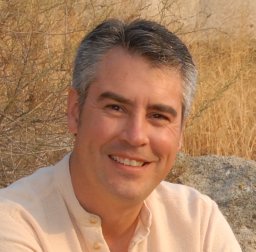 Louis S Santiago合作论文数Center for Conservation Biology, University of California, Riverside1
 Jennifer Powers合作论文数Department of Plant and Microbial Biology, College of Biological Sciences, University of Minnesota;Smithsonian Tropical Research Institute1
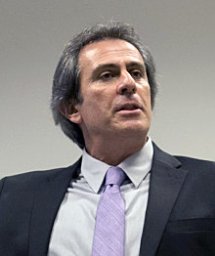 Richard Marciano合作论文数San Diego Supercomputer Center1
 William C. Sullivan合作论文数The Environmental Council, University of Illinois1




