Engineering students used ClassTranscribe, an accessible video player, in multiple engineering courses to view course videos and search for video content. The tool collected detailed timestamped student behavioral data from 1,894 students across 25 engineering courses that included what individual students searched for and when. A previous analysis, published in ASEE 2020 [1], found that using ClassTranscribe caption search significantly predicted improvement in final exam scores in a computer science course. In this paper we present how students used the search functionality based on a more detailed analysis of the log data. ClassTranscribe automatically created captions and transcripts for all lecture videos using an Azure speech-to-text system that was supplemented with crowd-sourced editing to fix captioning errors. The search functionality used the timestamped caption data to find specific video moments both within the current video or across the entire course. The number of search activities per person ranged from zero to 186 events. An in-depth analysis of the students (N=167) who performed 1,022 searches was conducted to gain insight into student search needs and behaviors. Based on the total number of searches performed, students were grouped into “Infrequent Searcher” (< 18 searches) and “Frequent Searcher” (18 to 110 searches) using clustering algorithms. The search queries used by each group were found to follow the Zipf’s Law and were categorized into STEM-related terms, course logistics and others. Our study reports on students’ search context, behaviors, strategies, and optimizations. Using Universal Design for Learning as a foundation, we discuss the implications for educators, designers, and developers who are interested in providing new learning pathways to support and enhance video-based learning environments.
Understanding the meanings of domain-specific terms is essential to academic success in college-level STEM courses.However, it can be challenging for students to obtain correct spellings and precise definitions of domain-specific terms from lecture videos, given the limited lecture time, rarity of the terms, and possibly confusing pronunciations.To provide accurate speech-to-text transcription, and enable students to search for domain-specific terms and obtain term definitions in real-time, we designed, implemented, and evaluated the PhraseHinter tool, a text analytics pipeline that efficiently extracts domain-specific terms from engineering educational videos.The tool is lightweight and adaptable to online instruction platforms.In our approach, a series of key scenes are initially extracted from a lecture video using a novel scene detection algorithm.The algorithm employs a support vector machine to classify image differences based on pixel, face, and text similarity information [2].A domain corpus is built by using the optical character recognition (OCR) technique to extract text from the scenes.A sequence of text-cleaning algorithms is applied to the domain corpus to filter out invalid characters, punctuation, and stop words.Frequent phrases are identified using standard text mining algorithms including PrefixSpan [15].Using the TF-IDF metric [16], we compare the cleaned corpus to the background corpus to determine domain-specific terms and phrases.The proposed PhraseHinter tool has been successfully integrated into ClassTranscribe [4,11,3,19,2,10], a web-based video lecture platform, for multiple purposes: 1) Improve the Microsoft Azure Speech-to-Text accuracy by preparing a list of domainspecific terms with high confidence of occurrence in the audio, 2) Provide the input for the glossary tool, another text analytics service in ClassTranscribe that automatically generates the explanation for the domain-specific terms, and, currently in progress, 3) Provide search capability in order to locate the moments in the video when a domainspecific term is visually presented.In this paper, we evaluate the performance and accuracy of the PhraseHinter system based on a representative corpus of videos from different engineering disciplines with domain-specific terms and phrases correctly pre-identified.We share the evaluation dataset to the education community for further research.In addition, we present the source code and provide guidance for instructors who would like to adopt the tool.
The Cyber Human Ecosystem for Engaged Security Education (CHEESEHub) is an open web platform that hosts community-contributed containerized demonstrations of cybersecurity concepts. In order to maximize flexibility, scalability, and utilization, CHEESEHub is currently hosted in a Kubernetes cluster on the Jetstream academic cloud. In this short paper, we describe the security model of CHEESEHub and specifically the various Kubernetes security features that have been leveraged to secure CHEESEHub. This ensures that the various cybersecurity exploits hosted in the containers cannot be misused, and that potential malicious users of the platform are cordoned off from impacting not just other legitimate users, but also the underlying hosting cloud. More generally, we hope that this article will provide useful information to the research computing community on a less discussed aspect of cloud deployment: the various security features of Kubernetes and their application in practice.
In an era of rapid global change, our ability to understand and predict Earth's natural systems is lagging behind our ability to monitor and measure changes in the biosphere. Bottlenecks to informing models with observations have reduced our capacity to fully exploit the growing volume and variety of available data. Here, we take a critical look at the information infrastructure that connects ecosystem modeling and measurement efforts, and propose a roadmap to community cyberinfrastructure development that can reduce the divisions between empirical research and modeling and accelerate the pace of discovery. A new era of data-model integration requires investment in accessible, scalable, and transparent tools that integrate the expertise of the whole community, including both modelers and empiricists. This roadmap focuses on five key opportunities for community tools: the underlying foundations of community cyberinfrastructure; data ingest; calibration of models to data; model-data benchmarking; and data assimilation and ecological forecasting. This community-driven approach is a key to meeting the pressing needs of science and society in the 21st century.
A core objective of the TERRA-REF project was to generate an open-access reference dataset for the evaluation of sensing technologies to study plants under field conditions. The TERRA-REF program deployed a suite of high-resolution, cutting edge technology sensors on a gantry system with the aim of scanning 1 hectare (10 4 m) at around 1 mm 2 spatial resolution multiple times per week. The system contains co-located sensors including a stereo-pair RGB camera, a thermal imager, a laser scanner to capture 3D structure, and two hyperspectral cameras covering wavelengths of 300-2500nm. This sensor data is provided alongside over sixty types of traditional plant phenotype measurements that can be used to train new machine learning models. Associated weather and environmental measurements, information about agronomic management and experimental design, and the genomic sequences of hundreds of plant varieties have been collected and are available alongside the sensor and plant phenotype data.Over the course of four years and ten growing seasons, the TERRA-REF system generated over 1 PB of sensor data and almost 45 million files. The subset that has been released to the public domain accounts for two seasons and about half of the total data volume. This provides an unprecedented opportunity for investigations far beyond the core biological scope of the project.The focus of this paper is to provide the Computer Vision and Machine Learning communities an overview of the available data and some potential applications of this one of a kind data.
This paper presents three case studies that examined the use of ClassTranscribe in a diverse set of undergraduate engineering classes in 2019 and 2020 at the University of Illinois at Urbana-Champaign. ClassTranscribe, a video viewing system designed with accessibility and learning in mind, was first presented to the ASEE community in 2019 [1]. The pedagogical features of the tool include: pause, leave and resume viewing; captions available in multiple languages; downloadable transcriptions; shareable links to video moments; and searchable content within each video and across an entire course. The importance of the tool in the context of a commitment to accessibility for engineering education is discussed. In addition, online video content that follows Universal Design for Learning principles enables all students to prepare for assessments and provides more equitable learning opportunities. Low-stress online learning opportunities may be particularly valuable for underrepresented minorities (e.g., [2] explored relative student improvement in multiple exams assessments in an online course with video lectures). The first study presented here describes two extremes: a supplemental-resource approach and primary-resource approach in the adoption of ClassTranscribe into an Electrical and Computer Engineering (ECE) and Computer Science (CS) course, respectively. In Spring 2020, ECE students used the tool as a supplemental learning resource to review and search live lecture captures. Whereas in the sophomore CS course (N=271 students), physical lectures were canceled and ClassTranscribe was used as a primary learning resource using short-length (<10 minute) videos. The methodology and analysis of the CS course outcomes were described in [3] but relevant findings are reproduced here: Students in the lowest quartile improved by 3.3 percentile points compared to previous semesters and statistically-significant positive learning outcomes were found at all levels of student performance. Each quartile of students who used the tool an above average amount of time led to increased final exam scores, with the lowest quartile increasing 14.4 absolute points compared to their in-quartile peers. A new contribution of this paper is an analysis of the interactions with the tool, which found three event types: Fullscreen-viewing, Change-playback-speed and Search-Transcription predicted improved exam performance and were statistically significant (p<0.01). In the second case study, video instruction was used to present safety and lab-handling techniques in a Bioengineering class prior to rigorous lab assessment. The student-specific analytic data available to the course instructor using the web interface allowed the instructor to check that each student had completed training materials prior to lab work. Student surveys measured several factors including the utility of the tool and students' preferences in video systems and video-based Bioengineering instruction. In the third case study, student feedback from CS and ECE courses were solicited on learning utility and digital accessibility. The majority of the 206 responses reported high utility (“moderately useful” or greater) of the tool when working on assignments (67%) and preparing for an exam (77%). The majority of respondents (96%, n=239) recommended the tool be re-used in future semesters of their course. We present example survey questions that respect student choice to not-self disclose a disability.
The Transportation Energy Resources from Renewable Agriculture Phenotyping Reference Platform (TERRA-REF) provides a data and computation pipeline responsible for collecting, transferring, processing and distributing large volumes of crop sensing and genomic data from genetically informative germplasm sets. The primary source of these data is a field scanner system built over an experimental field at the University of Arizona Maricopa Agricultural Center. The scanner uses several different sensors to observe the field at a dense collection frequency with high resolution. These sensors include RGB stereo, thermal, pulse-amplitude modulated chlorophyll fluorescence, imaging spectrometer cameras, a 3D laser scanner, and environmental monitors. In addition, data from sensors mounted on tractors, UAVs, an indoor controlled-environment facility, and manually collected measurements are integrated into the pipeline. Up to two TB of data per day are collected and transferred to the National Center for Supercomputing Applications at the University of Illinois (NCSA) where they are processed. In this paper we describe the technical architecture for the TERRA-REF data and computing pipeline. This modular and scalable pipeline provides a suite of components to convert raw imagery to standard formats, geospatially subset data, and identify biophysical and physiological plant features related to crop productivity, resource use, and stress tolerance. Derived data products are uploaded to the Clowder content management system and the BETYdb traits and yields database for querying, supporting research at an experimental plot level. All software is open source2 under a BSD 3-clause or similar license and the data products are open access (currently for evaluation with a full release in fall 2019). In addition, we provide computing environments in which users can explore data and develop new tools. The goal of this system is to enable scientists to evaluate and use data, create new algorithms, and advance the science of digital agriculture and crop improvement.
Clowder is an open source data management system to support data curation of long tail data and metadata across multiple research domains and diverse data types. Institutions and labs can install and customize their own instance of the framework on local hardware or on remote cloud computing resources to provide a shared service to distributed communities of researchers. Data can be ingested directly from instruments or manually uploaded by users and then shared with remote collaborators using a web front end. We discuss some of the challenges encountered in designing and developing a system that can be easily adapted to different scientific areas including digital preservation, geoscience, material science, medicine, social science, cultural heritage and the arts. Some of these challenges include support for large amounts of data, horizontal scaling of domain specific preprocessing algorithms, ability to provide new data visualizations in the web browser, a comprehensive Web service API for automatic data ingestion and curation, a suite of social annotation and metadata management features to support data annotation by communities of users and algorithms, and a web based front-end to interact with code running on heterogeneous clusters, including HPC resources.
Brown Dog is a data transformation service for auto-curation of long-tail data. In this digital age, we have more data available for analysis than ever and this trend will only increase. According to most estimates, 70--80% of this data is unstructured, and together with unsupported data formats and inaccessible software tools, in essence, this data is not either easily accessible or usable to its owners in a meaningful way. Brown Dog aims at making this data more accessible and usable by auto-curation and indexing, leveraging existing and novel data transformation tools. In this paper, we discuss the recent major component improvements to Brown Dog including transformation tools called extractors and converters; desktop, web and terminal-based clients which perform data transformations; libraries written in multiple programming languages which integrate with existing software and extend their data curation capabilities; an online tool store for users to contribute, manage and share data transformation tools and receive credit for developing them; cyberinfrastructure for deploying the system on diverse computing platforms leveraging scalability via Docker swarm; workflow management service for creatively integrating existing transformations to generate custom, reproducible workflows which meet research needs, and its data management capabilities. This paper also discusses data transformation tools developed to support some scientific and allied use cases, thereby benefiting researchers in diverse domains. Finally, we briefly discuss our future directions with regard to production deployments as well as how users can access Brown Dog to manage their un-curated unstructured data.
Increasing demand for sustainable energy has led to research and development on the cultivation of diverse plant species for biomass production. To support the research and development required to domesticate and cultivate crops for bioenergy, we developed the Biofuel Ecophysiological Traits and Yields database (BETYdb). BETYdb is a centralized open-access repository that facilitates organization, discovery, and exchange of information about plant traits, crop yields, and ecosystem functions. BETYdb provides user interfaces to simplify storage and discovery as well as programming interfaces that support automated and reproducible scientific workflows. Presently, BETYdb contains over forty thousand observations of plant traits, biomass yields, and ecosystem dynamics collected from the published articles and ongoing field studies. Over half of these records represent fewer than ten genera that have been intensively evaluated for biomass production, while the other half represent over two thousand plant species reflecting research on new crops, unmanaged ecosystems, and land use transitions associated with bioenergy. BETYdb has been accessed over twenty-five thousand times and is used in the fields of bioenergy and ecosystem ecology to quantify yield potential and ecosystem functioning of crops and unmanaged systems under present and future climates. Here, we summarize the database contents and illustrate its applications. We show its utility in a new analysis that confirms that Miscanthus is twice as productive as switchgrass over a much wider range of environmental and management conditions than covered in previous analyses. We compare traits related to carbon uptake and water use of these species with each other and with two coppice shrubs, poplar and willow. These examples, along with a growing body of published research that used BETYdb, illustrate the scope of research supported through this open-access database.
Clowder is an open source data management system to support data curation of long tail data and metadata across multiple research domains and diverse data types. Institutions and labs can install and customize their own instance of the framework on local hardware or on remote cloud computing resources to provide a shared service to distributed communities of researchers. Data can be ingested directly from instruments or manually uploaded by users and then shared with remote collaborators using a web front end. We discuss some of the challenges encountered in designing and developing a system that can be easily adapted to different scientific areas including digital preservation, geoscience, material science, medicine, social science, cultural heritage and the arts. Some of these challenges include support for large amounts of data, horizontal scaling of domain specific preprocessing algorithms, ability to provide new data visualizations in the web browser, a comprehensive Web service API for automatic data ingestion and curation, a suite of social annotation and metadata management features to support data annotation by communities of users and algorithms, and a web based front-end to interact with code running on heterogeneous clusters, including HPC resources.
 Michael Dietze合作论文数Department of Earth & Environment, College of Arts & Sciences, Boston University44
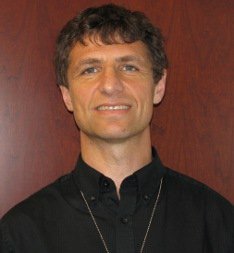 Peter Bajcsy合作论文数Center for Supercomputing Applications, National;University of Illinois at Urbana-Champaign;National Center for Supercomputing Applications, University of Illinois at Urbana-Champaign42
 Lebauer David S合作论文数Energy Biosci Inst, Univ Illinois41
 Luigi Marini合作论文数38
 jeremy kemball合作论文数24
 Kenton Guadron McHenry合作论文数Department of Computer Science, The Grainger College of Engineering, University of Illinois at Urbana-Champaign23
 Shawn Serbin合作论文数Environmental Sciences Department, Brookhaven National Laboratory20
 Barbara S. Minsker合作论文数Ven Te Chow Hydrosystems Laboratory, University of Illinois at Urbana-Champaign18
 James Myers合作论文数17carl crott合作论文数14zhengqi yang合作论文数14Kenton Mchenry合作论文数Computer Science, University of Illinois at Urbana-Champaign13
 Alexey Shiklomanov合作论文数Goddard Space Flight Center, NASA13
 Yong Liu (刘勇)合作论文数Shengjing Hospital of China Medical University12
 Larry Hodges合作论文数North Carolina School of Science and Mathematics;School of Computing, Clemson University;Virtually Better, LLC;Recovr, Inc.12Betsy Cowdery合作论文数11
 Ann Raiho合作论文数Earth System Science Interdisciplinary Center, University of Maryland11
 Ankur Desai合作论文数Department of Civil and Environmental Engineering, College of Engineering, University of Wisconsin-Madison10
 Xiaohui Feng合作论文数10
 Jong Sung Lee合作论文数School of Civil and Environmental Engineering, Georgia Institute of Technology10scott rohde合作论文数9Afshin Pourmokhtarian合作论文数8
 Alejandro Rodriguez合作论文数University of Illinois at Urbana-Champaign8
 Barbara Rothbaum合作论文数Department of Medicine, School of Medicine, Emory University;Department of Psychiatry and Behavioral Sciences, School of Medicine, Emory University8Joe Futrelle合作论文数Woods Hole Oceanographic Institution8michael marshall合作论文数7
 Elizabeth M. Cowdery合作论文数Earth & Environm Dept, Boston Univ7
 Marcus Slavenas合作论文数National Center of Supercomputing Applications, University of Illinois at Urbana-Champaign7
 B. M. Raczka合作论文数7
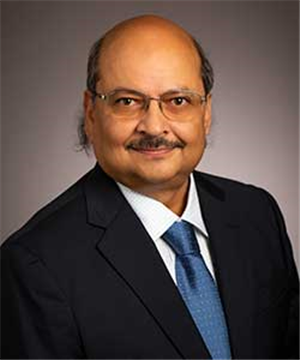 Praveen Kumar合作论文数Department of Civil & Environmental Engineering, The Grainger College of Engineering, University of Illinois at Urbana-Champaign;Prairie Research Institute, University of Illinois at Urbana-Champaign7
 Michal Ondrejcek合作论文数Fritz-Haber-Institut der Max-Planck-Gesellschaft7Inna Zharnitsky合作论文数6
 Anthony Gardella合作论文数6Chris Navarro合作论文数6
 Sandeep Puthanveetil Satheesan合作论文数6David J. T. Hill合作论文数6
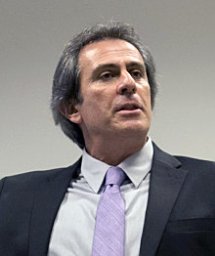 Richard Marciano合作论文数San Diego Supercomputer Center6
 Jay Alameda合作论文数National Center for Supercomputing Applications, University of Illinois at Urbana Champaign6D. Opdyke合作论文数5
 Greg Jansen合作论文数College Pk, Univ Maryland5
 Mantooth Joshua A合作论文数Department of Biology and Department of Earth and Environment, Boston University5
 Max M. North合作论文数available - click to provide one
No description available of Max M. North5
Max M. North合作论文数available - click to provide one
No description available of Max M. North5 Liana Diesendruck合作论文数Vicomi5Thomas C. Meyer合作论文数5
 William C. Sullivan合作论文数The Environmental Council, University of Illinois5Ryan Kelly合作论文数4James Simkins合作论文数4
 Lawrence Angrave合作论文数Univ Illinois, Urbana, IL 61801 USA4
 Istem Fer合作论文数Department of Plant Ecology and Nature Conservation, Institute of Biochemistry and Biology, University of Potsdam, Maulbeerallee 2, 14469 Potsdam, Germany4




