Advancing time-domain soft X-ray astronomy demands focal plane readout electronics capable of high-speed digitization with low noise while maintaining spectral fidelity across multiple detector channels. The Advanced X-ray Imaging Satellite (AXIS), a NASA Probe-class mission concept, provided the driving requirements and heritage for developing a generalized high-speed (>=5 fps) camera Front-End Electronics (FEE) architecture applicable to future soft X-ray missions. The FEE architecture defines a modular, dual-box redundant configuration to operate a focal plane of four 16-channel CCDs, with functional partitioning for power distribution, thermal management, mechanism control, and image data acquisition and transmission to the spacecraft. To validate the core signal chain architecture, particularly the analog-to-digital conversion, FPGA-based processing, and Ethernet data transmission, a dedicated technology demonstrator, AXIS-TAP (ADC Testing and Acquisition Platform), has been designed and is currently in fabrication. AXIS-TAP employs commercial equivalents of radiation-tolerant components (FPGA, ADCs, Ethernet PHY) and interfaces directly with the STA Archon benchtop readout system, enabling simultaneous image acquisition from both systems to validate that the flight-like architecture achieves equivalent or superior noise performance. This paper presents the FEE architectural framework, the AXIS-TAP demonstrator design, and the design principles that enable scalability to future soft X-ray missions with similar detector requirements. Performance validation results will be reported upon completion of AXIS-TAP system integration and testing.
Next-generation X-ray optics will revolutionize high-energy astrophysics, yet they present several challenges to design a complementary focal plane. In particular, the focal surface is curved, requiring many small, flat sensors to achieve a large field. We present work building on MIT Lincoln Laboratory technology to curve the sensor itself, improving image quality and reducing complexity. Applying this technology to back-illuminated, large-format CCDs having well-characterized X-ray response, we describe the process and report success curving functional BI CCDs to a 2.5-m radius of curvature, achieving RMS curvature deviations less than 1 micron. We confirm that there is no appreciable increase in dark current and that the spectroscopic performance across the 0.3-6 keV band remains excellent. These results demonstrate that curved, large-format X-ray sensors are realizable, and the process can be extended to silicon detectors with other architectures, including active pixel sensors.
The Single electron Sensitive Read Out (SiSeRO) technology is a new device class designed to support the needs of future X-ray and optical astronomical telescopes that will require fast, low-noise, megapixel spectro-imagers. Developed at MIT Lincoln Laboratory, in collaboration with Stanford University and MIT, the first generation SiSeRO-CCD (charge-coupled device) prototypes achieved a charge/current conversion gain of 700$-$800 pA per electron, an equivalent noise charge (ENC) of around 3.5 electrons root mean square (RMS), and a full width half maximum (FWHM) energy resolution of approximately 130 eV at 5.9 keV at a readout speed of 625 kpix/s. Utilizing Repetitive Non-Destructive Readout (RNDR), these same devices also demonstrated sub-electron noise performance (ENC$<$0.5 electrons RMS) at a readout speed of 10 kpix/s. We present the results of device simulations for next-generation SiSeRO CCD output stages that optimize the sensing transistor and its internal gate geometry to enhance noise and speed performance. Further, the goal is to develop a SiSeRO active pixel sensor (APS) that combines the proven X-ray performance of CCDs with the architectural advantages of an APS. Enabling this requires substantial design updates, for example, incorporating two SiSeRO amplifiers side by side on each pixel and shuffling the charge between them to support RNDR. We discuss our device simulation framework and design parameter optimization in the first-generation SiSeRO devices.
Advanced algorithms incorporating artificial intelligence and machine learning (AI/ML) enhance the sensitivity of X-ray imaging detectors and the scientific capabilities of future X-ray missions. In orbit, current instruments are limited in their sensitivity by (1) the instrumental background, induced by cosmic rays which produce signals that can be confused for genuine, astrophysical X-rays, and (2) the ability to reconstruct the detected photon events, degrading the quantum efficiency and energy resolution at the lowest energies, where much discovery space resides. We report on the development of prototype algorithms designed to operate on the raw frame-level data to provide improved identification of particle-induced background events and enhanced energy reconstruction. These algorithms consider the contextual information from all signals in a frame, and are built upon physics-motivated models of charge diffusion and signal generation within the detector. Using high fidelity simulations, we show that following recent developments, prototype ML algorithms can reduce the unrejected particle background by up to 68 per cent compared with traditional filtering methods when operated in an aggressive mode suitable for source detection in imaging surveys, or up to 40 per cent in a conservative mode designed to prioritize accurate measurements of the spectrum. We find that next-generation event reconstruction algorithms improve the sensitivity and energy resolution of CCD-like detectors at event energies below 1keV, and can aid in background filtering, and reduce the impact of photon pile-up. We present new laboratory data that demonstrates the performance of the algorithm on the MIT-LL CCID-93 CCD detector. Together with the capabilities of next-generation high-speed, low-noise detectors, these algorithms can satisfy the requirements for future X-ray flagship missions.
The Astro2020 Decadal recommended the development of a suite of next generation astronomical observatories spanning the X-ray to near-IR spectrum. These programs require fast, extremely low noise detectors to fulfill their science goals. To address this technology gap, Stanford X-ray Astronomy and Observational Cosmology (XOC) group, MIT Lincoln Laboratory (MIT-LL), and MIT Kavli Institute (MKI) are advancing Single electron Sensitive Read Out (SiSeRO), a multiband detector technology capable of achieving substantially sub-electron noise via Repetitive Non-Destructive Readout (RNDR). We present initial results for our second generation SiSeRO CCDs. We also discuss our test bed, including a readout electronics system capable of accommodating all second-generation SiSeRO CCD variants utilizing the XOC-designed Multi-Channel Readout Chip (MCRC) ASIC.
The Rocket Experiment Demonstration of a Soft X-ray Polarimeter (REDSoX) is a NASA-funded, sounding rocket mission. The rocket payload will measure polarization strength and direction as a function of energy in the 0.2-0.4 keV band, providing complementary measurements to those made by IXPE in the 2-8 keV band. The first flight, scheduled for 2028, will provide a technology demonstration of our polarimeter concept, which utilizes an aligned system of a focusing optic, Critical-Angle Transmission (CAT) gratings, Laterally Graded Multilayer (LGML) mirrors, and Charge Coupled Device (CCD) detectors to measure polarization. We will describe the design of the instrument post-critical design review, the status of flight hardware testing, and payload assembly.
Next-generation strategic X-ray astronomy missions will require the simultaneous achievement of high angular resolution, large effective collecting area, and wide-field imaging with large-format focal plane detectors. Realizing the associated science objectives–ranging from precision measurements of bright point sources to the detection and characterization of faint diffuse emission-places stringent and, in some cases, competing requirements on detector performance. In particular, high frame rates are necessary to mitigate photon pile-up in observations of bright sources and to reduce contamination from particle-induced background in measurements of low surface brightness structures. At the same time, these instruments must preserve excellent soft X-ray response, which places tight constraints on read noise and on the fidelity of event characterization. State-of-the-art X-ray charge-coupled devices (CCDs) approach many of the key performance metrics required for these missions, but readout speed remains a primary limitation. Addressing this gap requires readout architectures that scale to high channel count, sustain high pixel throughput, and preserve the low-noise characteristics needed for soft X-ray sensitivity.
The Advanced X-ray Imaging Satellite (AXIS) is a Probe-class mission concept designed to deliver arcsecond spatial resolution, high-sensitivity spectral imaging across the 0.3-10 keV band. The X-ray Astronomy and Observational Cosmology (XOC) Group at Stanford, in collaboration with the MIT Kavli Institute (MKI) and MIT Lincoln Laboratory (MIT-LL), is developing the AXIS X-ray camera, including both the detector and the front-end readout electronics required to meet the mission's demanding performance goals. The telescope's focal plane detector consists of four 1440x1440 pixel charge-coupled devices (CCDs) developed by MIT-LL, each featuring 16 parallel output channels. These outputs are amplified by a high-speed, low-power, low-noise application-specific integrated circuit (ASIC) - the Multi-Channel Readout Chip (MCRC) - developed at Stanford. Following amplification, the analog signals are digitized and processed to construct a pixel array, prior to event detection. Here, we present the field-programmable gate array (FPGA) architecture developed to enable high-speed, parallelized readout of these CCD channels. The FPGA samples 16 analog-to-digital converter (ADC) channels at 50 MHz, performs preprocessing of pixel data, which is then streamed via User Datagram Protocol (UDP) over a 1 Gb Ethernet link to the back-end system for event reconstruction. Our design demonstrates the goal readout performance for AXIS (20 frames per second) and provides a framework for future high-throughput X-ray observatories.
The first generation of Single electron Sensitive Read Out (SiSeRO) amplifiers, employed as on-chip charge detectors for charge-coupled devices (CCDs) have demonstrated excellent noise and spectral performance: a responsivity of around 800 pA per electron, an equivalent noise charge (ENC) of 3.2 electrons root mean square (RMS), and a full width half maximum (FWHM) energy resolution of 130 eV at 5.9 keV for a readout speed of 625 Kpixel/s. Repetitive Non Destructive Readout (RNDR) has also been demonstrated with these devices, achieving an improved ENC performance of 0.36 electrons RMS after 200 RNDR cycles. In order to mature this technology further, Stanford University, in collaboration with MIT Kavli Institute and MIT Lincoln Laboratory, are developing new SiSeRO detectors with improved geometries that should enable greater responsivity and improved noise performance. These include CCD devices employing arrays of SiSeRO amplifiers to optimize high speed, low noise RNDR readout and a proof-of-concept SiSeRO active pixel sensor (APS). To read out these devices, our team has developed a compact, 8-channel, fast, low noise, low power application specific integrated circuit (ASIC) denoted the Multi-Channel Readout Chip (MCRC) that includes an experimental drain current readout mode intended for SiSeRO devices. In this paper, we present results from the first tests of SiSeRO CCD devices operating with MCRC readout, and our designs for next generation SiSeRO devices.
The Teledyne COSMOS-66 is a next-generation complementary metal-oxide-semiconductor (CMOS) camera designed for astronomical imaging, featuring a large-format sensor (8120x8120 pixels, each 10 mu m wide), high quantum efficiency, high frame rates, and a correlated multi-sampling mode that achieves low read noise. We performed a suite of bench-top and on-sky tests to characterize this sensor and analyze its suitability for use in astronomical instruments. We present key findings, including measurements of linearity, conversion gain, read noise, dark current, quantum efficiency, image lag, and crosstalk. We found that the sensor exhibits a nonlinear response at low signal levels (below 5% of saturation). This nonlinearity is plausibly attributable to the trapping of electrons in each pixel during charge transfer. We developed and implemented a pixel-by-pixel nonlinearity correction, enabling accurate photometric measurements across the sensor's dynamic range. After implementing this correction, operating in the correlated multi-sampling mode, the sensor achieved an effective read noise of 2.9 e- and dark current of 0.12 e-/pix/s at -25 degrees C. The quantum efficiency exceeded 50% for wavelengths from 250 to 800 nm, peaking at 89% at 600 nm. We observed significant optical crosstalk among the pixels, likely caused by photoelectron diffusion. To demonstrate the sensor's astronomical performance, we mounted it on the Wide-Field Infrared Transient Explorer 1-m telescope at Palomar Observatory for on-sky observations. These tests confirmed that the linearity calibration enables accurate stellar photometry and validated our measured noise levels. Overall, the COSMOS-66 delivers similar noise performance to large-format charge-coupled devices (CCDs) but with higher frame rates and relaxed cooling requirements. If pixel design improvements are made to mitigate the nonlinearity and crosstalk, then the camera may combine the advantages of low-noise CMOS image sensors with the integration simplicity of large-format CCDs, broadening its utility to a host of astronomical science cases. (c) The Authors. Published by SPIE under a Creative Commons Attribution 4.0 International License.Distribution or reproduction of this work in whole or in part requires full attribution of the originalpublication, including its DOI. [DOI:10.1117/1.JATIS.11.2.026003]
The Advanced X-ray Imaging Satellite (AXIS) is one of two candidate mission concepts selected for Phase-A study for the new NASA Astrophysics Probe Explorer (APEX) mission class, with a planned launch in 2032. The X-ray camera for AXIS is under joint development by the X-ray Astronomy and Observational Cosmology (XOC) Group at Stanford, the MIT Kavli Institute (MKI), and MIT Lincoln Laboratory (MIT-LL). To accelerate development efforts and meet the AXIS mission requirements, XOC has developed a twin beamline testing system, capable of providing the necessary performance, flexibility, and robustness. We present design details, simulations, and performance results for the newer of the two beamlines, constructed and optimized to test and characterize the first full-size MIT-LL AXIS prototype detectors, operating with the Stanford-developed Multi-Channel Readout Chip (MCRC) integrated readout electronics system. The XOC X-ray beamline design is forward-looking and flexible, with a modular structure adaptable to a wide range of detector technologies identified by the Great Observatories Maturation Program (GOMAP) that span the X-ray to near-infrared wavelengths.
AXIS, a Probe mission concept now in a Phase A study, will provide transformative studies of high-energy astrophysical phenomena thanks to its high-resolution X-ray spectral imaging. These capabilities are enabled by improvements to the mirror design that greatly increase the X-ray throughput per unit mass; and to the detector system, which operates more than an order of magnitude faster than heritage instruments while maintaining excellent spectral performance. We present updates to the design of the AXIS High-Speed Camera, a collaborative effort by MIT, Stanford University, the Pennsylvania State University, and the Southwest Research Institute. The camera employs large-format MIT Lincoln Laboratory CCDs that feature multiple high-speed, low-noise output amplifiers and an advanced single-layer polysilicon gate structure for fast, low-power clock transfers. A first lot of prototype CCID100 CCDs has completed fabrication and will soon begin X-ray performance testing. The CCDs are paired with high-speed, low-noise ASIC readout chips designed by Stanford to provide better performance than conventional discrete solutions at a fraction of the power consumption and footprint. Complementary Front-End Electronics employ state-of-the-art digital video waveform capture and advanced signal processing to further deliver low noise at high speed. The Back-End Electronics provide high-speed identification of candidate X-ray events and transient monitoring that relays fast alerts of changing sources to the community. We highlight updates to our parallel X-ray performance test facilities at MIT and Stanford, and review the current performance of the CCD and ASIC technology from testing of prototype devices. These measurements achieve excellent spectral response at the required readout rate, demonstrating that we will meet mission requirements and enable AXIS to achieve world-class science.
The Arcus Probe mission concept provides high-resolution soft X-ray and UV spectroscopy to reveal feedback-driven structure and evolution throughout the universe with an agile response capability ideal for probing the physics of time-dependent phenomena. The X-ray Spectrograph (XRS) utilizes two nearly identical CCD focal planes to detect and record X-ray photons from the dispersed spectra and zero-order of the critical angle transmission gratings. In this paper we describe the Arcus focal plane instrument and the CCDs, including laboratory performance results, which meet observatory requirements.
Future X-ray astrophysics missions will survey large areas of the sky with unparalleled sensitivity, enabled by lightweight, high-resolution optics. These optics inherently produce curved focal surfaces with radii as small as 2 m, requiring a large area detector system that closely conforms to the curved focal surface. We have embarked on a project using a curved charge-coupled device (CCD) detector technology developed at MIT Lincoln Laboratory to provide large-format, curved detectors for such missions, improving performance and simplifying design. We present the current status of this work, which aims to curve back-illuminated, large-format (5 cm x 4 cm) CCDs to 2.5-m radius and confirm X-ray performance. We detail the design of fixtures and the curving process, and present intial results on curving bare silicon samples and monitor devices and characterizing the surface geometric accuracy. The tests meet our accuracy requirement of <5 mu m RMS surface non-conformance for samples of similar thickness to the functional detectors. We finally show X-ray performance measurements of planar CCDs that will serve as a baseline to evaluate the curved detectors. The detectors exhibit low noise, good charge-transfer efficiency, and excellent, uniform spectroscopic performance, including in the important soft X-ray band.
Single electron Sensitive Read Out (SiSeRO) is a novel on-chip charge detection technology that can, in principle, provide significantly greater responsivity and improved noise performance than traditional charge coupled device (CCD) readout circuitry. The SiSeRO, developed by MIT Lincoln Laboratory, uses a p-MOSFET transistor with a depleted back-gate region under the transistor channel; as charge is transferred into the back gate region, the transistor current is modulated. With our first generation SiSeRO devices, we previously achieved a responsivity of around 800 pA per electron, an equivalent noise charge (ENC) of 4.5 electrons root mean square (RMS), and a full width at half maximum (FWHM) spectral resolution of 130 eV at 5.9 keV, at a readout speed of 625 Kpixel/s and for a detector temperature of 250 K. Importantly, since the charge signal remains unaffected by the SiSeRO readout process, we have also been able to implement Repetitive Non-Destructive Readout (RNDR), achieving an improved ENC performance. In this paper, we demonstrate sub-electron noise sensitivity with these devices, utilizing an enhanced test setup optimized for RNDR measurements, with excellent temperature control, improved readout circuitry, and advanced digital filtering techniques. We are currently fabricating new SiSeRO detectors with more sensitive and RNDR-optimized amplifier designs, which will help mature the SiSeRO technology in the future and eventually lead to the pathway to develop active pixel sensor (APS) arrays using sensitive SiSeRO amplifiers on each pixel. Active pixel devices with sub-electron sensitivity and fast readout present an exciting option for next generation, large area astronomical X-ray telescopes requiring fast, low-noise megapixel imagers.
 Marshall W. Bautz合作论文数Kavli Institute for Astrophysics and Space Research, Massachusetts Institute of Technology83
 Gregory Y. Prigozhin合作论文数Center for Space Research;Massachusetts Institute of Technology;Center for Space Research, Massachusetts Institute of Technology74
 Eric D. Miller合作论文数Kavli Institute for Astrophysics and Space Research, School of Science, Massachusetts Institute of Technology35
 richard f foster合作论文数Kavli Inst Astrophys & Space Res, MIT34
 Catherine E. Grant合作论文数Kavli Institute for Astrophysics and Space Research, Massachusetts Institute of Technology33Andrew Malonis合作论文数28Michael Cooper合作论文数23Steven E Kissel合作论文数19
 Steve Kissel合作论文数19Kevan Donlon合作论文数18Sven Herrmann合作论文数17
 Steven Allen合作论文数LSST Science Department, SLAC National Accelerator Laboratory, Stanford University;Department of Physics, Stanford University17R. Glenn Morris合作论文数16Hiroshi Tsunemi合作论文数Osaka University Graduate school of Science12
 Keith C Gendreau合作论文数12Christopher W. Leitz合作论文数11
 Ilya Prigozhin合作论文数Department of Electrical and Computer Engineering, Boston University11
 Tanmoy Chattopadhyay合作论文数Kavli Inst Particle Astrophys & Cosmol, Stanford Univ11
 Hironori Matsumoto (松本浩典)合作论文数Department of Earth and Space Science, Graduate School of Science, Osaka University11
 Katsuji Koyama合作论文数Department of Physics, Graduate School of Science, Kyoto University11
 Ronald A. Remillard合作论文数Kavli Institute for Astrophysics and Space Research, Massachusetts Institute of Technology11Hiroshi Nakajima合作论文数10
 Takeshi Tsuru (鶴剛)合作论文数Division of Physics and Astronomy, Graduate School of Science, Kyoto University10
 Barry Burke合作论文数Lincoln Laboratory, Massachusetts Institute of Technology10Kiyoshi Hayashida合作论文数9Tadayasu Dotani (堂谷忠靖)合作论文数Institute of Space and Astronautical Science, High Energy Astrophysics, Japan Aerospace Exploration Agency9Hiroshi Murakami合作论文数9Peter Orel合作论文数8B. Schneider合作论文数CEA Saclay, Université Paris-Saclay8
 Zaven Arzoumanian合作论文数Goddard Space Flight Center, National Aeronautics and Space Administration8Alan Garner合作论文数7
 Herman L. Marshall合作论文数Kavli Institute for Astrophysics and Space Research, Massachusetts Institute of Technology;Center for Space Research, Massachusetts Institute of Technology7Masanobu Ozaki合作论文数7
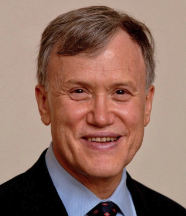 George Ricker合作论文数Kavli Institute for Astrophysics and Space Research, Massachusetts Institute of Technology;Detector Laboratory, Massachusetts Institute of Technology;Goddard Space Flight Center, National Aeronautics and Space Administration7
 Craig B Markwardt合作论文数NASA Goddard Space Flight Center7Ralf K. Heilmann合作论文数Space Nanotechnology Laboratory;Massachusetts Institute of Technology7Aya Bamba合作论文数ISAS/JAXA6
 Eric Miller合作论文数Department of Electrical and Computer Engineering, School of Engineering, Tufts University6Catherine E Grant合作论文数6Hideyuki Mori合作论文数6Hideki Uchiyama合作论文数School of Pharmaceutical Sciences, Kitasato University6
 Satoru Katsuda合作论文数Department of Earth and Space Science;Graduate School of Science;Osaka University;Graduate School of Science, Osaka University6A. Malonis合作论文数5norbert s schulz合作论文数5M. Cooper合作论文数5Noriaki Tawa合作论文数5Tomofumi Miyauchi合作论文数5




