Centre de rein de Tassin,1 Centre de rein artificiel, Tassin, France; University of Washington,2 Seattle, Washington; University of Missouri,3 Columbia, Missouri, U.S.A.; Division of Baxter Novum and Renal Medicine,4 Department of Clinical Science, Karolinska Institute, Huddinge Hospital, Stockholm, Sweden. The Middle Molecule Hypothesis Revisited. Should Short, Three Times Weekly Hemodialysis Be Abandoned?
Hemodialysis InternationalVolume 8, Issue 2 p. 188-192 Why thrice weekly dialysis? Belding H Scribner, Belding H Scribner University of Washington and the Northwest Kidney Centers, Seattle, Washington, U.S.A.Search for more papers by this authorJames J Cole, James J Cole University of Washington and the Northwest Kidney Centers, Seattle, Washington, U.S.A.Search for more papers by this authorSuhail Ahmad, Suhail Ahmad University of Washington and the Northwest Kidney Centers, Seattle, Washington, U.S.A.Search for more papers by this authorChristopher R Blagg, Corresponding Author Christopher R Blagg University of Washington and the Northwest Kidney Centers, Seattle, Washington, U.S.A. *Christopher R. Blagg, MD, Northwest Kidney Centers, Seattle, WA 98101, U.S.A. E-mail: blaggc@hotmail.comSearch for more papers by this author Belding H Scribner, Belding H Scribner University of Washington and the Northwest Kidney Centers, Seattle, Washington, U.S.A.Search for more papers by this authorJames J Cole, James J Cole University of Washington and the Northwest Kidney Centers, Seattle, Washington, U.S.A.Search for more papers by this authorSuhail Ahmad, Suhail Ahmad University of Washington and the Northwest Kidney Centers, Seattle, Washington, U.S.A.Search for more papers by this authorChristopher R Blagg, Corresponding Author Christopher R Blagg University of Washington and the Northwest Kidney Centers, Seattle, Washington, U.S.A. *Christopher R. Blagg, MD, Northwest Kidney Centers, Seattle, WA 98101, U.S.A. E-mail: blaggc@hotmail.comSearch for more papers by this author First published: 22 April 2004 https://doi.org/10.1111/j.1492-7535.2004.01094.xCitations: 35Read the full textAboutPDF ToolsRequest permissionExport citationAdd to favoritesTrack citation ShareShare Give accessShare full text accessShare full-text accessPlease review our Terms and Conditions of Use and check box below to share full-text version of article.I have read and accept the Wiley Online Library Terms and Conditions of UseShareable LinkUse the link below to share a full-text version of this article with your friends and colleagues. Learn more.Copy URL Share a linkShare onFacebookTwitterLinked InRedditWechat Citing Literature Volume8, Issue2April 2004Pages 188-192 RelatedInformation
to the editor: We are concerned about the conclusions of the report by Eknoyan et al. on the multimillion-dollar Hemodialysis (HEMO) Study (Dec. 19 issue) 1 that support the continued use of the current practice guidelines in the United States, which recommend a value of at least 1.2 for the single-pool Kt/V (where K represents the rate of urea clearance by the dialyzer in milliliters per minute, t the duration in minutes of the treatment session, and V the volume of distribution of urea in the patient in milliliters). There is now overwhelming evidence that such a dose is too low, resulting in morbidity and inadequate rehabilitation due to the persistence of the uremic syndrome. Far better results have been achieved with the use of longer sessions and especially with increases in the frequency of treatment. 2,3
When the middle molecule (MM) hypothesis was formulated in 1975, no MM had yet been identified as a uremic toxin. Meanwhile, the birth and implementation of the Kt/Vurea concept gained wide acceptance and has remained the world standard for assessing dialysis adequacy. However, over the past 20 years, accumulating evidence has made it clear that MM's are important uremic toxins, and that the dose of dialysis based on removal of small molecular substances does not protect against excessive hemodialysis mortality, morbidity, or the presence of uremic signs and symptoms. These poor results are, in one way or another, linked to the accumulation of MM's and other substances behaving like MM's, such as phosphate. Dialysis schedules yielding the best clinical results, such as longer dialysis and more frequent dialysis, favor increased removal of middle molecular substances. The observation that short daily dialysis is giving results similar to long nocturnal quotidian dialysis supports early observations that the volume from which middle molecular substances are extracted mainly by hemodialysis is small (about as large as the extracellular volume), and that transfer of MM's from cells to extracellular fluid is very slow. This behavior of MM's is markedly different from that of small molecular substances, which are more rapidly transferred from intracellular to extracellular compartments and are more readily extracted from total body water during hemodialysis. In order to achieve even minimum adequate dialysis, it is now scientifically validated that toxic MM's must be removed in larger amounts than currently attained. This can only be accomplished by long dialysis sessions with a 3-times per week schedule or more frequent dialyses. Five hours 3 times per week represents the absolute minimum treatment. Dialy sis 6 to 7 times per week is the ideal schedule for patients who are willing to commit the time and effort in exchange for maximum well-being and long survival.
n a recent issue of this journal, Dr. Peter Blake and others commented on the ADEMEX (Adequacy of Peritoneal Dialysis in Mexico) study, a brilliantly planned and conducted study on the influence of increases in Kt/V on the outcome of anuric continuous ambulatory peritoneal dialysis (CAPD) patients in Mexico. This prospective, controlled study was presented at the recent meeting of the International Society for Peritoneal Dialysis (Montreal, June 2001), but has not yet been published. The results were clear-cut and highly significant. Specifically, they demonstrated that increasing the dose of CAPD—as measured by Kt/V and weekly creatinine clearance— among anuric CAPD patients had no effect on patient survival when compared to a control group on a lower dose of dialysis. This result provides additional evidence that Kt/V is a flawed concept upon which to base the dose of dialysis in general. The prime example that Kt/V is flawed is that it fosters short hemodialysis, which is inefficient in removing toxic middle molecules. Short hemodialysis may give a false impression of highly efficient hemodialysis by removing fast-diffusing urea and, thus, resulting in a high Kt/V. However, removal of toxic middle molecules and PO4, which dialyzes like a middle molecule, is reduced because of the shortened time. Short hemodialysis sessions have great appeal only to the uninformed dialysis patient and to for-profit dialysis centers. For the last three decades worldwide, but especially in the U.S.A., belief among the hemodialysis community in the reliability of Kt/V, combined with the natural desire of the patient to have the shortest possible time on dialysis, has resulted in the underdialysis of the vast majority of hemodialysis patients.
Hemodialysis InternationalVolume 5, Issue 1 p. 6-7 Special Article Tribute Given to Professor Robin Eady on His 60th Birthday Professor of Medicine Emeritus Belding H. Scribner MD, Professor of Medicine Emeritus Belding H. Scribner MD scrib@u.washington.edu University of Washington Seattle, WA, USASearch for more papers by this author Professor of Medicine Emeritus Belding H. Scribner MD, Professor of Medicine Emeritus Belding H. Scribner MD scrib@u.washington.edu University of Washington Seattle, WA, USASearch for more papers by this author First published: 08 September 2016 https://doi.org/10.1111/hdi.2001.5.1.6Citations: 1Read the full textAboutPDF ToolsRequest permissionExport citationAdd to favoritesTrack citation ShareShare Give accessShare full text accessShare full-text accessPlease review our Terms and Conditions of Use and check box below to share full-text version of article.I have read and accept the Wiley Online Library Terms and Conditions of UseShareable LinkUse the link below to share a full-text version of this article with your friends and colleagues. Learn more.Copy URL Share a linkShare onFacebookTwitterLinkedInRedditWechat No abstract is available for this article.Citing Literature Volume5, Issue1January 2001Pages 6-7 RelatedInformation
To the Editor: Dr. Rutecki’s recent article on dialysis resource allocation was interesting and provocative. First of all, let me make it clear that, contrary to what was written, I had nothing directly to do with the famous (or infamous) Seattle committee, which was the brainchild of Dr. James Haviland and the board of directors of the King County Medical Society. My favorite ridicule of that group came from a law review article (your reference 15): “Pablo Picasso never would have made it by that committee.” What actually happened was that in 1961, the NIH turned down a grant request to test the principle of an out-of-hospital dialysis center. Mr. E. P. Roy, who ran the John A. Hartford Foundation, had more wisdom and foresight and gave us a $300,000 grant to try the experiment in downtown Seattle. That Hartford grant created the need for a patient selection system. This need had been underlined when I got into a shouting match with Dr. John Hogness, then head of the University Hospital, over my patient, Jim Albers, who was dying. As a compromise, he permitted Jim to go on our CRC dialysis unit, until the new community-based Seattle Artificial Kidney Center opened in four months. He got admitted before the selection process was in place. It is noteworthy that Jim Albers gave a paper on dialysis technique at the ASAIO in 1962 and no one knew he was a dialysis patient. He later became a professor of physics at Western Washington and survived 35 years on dialysis alone, having lost a transplanted kidney in the 1970s due to an unfortunate technical error. He died in 1996. One final tragic point about Jim: unbeknownst to us, he started taking “Linus Pauling doses” of vitamin C (1–2 g/day) and went blind when the oxalate deposits from its breakdown deposited in his retinas. For all the furor and criticism over the Seattle committee, there was no precedent on how to deal with the rationing of life-saving care, the decision that was faced in Seattle in the early 1960s. Furthermore, during the first few years no other dialysis center had more than a few long-term survivors, since transplantation was available elsewhere but not in Seattle. And by the time other centers began to feel the pressure in the late 1960s, there were enough new spaces opening up to ease the crunch. The patient selection procedure that the King County Medical Society came up with may have been flawed; a lottery of some sort might have replaced the Seattle committee. However, it broke new ground in bioethics by dramatizing the dilemmas that were upcoming, took the pressure off physicians, and most important of all, got a very difficult job accomplished. In retrospect, it is easy for glib critics like those in your reference 15 to criticize the Seattle committee but at the time we had to face it, this patient selection problem was unique to peacetime medicine. I think that our well thought out selection system worked well, especially because it limited candidates to the State of Washington. Furthermore, because the daughter of a friend of my engineering colleague, Les Babb, was turned down, he was inspired to come up with the first home hemodialysis machine in record time (1). That remarkable device became the prototype for all single-patient dialysis machines in use today. Babb’s machine now resides in Seattle’s Museum of History and Industry. Getting back to the provocative rationing plan for the future—it will be much much tougher this time around, as is rightly pointed out. However, based on the views expressed in my 1964 ASAIO Presidential Address (2), I would argue strongly against stage II of the proposed rationing plan. In that address, I expressed the opinion that once you get started on dialysis, it is much harder to stop. I still believe that very strongly. For one thing, try and imagine what that 1-month trial period would be like for patients, their families, and for the dialysis staff. Emotional attachments would be formed during the trial period, making it devastating when the patient was rejected. I have gone on too long, but before ending, I have a question. Why is Jack Kevorkian not involved with dialysis patients? How come everybody has a fit when a cancer patient wants out, but nobody says anything when a dialysis patient makes the same decision?
Until daily dialysis becomes widely available, we believe that hemodialysis patients would benefit enormously from every‐other‐day dialysis (EODD), which may be implemented both by home patients and in centers. Benefits of EODD over the routine, three‐times‐weekly schedule would include decreased mortality after the weekend interval without dialysis; increased weekly dose of dialysis, resulting in better rehabilitation; and improved blood pressure control.
Home Hemodialysis InternationalVolume 3, Issue 1 p. 9-12 Article Dialysis Therapy in the United States: A Historical Perspective Belding H. Scribner, Corresponding Author Belding H. Scribner scrib@u.washington.edu University of Washington, Seattle, Washington, U.S.A.Correspondence to: Belding H. Scribner, MD, 3110-H Portage Bay, Place East, Seattle, Washington 98102 U.S.A.Search for more papers by this author Belding H. Scribner, Corresponding Author Belding H. Scribner scrib@u.washington.edu University of Washington, Seattle, Washington, U.S.A.Correspondence to: Belding H. Scribner, MD, 3110-H Portage Bay, Place East, Seattle, Washington 98102 U.S.A.Search for more papers by this author First published: 08 September 2016 https://doi.org/10.1111/hdi.1999.3.1.9Citations: 7Read the full textAboutPDF ToolsRequest permissionExport citationAdd to favoritesTrack citation ShareShare Give accessShare full text accessShare full-text accessPlease review our Terms and Conditions of Use and check box below to share full-text version of article.I have read and accept the Wiley Online Library Terms and Conditions of UseShareable LinkUse the link below to share a full-text version of this article with your friends and colleagues. Learn more.Copy URL Share a linkShare onFacebookTwitterLinkedInRedditWechat Citing Literature Volume3, Issue1January 1999Pages 9-12 RelatedInformation
 willem j kolff合作论文数22
 Eli Friedman合作论文数Department of Medicine, Downstate Medical Center, State University of New York22
 Thomas E. Starzl合作论文数University of Pittsburgh18
 Albert L. Babb合作论文数Departments of Chemical Engineering, College of Engineering, University of Washington6Jm Burnell合作论文数3Roukis Thomas S合作论文数3DA UVELLI合作论文数2Bernard Charra合作论文数Centre de Rein Artificiel, Tassin2
 Zbylut J. Twardowski合作论文数Dalton Research Center, University of Missouri2Jonas Bergström合作论文数2Christopher R. Blagg合作论文数2James J. Cole合作论文数Department of Psychology, Southern Illinois University2Ho Doerr合作论文数1j zbylut合作论文数1W FOLLETTE合作论文数1C Eisdorfer合作论文数1Mb Dennis合作论文数1S Ahmad合作论文数1B. T. UYENO合作论文数1Melvin B. Dennis合作论文数1Mj Strand合作论文数1Agodoa L C合作论文数1Hegstrom R M合作论文数1
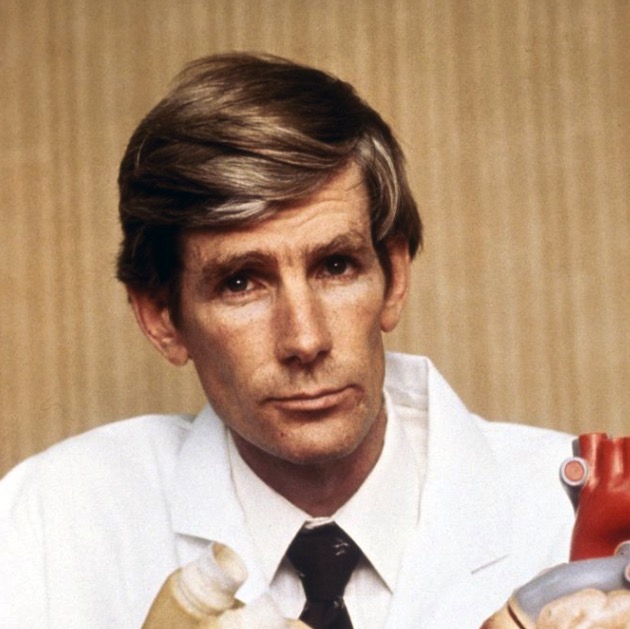 Willem Johan Kolff (Pim)合作论文数Department of Surgery, Medical School, University of Utah1Atkins R C合作论文数1
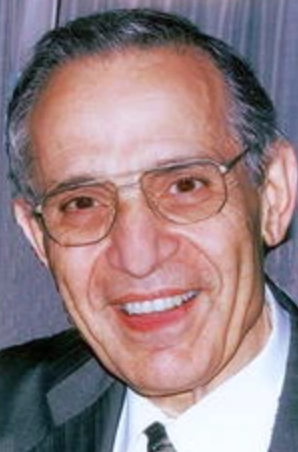 Dimitrios G. Oreopoulos合作论文数University of Toronto;Toronto Western Hospital1
 Suhail Ahmad合作论文数Faculty of Medicine, Kuwait University1William M. Jensen合作论文数1
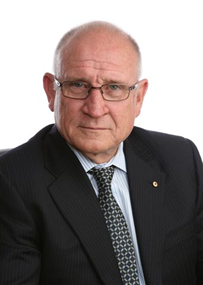 Peter C. Farrell合作论文数ResMed,Inc1Kenneth Fremont-Smith合作论文数1David A. Uvelli合作论文数1John L. Bakke合作论文数1Deloss L. Fry合作论文数1Ernest Congdon合作论文数1John C. Stauffer合作论文数1Charles D. Leonard合作论文数1JE VIZZO合作论文数1James M. Burnell合作论文数1C.D. Leonard合作论文数1Mario F. Villamil合作论文数1




