The world's oceans are often perceived as barriers that separate countries. To counter these divisions and improve protection of ocean resources, marine protected area (MPA) managers have formed alliances that bridge jurisdictional boundaries to share strategies and resources with other protected areas. The National Oceanic and Atmospheric Administration's Office of National Marine Sanctuaries has embraced this sister site approach to connect MPA management based on ecological and cultural links. Designed to strengthen the management of ecologically and culturally connected areas, these relationships between protected areas serve as catalysts for effective stewardship of the ocean's biological resources and show the important benefits of transnational cooperation. This paper summarizes the lessons from over a decade of sister site partnerships, including case studies from Stellwagen Bank National Marine Sanctuary and four sites in the Caribbean working together to protect a shared population of humpback whales; the Gulf of Mexico Sister Site Network being developed by the USA, Mexico, and Cuba; Papahanaumokuakea Marine National Monument and Rapa Nui in Chile; and broader collaboration among MPAs in the USA and Chile on the Pacific coast.
1. Marine protected areas (MPAs) have a long history, originating in traditional and cultural initiatives often focused on reserving resources for food security. A handful of 'parks' were established between the 1870s and 1940s and, following World War II, increased awareness of threats to the ocean led to global programmes that started in the 1970-1980s.2. Initially IUCN became the leader, piloting a science-based 'critical marine habitats' approach, by which MPAs were aimed at conserving the healthiest and most diverse ecosystems, endangered and charismatic species, and high-profile habitats.3. During the 1970s, with the support of WWF, UNESCO, UNEP, and growing national efforts, the MPA concept evolved to include biosphere reserves, marine reserves and sanctuaries, large ocean reserves, and other designations that aimed to reconcile long-term protection with human use.4. From the 1980s, MPAs greatly expanded in number and scope. By the turn of the millennium, MPAs were proliferating, and principles and methodologies were available to guide their establishment and management in a harmonized manner. Zoning for different uses was widespread, but questions were being raised about the efficacy of biodiversity conservation in areas where extractive uses were permitted.5. MPA implementation accelerated once targets were introduced by the Convention on Biological Diversity. Campaigns and fundraising by non-governmental organizations and further national efforts resulted in a rapid increase although, by 2015, less than 4% of ocean surface was protected.6. Current challenges include: (1) understanding the role of MPAs in maintaining ecosystem services, fishery management, climate change adaptation and mitigation, and other emergent problems; (2) more rigorous network design; (3) effective governance and demonstration of 'success'; and (4) integrating MPAs with marine spatial planning. 7. While MPAs have provided one of the most viable and politically acceptable approaches to marine conservation for 50 years, their role in developing a fully effective marine ecosystems management regime has yet to be fully explored and understood. Copyright (C) 2016 John Wiley & Sons, Ltd.
The efficacy of no-take marine reserves (NTMRs) to enhance and sustain regional coral reef fisheries was assessed in Dry Tortugas, Florida, through 9 annual fishery-independent research surveys spanning 2 years before and 10 years after NTMR implementation. A probabilistic sampling design produced precise estimates of population metrics of more than 250 exploited and non-target reef fishes. During the survey period more than 8100 research dives utilizing SCUBA Nitrox were optimally allocated using stratified random sampling. The survey domain covered 326 km2, comprised of eight reef habitats in four management areas that offered different levels of resource protection: the Tortugas North Ecological Reserve (a NTMR), Dry Tortugas National Park (recreational angling only), Dry Tortugas National Park Research Natural Area (a NTMR), and southern Tortugas Bank (open to all types of fishing). Surveys detected significant changes in population occupancy, density, and abundance within management zones for a suite of exploited and non-target species. Increases in size, adult abundance, and occupancy rates were detected for many principal exploited species in protected areas, which harbored a disproportionately greater number of adult spawning fishes. In contrast, density and occupancy rates for aquaria and non-target reef fishes fluctuated above and below baseline levels in each management zone. Observed decreases in density of exploited species below baseline levels only occurred at the Tortugas Bank area open to all fishing. Our findings indicate that these NTMRs, in conjunction with traditional fishery management control strategies, are helping to build sustainable fisheries while protecting the fundamental ecological dynamics of the Florida Keys coral-reef ecosystem.
BACKGROUND:The rising temperature of the world's oceans has become a major threat to coral reefs globally as the severity and frequency of mass coral bleaching and mortality events increase. In 2005, high ocean temperatures in the tropical Atlantic and Caribbean resulted in the most severe bleaching event ever recorded in the basin.METHODOLOGY/PRINCIPAL FINDINGS:Satellite-based tools provided warnings for coral reef managers and scientists, guiding both the timing and location of researchers' field observations as anomalously warm conditions developed and spread across the greater Caribbean region from June to October 2005. Field surveys of bleaching and mortality exceeded prior efforts in detail and extent, and provided a new standard for documenting the effects of bleaching and for testing nowcast and forecast products. Collaborators from 22 countries undertook the most comprehensive documentation of basin-scale bleaching to date and found that over 80% of corals bleached and over 40% died at many sites. The most severe bleaching coincided with waters nearest a western Atlantic warm pool that was centered off the northern end of the Lesser Antilles.CONCLUSIONS/SIGNIFICANCE:Thermal stress during the 2005 event exceeded any observed from the Caribbean in the prior 20 years, and regionally-averaged temperatures were the warmest in over 150 years. Comparison of satellite data against field surveys demonstrated a significant predictive relationship between accumulated heat stress (measured using NOAA Coral Reef Watch's Degree Heating Weeks) and bleaching intensity. This severe, widespread bleaching and mortality will undoubtedly have long-term consequences for reef ecosystems and suggests a troubled future for tropical marine ecosystems under a warming climate.
Marine protected areas (MPAs) provide place-based management of marine ecosystems through various degrees and types of protective actions. Habitats such as coral reefs are especially susceptible to degradation resulting from climate change, as evidenced by mass bleaching events over the past two decades. Marine ecosystems are being altered by direct effects of climate change including ocean warming, ocean acidification, rising sea level, changing circulation patterns, increasing severity of storms, and changing freshwater influxes. As impacts of climate change strengthen they may exacerbate effects of existing stressors and require new or modified management approaches; MPA networks are generally accepted as an improvement over individual MPAs to address multiple threats to the marine environment. While MPA networks are considered a potentially effective management approach for conserving marine biodiversity, they should be established in conjunction with other management strategies, such as fisheries regulations and reductions of nutrients and other forms of land-based pollution. Information about interactions between climate change and more “traditional” stressors is limited. MPA managers are faced with high levels of uncertainty about likely outcomes of management actions because climate change impacts have strong interactions with existing stressors, such as land-based sources of pollution, overfishing and destructive fishing practices, invasive species, and diseases. Management options include ameliorating existing stressors, protecting potentially resilient areas, developing networks of MPAs, and integrating climate change into MPA planning, management, and evaluation.
At the 11th International Coral Reef Symposium (ICRS) held in July in Fort Lauderdale, Florida, midway through the International Year of the Reef, more than 3500 experts from 75 countries assembled to face some hard truths: Coral reefs are teetering on the edge of survival, and it is our fault. High levels of carbon dioxide in the atmosphere can produce a lethal combination of warmer seawater and lower pH. Pervasive overfishing, pollution, coastal development, and physical damage further undermine reef health—and consequently the health of the people and ecosystems depending upon them ([1][1]). Coral reefs feed, protect, and provide livelihoods for hundreds of millions of people around the world. They create homes for billions of fish and other animals, buffer coastlines from the ravages of storms, and provide rich economic opportunities through tourism and fishing. Their value to society has been estimated at more than $300 billion per year. Reefs are the dynamic centers of the most concentrated biodiversity on Earth. It is not too late to save coral reefs. A consensus emerged at the 11th ICRS that society has both the knowledge and the tools to bring coral reefs back from the brink. We have a real—but rapidly narrowing—window of opportunity in which to take decisive action. We must immediately: (i) Cut CO2 emissions by lowering our carbon footprint and ask our policy-makers to commit to low carbon economic growth. (ii) Eliminate open-access fisheries in coral reef ecosystems and instead establish and enforce regulations on user rights, total allowable catch, individual catch quotas, nondestructive gear, and other sustainable fisheries regulations. (iii) Protect coral reef herbivores, including parrotfish, by banning the harvesting of these species for sale and commercial consumption. (iv) Establish and strictly enforce networks of Marine Protected Areas that include No-Take Areas. (v) Effectively manage the waters in between Marine Protected Areas. (vi) Maintain connectivity between coral reefs and associated habitats; mangroves, sea grass beds, and lagoons contribute to the integrity of reef ecosystems and their continued production of ecosystem services. (vii) Report regularly and publicly on the health of local coral reefs. (viii) Recognize the links between what we do on land and how it affects the ocean. (ix) Bring local actors together—including members of industry, civil society, local government, and the scientific community—to develop a shared vision of healthy reefs and a road map for getting there. Only by taking bold and urgent steps now can we hope to ensure that reefs will survive to enrich life on Earth, as they have for millions of years before us. By failing to act, we risk bequeathing an impoverished ocean to our children and future generations ([2][2]). 1. 1.[↵][3]An overview of the 2632 papers presented can be found on [www.nova.edu/ncri/11icrs/outcomes.html][4]. 2. 2.[↵][5]Please add your name to sign up for this Call to Action. Go to [www.thepetitionsite.com/1/11th-international-coral-reef-symposium-call-to-action][6]. 3. 3.R.E.D. is the Chair of the 11th ICRS Local Organizing Committee (LOC); C.B., M.H., J.K., S.R.P., and O.H.-G. are Super Chairs of the 11th ICRS Mini-Symposia. R.v.W. is the Science Chair of the LOC. J.C.O. and B.D.C. are LOC organizers, R.B.A. is the President of the International Society for Reef Studies, and F.S. is Coordinator of the International Year of the Reef 2008. [1]: #ref-1 [2]: #ref-2 [3]: #xref-ref-1-1 View reference 1. in text [4]: http://www.nova.edu/ncri/11icrs/outcomes.html [5]: #xref-ref-2-1 View reference 2. in text [6]: http://www.thepetitionsite.com/1/11th-international-coral-reef-symposium-call-to-action
1. NOAA, Florida Keys National Marine Sanctuary 2. Florida Fish and Wildlife Conservation Commission, Fish and Wildlife Research Institute 3. Reef Environmental Education Foundation 9. NOAA, Office of National Marine Sanctuaries 4. University of Miami, Rosenstiel School for Marine and Atmospheric Science 10. NOAA, National Ocean Service, Special Projects Office 5. NOAA, Southeast Fisheries Science Center 11. Scripps Institute of Oceanography 6. Florida International University, Southeast Environmental Research Center 12. University of North Carolina, Wilmington 7. Florida Department of Environmental Protection 13. Mote Marine Laboratory 8. Monroe County Division of Marine Resources 14. U.S. Environmental Protection Agency, Gulf Ecology Division9. The State of Coral Reef Ecosystems of the Florida Keys
The objective of this paper is to present an example of enforcement in a marine protected area (MPA) where the primary goal is compliance. Education can lead to greater overall compliance in the shorter timeframe for the majority of MPA users. The most effective means of ensuring the compliance to legislation in MPAs is through public education and enlisting the help of user groups in management. This makes education and peer pressure important components of an enforcement initiative. When education and peer pressure do not work, which is true of a small percentage of MPA users, other more traditional enforcement tools must be utilized. This is essential if the. long-term respect and compliance is expected of the general population of users. A small group of relentless violators will quickly erode at the effectiveness of the overall enforcement goals in a MPA.
Although the title of this symposium implied a focus on fully protected marine areas, most presentations actually dealt with a range of traditional "marine protected areas" or "marine managed areas" that offer less than "full" resource protection. Some presentations noted a backlash against establishing no-take reserves. Here we provide 17 reasons why there is a strong scientific, management, and public interest in using no-take marine reserves to build sustainable fisheries and protect marine ecosystems. We also discuss some underlying technical and philosophical issues involved in the opposition to their usage.
United States Federal funding for regional mapping, monitoring, and management of coral reef ecosystems of Florida, Texas, Puerto Rico, US Virgin Islands and Navassa increased significantly in 2000. The US Coral Reef Task Force outlined a National Action Plan, which the National Ocean Service (NOS) of NOAA (National Oceanic and Atmospheric Administration) funded some of the activities relevant to the US Caribbean and the Gulf of Mexico. Besides the NOS cooperative grants of over US$0.6 million to assess and monitor coral reef ecosystems and to complete several projects outlined in the All Islands Initiative ‘Green Book’, NOS has spent several months mapping coral reefs off the US Virgin Islands and Puerto Rico. Additionally, NOS provided a further US$1million of FY2000 funding cooperative grants for coral reef research and monitoring to the National Coral Reef Initiative (NCRI), and the Puerto Rico Department of Natural and Environmental Resources. NCRI grant projects include mapping, monitoring, and research conducted on Florida East Coast coral reef ecosystems. Puerto Rico will initiate assessments and set up at least 16 long-term monitoring sites at selected reefs around Puerto Rico, and a cooperative grant will result in a baseline characterisation of coral reef and seagrass communities off Vieques Island. The US Virgin Island grant will support a multi-agency effort among the Virgin Island Department of Planning and Natural Resources, the US Geological Survey, the University of the Virgin Islands, and the National Park Service to establish baseline conditions prior to the anticipated establishment of marine reserves so that their effectiveness in promoting recovery of fish assemblages and marine habitats can be evaluated. The hope is that such heightened attention to coral reef issues in this region will continue into the near future, the following recommendations are proposed for regional scale action: • Identify hydrological and ecological ecosystem linkages at regional scales; • Establish procedures to reduce regional water quality stresses to coral reefs; • Determine sources and sinks of marine resources on a regional scale; • Use satellite resources to map and track watershed influences and aid in characterising the oceanographic patterns both upstream and downstream of coral reef areas; • Establish cross-boundary and cross-jurisdictional agreements to manage reef areas using an ecosystem approach; 239 BILLY CAUSEY, JOANNE DELANEY, ERNESTO DIAZ, DICK DODGE, JORGE R. GARCIA, JAMIE HIGGINS, WALTER JAAP, CRUZ A. MATOS, GEORGE P. SCHMAHL, CAROLINE ROGERS, MARGARET W. MILLER AND DONNA D. TURGEON Status of Coral Reefs of the World: 2000 • Establish domestic and international agreements within a region to address coral reef issues, including protocols for marine resource management and protection; • Establish and implement consistent research and monitoring procedures; and • Share information that will facilitate cross-jurisdictional management of marine resources, such as when spawning aggregations of species within another jurisdiction feed larvae into the nursery areas elsewhere.
Enforcement is an essential component in the management of marine protected areas (MPAs) but the level of enforcement required can vary significantly from site to site and from programme to programme. Enforcement policies, authorities and philosophies differ between agencies and programmes within nations (e.g. the National Park Service and National Marine Sanctuaries programme in the United States) and, to an even greater degree, between international programmes. Traditionally, enforcement has relied on citations and penalties as forms of punishment to establish compliance and discourage violators. This is particularly true of crimes against the State or society in municipalities around the world.
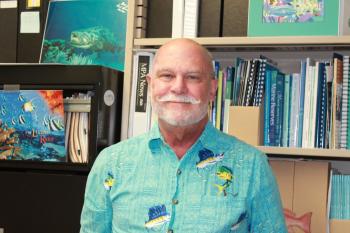 James A. Bohnsack (James Bohnsack)合作论文数Protected Resources and Biodiversity Division, Southeast Fisheries Science Center4
 Kristina Gjerde合作论文数Institute of Zoology,4
 tammy m trott合作论文数3sylvia a earle合作论文数3joanne delaney合作论文数3
 Richard E. Dodge合作论文数3
 Jerald S. Ault合作论文数University of Miami;School of Marine and Atmospheric Science;Division of Marine Biology and Fisheries;School of Marine and Atmospheric Science, University of Miami3George P. Schmahl合作论文数3
 Steven L. Miller合作论文数Office of Ag;Communications and Technology;Office of Ag|Communications and Technology3Margaret W. Miller合作论文数Southeast Fisheries Science Center, National Marine Fisheries Service NOAA3
 Joanna M Pitt合作论文数3ernesto diaz合作论文数2Jorge R. García合作论文数2Les Kaufman合作论文数2
 Hendee James合作论文数2
 Richard B. Aronson合作论文数Head of Department, Florida Institute of Technology2
 Charles Birkeland合作论文数2
 Kim B Ritchie合作论文数Department of Ecology;Cornell University;Mote Marine Laboratory;Mote Marine Laboratory, Cornell University2
 Walter C Jaap合作论文数2
 John C. Ogden合作论文数Department of Integrative Biology, University of South Florida2Arlo Hemphill合作论文数2
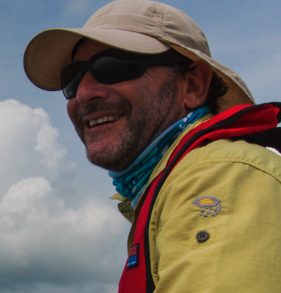 Hector Guzman合作论文数Smithsonian Tropical Research Institute2
 Alan Friedlander合作论文数Hawaii Institute of Marine Biology, Department of Biology, School of Life Sciences, University of Hawai‘i at Manoa2
 Philippe Rouja合作论文数2Donna D. Turgeon合作论文数2Brian D. Keller合作论文数2Caroline S. Rogers合作论文数US Department of the Interior, Virginia Tech/Department of Forestry2
 Katherine Andrews合作论文数School of Environment and Science, The Queensland Institute of Medical Research2
 Johanna E. Johnson合作论文数1Lucy Bunkley Williams合作论文数1Terence P. Hughes合作论文数1vernon r leeworthy合作论文数1Julie Church合作论文数1graeme kelleher合作论文数1Judith C. Lang合作论文数1
 Sascha C.C. Steiner合作论文数1rod salm合作论文数1Satie Airamé合作论文数1Burton Shank合作论文数1michael w feeley合作论文数1NANCY VANDER VELDE合作论文数1Sue Wells合作论文数1Muliagatele Joe Reti合作论文数1Kalani Quiochob合作论文数1Lauri MacLaughlin合作论文数1
 Amy N. S. Siuda合作论文数Marine Science Discipline, Eckerd College1Elena de la Guardia合作论文数1Lauren Wenzel合作论文数1Russell E Brainard合作论文数1




