Recently, remarkable progress has been made in scaling up Large Language Models (LLMs) through the use of the sparse Mixture-of-Expert (MoE) layers without significantly increasing computational cost. However, the transition from a pre-trained LLM to a sparse Large Vision-Language Model (LVLM) with MoE remains an open challenge. Directly fine-tuning an LLM to a sparse LVLM often leads to training collapse, characterized by (1) a large modality feature distribution gap and (2) expert load imbalance. This paper proposes a three-stage decoupled weight training process. In the first two stages, the model learns to adapt the LLM to an LVLM. In the third stage, the FFN weights from the second stage are used as lossless initialization for expert weights, effectively constructing a sparse model with a vast number of parameters while maintaining constant computational cost. Through extensive ablation experiments, we derive three empirical guidelines and propose a sparse LVLM termed MoE-LLaVA. MoE-LLaVA is a MoE-based sparse LVLM architecture, which uniquely activates only the top-$k$ experts through routers during deployment, keeping the remaining experts inactive. Extensive experiments demonstrate that MoE-LLaVA outperforms LLaVA-1.5-7B by 4.6 on average across nine visual understanding benchmarks. Notably, MoE-LLaVA has only 2.2B active parameters, achieving an average performance of 66.7, surpassing LLaVA-1.5-7B's 65.5. Our work establishes a baseline for sparse LVLMs and provides empirical guidelines for exploring the sparse LVLMs.
Unified multimodal models integrate the reasoning capacity of large language models with both image understanding and generation, showing great promise for advanced multimodal intelligence. However, the community still lacks a rigorous reasoning-centric benchmark to systematically evaluate the alignment between understanding and generation, and their generalization potential in complex visual tasks. To this end, we introduce \textbf{GIR-Bench}, a comprehensive benchmark that evaluates unified models across three complementary perspectives. Firstly, we explore whether models can consistently leverage the same knowledge for both understanding and generation (GIR-Bench-Uni). Secondly, we investigate whether models can perform reasoning-centric text-to-image generation that requires applying logical constraints and implicit knowledge to generate faithful visual content (GIR-Bench-T2I). Thirdly, we evaluate whether models can handle multi-step reasoning in editing (GIR-Bench-Edit). For each subset, we carefully design different task-specific evaluation pipelines tailored for each task. This enables fine-grained and interpretable evaluation while mitigating biases from the prevalent MLLM-as-a-Judge paradigm. Extensive ablations over various unified models and generation-only systems have shown that: Although unified models are more capable of reasoning-driven visual tasks, they still exhibit a persistent gap between understanding and generation. The data and code for GIR-Bench are available at \url{https://anonymous.4open.science/r/GIR-Bench-7E40}.
Text-to-Image (T2I) models are capable of generating high-quality artistic creations and visual content. However, existing research and evaluation standards predominantly focus on image realism and shallow text-image alignment, lacking a comprehensive assessment of complex semantic understanding and world knowledge integration in text-to-image generation. To address this challenge, we propose WISE, the first benchmark specifically designed for World Knowledge-Informed Semantic Evaluation. WISE moves beyond simple word-pixel mapping by challenging models with 1000 meticulously crafted prompts across 25 subdomains in cultural common sense, spatio-temporal reasoning, and natural science. To overcome the limitations of traditional CLIP metric, we introduce WiScore, a novel quantitative metric for assessing knowledge-image alignment. Through comprehensive testing of 20 models (10 dedicated T2I models and 10 unified multimodal models) using 1,000 structured prompts spanning 25 subdomains, our findings reveal significant limitations in their ability to effectively integrate and apply world knowledge during image generation, highlighting critical pathways for enhancing knowledge incorporation and application in next-generation T2I models. Code and data will be available.
Video-based large language models (Video-LLMs) have been recently introduced, targeting both fundamental improvements in perception and comprehension, and a diverse range of user inquiries. In pursuit of the ultimate goal of achieving artificial general intelligence, a truly intelligent Video-LLM model should not only see and understand the surroundings, but also possess human-level commonsense, and make well-informed decisions for users. To guide the development of such a model, the establishment of a robust and comprehensive evaluation system becomes crucial. To this end, this paper proposes Video-Bench, a new comprehensive benchmark along with a toolkit specifically designed for evaluating Video-LLMs. The benchmark comprises 10 meticulously crafted tasks, evaluating the capabilities of Video-LLMs across three distinct levels: video-exclusive understanding, prior knowledge-based question-answering, and comprehension and decision-making. In addition, we introduce an automatic toolkit tailored to process model outputs for various tasks, facilitating the calculation of metrics and conveniently generating final scores. We evaluate 9 representative Video-LLMs using Video-Bench. The findings reveal that current Video-LLMs still fall considerably short of achieving human-like comprehension and analysis of real-world video, and offer valuable insights for future research directions. The benchmark and toolkit are available at https://github.com/PKU-YuanGroup/Video-Bench.
Agent-based editing models have substantially advanced interactive experiences, processing quality, and creative flexibility. However, two critical challenges persist: (1) instruction hallucination—text-only chain-of-thought (CoT) reasoning cannot fully prevent factual errors due to inherent information bottlenecks; (2) reward hacking—dynamic policy optimization against static reward models allows agents to exploit flaws in reward functions. To address these issues, we propose JarvisEvo, a unified image editing agent that emulates an expert human designer by iteratively editing, selecting appropriate tools, evaluating results, and reflecting on its own decisions to refine outcomes. JarvisEvo offers three key advantages: (1) an interleaved multimodal chain-of-thought (iMCoT) reasoning mechanism that enhances instruction following and editing quality; (2) a synergistic editor–evaluator policy optimization (SEPO) framework that enables self-improvement without external rewards, effectively mitigating reward hacking; and (3) support for both preservative and generative editing through seamless integration of Adobe Lightroom and Qwen-Image-Edit tools. On ArtEdit-Bench, JarvisEvo outperforms Nano-Banana by an average of 18.95% on preservative editing metrics, including a substantial 44.96% improvement in pixel-level content fidelity, while maintaining competitive performance in generative editing tasks.
Autoregressive models, built based on the Next Token Prediction (NTP) paradigm, show great potential in developing a unified framework that integrates both language and vision tasks. Pioneering works introduce NTP to autoregressive visual generation tasks. In this work, we rethink the NTP for autoregressive image generation and extend it to a novel Next Patch Prediction (NPP) paradigm. Our key idea is to group and aggregate image tokens into patch tokens with higher information density. By using patch tokens as a more compact input sequence, the autoregressive model is trained to predict the next patch, significantly reducing computational costs. To further exploit the natural hierarchical structure of image data, we propose a multi-scale coarse-to-fine patch grouping strategy. With this strategy, the training process begins with a large patch size and ends with vanilla NTP where the patch size is 1x1, thus maintaining the original inference process without modifications. Extensive experiments across a diverse range of model sizes demonstrate that NPP could reduce the training cost to around 0.6 times while improving image generation quality by up to 1.0 FID score on the ImageNet 256x256 generation benchmark. Notably, our method retains the original autoregressive model architecture without introducing additional trainable parameters or specifically designing a custom image tokenizer, offering a flexible and plug-and-play solution for enhancing autoregressive visual generation.
Multimodal Large Language Models (MLLMs) have achieved remarkable progress in multimodal reasoning. However, they often excessively rely on textual information during the later stages of inference, neglecting the crucial integration of visual input. Current methods typically address this by explicitly injecting visual information to guide the reasoning process. In this work, through an analysis of MLLM attention patterns, we made an intriguing observation: with appropriate guidance, MLLMs can spontaneously re-focus their attention on visual inputs during the later stages of reasoning, even without explicit visual injection. This spontaneous shift in focus suggests that MLLMs are intrinsically capable of performing visual fusion reasoning. Building on this insight, we introduce Look-Back, an implicit approach designed to guide MLLMs to look back at visual information in a self-directed manner during reasoning. Look-Back empowers the model to autonomously determine when, where, and how to re-focus on visual inputs, eliminating the need for explicit model-structure constraints or additional input. We demonstrate that Look-Back significantly enhances the model's reasoning and perception capabilities, as evidenced by extensive empirical evaluations on multiple multimodal benchmarks.
Recent advancements in generative models have enabled high-fidelity text-to-image generation. However, open-source image-editing models still lag behind their proprietary counterparts, primarily due to limited high-quality data and insufficient benchmarks. To overcome these limitations, we introduce ImgEdit, a large-scale, high-quality image-editing dataset comprising 1.2 million carefully curated edit pairs, which contain both novel and complex single-turn edits, as well as challenging multi-turn tasks. To ensure the data quality, we employ a multi-stage pipeline that integrates a cutting-edge vision-language model, a detection model, a segmentation model, alongside task-specific in-painting procedures and strict post-processing. ImgEdit surpasses existing datasets in both task novelty and data quality. Using ImgEdit, we train ImgEdit-E1, an editing model using Vision Language Model to process the reference image and editing prompt, which outperforms existing open-source models on multiple tasks, highlighting the value of ImgEdit and model design. For comprehensive evaluation, we introduce ImgEdit-Bench, a benchmark designed to evaluate image editing performance in terms of instruction adherence, editing quality, and detail preservation. It includes a basic testsuite, a challenging single-turn suite, and a dedicated multi-turn suite. We evaluate both open-source and proprietary models, as well as ImgEdit-E1, providing deep analysis and actionable insights into the current behavior of image-editing models. The source data are publicly available on https://github.com/PKU-YuanGroup/ImgEdit.
>Protein design aims to generate protein variants with targeted biological functions, which is significant in multiple biological areas, including enzyme reaction catalysis, vaccine design, and fluorescence intensity. Protein design contains two paradigms: sequence generation and structure generation. Recently, EvoDiff [1] proposed a universal designing paradigm, combining structure and sequence generation using the diffusion framework, which improves the protein design efficiency.
Recent advances in text-to-video generation (T2V) have achieved remarkable success in synthesizing high-quality general videos from textual descriptions. A largely overlooked problem in T2V is that existing models have not adequately encoded physical knowledge of the real world, thus generated videos tend to have limited motion and poor variations. In this paper, we propose MagicTime, a metamorphic time-lapse video generation model, which learns real-world physics knowledge from time-lapse videos and implements metamorphic generation. First, we design a simple yet effective two-stage Magic Adaptive Strategy, encode more physical knowledge from metamorphic videos, and transform pre-trained T2V models to generate metamorphic videos. Second, we introduce a Dynamic Frames Extraction strategy to adapt to metamorphic time-lapse videos, which have a wider variation range and cover dramatic object metamorphic processes, thus embodying more physical knowledge than general videos. Finally, we introduce a Magic Text-Encoder to improve the understanding of metamorphic video prompts. Furthermore, we create a time-lapse video-text dataset called ChronoMagic, specifically curated to unlock the metamorphic video generation ability. Extensive experiments demonstrate the superiority and effectiveness of MagicTime for generating high-quality and dynamic metamorphic videos, suggesting time-lapse video generation is a promising path toward building metamorphic simulators of the physical world.
In this work, we present DreamDance, a novel method for animating human images using only skeleton pose sequences as conditional inputs. Existing approaches struggle with generating coherent, high-quality content in an efficient and user-friendly manner. Concretely, baseline methods relying on only 2D pose guidance lack the cues of 3D information, leading to suboptimal results, while methods using 3D representation as guidance achieve higher quality but involve a cumbersome and time-intensive process. To address these limitations, DreamDance enriches 3D geometry cues from 2D poses by introducing an efficient diffusion model, enabling high-quality human image animation with various guidance. Our key insight is that human images naturally exhibit multiple levels of correlation, progressing from coarse skeleton poses to fine-grained geometry cues, and further from these geometry cues to explicit appearance details. Capturing such correlations could enrich the guidance signals, facilitating intra-frame coherency and inter-frame consistency. Specifically, we construct the TikTok-Dance5K dataset, comprising 5K high-quality dance videos with detailed frame annotations, including human pose, depth, and normal maps. Next, we introduce a Mutually Aligned Geometry Diffusion Model to generate fine-grained depth and normal maps for enriched guidance. Finally, a Cross-domain Controller incorporates multi-level guidance to animate human images effectively with a video diffusion model. Extensive experiments demonstrate that our method achieves state-of-the-art performance in animating human images.
Variational Autoencoder (VAE), compressing videos into latent representations, is a crucial preceding component of Latent Video Diffusion Models (LVDMs). With the same reconstruction quality, the more sufficient the VAE's compression for videos is, the more efficient the LVDMs are. However, most LVDMs utilize 2D image VAE, whose compression for videos is only in the spatial dimension and often ignored in the temporal dimension. How to conduct temporal compression for videos in a VAE to obtain more concise latent representations while promising accurate reconstruction is seldom explored. To fill this gap, we propose an omni-dimension compression VAE, named OD-VAE, which can temporally and spatially compress videos. Although OD-VAE's more sufficient compression brings a great challenge to video reconstruction, it can still achieve high reconstructed accuracy by our fine design. To obtain a better trade-off between video reconstruction quality and compression speed, four variants of OD-VAE are introduced and analyzed. In addition, a novel tail initialization is designed to train OD-VAE more efficiently, and a novel inference strategy is proposed to enable OD-VAE to handle videos of arbitrary length with limited GPU memory. Comprehensive experiments on video reconstruction and LVDM-based video generation demonstrate the effectiveness and efficiency of our proposed methods.
Recent years have witnessed significant progress in Unified Multimodal Models, yet a fundamental question remains: Does understanding truly inform generation? To investigate this, we introduce UniSandbox, a decoupled evaluation framework paired with controlled, synthetic datasets to avoid data leakage and enable detailed analysis. Our findings reveal a significant understanding-generation gap, which is mainly reflected in two key dimensions: reasoning generation and knowledge transfer. Specifically, for reasoning generation tasks, we observe that explicit Chain-of-Thought (CoT) in the understanding module effectively bridges the gap, and further demonstrate that a self-training approach can successfully internalize this ability, enabling implicit reasoning during generation. Additionally, for knowledge transfer tasks, we find that CoT assists the generative process by helping retrieve newly learned knowledge, and also discover that query-based architectures inherently exhibit latent CoT-like properties that affect this transfer. UniSandbox provides preliminary insights for designing future unified architectures and training strategies that truly bridge the gap between understanding and generation. Code and data are available at https://github.com/PKU-YuanGroup/UniSandBox
Subject-to-Video (S2V) generation aims to create videos that faithfully incorporate reference content, providing enhanced flexibility in the production of videos. To establish the infrastructure for S2V generation, we propose OpenS2V-Nexus, consisting of (i) OpenS2V-Eval, a fine-grained benchmark, and (ii) OpenS2V-5M, a million-scale dataset. In contrast to existing S2V benchmarks inherited from VBench that focus on global and coarse-grained assessment of generated videos, OpenS2V-Eval focuses on the model's ability to generate subject-consistent videos with natural subject appearance and identity fidelity. For these purposes, OpenS2V-Eval introduces 180 prompts from seven major categories of S2V, which incorporate both real and synthetic test data. Furthermore, to accurately align human preferences with S2V benchmarks, we propose three automatic metrics, NexusScore, NaturalScore and GmeScore, to separately quantify subject consistency, naturalness, and text relevance in generated videos. Building on this, we conduct a comprehensive evaluation of 16 representative S2V models, highlighting their strengths and weaknesses across different content. Moreover, we create the first open-source large-scale S2V generation dataset OpenS2V-5M, which consists of five million high-quality 720P subject-text-video triples. Specifically, we ensure subject-information diversity in our dataset by (1) segmenting subjects and building pairing information via cross-video associations and (2) prompting GPT-Image-1 on raw frames to synthesize multi-view representations. Through OpenS2V-Nexus, we deliver a robust infrastructure to accelerate future S2V generation research.
In Image-to-Video (I2V) generation, a video is created using an input image as the first-frame condition. Existing I2V methods concatenate the full information of the conditional image with noisy latents to achieve high fidelity. However, the denoisers in these methods tend to shortcut the conditional image, which is known as conditional image leakage, leading to performance degradation issues such as slow motion and color inconsistency. In this work, we further clarify that conditional image leakage leads to overfitting to in-domain data and decreases the performance in out-of-domain scenarios. Moreover, we introduce Fourier-Guided Latent Shifting I2V, named FlashI2V, to prevent conditional image leakage. Concretely, FlashI2V consists of: (1) Latent Shifting. We modify the source and target distributions of flow matching by subtracting the conditional image information from the noisy latents, thereby incorporating the condition implicitly. (2) Fourier Guidance. We use high-frequency magnitude features obtained by the Fourier Transform to accelerate convergence and enable the adjustment of detail levels in the generated video. Experimental results show that our method effectively overcomes conditional image leakage and achieves the best generalization and performance on out-of-domain data among various I2V paradigms. With only 1.3B parameters, FlashI2V achieves a dynamic degree score of 53.01 on Vbench-I2V, surpassing CogVideoX1.5-5B-I2V and Wan2.1-I2V-14B-480P. Github page: https://pku-yuangroup.github.io/FlashI2V/
Video Variational Autoencoder (VAE) encodes videos into a low-dimensional latent space, becoming a key component of most Latent Video Diffusion Models (LVDMs) to reduce model training costs. However, as the resolution and duration of generated videos increase, the encoding cost of Video VAEs becomes a limiting bottleneck in training LVDMs. Moreover, the block-wise inference method adopted by most LVDMs can lead to discontinuities of latent space when processing long-duration videos. The key to addressing the computational bottleneck lies in decomposing videos into distinct components and efficiently encoding the critical information. Wavelet transform can decompose videos into multiple frequency-domain components and improve the efficiency significantly, we thus propose Wavelet Flow VAE (WF-VAE), an autoencoder that leverages multi-level wavelet transform to facilitate low-frequency energy flow into latent representation. Furthermore, we introduce a method called Causal Cache, which maintains the integrity of latent space during block-wise inference. Compared to state-of-the-art video VAEs, WF-VAE demonstrates superior performance in both PSNR and LPIPS metrics, achieving 2x higher throughput and 4x lower memory consumption while maintaining competitive reconstruction quality. Our code and models are available at https://github.com/PKU-YuanGroup/WF-VAE.
Instruction-based image editing has achieved remarkable progress; however, models solely trained via supervised fine-tuning often overfit to annotated patterns, hindering their ability to explore and generalize beyond training distributions. To this end, we introduce Edit-R1, a novel post-training framework for instruction-based image editing based on policy optimization. Specifically, we utilize Diffusion Negative-aware Finetuning (DiffusionNFT), a likelihood-free policy optimization method consistent with the flow matching forward process, thereby enabling the use of higher-order samplers and more efficient training. Another key challenge here is the absence of a universal reward model, resulting from the diverse nature of editing instructions and tasks. To bridge this gap, we employ a Multimodal Large Language Model (MLLM) as a unified, training-free reward model, leveraging its output logits to provide fine-grained feedback. Furthermore, we carefully design a low-variance group filtering mechanism to reduce MLLM scoring noise and stabilize optimization. UniWorld-V2, trained with this framework, achieves state-of-the-art results on the ImgEdit and GEdit-Bench benchmarks, scoring 4.49 and 7.83, respectively. Crucially, our framework is model-agnostic, delivering substantial performance gains when applied to diverse base models like Qwen-Image-Edit and FLUX-Kontext, demonstrating its wide applicability. Code and models are publicly available at https://github.com/PKU-YuanGroup/UniWorld-V2.
Recent 3D large reconstruction models typically employ a two-stage process, including first generate multi-view images by a multi-view diffusion model, and then utilize a feed-forward model to reconstruct images to 3D content.However, multi-view diffusion models often produce low-quality and inconsistent images, adversely affecting the quality of the final 3D reconstruction. To address this issue, we propose a unified 3D generation framework called Cycle3D, which cyclically utilizes a 2D diffusion-based generation module and a feed-forward 3D reconstruction module during the multi-step diffusion process. Concretely, 2D diffusion model is applied for generating high-quality texture, and the reconstruction model guarantees multi-view consistency.Moreover, 2D diffusion model can further control the generated content and inject reference-view information for unseen views, thereby enhancing the diversity and texture consistency of 3D generation during the denoising process. Extensive experiments demonstrate the superior ability of our method to create 3D content with high-quality and consistency compared with state-of-the-art baselines.
Although existing unified models achieve strong performance in vision-language understanding and text-to-image generation, they remain limited in addressing image perception and manipulation – capabilities increasingly demanded in practical applications. Recently, OpenAI introduced the powerful GPT-4o-Image model, which showcases advanced capabilities in comprehensive image perception and manipulation, sparking widespread interest. Through carefully designed experiments, we observe that GPT-4o-Image likely relies on semantic encoders rather than VAEs for feature extraction, despite VAEs being commonly regarded as crucial for image manipulation tasks. Inspired by this insight, we propose UniWorld-V1, a unified generative framework built upon semantic features extracted from powerful multimodal large language models and contrastive semantic encoders. Using only 2.7M training data, UniWorld-V1 achieves impressive performance across diverse tasks, including image understanding, generation, manipulation, and perception. We fully open-source the UniWorld-V1 framework, including model weights, training and evaluation scripts, and datasets to promote reproducibility and further research.
Video body-swapping aims to replace the body in an existing video with a new body from arbitrary sources, which has garnered more attention in recent years. Existing methods treat video body-swapping as a composite of multiple tasks instead of an independent task and typically rely on various models to achieve video body-swapping sequentially. However, these methods fail to achieve end-to-end optimization for the video body-swapping which causes issues such as variations in luminance among frames, disorganized occlusion relationships, and the noticeable separation between bodies and background. In this work, we define video body-swapping as an independent task and propose three critical consistencies: identity consistency, motion consistency, and environment consistency. We introduce an end-to-end model named SwapAnyone, treating video body-swapping as a video inpainting task with reference fidelity and motion control. To improve the ability to maintain environmental harmony, particularly luminance harmony in the resulting video, we introduce a novel EnvHarmony strategy for training our model progressively. Additionally, we provide a dataset named HumanAction-32K covering various videos about human actions. Extensive experiments demonstrate that our method achieves State-Of-The-Art (SOTA) performance among open-source methods while approaching or surpassing closed-source models across multiple dimensions. All code, model weights, and the HumanAction-32K dataset will be open-sourced at https://github.com/PKU-YuanGroup/SwapAnyone.
 Li Yuan (袁粒)合作论文数School of Electrical and Computer Engineering, Shenzhen Graduate School, Peking University24
 Bin Zhu (朱斌)合作论文数School of Computing and Information Systems, Singapore Management University12
 Shenghai Yuan合作论文数Center for Advanced Robotics Technology and Innovation, Nanyang Technological University9
 Xinhua Cheng (程鑫华)合作论文数School of Electron and Computer Engineering, Peking University9
 Yatian Pang (庞雅天)合作论文数Cosmos Lab, NVIDIA8
 Junwu Zhang合作论文数6
 Peng Jin (金鹏)合作论文数School of Electronic and Computer Engineering, Peking University6
 Munan Ning合作论文数School of Electronic and Computer Engineering, Peking University;Shenzhen Graduate School, Peking University6Zhenyu Tang合作论文数4Jiaxi Cui合作论文数3
 Jinfa Huang合作论文数Peking University, China/Peking University3
 Yonghong Tian (田永鸿)合作论文数School of Computer Science, Peking University3
 Jiebo Luo (罗杰波)合作论文数Department of Computer Science, Hajim School of Engineering & Applied Sciences, University of Rochester3
 Lin Chen (陈林)合作论文数Brain-Inspired Vision Laboratory, Department of Automation, School of Information Science and Technology, University of Science and Technology of China;School of Automation, University of Science and Technology of China;Shanghai Artificial Intelligence Laboratory2
 Xiaoyi Dong合作论文数The Chinese University of Hong Kong;Shanghai Artificial Intelligence Laboratory2
 Pan Zhang合作论文数Shanghai AI Laboratory2
 Francis Tay Eng Hock合作论文数Department of Mechanical Engineering, College of Design and Engineering, National University of Singapore;Centre of Intelligent Products and Manufacturing Systems, National University of Singapore2
 Ser-Nam Lim合作论文数Department of Computer Science, College of Engineering & Computer Science, University of Central Florida;Institute of Artificial Intelligence, University of Central Florida2Zongjian Li合作论文数Peking University;Rabbitpre Intelligence1
 Yunlong Lin合作论文数Xiamen University1
 Rui-Jie Zhu合作论文数Department of Electrical and Computer Engineering, University of California, Santa Cruz1Yunyang Ge合作论文数1Qiulin Wang合作论文数1Yongqi Xu合作论文数1Xilin Wei合作论文数1Liuzhenghao Lv合作论文数1
 Fan Yang合作论文数S-Lab, Nanyang Technological University1Yang Yan合作论文数1Qihui Zhang (张祺珲)合作论文数Visual Technology Lab, Alibaba DAMO Academy1
 Yihan Cao合作论文数LinkedIn1
 Yuyang Liu (刘宇阳)合作论文数AI for Science Institute, Peking University1
 Hongxiang Li合作论文数Peking University1
 Yaowei Li合作论文数School of Electronic and Computer Engineering, Peking University1
 Wangbo Yu合作论文数1
 Xuejiao Qiao (乔雪姣)合作论文数School of Environment and Energy, Peking University ShenZhen Graduate School1
 Lili Shi合作论文数1
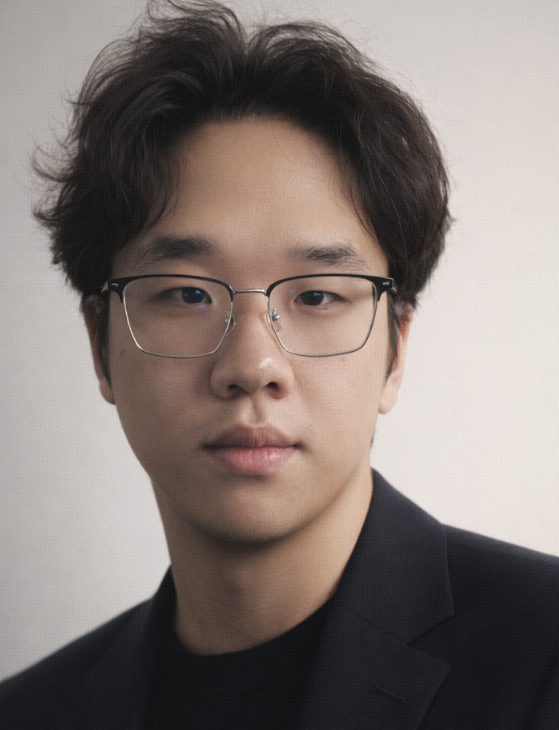 Zhengqing Yuan (袁政卿)合作论文数Department of Computer Science and Engineering, University of Notre Dame1
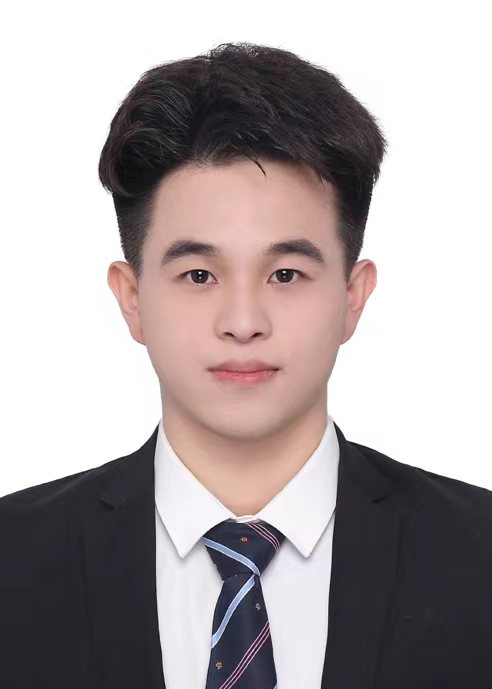 Qian Wang (王乾)合作论文数Virginia Tech1
 Li Hao合作论文数School of Electronic and Computer Engineering, Peking University;Shanghai AI Laboratory;Peking University Shenzhen Graduate School1
 Zhaokun Zhou (周昭坤)合作论文数School of Electronic and Computer Engineering, Peking University1
 Zhiguang Qiu合作论文数Sch Environm & Energy, Peking Univ Shenzhen Grad Sch1Wancai Zhang合作论文数Beijing Guowang Fuda Sci & Technol Dev Co, Beijing, Peoples R China1Chun-Ang Lian合作论文数1
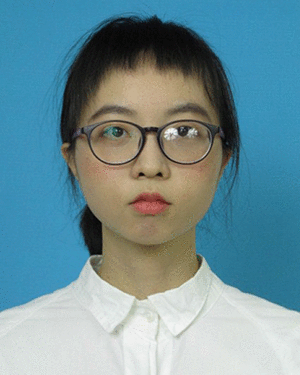 Ruoxi Chen合作论文数College of Information EngineeringZhejiang University of TechnologyHangzhou310023China1Shaoling Dong合作论文数Fibonacci Data Consulting Serv Inc, Shenzhen, Peoples R China1
 Ke Yu (余珂)合作论文数School of Environment and Energy, Peking University1




