Autoregressive models, built based on the Next Token Prediction (NTP) paradigm, show great potential in developing a unified framework that integrates both language and vision tasks. Pioneering works introduce NTP to autoregressive visual generation tasks. In this work, we rethink the NTP for autoregressive image generation and extend it to a novel Next Patch Prediction (NPP) paradigm. Our key idea is to group and aggregate image tokens into patch tokens with higher information density. By using patch tokens as a more compact input sequence, the autoregressive model is trained to predict the next patch, significantly reducing computational costs. To further exploit the natural hierarchical structure of image data, we propose a multi-scale coarse-to-fine patch grouping strategy. With this strategy, the training process begins with a large patch size and ends with vanilla NTP where the patch size is 1x1, thus maintaining the original inference process without modifications. Extensive experiments across a diverse range of model sizes demonstrate that NPP could reduce the training cost to around 0.6 times while improving image generation quality by up to 1.0 FID score on the ImageNet 256x256 generation benchmark. Notably, our method retains the original autoregressive model architecture without introducing additional trainable parameters or specifically designing a custom image tokenizer, offering a flexible and plug-and-play solution for enhancing autoregressive visual generation.
In this work, we present DreamDance, a novel method for animating human images using only skeleton pose sequences as conditional inputs. Existing approaches struggle with generating coherent, high-quality content in an efficient and user-friendly manner. Concretely, baseline methods relying on only 2D pose guidance lack the cues of 3D information, leading to suboptimal results, while methods using 3D representation as guidance achieve higher quality but involve a cumbersome and time-intensive process. To address these limitations, DreamDance enriches 3D geometry cues from 2D poses by introducing an efficient diffusion model, enabling high-quality human image animation with various guidance. Our key insight is that human images naturally exhibit multiple levels of correlation, progressing from coarse skeleton poses to fine-grained geometry cues, and further from these geometry cues to explicit appearance details. Capturing such correlations could enrich the guidance signals, facilitating intra-frame coherency and inter-frame consistency. Specifically, we construct the TikTok-Dance5K dataset, comprising 5K high-quality dance videos with detailed frame annotations, including human pose, depth, and normal maps. Next, we introduce a Mutually Aligned Geometry Diffusion Model to generate fine-grained depth and normal maps for enriched guidance. Finally, a Cross-domain Controller incorporates multi-level guidance to animate human images effectively with a video diffusion model. Extensive experiments demonstrate that our method achieves state-of-the-art performance in animating human images.
Current video generation models excel at short clips but fail to produce cohesive multi-shot narratives due to disjointed visual dynamics and fractured storylines. Existing solutions either rely on extensive manual scripting/editing or prioritize single-shot fidelity over cross-scene continuity, limiting their practicality for movie-like content. We introduce VideoGen-of-Thought (VGoT), a step-by-step framework that automates multi-shot video synthesis from a single sentence by systematically addressing three core challenges: (1) Narrative Fragmentation: Existing methods lack structured storytelling. We propose dynamic storyline modeling, which first converts the user prompt into concise shot descriptions, then elaborates them into detailed, cinematic specifications across five domains (character dynamics, background continuity, relationship evolution, camera movements, HDR lighting), ensuring logical narrative progression with self-validation. (2) Visual Inconsistency: Existing approaches struggle with maintaining visual consistency across shots. Our identity-aware cross-shot propagation generates identity-preserving portrait (IPP) tokens that maintain character fidelity while allowing trait variations (expressions, aging) dictated by the storyline. (3) Transition Artifacts: Abrupt shot changes disrupt immersion. Our adjacent latent transition mechanisms implement boundary-aware reset strategies that process adjacent shots' features at transition points, enabling seamless visual flow while preserving narrative continuity. VGoT generates multi-shot videos that outperform state-of-the-art baselines by 20.4 and 17.4 consistency and 10x fewer manual adjustments than alternatives.
 Yatian Pang (庞雅天)合作论文数Cosmos Lab, NVIDIA3
 Ser-Nam Lim合作论文数Department of Computer Science, College of Engineering & Computer Science, University of Central Florida;Institute of Artificial Intelligence, University of Central Florida3
 Mingzhe Zheng合作论文数2
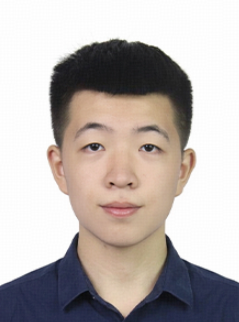 Bin Lin (林彬)合作论文数School of Electronic and Computer Engineering, Peking University2
 Bin Zhu (朱斌)合作论文数School of Computing and Information Systems, Singapore Management University2
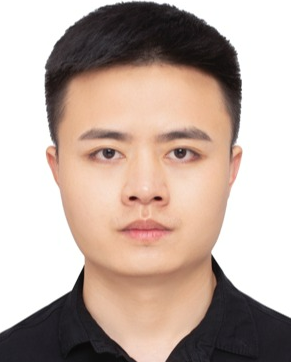 Li Yuan (袁粒)合作论文数School of Electrical and Computer Engineering, Shenzhen Graduate School, Peking University2
 Francis Tay Eng Hock合作论文数Department of Mechanical Engineering, College of Design and Engineering, National University of Singapore;Centre of Intelligent Products and Manufacturing Systems, National University of Singapore2Liuhan Chen合作论文数1Haojian Huang合作论文数1Yexin Liu合作论文数1Zhenyu Tang合作论文数1
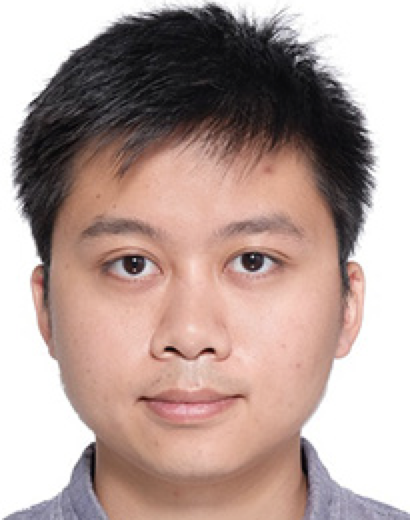 Qifeng Chen (陳启峰)合作论文数Department of Computer Science and Engineering, School of Engineering, The Hong Kong University of Science and Technology1
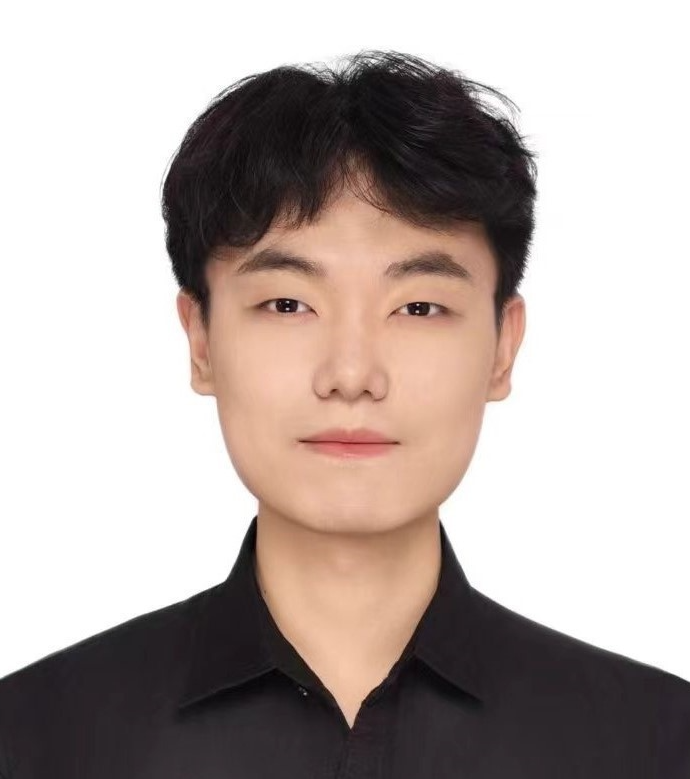 Peng Jin (金鹏)合作论文数School of Electronic and Computer Engineering, Peking University1




