To assist the sustainable development of the building sector, designers require tools illustrating the most viable design options. This paper, starting by presenting the opportunities and limitations of the Life Cycle Assessment (LCA) methodology and Digital Product Passport (DPP) instrument when applied to Custom Modules for Curtain Walls, proposes a Semantic Data-driven Framework to facilitate the design of low-carbon and circular façade modules. Based on literature and the practical outcome of the H2020 project Basajaun, this framework integrates computer-aided technologies that manufacturing companies commonly employ to automate an efficient sustainability assessment process using primary data. This solution innovates industrial process management and architectural design and supports the creation of greener products. It also facilitates the output of documents supporting end-of-life scenarios. The development methodology involves investigating required quantitative project data, environmental factors, and circularity information, as well as the definition of flowcharts for the Life Cycle Inventory, extending a best practice for the façade module’s DPP. Furthermore, the methodology implicates data collection and IT implementation and organisation. This is through the definition of an ontology conceived for interconnection between digital systems. The findings shall contribute to implementing the LCA and DPP practices for custom prefabricated façade modules and suggest areas for further development. Challenges include obtaining and sharing data on environmental impacts and circularity, but involving stakeholders and addressing technical limitations can improve sustainability.
Bioeconomy helps to move towards a renewable, fossil-free future. The environmental impact is significantly reduced when replacing fossil-based products with bio-based alternatives. In a bioeconomy, all products are made from renewable and biogenic resources. In the building sector examples for biogenic sources are traditionally wooden building structures, while green roofs are becoming more popular. The goal of the present project was to assess the amount of biogenic carbon stored in green roofs and wooden buildings overall. The question is whether green roofs are improving the biogenic carbon usage of buildings and find out how that can be improved. The methods used are based on construction modelling, life cycle assessment and standardised environmental product declaration (EPD). The results indicate that wooden building structures are not enough for a complete biogenic building to move to a renewable, fossil-free future. Furthermore, the green roofs do add more biogenic carbon to the building than conventional roofs, while seen over the whole building these benefits are negligible. The results are presented as renewable and nonrenewable energy as well as biogenic carbon and greenhouse gas emissions. These are compared with conventional roofing based on non-renewable standard roofs in Sweden.
The Internet of Things (IoT) is expected to transform the way we live, work, and learn. Using IoT could thus be a game-changer for municipalities towards sustainability. The Swedish municipality of Södertälje strives to develop IoT concepts and use open data for a sustainable and inclusive society. The goal of this study was to explore how IoT can enable route optimization and placement planning for increased operational efficiency. The goal was also to enhance the knowledge of the environmental and social benefits of IoT systems in the waste collection system in Södertälje. The analysis is based on Life Cycle Assessment (LCA) and interviews. The results show a minor climate change impact for the IoT solutions in the overall smart waste collection system. The major climate impact contributor was instead associated with the trash bags used. Additionally, the study showed that the performance of the system relies on smart planning of the operations and the transportations.
To reach future climate targets, it is important to verify that materials and technologies used for construction are sustainable and have a minimal environmental impact. The goal of this project was to add a broad life cycle perspective for quantifying energy and greenhouse gas emission, from the upstream flow of the construction process and the operational phase by including buildings and stormwater systems at a district level. The hypothesis was that green roofs might have a higher impact on greenhouse gas emissions as more material is needed compared to a standard roof. In return, green roofs reduce and retain stormwater, which may reduce the risk of hydraulic overloading in connected stormwater systems. This may lead to reduced CO2 emission if an upgrade of existing systems is not necessary. To evaluate this complex issue, a framework was developed combining construction modelling, energy simulation, stormwater system modelling, and life cycle assessment. The result of this theoretical study indicates that green roofs reduce and retain stormwater but are in most cases not sufficient to reduce the risk of hydraulic overloading in connected stormwater systems. The results demonstrated that green roofs should be not solely implemented to reduce and retain stormwater in the Nordic climate.
The procurement in public organisations has traditionally been performed in a linear way. Using circular solutions could help public organisations to save resources and tackle climate change. The Swedish City of Malmö strives to include circular solutions and become a circular municipality. The goal of the study was to explore activities for increased reuse and visualise how circular material flows can reduce environmental impacts. The goal was also to develop a method for mapping material flows that can be used in the City of Malmö and other public organisations. The studied activities included in this study are the reuse of furniture and replacement of single use plastic with reuse alternatives, as well as prolonged lifetime of IT products and textiles. Life cycle analysis (LCA) based methods were used to estimate the reduction in environmental impact from the studied activities. The perception of circular activities within the City of Malmö was analysed with a survey. The results showed that the purchasing agreements with increased lifetime for clothing and IT products, lead to reduced environmental impacts. The results also showed that most employees are interested in using a digital sharing platform. Additionally, the results pointed out the need for a circular manager.
The collection and recycling of packaging and life cycle assessments have traditionally been developed from a technical perspective, not including the actors in the chain. How recycling should be done depends on who you ask, and whether you look at the issue from an energy, material, legal or user perspective. FTI, the Packaging and Newspaper Collection organization is responsible for better circularity and collecting these fractions in Sweden’s municipalities. When recyclable materials end up in the wrong place, it causes problems leading to increased energy use in the life cycle. The ongoing project Tjårven, aims to reduce energy use in connection with packaging collection, as well as potential energy gains in the second stage of the packaging life cycle, by redesigning packaging collection from a user centred perspective. To do this, design interventions are developed based on observed and self-reported user behaviour, a literature review of state-of-the-art collection infrastructure and an understanding of the system developed using actor-based LCA methodology. The latter methodology is used to show the energy use in the lifecycle, including the actions of the actors in the chain. The interventions developed will be tested through a case study that will be evaluated to see if it helps to achieve more energy efficient collection infrastructure, allowing for better circularity and therefore more sustainable future lifestyles. The present article presents the first part of the project, summarizing the results from the user centred observations, literature review and initial actor-based LCA model.
In Sweden, the current dominant valorization of food waste is the production of biogas. However, as current production has low profitability, other options are sought to find more valuable uses of food waste, e.g. as the feedstock for bio-based chemicals. One example is the use of food waste in the production of bio-based succinic acid. In this paper, a LCA study is presented in order to highlight whether biogas production or the production of succinic acid has the lowest environmental impact as valorization option for mixed food waste, and if mixed food waste could be an environmentally preferable feedstock to succinic acid production. The LCA study shows that the environmental results depend on the perspective. From a valorization perspective, food waste has the lowest environmental impact the biogas production. From a feedstock perspective, mixed food waste is an environmentally preferable feedstock to succinic acid production. Although many uncertainties exist because production processes are still being developed, it can be concluded that mixed food waste seems to be a promising feedstock for bio-based chemicals from an environmental point of view, and is of interest to be included in future assessments of bio-based chemicals for the emerging bio-economy. (C) 2018 Published by Elsevier Ltd.
There is an extensive need for renovation in the existing housing stock and an increased rate of renovation activities is necessary not only to meet international climate and energy targets, but also in order to ensure buildings functions, technical qualities and to provide a good living environment. Thus, the challenges for the housing companies is to meet and balance all the different needs. Research focus on the development of decision support tools and expansion of the renovation discussion from not only a technical issue but also to include a social perspective. But how do housing companies manage renovation activities in a broader perspective and what are the related future challenges in renovation and transformation of building stocks? The aim of this study to investigate how larger housing companies act in renovation projects and to identify perceived challenges in relation to renovation. A questionnaire survey directed to the Swedish housing sector has been carried out including all housing companies with more than 20 employees. Out of 198 companies, 76 companies responded, which corresponds to a response rate of 38 percent. Results show that even if companies have environmental and energy goals or policies, only minor energy efficiency measurements are carried out in renovation projects. Social aspects are increasingly addressed both in policy and renovation. The largest challenges are economy and a limitation of the rent increases in order to ensure that the residents can remain in the apartment or in the housing area after renovation, i.e. to find appropriate rent levels. With a starting point in Swedish conditions, the results are of interest or the transformation process of the European housing stock.
This chapter describes the information flows regarding chemicals in global textile supply chains as illustrated by the case of Swedish textile retailers and their Chinese suppliers. There is a need for more knowledge on how chemical risk information is handled, especially considering international supply chains. In textile production, a large number of chemicals are used, for instance during cultivation of cotton fibres where herbicides and insecticides are used for plant protection. Different types of labelling programme are additional tools for importers and suppliers to communicate about chemicals. Although Chinese regulations for management of hazardous chemicals exist, the findings from the chapter shows that implementation of this legislation is mainly concentrated on controlling wastewater discharge from industry. The main method for data gathering has been semi-structured interviews with Swedish textile retailers and Chinese textile producers. Labels such as Oeko-Tex are seen as valuable by the suppliers as instruments to increase the competitive power of Chinese textile products.
An infrastructure system – here, the industrial ecology of Gothenburg — is more important for society than we usually credit it for (cf. Technology is society made durable, Latour 1990) and is taken for granted by most inhabitants. Gothenburg is an unusually well-developed and interconnected infrastructure system. The first district heating facility was put in operation in 1952. Soon enough, waste was re-used and recycled into energy, into both electricity and heat. With time, more varied materials and sources became integrated into the system to also produce biogas and compost. The project makes a historiographic description of how the industrial ecology of the Gothenburg city region developed since the Gothenburg technical environmental flow system is unique in size, age, diversity of flows and functions. The study describes environmental flows and their actors in a networked organization. The focus on interconnectivity of the different actors, flows and sectors of Gothenburg requires the combination of several theoretical fields. Such theoretical fields include Networked Learning, which takes a relational stance in which learning takes place both in relation to others, and in relation to learning resources (Dirckinck-Homfeld et al., 2009); STS (Science Technology and Society), which study how technical innovation are affected by social, political and cultural values, and how these innovation affect, in turn, political, social and cultural values; (Joerges & Novotny, 2003); and Urban Metabolism, which uses models to facilitate the description and analysis of the flows of the energy and materials within cities, such as Material Flow Analysis of a city, and provides a metaphorical framework to study the interactions of natural and human systems in specific regions. Preliminary findings will be presented.
This report presents a project with the aim to develop methods for large companies on how to work with energy efficiency that stretches along the value chain. By studying organizational conditions and physical effects on energy and climate for six cases in three companies, recommendations are given to businesses and governments on how to work for increased life cycle energy efficiency. The results point to a range of organizational and economic challenges, but also to enablers. Four strategies for progress were identified: A) Find and share the life cycle benefits, B) Enable and encourage understanding and action, C) Get focus and priorities in line, and D) Seek or create a way forward. The study points to the need to be strategic, and to translate this strategy into priorities and operational work. Yet, it must be recognized that life cycle thinking is not the work by one company and there is a call for cross-actor arenas to discuss and develop governance of value chains beyond the act of single companies.
The broader field of LCA, industrial ecology is dominated by a normative approach to the modelling of flows of energy and materials in the industrial system. To include social aspects have led researchers use an agent based modelling based on a micro perspective (Axtell et al 2002). A different approach is the descriptive approach to include actors. Examples for that can be found in the field of supply chain management, or in social shaping perspective based on Actor Network Theory, or in organisational perspective based on Actor Network Theory, more specifically the theory of action nets (Baumann 2004). Here we present a new actor based LCA method using a descriptive approach of the product chain. The recognition that LCA can help actors see the indirect consequences of their actions are long established. We have started to study the direct consequences of actors on organic milk and dairy products (Berlin et al 2008), and indirect consequences of actors in the building chain (Brunklaus et al 2010), and we continued to study the direct and indirect consequences of actors in organic food chains such as egg, pork, and cucumber. Here we also present an extension of the actor based LCA method to analyse actors external to the product chain, which include an analysis of agencies and policy actors, industrial organisations and market actors, as well as NGOs based on innovation analysis. An initial study combines a study on innovation analysis on organic milk (Jacobsson 2006) and actor based LCA on organic milk (Berlin et al 2008). With this combination we can explain agents and roles, and their effect on the product chain. We can analytically link internal and external actors to analyse barriers and opportunities in the product chain. Future studies will analyse each actor and effect in relation to LCA.
Film i Vast ar idag en av Europas viktigaste filmfonder, dit filmproducenter/bolag kan vanda sig med sina projekt och soker medfinansiering. Film i Vast staller krav pa bland annat kop av varor och tjanster. For att kunna stalla krav pa en mer miljomassigt hallbar filmproduktion behovs en forstaelse hur filmproduktionen paverkar miljon. Hur kan en filmproduktion arbeta pa ett mer miljomassigt hallbart satt? Inom detta samarbetsprojekt mellan Film i Vast och Chalmers har ett enkelt verktyg specifik for filmproduktion tagits fram med bland annat livscykelanalys.Syfte och fragestallningar: Det overgripande syftet med projektet ar att utveckla verktyg for att berakna filmproduktionens miljopaverkan och aktorers mojlighet att paverka. Med aktorer menas allt fran regissor/platschef till ljustekniker och skadespelare. Projektet ar uppdelat i tre delprojekt: 1) att ta fram en modell och en metod for att berakna miljopaverkan av filmproduktion 2) att ta fram filmdata med hjalp av inspelningsplan, platsbesok och enkater till aktorer 3) att med tillganglig LCA-data berakna filmproduktionens klimatpaverkan (kg CO2 ekv). Funktionell enhet ar per 1 film-produktion och per 1 timme film-konsumtion. Modell och klimatberakningar: For att berakna filmproduktionens miljopaverkan inkluderas i denna rapport foljande fem moment: forproduktion, produktion, postproduktion, samt distribution och konsumtion. Sjalva produktionen inkludera flera olika delmoment: utrustning, mat, transport t/r (skadespelare, utrustning), och boende. Resultaten ar kopplade till vad filmproducenter valjer (dvs. utrustning), men ocksa ett resultat av tillgangen till data (dvs. tidigare LCA-data och klimatdata) for tjanster och produkter som paverkar klimatet. Data fran en existerande filmproduktion fran GotaFilm t.ex. typ av utrustning och antal timmar den anvands eller typ av transport och antal km den har anvants. Utgangspunkter har varit filmens inspelningsplan och dagsbesked, korschema for transporter, etc. Dessa data kallas for forgrundsdata. For att berakna klimatpaverkan for varje enskild moment kravs s.k. bakgrundsdata. Har anvands LCA-databaser (t.ex. ecoinvent inom transport och el), energi- och klimatberakningar (framforallt for hotell och material) eller LCA-studier (framforallt inom kost och material). Resultat och nyckeltal: Resultaten visar att filmproduktionens klimatpaverkan i huvudsak orsakas av transporter och flygresor (73%), samt inspelning (16%), kost (5%) och logi (3%). Filmproduktion orsakar totalt cirka 51 kg CO2 ekv eller 17kg per timme. Utslappen varierar framforallt beroende pa val av transportslag, samt typ av inspelning, kost och logi. Modellen, metoden och berakningarna mojliggor framtagandet av rekommendationer for framtida filmproduktioner.
 Henrikke Baumann合作论文数Chalmers University of Technology18
 Liane Thuvander合作论文数16
 Johanna Berlin合作论文数10
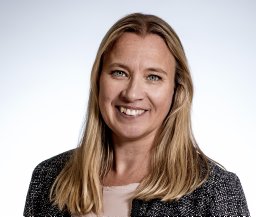 Pernilla Gluch合作论文数Dept Civil & Environm Engn, Construct Management10orjan lundberg合作论文数9michaela raab合作论文数8Ann-Charlotte Stenberg合作论文数7karin johansson合作论文数6
 Emma Rex合作论文数6
 Catarina Thormark合作论文数5Jutta Hildenbrand合作论文数RISE Research Institutes of Sweden4
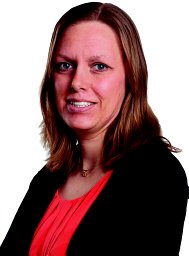 kristin fransson合作论文数RISE Res Inst Sweden3
 Steven Sarasini合作论文数Research Policy Institute, Lund University3
 Sverker Molander合作论文数Technical Environmental Planning;Chalmers University of Technology;Technical Environmental Planning, Chalmers University of Technology3
 Anna Kadefors合作论文数Division of Construction and Facilities Management, Department of Real Estate and Construction Management, KTH Royal Institute of Technology;Department of Technology Management and Economics, Chalmers University of Technology3sara palander合作论文数2Yuntao Zhang合作论文数2
 Hanna Nilsson-Linden合作论文数RISE Res Inst Sweden2
 Maud Lanau合作论文数Dept Civil & Struct Engn, Univ Sheffield2
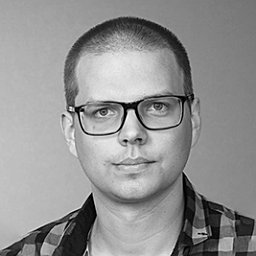 Jani Mukkavaara合作论文数Div Industrialized & Sustainable Construct, Lulea Univ Technol2
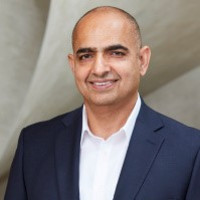 Amir Rashid合作论文数Department of Production Engineering, School of Industrial Engineering and Management, KTH Royal Institute of Technology2
 Ted Saarikko合作论文数2
 Jutta Schade合作论文数Department of Civil;Mining and Environmental Engineering;Luleå University of Technology;Department of Civil|Mining and Environmental Engineering, Luleå University of Technology2
 Mathias Lindkvist合作论文数Chalmers University of Technology2
 Luca Morganti合作论文数1Julen Astudillo Larraz合作论文数1Mathias von Scherling合作论文数1Kristina Svahnström合作论文数1
 Theo Zaffagnini合作论文数1
 Veronica Garcia-Cortes合作论文数1
 Alessandro Pracucci合作论文数R2M Solution, United Kingdom1birger lofgren合作论文数1
 graham aid合作论文数Ragn‐Sells Group1
 Frida Røyne合作论文数1
 Peru Elguezabal合作论文数1
 Isabel Ordoñez合作论文数Design & Human Factors, Chalmers Univ Technol1
 Malin Eriksson合作论文数1
 Rickard Arvidsson合作论文数Department of Energy and Environment, Chalmers University of Technology1
 Anne Marie Tillman合作论文数Division of Environmental Systems Analysis, Chalmers University of Technology1
 Johanna Ulmanen合作论文数1
 Paula Femenias合作论文数1
 Tove Malmqvist Stigell合作论文数Division of Sustainability Assessment and Management, Department of Sustainable Development, Environmental Science and Engineering, School of Architecture and the Built Environment, KTH Royal Institute of Technology1Chalmers Tekniska合作论文数1




