Quorum systems are a key abstraction in distributed fault-tolerant computing for capturing trust assumptions. They can be found at the core of many algorithms for implementing reliable broadcasts, shared memory, consensus and other problems. This paper introduces asymmetric Byzantine quorum systems that model subjective trust. Every process is free to choose which combinations of other processes it trusts and which ones it considers faulty. Asymmetric quorum systems strictly generalize standard Byzantine quorum systems, which have only one global trust assumption for all processes. This work also presents protocols that implement abstractions of shared memory, broadcast primitives, and a consensus protocol among processes prone to Byzantine faults and asymmetric trust. The model and protocols pave the way for realizing more elaborate algorithms with asymmetric trust.
In permissioned blockchain systems, participants are admitted to the network by receiving a credential from a certification authority. Each transaction processed by the network is required to be authorized by a valid participant who authenticates via her credential. Use case settings where privacy is a concern thus require proper privacy-preserving authentication and authorization mechanisms. Anonymous credential schemes allow a user to authenticate while showing only those attributes necessary in a given setting. This makes them a great tool for authorizing transactions in permissioned blockchain systems based on the user's attributes. In most setups, there is one distinct certification authority for each organization in the network. Consequently, the use of plain anonymous credential schemes still leaks the association of a user to the organization that issued her credentials. Camenisch, Drijvers and Dubovitskaya (CCS 2017) therefore suggest the use of a delegatable anonymous credential scheme to also hide that remaining piece of information. In this paper, we propose the revocation and auditability-two functionalities that are necessary for real-world adoption-and integrate them into the scheme. We present a complete protocol, its security definition and the proof, and provide its open-source implementation. Our distributed-setting performance measurements show that the integration of the scheme with Hyperledger Fabric, while incurring an overhead in comparison to the less privacy-preserving solutions, is practical for settings with stringent privacy requirements.
The Global and Externalized UC frameworks [Canetti-Dodis-Pass-Walfish, TCC 07] extend the plain UC framework to additionally handle protocols that use a “global setup”, namely a mechanism that is also used by entities outside the protocol. These frameworks have broad applicability: Examples include public-key infrastructures, common reference strings, shared synchronization mechanisms, global blockchains, or even abstractions such as the random oracle. However, the need to work in a specialized framework has been a source of confusion, incompatibility, and an impediment to broader use. We show how security in the presence of a global setup can be captured within the plain UC framework, thus significantly simplifying the treatment. This is done as follows: We also exemplify how our treatment can be used to streamline, within the plain UC model, proofs of security of systems that involve global set-up, thus providing greater simplicity and flexibility.
Token payment systems were the first application of blockchain technology and are still the most widely used one. Early implementations of such systems, like Bitcoin or Ethereum, provide virtually no privacy beyond basic pseudonymity: all transactions are written in plain to the blockchain, which makes them linkable and traceable. Several more recent blockchain systems, such as Monero or Zerocash, implement improved levels of privacy. Most of these systems target the permissionless setting, and as such are not suited for enterprise networks. These require token systems to be permissioned and to bind tokens to user identities instead of pseudonymous addresses. They also require auditing functionalities in order to satisfy regulations such as AML/KYC. We present a privacy-preserving token management system for permissioned blockchains that also supports fine-grained auditing. The scheme is secure under computational assumptions in bilinear groups, in the random-oracle model. We provide performance measurements for our prototype built on top of Hyperledger Fabric.
One approach toward basing public-key encryption (PKE) schemes on weak and credible assumptions is to build "stronger" or more general schemes generically from "weaker" or more restricted ones. One particular line of work in this context was initiated by Myers and Shelat (FOCS '09) and continued by Hohenberger, Lewko, and Waters (Eurocrypt '12), who provide constructions of multi-bit CCA-secure PKE from single-bit CCA-secure PKE. It is well known that encrypting each bit of a plaintext string independently is not CCA-secure-the resulting scheme ismalleable. We therefore investigate whether this malleability can be dealt with using the conceptually simple approach of applying a suitable non-malleable code (Dziembowski et al., ICS '10) to the plaintext and subsequently encrypting the resulting codeword bit by bit. We find that an attacker's ability to ask multiple decryption queries requires that the underlying code becontinuouslynon-malleable (Faust et al., TCC '14). Since, as we show, this flavor of non-malleability can only be achieved if the code is allowed to "self-destruct," the resulting scheme inherits this property and therefore only achieves a weaker variant of CCA security. We formalize this new notion of so-calledindistinguishability under self-destruct attacks (IND-SDA)as CCA security with the restriction that the decryption oracle stops working once the attacker submits an invalid ciphertext. We first show that the above approach based on non-malleable codes yields a solution to the problem of domain extension for IND-SDA-secure PKE, provided that the underlying code is continuously non-malleable against (a reduced form of) bit-wise tampering. Then, we prove that the code of Dziembowski et al. is actually already continuously non-malleable against bit-wise tampering. We further investigate the notion of security under self-destruct attacks and combine IND-SDA security withnon-malleability under chosen-ciphertext attacks (NM-CPA)to obtain thestrictlystronger notion ofnon-malleability under self-destruct attacks (NM-SDA). We show that NM-SDA security can be obtained from basic IND-CPA security by means of a black-box construction based on the seminal work by Choi et al. (TCC '08). Finally, we provide a domain extension technique for building a multi-bit NM-SDA scheme from a single-bit NM-SDA scheme. To achieve this goal, we define and construct a novel type of continuous non-malleable code, calledsecret-state NMC, since, as we show, standard continuous NMCs areinsufficientfor the natural "encode-then-encrypt-bit-by-bit" approach to work.
We draw attention to a gap between theory and usage of nonce-based symmetric encryption, under which the way the former treats nonces can result in violation of privacy in the latter. We bridge the gap with a new treatment of nonce-based symmetric encryption that modifies the syntax (decryption no longer takes a nonce), upgrades the security goal (asking that not just messages, but also nonces, be hidden) and gives simple, efficient schemes conforming to the new definitions. We investigate both basic security (holding when nonces are not reused) and advanced security (misuse resistance, providing best-possible guarantees when nonces are reused).
We want to design and analyze protocols in a modular way by combining idealized components that we realize individually. While this is in principle possible using security frameworks that provide generic composition theorems, we notice that actually applying this methodology in practical protocols is far from trivial and, worse, is sometimes not even possible. As an example, we use a natural combination of zero-knowledge proofs with signature and commitment schemes, where the goal to have a party prove in zero-knowledge that it knows a signature on a committed message, i.e., prove knowledge of a witness to a statement involving algorithms of the signature and commitment scheme. We notice that, unfortunately, the composition theorem of the widely used UC framework does allow one to modularly prove the security of this example protocol. We then describe a new variant of the UC framework, multi-protocol UC, and show a composition theorem that generalizes the one from the standard framework. We use this new framework to provide a modular analysis of a practical protocol that follows the above structure and is based on discretelogarithm-based primitives. Besides the individual security proofs of the protocol components, we also describe a new methodology for idealizing them as components that can then be composed.
Quorum systems are a key abstraction in distributed fault-tolerant computing for capturing trust assumptions. They can be found at the core of many algorithms for implementing reliable broadcasts, shared memory, consensus and other problems. This paper introduces asymmetric Byzantine quorum systems that model subjective trust. Every process is free to choose which combinations of other processes it trusts and which ones it considers faulty. Asymmetric quorum systems strictly generalize standard Byzantine quorum systems, which have only one global trust assumption for all processes. This work also presents protocols that implement abstractions of shared memory and broadcast primitives with processes prone to Byzantine faults and asymmetric trust. The model and protocols pave the way for realizing more elaborate algorithms with asymmetric trust. 2012 ACM Subject Classification Theory of computation → Cryptographic protocols; Software and its engineering → Distributed systems organizing principles
We propose the concept of a system algebra with a parallel composition operation and an interface connection operation, and formalize composition-order invariance, which postulates that the order of composing and connecting systems is irrelevant, a generalized form of associativity. Composition-order invariance explicitly captures a common property that is implicit in any context where one can draw a figure (hiding the drawing order) of several connected systems, which appears in many scientific contexts. This abstract algebra captures settings where one is interested in the behavior of a composed system in an environment and wants to abstract away anything internal not relevant for the behavior. This may include physical systems, electronic circuits, or interacting distributed systems. One specific such setting, of special interest in computer science, are functional system algebras, which capture, in the most general sense, any type of system that takes inputs and produces outputs depending on the inputs, and where the output of a system can be the input to another system. The behavior of such a system is uniquely determined by the function mapping inputs to outputs. We consider several instantiations of this very general concept. In particular, we show that Kahn networks form a functional system algebra and prove their composition-order invariance. Moreover, we define a functional system algebra of causal systems, characterized by the property that inputs can only influence future outputs, where an abstract partial order relation captures the notion of "later". This system algebra is also shown to be composition-order invariant and appropriate instantiations thereof allow to model and analyze systems that depend on time.
This paper develops an asynchronous cryptographic protocol for outsourcing arbitrary stateful computation among multiple clients to an untrusted server, while guaranteeing integrity of the data. The clients communicate only with the server and merely store a short authenticator to ensure that the server does not cheat. Our contribution is two-fold. First, we extend the recent hash&prove scheme of Fiore et al. (CCS 2016) to stateful computations that support arbitrary updates by the untrusted server, in a way that can be verified by the clients. We use this scheme to generically instantiate authenticated data types. Second, we describe a protocol for multi-client verifiable computation based on an authenticated data type, and prove that it achieves a computational version of fork linearizability. This is the strongest guarantee that can be achieved in the setting where clients do not communicate directly; it ensures correctness and consistency of outputs seen by the clients individually.
The security of today's widely used communication security protocols is based on trust in Certificate Authorities (CAs). However, the real security of this approach is debatable, since certificate handling is tedious and many recent attacks have undermined the trust in CAs. On the other hand, opportunistic encryption protocols such as Tcpcrypt, which are currently gaining momentum as an alternative to no encryption, have similar security to using untrusted CAs or self-signed certificates: they only protect against passive attackers. In this paper, we present a key exchange protocol, Secure Multipath Key Exchange (SMKEX), that enables all the benefits of opportunistic encryption (no need for trusted third parties or pre-established secrets), as well as proven protection against some classes of active attackers. Furthermore, SMKEX can be easily extended to a trust-on-first-use setting and can be easily integrated with TLS, providing the highest security for opportunistic encryption to date while also increasing the security of standard TLS. We show that SMKEX is made practical by the current availability of path diversity between different AS-es. We also show a method to create path diversity with encrypted tunnels without relying on the network topology. These allow SMKEX to provide protection against most adversaries for a majority of Alexa top 100 web sites. We have implemented SMKEX using a modified Multipath TCP kernel implementation and a user library that overwrites part of the socket API, allowing unmodified applications to take advantage of the security provided by SMKEX.
An updatable encryption scheme allows to periodically rotate the encryption key and move already existing ciphertexts from the old to the new key. These ciphertext updates are done with the help of a so-called update token and can be performed by an untrusted party, as the update never decrypts the data. Updatable encryption is particularly useful in settings where encrypted data is outsourced, e.g., stored on a cloud server. The data owner can produce an update token, and the cloud server can update the ciphertexts. We provide a comprehensive treatment of ciphertext-independent schemes, where a single token is used to update all ciphertexts. We show that the existing ciphertext-independent schemes and models by Boneh et al. (CRYPTO'13) and Everspaugh et al. (CRYPTO'17) do not guarantee the post-compromise security one would intuitively expect from key rotation. In fact, the simple scheme recently proposed by Everspaugh et al. allows to recover the current key upon corruption of a single old key. Surprisingly, none of the models so far reflects the timely aspect of key rotation which makes it hard to grasp when an adversary is allowed to corrupt keys. We propose strong security models that clearly capture post-compromise and forward security under adaptive attacks. We then analyze various existing schemes and show that none of them is secure in this strong model, but we formulate the additional constraints that suffice to prove their security in a relaxed version of our model. Finally, we propose a new updatable encryption scheme that achieves our strong notions while being (at least) as efficient as the existing solutions.
A digital signature scheme (DSS), which consists of a key-generation, a signing, and a verification algorithm, is an invaluable tool in cryptography. The first and still most widely used security definition for a DSS, existential unforgeability under chosen-message attack, was introduced by Goldwasser, Micali, and Rivest in 1988. As DSSs serve as a building block in numerous complex cryptographic protocols, a security definition that specifies the guarantees of a DSS under composition is needed. Canetti (FOCS 2001, CSFW 2004) as well as Backes, Pfitzmann, and Waidner (CCS 2003) have described ideal functionalities for signatures in their respective composable-security frameworks. While several variants of these functionalities exist, they all share that the verification key and signature values appear explicitly. In this paper, we describe digital signature schemes from a different, more abstract perspective. Instead of modeling all aspects of a DSS in a monolithic ideal functionality, our approach characterizes a DSS as a construction of a repository for authentically reading values written by a certain party from certain assumed repositories, e.g., for transmitting verification key and signature values. This approach resolves several technical complications of previous simulation-based approaches, captures the security of signature schemes in an abstract way, and allows for modular proofs. We show that our definition is equivalent to existential unforgeability. We then model two example applications: (1) the certification of values via a signature from a specific entity, which with public keys as values is the core functionality of public-key infrastructures, and (2) the authentication of a session between a client and a server with the help of a digitally signed assertion from an identity provider. Single-sign-on mechanisms such as SAML rely on the soundness of the latter approach.
The advent of Bitcoin paved the way for a plethora of blockchain systems supporting diverse applications beyond cryptocurrencies. Although in-depth studies of the consensus protocols as well as the privacy of blockchain transactions are available, there is no formal model of the transaction semantics that a blockchain is supposed to guarantee.
Complex information-processing systems, for example quantum circuits, cryptographic protocols, or multi-player games, are naturally described as networks composed of more basic information-processing systems. A modular analysis of such systems requires a mathematical model of systems that is closed under composition, i.e., a network of these objects is again an object of the same type. We propose such a model and call the corresponding systems causal boxes. Causal boxes capture superpositions of causal structures, e.g., messages sent by a causal box A can be in a superposition of different orders or in a superposition of being sent to box B and box C. Furthermore, causal boxes can model systems whose behavior depends on time. By instantiating the Abstract Cryptography framework with causal boxes, we obtain the first composable security framework that can handle arbitrary quantum protocols and relativistic protocols.
Cryptographic security is usually defined as a guarantee that holds except when a bad event with negligible probability occurs, and nothing is guaranteed in that bad case. However, in settings where such failure can happen with substantial probability, one needs to provide guarantees even for the bad case. A typical example is where a (possibly weak) password is used instead of a secure cryptographic key to protect a session, the bad event being that the adversary correctly guesses the password. In a situation with multiple such sessions, a per-session guarantee is desired: any session for which the password has not been guessed remains secure, independently of whether other sessions have been compromised. A new formalism for stating such gracefully degrading security guarantees is introduced and applied to analyze the examples of password-based message authentication and password-based encryption. While a natural per-message guarantee is achieved for authentication, the situation of password-based encryption is more delicate: a per-session confidentiality guarantee only holds against attackers for which the distribution of password-guessing effort over the sessions is known in advance. In contrast, for more general attackers without such a restriction, a strong, composable notion of security cannot be achieved.
Several cryptographic schemes and applications are based on functions that are both reasonably efficient to compute and moderately hard to invert, including client puzzles for Denial-of-Service protection, password protection via salted hashes, or recent proof-of-work blockchain systems. Despite their wide use, a definition of this concept has not yet been distilled and formalized explicitly. Instead, either the applications are proven directly based on the assumptions underlying the function, or some property of the function is proven, but the security of the application is argued only informally. The goal of this work is to provide a (universal) definition that decouples the efforts of designing new moderately hard functions and of building protocols based on them, serving as an interface between the two. On a technical level, beyond the mentioned definitions, we instantiate the model for four different notions of hardness. We extend the work of Alwen and Serbinenko (STOC 2015) by providing a general tool for proving security for the first notion of memory-hard functions that allows for provably secure applications. The tool allows us to recover all of the graph-theoretic techniques developed for proving security under the older, non-composable, notion of security used by Alwen and Serbinenko. As an application of our definition of moderately hard functions, we prove the security of two different schemes for proofs of effort (PoE). We also formalize and instantiate the concept of a non-interactive proof of effort (niPoE), in which the proof is not bound to a particular communication context but rather any bit-string chosen by the prover.
Concert tickets “are” nowadays unique identifiers that are printed on paper as barcodes, and scanned at the entrance gate. While this system is convenient and secure for the concert organizer, it bears risks and inconveniences for the ticket owner. We developed a prototype system in which concert tickets are managed as assets on a blockchain. The system prevents ticket theft as well as fraud such as selling invalid tickets, or selling multiple copies of a ticket, by leveraging the consistency features of the blockchain. We implemented the system based on Hyperledger Fabric V1. We developed a smart contract that manages the tickets as assets on the blockchain. We also developed a client application that runs on a smart phone and allows to seamlessly transfer tickets between two users using their phones, as well as the control at the entrance gate.
 Ueli Maurer合作论文数Institute of Theoretical Computer Science, Department of Computer Science, Eidgenössische Technische Hochschule Zürich21
 Sandro Coretti-Drayton合作论文数Input Output Global6
 Daniele Venturi合作论文数Department of Computer Science, Sapienza University of Rome6
 Vassilis Zikas合作论文数College of Computing, Georgia Tech;School of Cybersecurity, Georgia Tech;School of Computer Science, Georgia Tech6
 Christian Matt合作论文数4
 Christian Badertscher合作论文数ETH Zurich4Grégory Demay合作论文数4
 Christian Cachin合作论文数Institute of Computer Science, Faculty of Science, University of Bern4
 Jonathan Katz合作论文数Google;Department of Computer Science, University of Maryland4
 Peter Gazi合作论文数Department of Computer Science, ETH Zürich4
 Markulf Kohlweiss合作论文数Laboratory for Foundations of Computer Science, School of Informatics, Univeristy of Edinburgh3
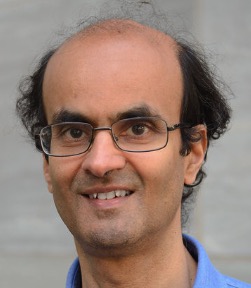 Mihir Bellare合作论文数Department of Computer Science and Engineering, University of California, San Diego3
 Yevgeniy Dodis合作论文数Department of Computer Science, New York University;Courant Institute of Mathematical Sciences, New York University3Cristina Onete合作论文数CASED & TU Darmstadt3
 Angelo De Caro合作论文数Dipartimento di Informatica ed Applicazioni, Università di Salerno3
 Christopher Portmann合作论文数Dept Comp Sci, Swiss Fed Inst Technol2
 Jan Camenisch合作论文数DFINITY Foundation2
 Phillip Rogaway合作论文数Department of Computer Science, University of California, Davis2Kaoutar Elkhiyaoui合作论文数EURECOM, Sophia Antipolis, France2
 Juan A. Garay合作论文数Department of Computer Science and Engineering, College of Engineering, Texas A&M University2
 Renato Renner合作论文数Institute for Theoretical Physics, Department of Physics, Eidgenössische Technische Hochschule Zürich2Elli Androulaki合作论文数1
 Ruth Ng Ii-Yung合作论文数Univ Calif San Diego1Orestis Alpos合作论文数University of Bern1Doru Gucea合作论文数University Politehnica of Bucharest, Bucharest, Romania1
 Luca Zanolini合作论文数University of Bern1
 Dmytro Bogatov合作论文数Boston University1
 Pedro Moreno-Sanchez合作论文数Purdue University1
 Julia Hesse合作论文数Tech Univ Darmstadt1
 Esha Ghosh合作论文数Dept. of Computer Science and Engineering, IIT Madras1
 Omar Choudary合作论文数IRIT, University of Toulouse1Sergiu Costea合作论文数Faculty of Automatic Control and Computer Science, University POLITEHNICA of Bucharest1
 Maria Dubovitskaya合作论文数IBM Research-Zurich1
 Manu Drijvers合作论文数DFINITY1
 Anja Lehmann合作论文数Darmstadt University of Technology1Joël Alwen合作论文数1
 Dimitrios Papadopoulos合作论文数Computer Science and Engineering Department, The Hong Kong University of Science and Technology1Marko Vukolic合作论文数Distributed Programming Laboratory (LPD)
School of Computer and Communication Sciences (I&C)
EPFL (Swiss Federal Institute of Technology - Lausanne)1Lehrstuhl Systemarchitektur合作论文数1
Dimitrios Papadopoulos合作论文数Computer Science and Engineering Department, The Hong Kong University of Science and Technology1Marko Vukolic合作论文数Distributed Programming Laboratory (LPD)
School of Computer and Communication Sciences (I&C)
EPFL (Swiss Federal Institute of Technology - Lausanne)1Lehrstuhl Systemarchitektur合作论文数1 Ivan Visconti合作论文数Dipartimento di Ingegneria dell'Informazione ed Elettrica e Matematica Applicata, Università degli Studi di Salerno1
 Costin Raiciu合作论文数Core Switching Group Division, Broadcom Inc.1
 Junbeom Hur合作论文数Department of Computer Science and Engineering, College of Informatics, Korea University1Andreas Rüedlinger合作论文数1
 Ran Canetti合作论文数Department of computer Science, Boston University;Center for Reliable Information System and Cyber Security, Boston University1




