Reinforcement learning with verifiable rewards (RLVR), along with recent selfdistillation variants such as SDPO, evaluates each rollout against a verifier and updates the policy from that episode-level signal. However, the richer procedural information in the rollout is rarely retained or reused. Across episodes and epochs, the model repeatedly encounters related problems under a changing policy, producing cross-episode signals that episode-local updates cannot capture: which strategies consistently pass verification, which failure modes persist, which patterns recur. We propose Procedural Memory Distillation (PMD), which converts these crossepisode signals into reusable procedural memory and distills it into the policy's weights during training. This memory functions as a training scaffold, absorbed into the policy itself, yielding a memory-free model at inference. PMD organizes the memory at three levels of abstraction: raw trajectories, self-reflected strategies and lessons, and higher-level behavioral patterns that recur across problems, all extracted online from the model's own trajectories. A memory-conditioned self-teacher draws on the accumulated experience to supervise the student on its own rollouts, enabling student to progressively internalize procedural knowledge within its parameters. The central design principle is co-evolution: the policy generates rollouts that update the memory, and memory shapes the supervision that updates the policy. Empirically, across Qwen3-8B and OLMo3-Instruct-7B, PMD improves over SDPO by 3.8-5.5
Standard chain-of-thought reasoning generates a solution in a single forward pass, committing irrevocably to each token and lacking a mechanism to recover from early errors. We introduce Inference-Time Rethinking, a generative framework that enables iterative self-correction by decoupling declarative latent thought vectors from procedural generation. We factorize reasoning into a continuous latent thought vector (what to reason about) and a decoder that verbalizes the trace conditioned on this vector (how to reason). Beyond serving as a declarative buffer, latent thought vectors compress the reasoning structure into a continuous representation that abstracts away surface-level token variability, making gradient-based optimization over reasoning strategies well-posed. Our prior model maps unstructured noise to a learned manifold of valid reasoning patterns, and at test time we employ a Gibbs-style procedure that alternates between generating a candidate trace and optimizing the latent vector to better explain that trace, effectively navigating the latent manifold to refine the reasoning strategy. Training a 0.2B-parameter model from scratch on GSM8K, our method with 30 rethinking iterations surpasses baselines with 10 to 15 times more parameters, including a 3B counterpart. This result demonstrates that effective mathematical reasoning can emerge from sophisticated inference-time computation rather than solely from massive parameter counts.
Terminal agents are a compelling application of large language models (LLMs), with the potential to integrate deeply into users' daily workflows. Reinforcement learning (RL) is a key technique for improving their capabilities, making scalable training environments a central challenge. Since public real-user interaction data are scarce, synthetic environments provide a practical alternative, but often suffer from domain gaps and limited fidelity, leading to poor generalization. Existing work mainly scales the quantity and diversity of synthetic environments, while reward-signal quality and the mechanisms governing generalization remain under-explored. We study how RL improves terminal agents and propose the Agentic Compositional Generalization hypothesis: rather than teaching new domain-specific skills from scratch, RL primarily shapes high-level decision-making behaviors that compose and route low-level skills acquired during pre-training and supervised fine-tuning (SFT). This account is consistent with our empirical results and suggests that verifier quality, which determines which behaviors are reinforced, is more important than simply increasing environment quantity or diversity. Motivated by this insight, we propose River, a simple training recipe that improves reward quality by filtering low-quality environments and augmenting outcome rewards with process-level behavior regularization. Using this recipe, our RL-trained agent achieves the best performance among evaluated open-source RL-trained 8B models across four terminal-agent benchmarks. River also generalizes across model families, scales, agent harnesses, and RL objectives. Using fewer than 30
We introduce xGen-small, a family of 4B and 9B Transformer decoder models optimized for long-context applications. Our vertically integrated pipeline unites domain-balanced, frequency-aware data curation; multi-stage pre-training with quality annealing and length extension to 128k tokens; and targeted post-training via supervised fine-tuning, preference learning, and online reinforcement learning. xGen-small delivers strong performance across various tasks, especially in math and coding domains, while excelling at long context benchmarks.
Large Language Models (LLMs) have demonstrated remarkable reasoning abilities, yet existing test-time frameworks often rely on coarse self-verification and self-correction, limiting their effectiveness on complex tasks. In this paper, we propose Socratic Self-Refine (SSR), a novel framework for fine-grained evaluation and precise refinement of LLM reasoning. Our proposed SSR decomposes model responses into verifiable (sub-question, sub-answer) pairs, enabling step-level confidence estimation through controlled re-solving and self-consistency checks. By pinpointing unreliable steps and iteratively refining them, SSR produces more accurate and interpretable reasoning chains. Empirical results across five reasoning benchmarks and three LLMs show that SSR consistently outperforms state-of-the-art iterative self-refinement baselines. Beyond performance gains, SSR provides a principled black-box approach for evaluating and understanding the internal reasoning processes of LLMs. Code is available at https://github.com/SalesforceAIResearch/socratic-self-refine-reasoning.
The effectiveness of large language models (LLMs) is closely tied to the design of prompts, making prompt optimization essential for enhancing their performance across a wide range of tasks. Although recent advancements have focused on automating prompt engineering, many existing approaches rely exclusively on textual feedback, refining prompts based solely on inference errors identified by large, computationally expensive LLMs. Unfortunately, smaller models struggle to generate high-quality feedback, resulting in complete dependence on large LLM judgment. Moreover, these methods fail to leverage more direct and finer-grained information, such as gradients, due to operating purely in text space. To this end, we introduce, we introduce *GReaTer*, a novel prompt optimization technique that directly incorporates *gradient information over task-specific reasoning*. By utilizing task loss gradients, *GReaTer* enables self-optimization of prompts for smaller, lightweight language models (LM) without the need for costly closed-source LLMs, while maintaining reasonable prompt structures. This allows high-performance prompt optimization without dependence on massive LLMs, closing the gap between smaller models and the sophisticated reasoning often needed for prompt refinement. Extensive evaluations across diverse tasks demonstrate that \ours consistently outperforms previous methods, even those reliant on powerful LLMs. Additionally, *GReaTer*-optimized prompts frequently exhibit better transferability and, in some cases, boost task performance to levels comparable to or surpassing those achieved by larger language models, highlighting the effectiveness of *"gradient over reasoning"*-based prompt optimization. Code of *GReaTer* is available at: https://github.com/psunlpgroup/GreaTer
Large language model (LLM) agents have shown great potential in solving real-world software engineering (SWE) problems. The most advanced open-source SWE agent can resolve over 27% of real GitHub issues in SWE-Bench Lite. However, these sophisticated agent frameworks exhibit varying strengths, excelling in certain tasks while underperforming in others. To fully harness the diversity of these agents, we propose DEI (Diversity Empowered Intelligence), a framework that leverages their unique expertise. DEI functions as a meta-module atop existing SWE agent frameworks, managing agent collectives for enhanced problem-solving. Experimental results show that a DEI-guided committee of agents is able to surpass the best individual agent's performance by a large margin. For instance, a group of open-source SWE agents, with a maximum individual resolve rate of 27.3% on SWE-Bench Lite, can achieve a 34.3% resolve rate with DEI, making a 25% improvement and beating most closed-source solutions. Our best-performing group excels with a 55% resolve rate, securing the highest ranking on SWE-Bench Lite. Our findings contribute to the growing body of research on collaborative AI systems and their potential to solve complex software engineering challenges.
Large language model (LLM) based agents are increasingly used to tackle software engineering tasks that require multi-step reasoning and code modification, demonstrating promising yet limited performance. However, most existing LLM agents typically operate within static execution frameworks, lacking a principled mechanism to learn and self-improve from their own experience and past rollouts. As a result, their performance remains bounded by the initial framework design and the underlying LLM's capabilities. We propose Self-Abstraction from Grounded Experience (SAGE), a framework that enables agents to learn from their own task executions and refine their behavior through self-abstraction. After an initial rollout, the agent induces a concise plan abstraction from its grounded experience, distilling key steps, dependencies, and constraints. This learned abstraction is then fed back as contextual guidance, refining the agent's policy and supporting more structured, informed subsequent executions. Empirically, SAGE delivers consistent performance gains across diverse LLM backbones and agent architectures. Notably, it yields a 7.2
We propose a novel class of language models, Latent Thought Models (LTMs), which incorporate explicit latent thought vectors that follow an explicit prior model in latent space. These latent thought vectors guide the autoregressive generation of ground tokens through a Transformer decoder. Training employs a dual-rate optimization process within the classical variational Bayes framework: fast learning of local variational parameters for the posterior distribution of latent vectors (inference-time computation), and slow learning of global decoder parameters. Empirical studies reveal that LTMs possess additional scaling dimensions beyond traditional Large Language Models (LLMs), such as the number of iterations in inference-time computation and number of latent thought vectors. Higher sample efficiency can be achieved by increasing training compute per token, with further gains possible by trading model size for more inference steps. Designed based on these scaling properties, LTMs demonstrate superior sample and parameter efficiency compared to autoregressive models and discrete diffusion models. They significantly outperform these counterparts in validation perplexity and zero-shot language modeling tasks. Additionally, LTMs exhibit emergent few-shot in-context reasoning capabilities that scale with model size, and achieve competitive performance in conditional and unconditional text generation.
Large language models (LLMs), such as o1 from OpenAI, have demonstrated remarkable reasoning capabilities. o1 generates a long chain-of-thought (LongCoT) before answering a question. LongCoT allows LLMs to analyze problems, devise plans, reflect, and backtrack effectively. These actions empower LLM to solve complex problems. After the release of o1, many teams have attempted to replicate its LongCoT and reasoning capabilities. In terms of methods, they primarily rely on knowledge distillation with data from existing models with LongCoT capacities (e.g., OpenAI-o1, Qwen-QwQ, DeepSeek-R1-Preview), leaving significant uncertainties on systematically developing such reasoning abilities. In terms of data domains, these works focus narrowly on math while a few others include coding, limiting their generalizability. This paper introduces a novel approach to enable LLM's LongCoT capacity without distillation from o1-like models or expensive human annotations, where we bootstrap LongCoT (BOLT) from a standard instruct model. BOLT involves three stages: 1) LongCoT data bootstrapping with in-context learning on a standard instruct model; 2) LongCoT supervised finetuning; 3) online training to further refine LongCoT capacities. In BOLT, only a few in-context examples need to be constructed during the bootstrapping stage; in our experiments, we created 10 examples, demonstrating the feasibility of this approach. We use Llama-3.1-70B-Instruct to bootstrap LongCoT and apply our method to various model scales (7B, 8B, 70B). We achieve impressive performance on a variety of benchmarks, Arena-Hard, MT-Bench, WildBench, ZebraLogic, MATH500, which evaluate diverse task-solving and reasoning capabilities.
Diffusion language models promise bidirectional context and infilling capabilities that autoregressive coders lack, yet practical systems remain heavyweight. We introduce CoDA, a 1.7B-parameter diffusion coder trained on TPU with a fully open-source training pipeline. CoDA pairs large-scale diffusion pre-training with code-centric mid-training and instruction tuning, enabling confidence-guided sampling that keeps inference latency competitive. On Humaneval, MBPP, and EvalPlus, CoDA-1.7B-Instruct matches or surpasses diffusion models up to 7B parameters. Our release includes model checkpoints, evaluation harnesses, and TPU training pipelines to accelerate research on lightweight diffusion-based coding assistants.
Reinforcement learning (RL) has become a prevailing approach for fine-tuning large language models (LLMs) on complex reasoning tasks. Among recent methods, GRPO stands out for its empirical success in training models such as DeepSeek-R1, yet the sources of its effectiveness remain poorly understood. In this work, we revisit GRPO from a reinforce-like algorithm perspective and analyze its core components. Surprisingly, we find that a simple rejection sampling baseline, RAFT, which trains only on positively rewarded samples, yields competitive performance than GRPO and PPO. Our ablation studies reveal that GRPO's main advantage arises from discarding prompts with entirely incorrect responses, rather than from its reward normalization. Motivated by this insight, we propose Reinforce-Rej, a minimal extension of policy gradient that filters both entirely incorrect and entirely correct samples. Reinforce-Rej improves KL efficiency and stability, serving as a lightweight yet effective alternative to more complex RL algorithms. We advocate RAFT as a robust and interpretable baseline, and suggest that future advances should focus on more principled designs for incorporating negative samples, rather than relying on them indiscriminately. Our findings provide guidance for future work in reward-based LLM post-training.
Software testing is a critical aspect of software development, yet generating test cases remains a routine task for engineers. This paper presents a benchmark, CLOVER, to evaluate models' capabilities in generating and completing test cases under specific conditions. Spanning from simple assertion completions to writing test cases that cover specific code blocks across multiple files, these tasks are based on 12 python repositories, analyzing 845 problems with context lengths ranging from 4k to 128k tokens. Utilizing code testing frameworks, we propose a method to construct retrieval contexts using coverage information. While models exhibit comparable performance with short contexts, notable differences emerge with 16k contexts. Notably, models like GPT-4o and Claude 3.5 can effectively leverage relevant snippets; however, all models score below 35% on the complex Task III, even with the oracle context provided, underscoring the benchmark's significance and the potential for model improvement. The benchmark is containerized for code execution across tasks, and we will release the code, data, and construction methodologies.
Reinforcement learning (RL) can elicit strong reasoning in large language models (LLMs), yet most open efforts focus on math and code. We propose Reasoning Curriculum, a simple two-stage curriculum that first elicits reasoning skills in pretraining-aligned domains such as math, then adapts and refines these skills across other domains via joint RL. Stage 1 performs a brief cold start and then math-only RL with verifiable rewards to develop reasoning skills. Stage 2 runs joint RL on mixed-domain data to transfer and consolidate these skills. The curriculum is minimal and backbone-agnostic, requiring no specialized reward models beyond standard verifiability checks. Evaluated on Qwen3-4B and Llama-3.1-8B over a multi-domain suite, reasoning curriculum yields consistent gains. Ablations and a cognitive-skill analysis indicate that both stages are necessary and that math-first elicitation increases cognitive behaviors important for solving complex problems. Reasoning Curriculum provides a compact, easy-to-adopt recipe for general reasoning.
While large language models (LLMs) trained with large-scale unsupervised learning acquire a wide variety of world knowledge and skills, its behavior does not necessarily align with human preferences. RLHF methods achieve successes in aligning LLM responses with human preferences and improving the controllability of LLM behavior with human instruction. However, RLHF methods are considerably complicated to implement, computationally expensive to train, and notoriously tricky to tune. In this work, we propose Alignment with Residual Energy-Based Model (ARM), as a simple and flexible alternative to RLHF methods. Our method is driven by an observation that we can learn an aligned policy by minimizing a forward Kullback-Leibler (KL) divergence from a target policy (in the form of a residual energy-based model) to a parameteric policy (LLM), instead of a reverse KL as in RLHF methods. With samples from the energy-based target policy, we can leverage the power of DPO (or other offline methods) to learn an aligned policy efficiently. ARM is simple to implement and applicable in various data settings. Our extensive experiments demonstrate its strong performance across multiple datasets, compared to strong baselines like PPO, DPO.
In tasks aiming for long-term returns, planning becomes essential. We study generative modeling for planning with datasets repurposed from offline reinforcement learning. Specifically, we identify temporal consistency in the absence of step-wise rewards as one key technical challenge. We introduce the Latent Plan Transformer (LPT), a novel model that leverages a latent variable to connect a Transformer-based trajectory generator and the final return. LPT can be learned with maximum likelihood estimation on trajectory-return pairs. In learning, posterior sampling of the latent variable naturally integrates sub-trajectories to form a consistent abstraction despite the finite context. At test time, the latent variable is inferred from an expected return before policy execution, realizing the idea of planning as inference. Our experiments demonstrate that LPT can discover improved decisions from sub-optimal trajectories, achieving competitive performance across several benchmarks, including Gym-Mujoco, Franka Kitchen, Maze2D, and Connect Four. It exhibits capabilities in nuanced credit assignments, trajectory stitching, and adaptation to environmental contingencies. These results validate that latent variable inference can be a strong alternative to step-wise reward prompting.
We present the workflow of Online Iterative Reinforcement Learning from Human Feedback (RLHF) in this technical report, which is widely reported to outperform its offline counterpart by a large margin in the recent large language model (LLM) literature. However, existing open-source RLHF projects are still largely confined to the offline learning setting. In this technical report, we aim to fill in this gap and provide a detailed recipe that is easy to reproduce for online iterative RLHF. In particular, since online human feedback is usually infeasible for open-source communities with limited resources, we start by constructing preference models using a diverse set of open-source datasets and use the constructed proxy preference model to approximate human feedback. Then, we discuss the theoretical insights and algorithmic principles behind online iterative RLHF, followed by a detailed practical implementation. Our trained LLM achieves impressive performance on LLM chatbot benchmarks, including AlpacaEval-2, Arena-Hard, and MT-Bench, as well as other academic benchmarks such as HumanEval and TruthfulQA. We have shown that supervised fine-tuning (SFT) and iterative RLHF can obtain state-of-the-art performance with fully open-source datasets. Further, we have made our models, curated datasets, and comprehensive step-by-step code guidebooks publicly available.
Large Language Models (LLMs) have become ubiquitous across various domains, transforming the way we interact with information and conduct research. However, most high-performing LLMs remain confined behind proprietary walls, hindering scientific progress. Most open-source LLMs, on the other hand, are limited in their ability to support longer sequence lengths, which is a key requirement for many tasks that require inference over an input context. To address this, we have trained XGen, a series of 7B parameter models on up to 8K sequence length for up to 1.5T tokens. We have also finetuned the XGen models on public-domain instructional data, creating their instruction-tuned counterparts (XGen-Inst). We open-source our models for both research advancements and commercial applications. Our evaluation on standard benchmarks shows that XGen models achieve comparable or better results when compared with state-of-the-art open-source LLMs. Our targeted evaluation on long sequence modeling tasks shows the benefits of our 8K-sequence models over 2K-sequence open-source LLMs.
Program synthesis strives to generate a computer program as a solution to a given problem specification, expressed with input-output examples or natural language descriptions. The prevalence of large language models advances the state-of-the-art for program synthesis, though limited training resources and data impede open access to such models. To democratize this, we train and release a family of large language models up to 16.1B parameters, called CODEGEN, on natural language and programming language data, and open source the training library JAXFORMER. We show the utility of the trained model by demonstrating that it is competitive with the previous state-of-the-art on zero-shot Python code generation on HumanEval. We further investigate the multi-step paradigm for program synthesis, where a single program is factorized into multiple prompts specifying subproblems. To this end, we construct an open benchmark, Multi-Turn Programming Benchmark (MTPB), consisting of 115 diverse problem sets that are factorized into multi-turn prompts. Our analysis on MTPB shows that the same intent provided to CODEGEN in multi-turn fashion significantly improves program synthesis over that provided as a single turn. We make the training library JAXFORMER and model checkpoints available as open source contribution: https://github.com/salesforce/CodeGen.
 Ying Nian Wu合作论文数Department of Statistics, University of California, Los Angeles22
 Caiming Xiong合作论文数Stealth Mode Startup Company21
 Erik Lennart Nijkamp合作论文数Salesforce Research19
 Yingbo Zhou合作论文数Salesforce17
 Silvio Savarese合作论文数Salesforce;Institute for Human-Centered Artificial Intelligence, Stanford University10
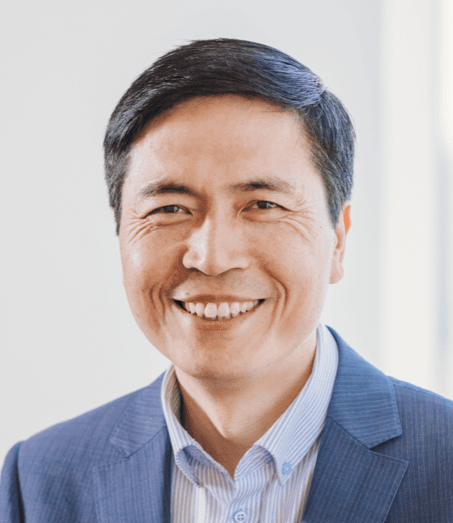 Song-Chun Zhu (朱松纯)合作论文数Institute for Artificial Intelligence, Peking University;Beijing Institute for General Artificial Intelligence;Department of Automation, Tsinghua University9
 Deqian Kong (孔德倩)合作论文数Department of Statistics and Data Science, University of California, Los Angeles8
 Tian Han合作论文数Department of Computer Science, Stevens Institute of Technology8
 Semih Yavuz合作论文数Salesforce7
 Dehong Xu合作论文数Department of Statistics, UCLA;Amazon5
 Hiroaki Hayashi合作论文数Salesforce Research5
 Jianwen Xie (谢建文)合作论文数Akool USA4
 Ruiqi Gao合作论文数Google DeepMind4
 Sirui Xie合作论文数Google DeepMind4
 Linqi (Alex) Zhou合作论文数OpenAI4
 Huan Wang合作论文数Salesforce Research4
 Sountsov Pavel合作论文数3
 Hanze Dong (董瀚澤)合作论文数Salesforce Research3
 Ye Liu合作论文数Salesforce AI Research3Minglu Zhao合作论文数Department of Statistics, University of California Los Angeles3
 Srinivas Vasudevan合作论文数Department of Mathematics, College of Arts and Sciences, University at Buffalo;School of Mathematics, Tata Institute of Fundamental Research3
 Jiacheng Xu (徐嘉诚)合作论文数Salesforce Research3
 Srijan Bansal合作论文数Salesforce Research3
 Rui Zhang合作论文数Department of Computer Science and Engineering, School of Electrical Engineering and Computer Science, College of Engineering, Penn State University3
 Lifu Tu (涂利福)合作论文数Salesforce AI Research;Toyota Technological Institute at Chicago3
 Shafiq Joty合作论文数School of Computer Science and Engineering, Nanyang Technological University;College of Computing and Data Science, Nanyang Technological University;Salesforce AI Research3
 Meghana Moorhty Bhat合作论文数Apple2Jin Qu合作论文数2
 Victoria Lin (林曦)合作论文数Foundational AI Research, Meta2
 Alexander R. Fabbri合作论文数Salesforce2
 Michihiro Yasunaga合作论文数Stanford University2Sungrok Shim合作论文数Yale Univ, Dept Comp Sci, New Haven, CT 06520 USA2Andrew Lizarraga合作论文数Ahmanson Lovelace Brain Mapping Center, Department of Neurology, UCLA.2Akash Gokul合作论文数#N#University of California Berkeley#N#2Heyang Er合作论文数Yale Univ, Dept Comp Sci, New Haven, CT 06520 USA2
 Shelby Heinecke合作论文数Salesforce Res, San Francisco, CA USA2Shreya Dixit合作论文数Yale Univ, Dept Comp Sci, New Haven, CT 06520 USA2Vincent Zhang合作论文数2
 Wojciech Kryscinski合作论文数Avail;Cohere2
 Suyi Li (李苏宜)合作论文数Anhui Provincial Hospital West District2
 Yi Chern Tan合作论文数Cohere2
 Doyen Sahoo合作论文数Salesforce Research Asia2
 Richard Socher合作论文数You.com;AIX Ventures2
 Wei Xiong (熊伟)合作论文数University of Illinois Urbana-Champaign2
 Zuxin Liu合作论文数OpenAI2
 Wenjuan Han (韩文娟)合作论文数School of Computer and Information Technology, Beijing Jiaotong University2Yuhao Huang合作论文数Institute of Artificial Intelligence and Robotics, Xi'an Jiaotong University2
 Dragomir R. Radev合作论文数Language, Information, and Learning Lab, Department of Computer Science, Yale University;Yale Institute for Network Science, Yale University;Wu Tsai Institute for Neuroscience, Yale University2
 Tao Yu (余涛)合作论文数Executable Language Grounding Lab, Department of Computer Science, Faculty of Engineering, The University of Hong Kong;Musketeers Foundation Institute of Data Science, University of Hong Kong2




