We introduce xGen-small, a family of 4B and 9B Transformer decoder models optimized for long-context applications. Our vertically integrated pipeline unites domain-balanced, frequency-aware data curation; multi-stage pre-training with quality annealing and length extension to 128k tokens; and targeted post-training via supervised fine-tuning, preference learning, and online reinforcement learning. xGen-small delivers strong performance across various tasks, especially in math and coding domains, while excelling at long context benchmarks.
We introduce a comprehensive benchmark for conversational memory evaluation containing 75,336 question-answer pairs across diverse categories including user facts, assistant recall, abstention, preferences, temporal changes, and implicit connections. While existing benchmarks have advanced the field, our work addresses fundamental challenges in statistical power, data generation consistency, and evaluation flexibility that limit current memory evaluation frameworks. We examine the relationship between conversational memory and retrieval-augmented generation (RAG). While these systems share fundamental architectural patterns–temporal reasoning, implicit extraction, knowledge updates, and graph representations–memory systems have a unique characteristic: they start from zero and grow progressively with each conversation. This characteristic enables naive approaches that would be impractical for traditional RAG. Consistent with recent findings on long context effectiveness, we observe that simple full-context approaches achieve 70-82
Attention-based models trained on protein sequences have demonstrated incredible success at classification and generation tasks relevant for artificial-intelligence-driven protein design. However, we lack a sufficient understanding of how very large-scale models and data play a role in effective protein model development. We introduce a suite of protein language models, named ProGen2, that are scaled up to 6.4B parameters and trained on different sequence datasets drawn from over a billion proteins from genomic, metagenomic, and immune repertoire databases. ProGen2 models show state-of-the-art performance in capturing the distribution of observed evolutionary sequences, generating novel viable sequences, and predicting protein fitness without additional fine-tuning. As large model sizes and raw numbers of protein sequences continue to become more widely accessible, our results suggest that a growing emphasis needs to be placed on the data distribution provided to a protein sequence model. Our models and code are open sourced for widespread adoption in protein engineering. A record of this paper's Transparent Peer Review process is included in the supplemental information.
Large Language Models (LLMs) have become ubiquitous across various domains, transforming the way we interact with information and conduct research. However, most high-performing LLMs remain confined behind proprietary walls, hindering scientific progress. Most open-source LLMs, on the other hand, are limited in their ability to support longer sequence lengths, which is a key requirement for many tasks that require inference over an input context. To address this, we have trained XGen, a series of 7B parameter models on up to 8K sequence length for up to 1.5T tokens. We have also finetuned the XGen models on public-domain instructional data, creating their instruction-tuned counterparts (XGen-Inst). We open-source our models for both research advancements and commercial applications. Our evaluation on standard benchmarks shows that XGen models achieve comparable or better results when compared with state-of-the-art open-source LLMs. Our targeted evaluation on long sequence modeling tasks shows the benefits of our 8K-sequence models over 2K-sequence open-source LLMs.
Generative models have the ability to synthesize data points drawn from the data distribution, however, not all generated samples are high quality. In this paper, we propose using a combination of coresets selection methods and ``entropic regularization'' to select the highest fidelity samples. We leverage an Energy-Based Model which resembles a variational auto-encoder with an inference and generator model for which the latent prior is complexified by an energy-based model. In a semi-supervised learning scenario, we show that augmenting the labeled data-set, by adding our selected subset of samples, leads to better accuracy improvement rather than using all the synthetic samples.
Program synthesis strives to generate a computer program as a solution to a given problem specification, expressed with input-output examples or natural language descriptions. The prevalence of large language models advances the state-of-the-art for program synthesis, though limited training resources and data impede open access to such models. To democratize this, we train and release a family of large language models up to 16.1B parameters, called CODEGEN, on natural language and programming language data, and open source the training library JAXFORMER. We show the utility of the trained model by demonstrating that it is competitive with the previous state-of-the-art on zero-shot Python code generation on HumanEval. We further investigate the multi-step paradigm for program synthesis, where a single program is factorized into multiple prompts specifying subproblems. To this end, we construct an open benchmark, Multi-Turn Programming Benchmark (MTPB), consisting of 115 diverse problem sets that are factorized into multi-turn prompts. Our analysis on MTPB shows that the same intent provided to CODEGEN in multi-turn fashion significantly improves program synthesis over that provided as a single turn. We make the training library JAXFORMER and model checkpoints available as open source contribution: https://github.com/salesforce/CodeGen.
Sequences generated from pretrained and fine-tuned ProGen2 models. Fitness benchmark data for evaluation of ProGen2 models.
Large language models (LLMs) have demonstrated remarkable abilities in representation learning for program synthesis and understanding tasks. The quality of the learned representations appears to be dictated by the neural scaling laws as a function of the number of model parameters and observations, while imposing upper bounds on the model performance by the amount of available data and compute, which is costly. In this study, we attempt to render the training of LLMs for program synthesis more efficient by unifying four key components: (1) model architectures, (2) learning methods, (3) infill sampling, and, (4) data distributions. Specifically, for the model architecture, we attempt to unify encoder and decoder-based models into a single prefix-LM. For learning methods, (i) causal language modeling, (ii) span corruption, (iii) infilling are unified into a simple learning algorithm. For infill sampling, we explore the claim of a "free lunch" hypothesis. For data distributions, the effect of a mixture distribution and multi-epoch training of programming and natural languages on model performance is explored. We conduct a comprehensive series of empirical experiments on 1B LLMs, for which failures and successes of this exploration are distilled into five lessons. We will provide a final recipe for training and release CodeGen2 models in size 1B, 3.7B, 7B, and, 16B parameters, along with the training framework as open-source: https://github.com/salesforce/CodeGen.
Text summarization aims to condense long documents and retain key information. Critical to the success of a summarization model is the faithful inference of latent representations of words or tokens in the source documents. Most recent models infer the latent representations with a transformer encoder, which is purely bottom-up and thus does not capture long-distance context well. Also, self-attention-based models face the challenge of quadratic complexity with respect to sequence length. We propose a method to improve summarization models on these two aspects. Our method assumes a hierarchical latent structure of a document where the top-level captures the long range dependency at a coarser time scale and the bottom token level preserves the details. Critically, our method enables token representations to be updated in both a bottom-up and top-down manner. In the bottom-up pass, token representations are inferred with local self-attention to leverage its efficiency. Top-down correction is then applied to allow tokens to capture global context. We demonstrate the effectiveness on a diverse set of summarization datasets, including narrative, conversational, scientific documents and news. Our model achieves state-of-the-art performance on a wide range of long document summarization benchmarks, compared to recent efficient transformers. We show that our model can summarize an entire book and achieve competitive performance using 0.27% parameters and much less training data, compared to a recent GPT-3-based model. These results indicate the general applicability and benefits of the framework.
Learning energy-based model (EBM) requires MCMC sampling of the learned model as an inner loop of the learning algorithm. However, MCMC sampling of EBMs in high-dimensional data space is generally not mixing, because the energy function, which is usually parametrized by a deep network, is highly multi-modal in the data space. This is a serious handicap for both theory and practice of EBMs. In this paper, we propose to learn an EBM with a flow-based model (or in general a latent variable model) serving as a backbone, so that the EBM is a correction or an exponential tilting of the flow-based model. We show that the model has a particularly simple form in the space of the latent variables of the backbone model, and MCMC sampling of the EBM in the latent space mixes well and traverses modes in the data space. This enables proper sampling and learning of EBMs.
Learning energy-based model (EBM) requires MCMC sampling of the learned model as an inner loop of the learning algorithm. However, MCMC sampling of EBMs in high-dimensional data space is generally not mixing, because the energy function, which is usually parametrized by deep network, is highly multi-modal in the data space. This is a serious handicap for both theory and practice of EBMs. In this paper, we propose to learn EBM with a flow-based model (or in general latent variable model) serving as a backbone, so that the EBM is a correction or an exponential tilting of the flow-based model. We show that the model has a particularly simple form in the space of the latent variables of the generative model, and MCMC sampling of the EBM in the latent space mixes well and traverses modes in the data space. This enables proper sampling and learning of EBMs.
This work proposes a method for using any generator network as the foundation of an Energy-Based Model (EBM). Our formulation posits that observed images are the sum of unobserved latent variables passed through the generator network and a residual random variable that spans the gap between the generator output and the image manifold. One can then define an EBM that includes the generator as part of its forward pass, which we call the Hat EBM. The model can be trained without inferring the latent variables of the observed data or calculating the generator Jacobian determinant. This enables explicit probabilistic modeling of the output distribution of any type of generator network. Experiments show strong performance of the proposed method on (1) unconditional ImageNet synthesis at 128x128 resolution, (2) refining the output of existing generators, and (3) learning EBMs that incorporate non-probabilistic generators. Code and pretrained models to reproduce our results are available at https://github.com/point0bar1/hat-ebm.
As machine learning tools progress, the inevitable question arises: How can machine learning help us write better code? With significant progress being achieved in natural language processing with models like GPT-3 and Bert, the applications of natural language processing techniques to code are starting to be explored. Most of the research has been focused on automatic program repair (APR), and while the results on synthetic or highly filtered datasets are promising, such models are hard to apply in real-world scenarios because of inadequate bug localization. We propose BigIssue: a benchmark for realistic bug localization. The goal of the benchmark is two-fold. We provide (1) a general benchmark with a diversity of real and synthetic Java bugs and (2) a motivation to improve bug localization capabilities of models through attention to the full repository context. With the introduction of BigIssue, we hope to advance the state of the art in bug localization, in turn improving APR performance and increasing its applicability to the modern development cycle.
Program synthesis strives to generate a computer program as a solution to a given problem specification. We propose a conversational program synthesis approach via large language models, which addresses the challenges of searching over a vast program space and user intent specification faced in prior approaches. Our new approach casts the process of writing a specification and program as a multi-turn conversation between a user and a system. It treats program synthesis as a sequence prediction problem, in which the specification is expressed in natural language and the desired program is conditionally sampled. We train a family of large language models, called C ODE G EN , on natural language and programming language data. With weak supervision in the data and the scaling up of data size and model size, conversational capacities emerge from the simple autoregressive language modeling. To study the model behavior on conversational program synthesis, we develop a multi-turn programming benchmark (MTPB), where solving each problem requires multi-step synthesis via multi-turn conversation between the user and the model. Our findings show the emergence of conversational capabilities and the effectiveness of the proposed conversational program synthesis paradigm. In addition, our model C ODE G EN (with up to 16B parameters trained on TPU-v4) outperforms OpenAI’s Codex on the HumanEval benchmark. We make the training library JAX FORMER including checkpoints available as open source contribution: https://github.com/salesforce/CodeGen . to achieve program synthesis: (1) the vastness of the search space, and (2) the difficulty of properly specifying user intent. In an attempt to address these challenges, we propose and train C ODE G EN , an interactive code generation model for program synthesis. In addition, we develop a new multi-turn programming benchmark to investigate the programming synthesis capacities of C ODE G EN . enhances as a function of the model size and data size. It suggests that the capacity of conversational program synthesis scales as a function of the model size and data size. The models are simply trained with an autoregressive language modeling objective. While the model and the data scale up, conversational capacity emerges.
Latent variable models for text, when trained successfully, accurately model the data distribution and capture global semantic and syntactic features of sentences. The prominent approach to train such models is variational autoencoders (VAE). It is nevertheless challenging to train and often results in a trivial local optimum where the latent variable is ignored and its posterior collapses into the prior, an issue known as posterior collapse. Various techniques have been proposed to mitigate this issue. Most of them focus on improving the inference model to yield latent codes of higher quality. The present work proposes a short run dynamics for inference. It is initialized from the prior distribution of the latent variable and then runs a small number (e.g., 20) of Langevin dynamics steps guided by its posterior distribution. The major advantage of our method is that it does not require a separate inference model or assume simple geometry of the posterior distribution, thus rendering an automatic, natural and flexible inference engine. We show that the models trained with short run dynamics more accurately model the data, compared to strong language model and VAE baselines, and exhibit no sign of posterior collapse. Analyses of the latent space show that interpolation in the latent space is able to generate coherent sentences with smooth transition and demonstrate improved classification over strong baselines with latent features from unsupervised pretraining. These results together expose a well-structured latent space of our generative model.
We introduce Self-CRItic Pretraining Transformers (SCRIPT) for representation learning of text. The popular masked language modeling (MLM) pretraining methods like BERT replace some tokens with [MASK] and an encoder is trained to recover them, while ELECTRA trains a discriminator to detect replaced tokens proposed by a generator. In contrast, we train a language model as in MLM and further derive a discriminator or critic on top of the encoder without using any additional parameters. That is, the model itself is a critic. SCRIPT combines MLM training and discriminative training for learning rich representations and compute- and sample-efficiency. We demonstrate improved sample-efficiency in pretraining and enhanced representations evidenced by improved downstream task performance on GLUE and SQuAD over strong baselines. Also, the self-critic scores can be directly used as pseudo-log-likelihood for efficient scoring.
This paper studies the fundamental problem of learning deep generative models that consist of multiple layers of latent variables organized in top-down architectures. Such models have high expressivity and allow for learning hierarchical representations. Learning such a generative model requires inferring the latent variables for each training example based on the posterior distribution of these latent variables. The inference typically requires Markov chain Monte Caro (MCMC) that can be time consuming. In this paper, we propose to use noise initialized non-persistent short run MCMC, such as nite step Langevin dynamics initialized from the prior distribution of the latent variables, as an approximate inference engine, where the step size of the Langevin dynamics is variationally optimized by minimizing the Kullback-Leibler divergence between the distribution produced by the short run MCMC and the posterior distribution. Our experiments show that the proposed method outperforms variational auto-encoder (VAE) in terms of reconstruction error and synthesis quality. The advantage of the proposed method is that it is simple and automatic without the need to design an inference model.
This study investigates the effects of Markov chain Monte Carlo (MCMC) sampling in unsupervised Maximum Likelihood (ML) learning. Our attention is restricted to the family of unnormalized probability densities for which the negative log density (or energy function) is a ConvNet. We find that many of the techniques used to stabilize training in previous studies are not necessary. ML learning with a ConvNet potential requires only a few hyper-parameters and no regularization. Using this minimal framework, we identify a variety of ML learning outcomes that depend solely on the implementation of MCMC sampling.On one hand, we show that it is easy to train an energy-based model which can sample realistic images with short-run Langevin. ML can be effective and stable even when MCMC samples have much higher energy than true steady-state samples throughout training. Based on this insight, we introduce an ML method with purely noise-initialized MCMC, high-quality short-run synthesis, and the same budget as ML with informative MCMC initialization such as CD or PCD. Unlike previous models, our energy model can obtain realistic high-diversity samples from a noise signal after training.On the other hand, ConvNet potentials learned with non-convergent MCMC do not have a valid steady-state and cannot be considered approximate unnormalized densities of the training data because long-run MCMC samples differ greatly from observed images. We show that it is much harder to train a ConvNet potential to learn a steady-state over realistic images. To our knowledge, long-run MCMC samples of all previous models lose the realism of short-run samples. With correct tuning of Langevin noise, we train the first ConvNet potentials for which long-run and steady-state MCMC samples are realistic images.
Open-domain dialogue generation has gained increasing attention in Natural Language Processing. Its evaluation requires a holistic means. Human ratings are deemed as the gold standard. As human evaluation is inefficient and costly, an automated substitute is highly desirable. In this paper, we propose holistic evaluation metrics that capture different aspects of open-domain dialogues. Our metrics consist of (1) GPT-2 based context coherence between sentences in a dialogue, (2) GPT-2 based fluency in phrasing, (3) n-gram based diversity in responses to augmented queries, and (4) textual-entailment-inference based logical self-consistency. The empirical validity of our metrics is demonstrated by strong correlations with human judgments. We open source the code and relevant materials.
This paper studies the fundamental problem of learning deep generative models that consist of multiple layers of latent variables organized in top-down architectures. Such models have high expressivity and allow for learning hierarchical representations. Learning such a generative model requires inferring the latent variables for each training example based on the posterior distribution of these latent variables. The inference typically requires Markov chain Monte Caro (MCMC) that can be time consuming. In this paper, we propose to use noise initialized non-persistent short run MCMC, such as finite step Langevin dynamics initialized from the prior distribution of the latent variables, as an approximate inference engine, where the step size of the Langevin dynamics is variationally optimized by minimizing the Kullback-Leibler divergence between the distribution produced by the short run MCMC and the posterior distribution. Our experiments show that the proposed method outperforms variational auto-encoder (VAE) in terms of reconstruction error and synthesis quality. The advantage of the proposed method is that it is simple and automatic without the need to design an inference model.
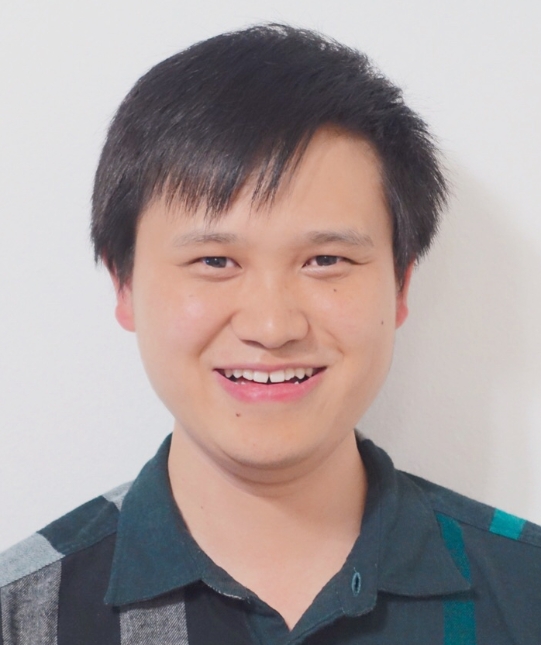 Bo Pang合作论文数Salesforce Research;Department of Statistics, University of California, Los Angeles19
 Ying Nian Wu合作论文数Department of Statistics, University of California, Los Angeles15
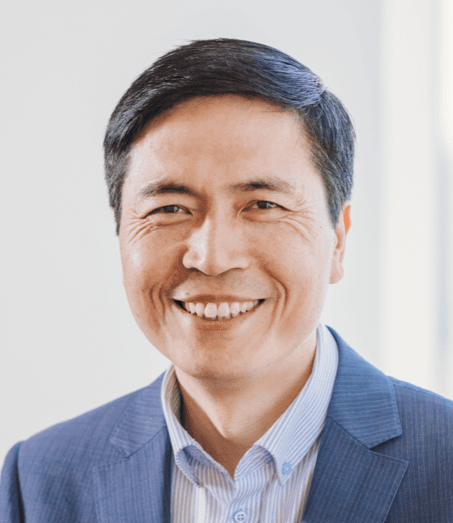 Song-Chun Zhu (朱松纯)合作论文数Institute for Artificial Intelligence, Peking University;Beijing Institute for General Artificial Intelligence;Department of Automation, Tsinghua University14
 Caiming Xiong合作论文数Stealth Mode Startup Company9
 Tian Han合作论文数Department of Computer Science, Stevens Institute of Technology7
 Yingbo Zhou合作论文数Salesforce7
 Silvio Savarese合作论文数Salesforce;Institute for Human-Centered Artificial Intelligence, Stanford University6
 Mitch Hill合作论文数InnoPeak Technology5
 Ruiqi Gao合作论文数Google DeepMind5
 Hiroaki Hayashi合作论文数Salesforce Research4
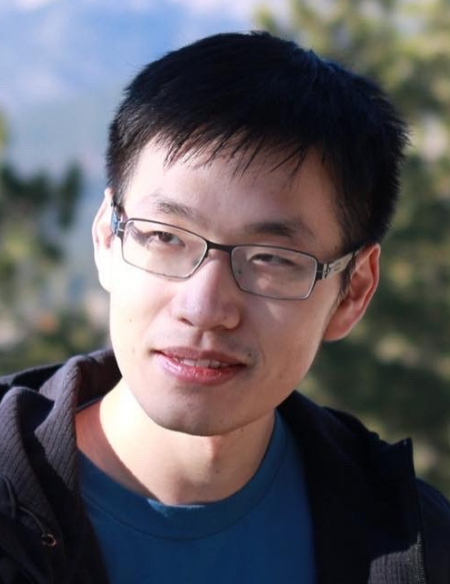 Linqi (Alex) Zhou合作论文数OpenAI4
 Sountsov Pavel合作论文数3
 Srinivas Vasudevan合作论文数Department of Mathematics, College of Arts and Sciences, University at Buffalo;School of Mathematics, Tata Institute of Fundamental Research3
 Lifu Tu (涂利福)合作论文数Salesforce AI Research;Toyota Technological Institute at Chicago3Heasoo Hwang合作论文数2Eli N Weinstein合作论文数2
 Jeffrey A Ruffolo合作论文数Univ Missouri, Dept EECS, Columbia, MO 65211 USA2
 Wojciech Kryscinski合作论文数Avail;Cohere2
 Jianwen Xie (谢建文)合作论文数Akool USA2
 Berthold Reinwald合作论文数IBM Almaden Research Center2
 Huan Wang合作论文数Salesforce Research2
 Ali Madani合作论文数Profluent Bio2
 Volker Markl合作论文数Berlin Institute for the Foundations of Learning and Data, Technische Universität Berlin;Intelligent Analytics for Massive Data Research Department, German Research Center for Artificial Intelligence2
 Martin Oberhofer合作论文数2Stephan Ewen合作论文数Technische Universität Berlin2
 Daniel Warneke合作论文数Technische Universität Berlin2
 Odej Kao合作论文数Faculty of Electrical Engineering and Computer Science, Department of Telecommunication systems, Technical University of Berlin;National Research Network2
 Max Heimel合作论文数Technische Universität Berlin2
 Fabian Hueske合作论文数Technische Universität Berlin2
 Alexander Alexandrov合作论文数Materialize2
 Yannis Sismanis合作论文数Google2Andrey Balmin合作论文数Exploratory Database Systems,
IBM Almaden Research Center2Frank van Hams合作论文数1Jun Rao合作论文数1
Yannis Sismanis合作论文数Google2Andrey Balmin合作论文数Exploratory Database Systems,
IBM Almaden Research Center2Frank van Hams合作论文数1Jun Rao合作论文数1 Meghana Moorhty Bhat合作论文数Apple1
 Tian Xie合作论文数Character.AI1Jin Qu合作论文数1
 Jiali Cui合作论文数Department of Computer Science, Stevens Institute of Technology1
 Yu Yang (杨雨)合作论文数Computer Science Department, Samueli School of Engineering, University of California, Los Angeles;Meta1Paul Kassianik合作论文数1
 Alexander R. Fabbri合作论文数Salesforce1
 Ye Liu合作论文数Salesforce AI Research1
 Prafulla Kumar Choubey合作论文数Salesforce AI Research1Lior Deutsch合作论文数1
 Lidiya Murakhovs'ka合作论文数Salesforce1Akash Gokul合作论文数#N#University of California Berkeley#N#1
 Pasha Khosravi合作论文数University of California , Los Angeles1Yifei Xu合作论文数Weride Inc.1
 Ben Krause合作论文数Psyfy1




