Measurements from particle timing detectors are often affected by the time walk effect caused by statistical fluctuations in the charge deposited by passing particles. The constant fraction discriminator (CFD) algorithm is frequently used to mitigate this effect both in test setups and in running experiments, such as the CMS-PPS system at the CERN's LHC. The CFD is simple and effective but does not leverage all voltage samples in a time series. Its performance could be enhanced with deep neural networks, which are commonly used for time series analysis, including computing the particle arrival time. We evaluated various neural network architectures using data acquired at the test beam facility in the DESY-II synchrotron, where a precise MCP (MicroChannel Plate) detector was installed in addition to PPS diamond timing detectors. MCP measurements were used as a reference to train the networks and compare the results with the standard CFD method. Ultimately, we improved the timing precision by 8% to 23%, depending on the detector's readout channel. The best results were obtained using a UNet-based model, which outperformed classical convolutional networks and the multilayer perceptron.
The TOTEM experiment at the LHC has produced a large set of measurements on diffractive processes and pp cross sections. A new detector, called nT2, has been designed to measure the inelastic scattering rate during the LHC special run of 2023. Due to the high radiation environment, the detector had to be installed in 10-20 minutes at most, then commissioned and operated after only few days. The detector, based on plastic scintillators read out by matrices of SiPMs, was designed with such constraints in mind. The front-end, DAQ and control electronics was developed with a fault tolerant architecture, moving as many functionalities as possible on a radiation tolerant SoC FPGA, hosting an integrated ARM controller. Here we will describe the nT2 detector and its read-out and control electronics. The detector was successfully operated during the special run: we will report the preliminary results on the detector performance.
Using proton-proton collision data corresponding to an integrated luminosity of 140 fb$^{-1}$ collected by the CMS experiment at $\sqrt{s}$ = 13 TeV, the $\Lambda_\text{b}^0$ $\to$ J/$\psi\Xi^-$K$^+$ decay is observed for the first time, with a statistical significance exceeding 5 standard deviations. The relative branching fraction, with respect to the $\Lambda_\text{b}^0$ $\to$ $\psi$(2S)$\Lambda$ decay, is measured to be $\mathcal{B}$($\Lambda_\text{b}^0$ $\to$ J/$\psi\Xi^-$K$^+$)/$\mathcal{B}$( $\Lambda_\text{b}^0$ $\to$ $\psi$(2S)$\Lambda$) = [3.38 $\pm$ 1.02 $\pm$ 0.61 $\pm$ 0.03]%, where the first uncertainty is statistical, the second is systematic, and the third is related to the uncertainties in $\mathcal{B}$($\psi$(2S) $\to$ J/$\psi\pi^+\pi^-$) and $\mathcal{B}$($\Xi^-$ $\to$ $\Lambda\pi^-$).
Researchers at INFN Pisa are currently developing a detector based on MICROMEGAS technology, sensitive to atoms with a kinetic energy in the 1-100 keV range and operating under low-pressure conditions (100 hPa or less). For the detector test, an Ion Beam Facility (IBF) was set up at the INFN laboratory in Pisa in order to have a controlled test bench capable of guaranteeing the stability and repeatability of the measurements. The group effort dedicated to the development of the IBF led to detailed characterization measurements of the MICROMEGAS performance using H(2 )and He ion beams.
The Extreme Energy Events (EEE) Project, a joint project of the Centro Fermi (Museo Storico della Fisica e Centro Studi e Ricerche "E. Fermi") and INFN, has a dual purpose: a scientific research program on cosmic rays at ground level and an intense outreach and educational program. The project consists in a network of about 60 tracking detectors, called telescopes, mostly hosted in Italian High Schools. Each telescope is made by three Multigap Resistive Plate Chambers, operated so far with a gas mixture composed by 98% C2H2F4 and 2% SF6. Due to its high Global Warming Potential, a few years ago the EEE collaboration has started an extensive R&D on alternative mixtures environmentally sustainable and compatible with the current experimental setup and operational environment. Among other gas mixtures, the one with helium and hydrofluoroolefin R1234ze gave the best result during the preliminary tests performed with two of the network telescopes. The detector has proved to reach performance levels comparable to those obtained with previous mixtures, without any modification of the hardware. We will discuss the first results obtained with the new mixture, tested with different percentages of the two components.
The Extreme Energy Events (EEE) Collaboration is fully involved in an ecological transition. The use of the standard gas mixture, C2H2F4 + SF6, has stopped in favor of an alternative green mixture based on C3H2F4 with the addition of He or CO2. The choise of these new mixtures is motivated by the significant lower Global Warming Potential (GWP) to reduce the emission of gases potentially contributing to the greenhouse effect. The EEE experiment consists of 61 muon telescopes based on Multigap Resistive Plate Chambers (MRPCs), each telescope composed of 3 chambers filled with gas. Several EEE detectors are today completely fluxed with the new ecological mixture. This contribution will report recent results about the telescope performance obtained from studies with the eco-friendly alternative mixture carried out in the last years.
A search is reported for charge-parity D$^0$ $\to$ K$^0_\mathrm{S}$K$^0_\mathrm{S}$ $CP$ violation in D$^0$ $\to$ K$^0_\mathrm{S}$K$^0_\mathrm{S}$ decays, using data collected in proton-proton collisions at $\sqrt{s}$ = 13 TeV recorded by the CMS experiment in 2018. The analysis uses a dedicated data set that corresponds to an integrated luminosity of 41.6 fb$^{-1}$, which consists of about 10 billion events containing a pair of \b hadrons, nearly all of which decay to charm hadrons. The flavor of the neutral D meson is determined by the pion charge in the reconstructed decays D$^{*+}$ $\to$ D$^0\pi^+$ and D$^{*-}$ $\to$ D$^0\pi^-$. The D$^0$ $\to$ K$^0_\mathrm{S}$K$^0_\mathrm{S}$ $CP$ asymmetry in D$^0$ $\to$ K$^0_\mathrm{S}$K$^0_\mathrm{S}$ is measured to be $A_{CP}$( K$^0_\mathrm{S}$K$^0_\mathrm{S}$) = (6.2 $\pm$ 3.0 $\pm$ 0.2 $\pm$ 0.8)%, where the three uncertainties represent the statistical uncertainty, the systematic uncertainty, and the uncertainty in the measurement of the D$^0$ $\to$ K$^0_\mathrm{S}$K$^0_\mathrm{S}$ $CP$ asymmetry in the D$^0$ $\to$ K$^0_\mathrm{S}\pi^+\pi^-$ decay. This is the first D$^0$ $\to$ K$^0_\mathrm{S}$K$^0_\mathrm{S}$ $CP$ asymmetry measurement by CMS in the charm sector as well as the first to utilize a fully hadronic final state.
The Extreme Energy Events (EEE) Project was born to include scientific, outreach and educational purposes. It is designed to detect and study high energy cosmic rays through the detection of the extensive air shower's muon component through an array of muon telescopes based on Multigap Resistive Plate Chambers (MRPC) GPS synchronized. The telescopes are organized in local clusters and single telescope stations distributed all over the Italian territory and installed mainly in high schools buildings. These unconventional working sites offer young learners the opportunity to get in touch with the world of high energy physics research. Every year hundreds of students and teachers are involved in the activities. The EEE Collaboration regularly schedules on-line activities: monthly meetings, masterclasses and seminars. Activities focusing on the upgrade phase of the EEE Project have been carried out in the last two years, with enormous success and participation. This contribution will present a general overview of the EEE outreach activities and the future plan.
The need for reducing the emission of gases, potentially contributing to the greenhouse effect and climate change, has impacted many fields, including scientific research. The Extreme Energy Event (EEE) collaboration started, already several years ago, a series of tests aiming at finding a more eco-friendly replacement for the gases used in the Multigap Resistive Plate Chambers (MRPCs) of its network. These tests identified a promising binary gas mixture, and data taking has begun with a subset of the telescopes of the EEE network, making EEE the first experiment in the world completely implemented with MRPCs and operating with an eco-friendly gas mixture. Here the results of the tests and a preliminary comparison of the telescope performance measured with the standard (non eco-friendly) and the new eco-friendly gas mixtures are presented and discussed.
AbstractAfter its successful campaign of measurements beyond the Polar Arctic Circle, the PolarquEEEst experiment measured the cosmic charged particle rate at sea level in a latitude interval between 35$$^{\circ }$$ ∘ N and 82$$^{\circ }$$ ∘ N. In this paper, these measurements are described and the corresponding results are discussed.
The Extreme Energy Events (EEE) experiment, a joint project of the Centro Fermi and INFN Italian national research institutes, has a dual purpose: a scientific research program for measurements of the cosmic rays flux at ground level and an intense outreach and educational program with an active contribution of students and teachers in the construction and operation of the detectors in High Schools. The network counts 60 tracking detectors, each made by three Multigap Resistive Plate Chambers (MRPC), operated so far with a gas mixture composed by 98% C2H2F4 and 2% SF6. Given its high Global Warming Potential (GWP), the collaboration, since few years, started a R&D on alternative mixtures environmentally sustainable. Latest results on a C3H2F4 + He eco-friendly mixture are here presented.
The Extreme Energy Events (EEE) project, mainly based on a network of cosmic ray telescopes, built by high school students at CERN and taking data for more than 15 years, has recently employed additional scintillation detectors for several measurement campaigns and long-term investigations of the secondary cosmic rays over a large range of northern latitudes. Muon measurements at the sea level were first performed on a sailboat from 66° to 82° N, and extended by the PolarquEEEst expedition by car, covering an overall latitude range from 35° to 82°N. Since 2019, three additional detectors, similar to those used in these expeditions, were permanently installed at Ny Alesund (79°N, Svalbard islands). Besides the prolonged monitoring of cosmic ray activity at a such northern latitudes, they observed the Rayleigh-Lamb waves generated by the 2022 Hunga-Tonga volcanic eruption. Results from the last three years of data taking will be presented and discussed.
The Extreme Energy Events (EEE) 'telescope' is made by 3 Multigap Resistive Plate Chambers (MRPC), each with an active area of 158x82 cm(2) in size. Each detector is part of a large network of about sixty telescopes spread over the Italian territory. Due to the good tracking capabilities (100 ps time resolution and cm(2) spatial resolution) the EEE telescope can be used also as test station for large area detectors. The link between the EEE track and signals from the detector under test can be obtained by implementing a streaming DAQ with a common time reference between the two systems given by the GPS signal. The installation and first results of the cosmic muon test facility with the EEE MRPC telescope based on the low-cost, streaming-compatible 12 channels, 250MHz, 14 bits digitizer (INFN-WaveBoard or WB) developed by the JLAB12 Collaboration, is presented.
The CMS Precision Proton Spectrometer (PPS), operating at the LHC, makes use of timing detectors based on planar single crystal CVD diamonds to measure the time of arrival of protons scattered in the very forward region. The time information is used to reconstruct the longitudinal position of the proton interaction vertex and to suppress pile-up background. The timing system, used during the LHC Run 2, has been upgraded for the Run 3, with the goal of reaching an ultimate timing resolution of better than 30 ps for protons in the TeV energy range. Here an overview of the PPS timing system is provided and the detector performance in Run 2 are briefly reported. The Run 3 upgrade will be outlined.
Abstract The TOTEM collaboration at the CERN LHC has measured the differential cross-section of elastic proton–proton scattering at $$\sqrt{s} = 8\,\mathrm{TeV}$$ s = 8 TeV in the squared four-momentum transfer range $$0.2\,\mathrm{GeV^{2}}< |t| < 1.9\,\mathrm{GeV^{2}}$$ 0.2 GeV 2 < | t | < 1.9 GeV 2 . This interval includes the structure with a diffractive minimum (“dip”) and a secondary maximum (“bump”) that has also been observed at all other LHC energies, where measurements were made. A detailed characterisation of this structure for $$\sqrt{s} = 8\,\mathrm{TeV}$$ s = 8 TeV yields the positions, $$|t|_{\mathrm{dip}} = (0.521 \pm 0.007)\,\mathrm{GeV^2}$$ | t | dip = ( 0.521 ± 0.007 ) GeV 2 and $$|t|_{\mathrm{bump}} = (0.695 \pm 0.026)\,\mathrm{GeV^2}$$ | t | bump = ( 0.695 ± 0.026 ) GeV 2 , as well as the cross-section values, $$\left. {\mathrm{d}\sigma /\mathrm{d}t}\right| _{\mathrm{dip}} = (15.1 \pm 2.5)\,\mathrm{{\mu b/GeV^2}}$$ d σ / d t dip = ( 15.1 ± 2.5 ) μ b / GeV 2 and $$\left. {\mathrm{d}\sigma /\mathrm{d}t}\right| _{\mathrm{bump}} = (29.7 \pm 1.8)\,\mathrm{{\mu b/GeV^2}}$$ d σ / d t bump = ( 29.7 ± 1.8 ) μ b / GeV 2 , for the dip and the bump, respectively.
Elevated levels of glutathione S-transferases (GSTs) play a major role as a mechanism of resistance to insecticides and acaricides in resistant pest insects and mites, respectively. Such compounds are either detoxicated directly via phase I metabolism or detoxicated by phase II metabolism of metabolites as formed by microsomal monooxygenases. Here we used monochlorobimane (MCB) as an artificial substrate and glutathione to determine total GST activity in equivalents of single pest insects and spider mites in a sensitive 96-well plate-based assay system by measuring the enzymatic conversion of MCB to its fluorescent bimane-glutathione adduct. The differentiation by their GST activity between several strains of the two-spotted spider mite, Tetranychus urticae (Acari: Tetranychidae), with different degrees of resistance to numerous acaricides was more sensitive with MCB compared to the commonly used substrate 1-chloro-2,4-dinitrobenzene (CDNB). Compared to an acaricide-susceptible reference strain, one field population of T. urticae showed a more than 10-fold higher GST activity measured with MCB, in contrast to a less than 2-fold higher activity when CDNB was used. Furthermore, we showed that GST activity can be sensitively assessed with MCB in homogenates of pest insects such as Heliothis virescens, Spodoptera frugiperda (Lepidoptera: Noctuidae), Plutella xylostella (Lepidoptera: Yponomeutidae), and Myzus persicae (Hemiptera: Aphididae).
The Extreme Energy Events (EEE) experiment consists in a network of cosmic muon tracker telescopes, each made of three Multi-gap Resistive Plate Chambers (MRPC), able to precisely measure the absolute muon crossing time and the muon integrated angular flux at the ground level. To investigate the MRPC telescope response and performance, a simulation tool was developed in GEMC, software package based on GEANT4 libraries. The framework was validated by comparing simulations with the EEE experimental data. Detailed description of telescope response is fundamental to carry on the physics program of the EEE project, and it could open other research avenues, such as using the telescope in combination with other detectors to perform a (muon) tomography of material surrounding the telescope. In this paper, the EEE simulation framework will be presented reporting results and discussing further applications.
Using a data sample of $$\sqrt{s}=13\,\text {TeV}$$ proton-proton collisions collected by the CMS experiment at the LHC in 2017 and 2018 with an integrated luminosity of $$103\text {~fb}^{-1}$$ , the $$\text {B}^{0}_{\mathrm{s}} \rightarrow \uppsi (\text {2S})\text {K}_\mathrm{S}^{0}$$ and $$\text {B}^{0} \rightarrow \uppsi (\text {2S})\text {K}_\mathrm{S}^{0} \uppi ^+\uppi ^-$$ decays are observed with significances exceeding 5 standard deviations. The resulting branching fraction ratios, measured for the first time, correspond to $${\mathcal {B}}(\text {B}^{0}_{\mathrm{s}} \rightarrow \uppsi (\text {2S})K_\mathrm{S}^{0})/{\mathcal {B}}(\text {B}^{0}\rightarrow \uppsi (\text {2S})K_\mathrm{S}^{0}) = (3.33 \pm 0.69 (\text {stat})\, \pm 0.11\,(\text {syst}) \pm 0.34\,(f_{\mathrm{s}}/f_{\mathrm{d}})) \times 10^{-2}$$ and $${\mathcal {B}}(\text {B}^{0} \rightarrow \uppsi (\text {2S})\text {K}_\mathrm{S}^{0} \uppi ^{+} \uppi ^{-})/ {\mathcal {B}}(\text {B}^{0} \rightarrow \uppsi (\text {2S})\text {K}^{0}_{\mathrm{S}}) = 0.480 \pm 0.013\,(\text {stat}) \pm 0.032\,(\text {syst})$$ , where the last uncertainty in the first ratio is related to the uncertainty in the ratio of production cross sections of $$\hbox {B}^{0}_{\mathrm{s}}$$ and $$\hbox {B}^{0}$$ mesons, $$f_{\mathrm{s}}/f_{\mathrm{d}}$$ .
The whole Extreme Energy Events (EEE) array is composed of 61 telescopes installed in Italian High Schools, built and operated by students and teachers, constantly supervised by researchers. The muon telescope of the EEE Project is made by 3 Multigap Resistive Plate Chambers (MRPC). The unconventional working sites are a unique test field for checking the robustness and the low-ageing features of the MRPC technology for particle tracking and timing purposes. The MRPCs are fluxed with a standard mixture (98% C 2 H 2 F 4 - 2% SF 6 ) of greenhouse gases (GHG) phasing out of production. The EEE Collaboration is currently studying alternative mixtures environmentally and economically sustainable. The EEE Collaboration actions to reduce the Global Warming Potential (GWP) in the MRPC array of the EEE experiment are progressing.
During the summer of 2018 the PolarQuest 2018 ship expedition cruised to the North Pole region. One of the four experiments installed on the boat was PolarquEEEst, a cosmic ray detector developed within the Extreme Energy Events project. The PolarquEEEst purpose is to measure the cosmic ray flux at sea level and at extreme latitudes in a very poorly explored region. The POLA-01 detector, designed to fit the strong requirements for an on-board installation, is composed of two planes (four tiles each) of scintillators. Two similar detectors POLA-02 and POLA-03 were also installed in fixed locations, in Norway and Italy respectively, to be used as a reference. The high stability of the POLA-01 detector in the whole period allowed to collect data from 66 degrees N to 82 degrees N latitudes and to look for variations on the cosmic ray flux when moving towards the North Pole, using POLA-02 and POLA-03 measurements to remove time-fluctuations affecting the flux. The first results collected during the expedition will be reported. The PolarquEEEst mission continued its trip in Italy to perform measurement down to 35 degrees N with POLA-01, which has been recently installed with POLA-03 and the newely built POLA-04 in the Svalbard islands to collect data for a long period.
 A Scribano合作论文数100
 Nicola Turini合作论文数Dipartimento di Scienze Fisiche, della Terra e dell'Ambiente, Università degli Studi di Siena;CERN65Marcello Abbrescia合作论文数INFN Sezione di Bari, Bari, Italy64
 Frigyes Nemes合作论文数Eszterhazy Karoly University58
 Nicola Minafra合作论文数Dipartimento Interateneo di Fisica di Bari, INFN Sezione di Bari58G. Latino合作论文数INFN Sezione di Firenze, Università di Firenze56
 Walter Snoeys合作论文数University of Wuppertal;D-42097 Wuppertal;University of Wuppertal56
 Francisco Garcia合作论文数55
 Paoletti Riccardo合作论文数Dipartimento Di Scienze Fisiche, Della Terra E Dell’ambiente, Universita di Siena54
 Lucia Votano合作论文数CERN Geneva53
 Marco Bozzo合作论文数53
 Marco Panareo合作论文数Dipartimento di Fisica dell'Università e Sezione INFN, Lecce, Italy52
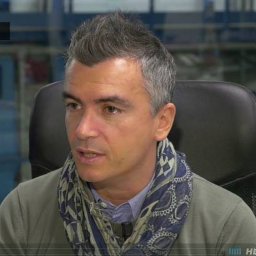 Marco Selvi合作论文数University of Bologna52
 M. Garbini合作论文数52G. Sartorelli合作论文数51Mario Deile合作论文数51J. Baechler合作论文数51s giani合作论文数51Mauro Taiuti合作论文数51Kenneth Österberg合作论文数51
 Ivan Gnesi合作论文数Dipartimento di Fisica;Amedeo Avogadro;University of Torino51M.C.S. Williams合作论文数51Jaromir Kaspar合作论文数Department of Physics, University of Washington51
 Paola La Rocca合作论文数Department of Physics and Astronomy "Ettore Majorana", University of Catania51Leszek Grzanka合作论文数CERN51
 Eugenio Scapparone合作论文数Istituto Nazionale di Fisica Nucleare;Università degli Studi di Bologna51
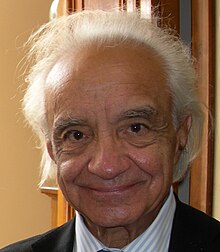 Antonino Zichichi合作论文数University of Bologna50
 Mate Csanad合作论文数Faculty of Natural Sciences, Eötvös Loránd University;Department of Atomic Physics, Eötvös Loránd University50
 Francesco Riggi合作论文数Department of Physics and Astronomy "Ettore Majorana", University of Catania50E. Robutti合作论文数50C. Avanzini合作论文数50Rinaldo Baldini Ferroli合作论文数Laboratori Nazionali di Frascati, Istituto Nazionale di Fisica Nucleare50Daniele De Gruttola合作论文数49
 Gianluca Gemme合作论文数Istituto Nazionale di Fisica Nucleare49F. Ferro合作论文数49V. Avati合作论文数48L. Perasso合作论文数48
 Salvatore De Pasquale合作论文数Dipartimento di Fisica "E.R.Caianiello", Università degli Studi di Salerno;Istituto Nazionale di Fisica Nucleare;CERN48
 F. Nozzoli合作论文数47Stefano Grazzi合作论文数47G. Maron合作论文数47
 Maria Cristina Vistoli合作论文数46Giacomo Terreni合作论文数Dipartimento di Informatica, Universita di Pisa46
 Gueorgui Antchev合作论文数46
 Maria Paola Panetta合作论文数45
 Despina Hatzifotiadou合作论文数CERN45
 Luca Baldini合作论文数Deaprtment of Physics Enrico Fermi, Università di Pisa45Mirko Berretti合作论文数45
 Raman Zuyeuski合作论文数44




