Directed graphs arise naturally in many realworld applications, yet most graph neural networks are designed for undirected settings. This paper proposes a graph neural network framework that jointly learns a directionaware graph shift operator and network parameters, enabling expressive feature propagation while preserving edge directionality. By maintaining separate learnable parameters for incoming and outgoing propagation, the framework allows the model to adaptively capture distinct directional roles of nodes and balance information flow across both directions. Experiments on benchmark directed datasets demonstrate consistent performance gains over existing baselines, particularly on homophilous directed graphs.
Graph Neural Networks (GNNs) have recently emerged as a flexible framework for processing non-Euclidean data, including graph representations of images. Unlike convolutional or transformer-based models that rely on regular grid or sequence structures, graph-based approaches enable a more adaptive representation aligned with object structure. In this work, we investigate the impact of image segmentation methods and node feature design on downstream classification performance. Images are converted into region adjacency graphs using three representative segmentation algorithms: SLIC, Felzenszwalb, and Watershed. We further analyze three different node feature configurations capturing intensity, color statistics, and spatial information.
Graph Neural Networks (GNNs) rely on graph shift operators to propagate information, yet their performance is limited by the choice of operator. This paper introduces a Hybrid Graph Convolutional Network (HybridGCN) that integrates both primal and dual graph shift operators, combining structural and spectral information into node embeddings. Experiments on heterophilous datasets demonstrate improvements over the standard GCN baseline, confirming that dual-domain propagation enhances representation learning and classification accuracy.
This paper studies image classification using graph neural networks, where images are represented as graphs obtained from superpixel segmentation. First, images are converted into region-adjacency graphs using the Simple Linear Iterative Clustering (SLIC) superpixel method. Then, graphlevel classification is performed using Graph Attention Networks (GAT) and Graph Isomorphism Networks (GIN). In addition to standard supervised training with a parametric classifier, we evaluate an alternative two-stage approach in which a non-negative kernel classifier is applied on graph embeddings. Experimental results show that the nonparametric classifier consistently outperforms the supervised approach for both architectures, with especially significant improvements observed for GAT.
This paper introduces a probabilistic variant of random sample consensus (RANSAC) for image reconstruction. Classical RANSAC samples pixel subsets uniformly to fit local models and identify inliers, but uniform draws are expensive on large images and fragile under widespread corruption. We replace them with likelihood-guided sampling that preserves the standard RANSAC pipeline while concentrating trials on cleaner pixels. Experiments on noisy images show comparable reconstruction quality with fewer iterations and substantially lower runtime.
Directed acyclic graphs (DAGs) are used for modeling causal relationships, dependencies, and flows in various systems. However, spectral analysis becomes impractical in this setting because the eigendecomposition of the adjacency matrix yields all eigenvalues equal to zero. This inherent property of DAGs results in an inability to differentiate between frequency components of signals on such graphs. This problem can be addressed by alternating the Fourier basis or adding edges in a DAG. However, these approaches change the physics of the considered problem. To address this limitation, we propose a graph zero-padding approach. This approach involves augmenting the original DAG with additional vertices that are connected to the existing structure. The added vertices are characterized by signal values set to zero. The proposed technique enables the spectral evaluation of system outputs on DAGs (in almost all cases), that is the computation of vertex-domain convolution without the adverse effects of aliasing due to changes in a graph structure, with the ultimate goal of preserving the output of the system on a graph as if the changes in the graph structure were not performed.
Graph Neural Networks (GNNs) have become a standard approach for learning from graph-structured data. However, their reliance on parametric classifiers (most often linear softmax layers) limits interpretability and sometimes hinders generalization. Recent work on interpolation-based methods, particularly Non-Negative Kernel regression (NNK), has demonstrated that predictions can be expressed as convex combinations of similar training examples in the embedding space, yielding both theoretical results and interpretable explanations.
We investigate Laplacian shift operators for directed acyclic graphs (DAGs). In a DAG, the adjacency matrix is nilpotent, yielding an all-zero eigenvalue spectrum that makes adjacency-based spectral methods degenerate. We address this with a zero-padding procedure and construct a Laplacian. This zero-padded DAG is further used to calculate its Laplacian, for a more informative spectrum. Since the graph is directed, a variant of the Laplacian shift-operator, the magnetic Laplacian, is used for such analysis. Using this operator, we apply classical low-pass filtering to noisy graph signals and compare the results with those obtained using the adjacency matrix shift.
Graph Neural Networks extend deep learning to irregular data by leveraging graph structures, but their performance depends on the underlying graph and Graph Shift Operator. A framework is proposed that jointly learns the graph structure and Parametrized Graph Shift Operator, unifying operators such as adjacency and Laplacian matrices. By optimizing both topology and operator parameters, the model adapts to the task, achieving competitive performance on citation and real-world datasets compared to fixed-operator or fixed-structure approaches.
In this paper, we study the Remez polynomial approximation of transfer functions for linear systems defined on graphs. Such approximations can enhance graph signal filtering through these systems. The Remez algorithm is a well-established method in approximation theory. Our goal is to provide a thorough analysis of its performance specifically for approximating transfer functions on graphs. The effectiveness of the algorithm is demonstrated through various illustrative examples.
This paper introduces an optimal filtering framework, in the mean-squared-error sense, for signals defined on directed acyclic graphs (DAGs), enabled by the zero-padding construction. By expanding the original DAG with padding vertices, the extended shift operator becomes diagonalizable, which enables spectral filter design. The Wiener solution is derived in the spectral domain, and approximated in the vertex domain, using a polynomial graph filter fitted through least-squares. Numerical experiments demonstrate consistent signal-to-noise ratio (SNR) improvements across a wide range of noise levels. Statistical evaluation over multiple noise realizations confirms that the designed polynomial filters achieve average SNR gains of 4-6 dB, while also reducing mean-squared-error (MSE). These results validate the feasibility of optimal filtering on DAGs via zero-padding and demonstrate the effectiveness of polynomial vertex-domain implementations.
In this paper, we introduce a framework that combines the Graph Fourier Transform (GFT) on Directed Acyclic Graphs (DAGs) with the Joint Time-Vertex Analysis. Our approach builds upon a recently developed zero-padding technique for DAG-based spectral analysis, enabling the application of time-vertex processing methods in such structures. We demonstrate the feasibility of this integration through illustrative examples. Future work will explore the broader implications of this methodology for scalable graph signal processing.
Impulsive noise often corrupts audio signals due to various factors, leading to a degradation in signal quality and clarity. In this paper, we analyze denoising techniques based on compressive sensing (CS) theory. CS-based methods leverage signal sparsity or high concentration in specific transformation domains. Audio signals exhibit high concentration in the discrete cosine transform (DCT) domain. CS-based denoising involves two main steps: (i) detecting corrupted samples and (ii) reconstructing samples at detected positions. The positions of the noisy samples identified in the first step are considered inaccessible, and we employ compressive sensing methods to reconstruct these values. We will evaluate the performance of two CS methods alongside a traditional denoising approach based on the median filter.
The matched filter is a crucial concept in both signal analysis and convolutional neural networks (CNNs). Previous work has addressed graph matched filtering principles for undirected graphs. This article expands upon the existing literature, by exploring matched filtering principles for signals on directed graphs. In such cases, the adjacency matrix is asymmetric, and commonly results in nonorthogonal eigenvectors. The presented concept is supported by a detailed analysis and numerical examples.
A directed acyclic graph (DAG) is a specialized form of directed graph used extensively for analyzing relationships and dependencies across various domains. However, spectral analysis—a core technique in signal processing on graphs—has been challenging to apply directly to DAGs due to their inherent acyclic structure. In this paper, we introduce a spectral filtering approach for DAGs using graph zero-padding. By adding extra nodes to the DAG, we create a modified graph structure that enables spectral analysis. This new structure supports the application of the graph Fourier transform (GFT) and spectral filtering techniques, enabling spectral filtering while maintaining key aspects of the DAG’s topology and dynamics.
Spectral analysis of signals defined on Directed Acyclic Graphs (DAGs) poses significant challenges due to the presence of zero eigenvalues in the adjacency matrix and equivalent shift operators, such as the random walk matrix. This characteristic hinders the differentiation between spectral components of signals on such graphs, rendering conventional spectral analysis impossible. To mitigate this issue, a zero-padding technique for signals defined on DAGs was recently proposed. Given the similarity between the properties of the random walk matrix and the adjacency matrix, this paper explores the feasibility of Fourier analysis using the eigen-decomposition basis of such matrices. The extension of the zero-padding concept to signals on DAGs described by the random walk matrix involves introducing additional nodes connected to the existing structure, with the signal values on these added nodes set to zero. The primary objective of this approach is to facilitate the computation of vertex-domain convolution, thereby enabling the output of graph filters without encountering aliasing issues.
We have developed a systematic approach to construct an intelligible real eigenbasis for discrete Fourier transforms (DFT) by directly utilizing the eigenbases of some specific types of discrete sine and cosine transforms (DST and DCT). This methodological advancement not only enhances the comprehension of DFT spectra but also leads to a significant outcome: the identification of an explicit discrete analogue of Hermite-Gaussian functions within the context of DFT. By capitalizing on the inherent structure present in DST and DCT eigenbases, our approach facilitates a seamless transition to the domain of discrete Hermite-Gaussian functions, thereby opening up new avenues for related applications.
In this paper, we introduce a technique for detecting and classifying transients within an electrical signal. Our approach uses the standard matched filter for transient detection and employs graph signal processing and cross-correlation for transient classification. In this way, a more precise analysis of the condition of the power system can be made. The results indicate that this method effectively identifies various types of transients and proficiently categorizes them, also addressing cases where transient classes are not well defined. Furthermore, our procedure exhibits robustness to changes in criteria, offering potential benefits for real signal analysis. To facilitate comprehension, the approach is presented through a detailed, step-by-step example.
 Miloš Daković合作论文数Faculty of Electrical Engineering, University of Montenegro72
 Ljubiša Stanković合作论文数Center for Signals, Systems, and Information Theory, Faculty of Electrical Engineering, University of Montenegro59
 Isidora Stankovic合作论文数Imperial Coll. London;c;Imperial Coll. London41
 Irena Orovic合作论文数Electrical Engineering Department, University of Montenegro23
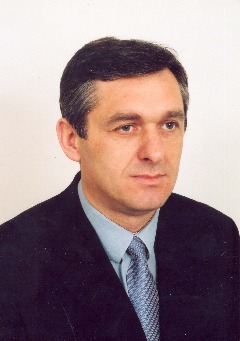 Srdjan Stankovic合作论文数Faculty of Electrical Engineering, University of Montenegro20
 Danilo P. Mandic合作论文数Communication and Signal Processing Research Group, Department of Electrical and Electronic Engineering, Faculty of Engineering, Imperial College London14
 Cornel Ioana合作论文数University of Montenegro14
 ivica đurđevictomas合作论文数6Bruno Scalzo合作论文数6
 Andjela Draganic合作论文数6
 Ali Bagheri-Bardi合作论文数5Zeljko Kurtela合作论文数4
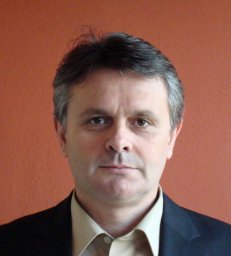 Lutovac, Budimir合作论文数4
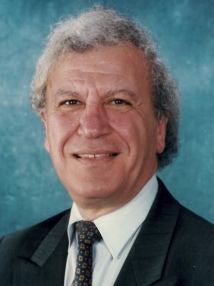 Tony Constantinides合作论文数Financial Signal Processing Lab, Department of Electrical and Electronic Engineering|, Faculty of Engineering, Imperial College London4
 Jonatan Lerga合作论文数Faculty of Engineering, University of Rijeka4
 Shengxi Li (李胜曦)合作论文数School of Electronic Information Engineering, Beihang University3
 Zoja Vulaj合作论文数2
 Marko Beko合作论文数Instituto de Telecomunicações;Instituto Superior Técnico, Universidade de Lisboa2Vedran Jelavic合作论文数2
 Slobodan Djukanovic合作论文数2
 Popovic-Bugarin Vesna合作论文数Electrical Engineering Department, University of Montenegro2
 Anthony G. Constantinides合作论文数Communications and Signal Processing Group of the Department of Electrical and Electronic Engineering2
 Stefan Vujovic合作论文数2Fatemeh Zarei合作论文数1Angela Digulescu合作论文数1
 Ervin Sejdic合作论文数The Edward S. Rogers Sr. Department of Electrical & Computer Engineering, Faculty of Applied Science and Engineering, University of Toronto1
 Cédric Richard合作论文数Laboratoire Lagrange, Observatoire de la Côte d'Azur, Université Côte d'Azur;Department of Electrical Engineering, University Côte d'Azur1
 Igor Djurović合作论文数Faculty of Electrical Engineering, University of Montenegro1
 Thayananthan Thayaparan合作论文数Defence R&D Canada1
 Josip Music合作论文数Faculty of Electrical Engineering, Mechanical Engineering and Naval Architecture, University of Split1
 Eftim Zdravevski合作论文数NI TEKNA – Intelligent Technologies Negotino Macedonia1
 Ivo Stancic合作论文数Faculty of Electrical Engineering, Mechanical Engineering and Naval Architecture, University of Split1
 Taher Yazdanpanah合作论文数1




