This study addresses gender assignment in six North Scandinavian varieties with a three-gender system: Old Norse, Norwegian (Nynorsk), Old Swedish, Nysvenska, Jamtlandic, and Elfdalian. Focusing on gender variation and change, we investigate the role of various factors in gender change. Using the contemporary Swedish varieties Jamtlandic and Elfdalian as a basis, we compare gender assignment in other North Scandinavian languages, tracing the evolution back to Old Norse. The data consist of 1,300 concepts from all six languages coded for cognacy, gender, and morphological and semantic variation. Our statistical analysis shows that the most important factors in gender change are the Old Norse weak/strong inflection, Old Norse gender, animate/inanimate distinction, word frequency, and loan status. From Old Norse to modern languages, phonological assignment principles tend to weaken, due to the general loss of word-final endings. Feminine words are more susceptible to changing gender, and the tendency to lose the feminine is noticeable even in the varieties in our study upholding the three-gender system. Further, frequency is significantly correlated with unstable gender. In semantics, only the animate/inanimate distinction signifi-cantly predicts gender assignment and stability. In general, our study confirms the decay of the feminine gender in the Scandinavian branch of Germanic.
Advances in computer-assisted linguistic research have been greatly influential in reshaping linguistic research. With the increasing availability of interconnected datasets created and curated by researchers, more and more interwoven questions can now be investigated. Such advances, however, are bringing high requirements in terms of rigorousness for preparing and curating datasets. Here we present CLICS, a Database of Cross-Linguistic Colexifications (CLICS). CLICS tackles interconnected interdisciplinary research questions about the colexification of words across semantic categories in the world's languages, and show-cases best practices for preparing data for cross-linguistic research. This is done by addressing shortcomings of an earlier version of the database, CLICS2, and by supplying an updated version with CLICS3, which massively increases the size and scope of the project. We provide tools and guidelines for this purpose and discuss insights resulting from organizing student tasks for database updates.
AbstractIn this study, we present an analysis of gender assignment tendencies in Jamtlandic, a language variety of Sweden, using a word list of 1029 items obtained from fieldwork. Most research on gender assignment in the Scandinavian languages focuses on the standard languages (Steinmetz 1985; Källström 1996; Trosterud 2001, 2006) and Norwegian dialects (Enger 2011, Kvinlaug 2011, Enger & Corbett 2012). However, gender assignment principles for Swedish dialects have not previously been researched. We find generalizations based on semantic, morphological, and phonological principles. Some of the principles apply more consistently than others, some ‘win’ in competition with other principles; a multinomial logistic regression analysis provides a statistical foundation for evaluating the principles. The strongest tendencies are those based on biological sex, plural inflection, derivational suffixes, and some phonological sequences. Weaker tendencies include non-core semantic tendencies and other phonological sequences. Gender assignment in modern loanwords differs from the overall material, with a larger proportion of nouns assigned masculine gender.
The Scandinavian languages, though closely related, display a great degree of variation in terms of how they divide up the noun space into genders. While some studies exist on gender assignment in individual Scandinavian languages (Steinmetz (1985) on Icelandic; Källström (1995, 1996) on Swedish; Trosterud (2001) on Norwegian; Trosterud (2006) on Old Norse), until now no study has taken a comparative approach. In this study, we compare gender assignment in six Scandinavian language varieties that maintain the three-gender system: Old Norse, Old Swedish, older Standard Swedish, and two lesser-known Scandinavian varieties spoken in Sweden the Jamtlandic dialect of Swedish, and the Elfdalian language. Jamtlandic is spoken in the region of Jämtland in northern Sweden and has a three-gender system that is in the process of changing to a two-gender system (Van Epps & Carling 2017, Van Epps 2013). Elfdalian, spoken in the region of Dalecarlia, has a three-gender system that is more stable. As a point of comparison, we also consider gender in Standard Swedish, which has a two-gender system.
The influence of standard language varieties on rural dialects is an important factor involved in dialect loss, which is widespread in Europe. In this study, we look at how the three-gender system in the Jämtlandic dialect of Sweden is changing under pressure from the two-gender system of Standard Swedish. The Jämtlandic dialect is an understudied Swedish dialect and an interesting object of study, in part because of the social and economic changes that have occurred over the past century. We performed a survey using profiled stimuli to elicit indefinite articles, definite articles and anaphoric pronouns for 36 target nouns. An analysis was conducted on the traditionalness of gender agreement in the material. We consider linguistic features (traditional gender and type of agreement), as well as sociological features (age, gender, education, geographical location, socioeconomic status, and language attitudes). The results show that most participants maintain the traditional three-gender system to a large degree. Age is the most significant predictor of traditionalness. While the youngest participants show the highest variability in gender assignment, they still retain the three-gender system to some degree. In addition, participants to whom the dialect is very important tend to use more traditional agreement.
 Gerd Carling合作论文数5
 Sophie Chang合作论文数1Ingrid Blanco合作论文数1Sallona Ramesh合作论文数1Kristina Pianykh合作论文数1Carolin Hundt合作论文数1Nathanael E. Schweikhard合作论文数1
 Nataliia Hubler合作论文数1Timotheus Adrianus Bodt合作论文数1Heini Arjava合作论文数1
 Mariann Proos合作论文数Univ Tartu1
 Sandra Cronhamn合作论文数Lund Univ1
 Tiago Tresoldi合作论文数Uppsala Univ1Filip Larsson合作论文数1Gereon A Kaiping合作论文数Ctr Interdisciplinary Study Language Evolut, Univ Zurich1
 Sergei Monakhov合作论文数Friedrich Schiller University Jena1Chundra Cathcart合作论文数1
 Mikael Noven合作论文数1
 Ezequiel Koile合作论文数Max Planck Inst Sci Human Hist1
 Yunfan Lai合作论文数Sch Linguist Speech & Commun Sci, Trinity Coll Dublin1
 Simon J. Greenhill合作论文数School of Biological Sciences, University of Auckland1
 Erich Round合作论文数Surrey Morphology Group, University of Surrey1Christoph Rzymski合作论文数1
 Russell Gray合作论文数Department of Linguistic and Cultural Evolution, Max Planck Institute for Evolutionary Anthropology1
 Mei-Shin Wu合作论文数1
 Volker Gast合作论文数Free University of Berlin1
 Karina Vamling合作论文数1
 Abbie Hantgan合作论文数1
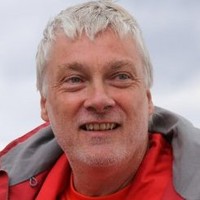 Steve Pepper合作论文数University of Oslo;PHAB Technology1Robert Forkel合作论文数1
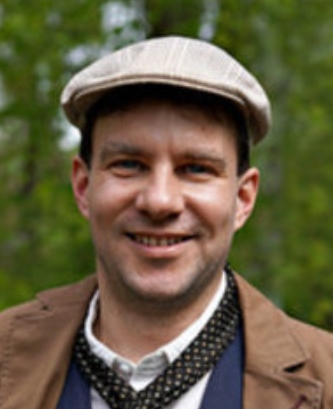 Johann-Mattis List合作论文数List's Linguistic Laboratory, University of Passau;Independent Research Group, Department of Linguistic and Cultural Evolution, Max Planck Institute for Evolutionary Anthropology1revaz tchantouria合作论文数1Johan Frid合作论文数Department of Linguistics;Lund University1
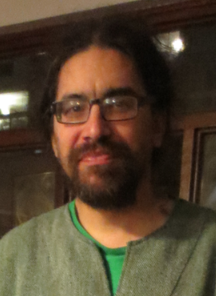 Harald Hammarström合作论文数Department of Linguistics and Philology, Faculty of Languages, Uppsala University1Arthur Holmer合作论文数1
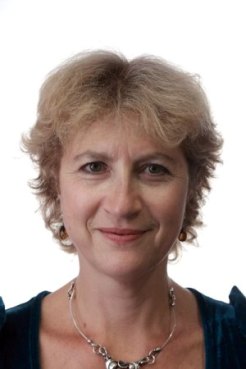 Maria Koptjevskaja Tamm合作论文数Department of Linguistics, Stockholm University1




