Without knowledge of seed germination requirements, conservation seed bank collections cannot be utilised, nor their viability monitored over time. When germination is low, deciding whether to invest further seed, time and resources into investigating why can be difficult. We investigated the germinability of 37 grassy ecosystem seed bank collections, including germination response to fire-related cues. Where germination was < 75% we investigated seed viability using the tetrazolium chloride (TZ) staining test. Germination and TZ test results were then compared to determine next steps in collection management. Using 95% confidence intervals of the difference between germination and viability, the 37 collections were assigned to one of seven different data- informed management decisions. This approach provides a detailed decision support framework for conservation collection management, to strengthen current guidelines and ensure that time and resources are effectively allocated. Other seed banks could customise this approach depending on the number of seeds used in testing and what percentage of germination is considered sufficient.
We introduce the AusTraits database - a compilation of values of plant traits for taxa in the Australian flora (hereafter AusTraits). AusTraits synthesises data on 448 traits across 28,640 taxa from field campaigns, published literature, taxonomic monographs, and individual taxon descriptions. Traits vary in scope from physiological measures of performance (e.g. photosynthetic gas exchange, water-use efficiency) to morphological attributes (e.g. leaf area, seed mass, plant height) which link to aspects of ecological variation. AusTraits contains curated and harmonised individual- and species-level measurements coupled to, where available, contextual information on site properties and experimental conditions. This article provides information on version 3.0.2 of AusTraits which contains data for 997,808 trait-by-taxon combinations. We envision AusTraits as an ongoing collaborative initiative for easily archiving and sharing trait data, which also provides a template for other national or regional initiatives globally to fill persistent gaps in trait knowledge.
We introduce the AusTraits database - a compilation of measurements of plant traits for taxa in the Australian flora (hereafter AusTraits). AusTraits synthesises data on 375 traits across 29230 taxa from field campaigns, published literature, taxonomic monographs, and individual taxa descriptions. Traits vary in scope from physiological measures of performance (e.g. photosynthetic gas exchange, water-use efficiency) to morphological parameters (e.g. leaf area, seed mass, plant height) which link to aspects of ecological variation. AusTraits contains curated and harmonised individual-, species- and genus-level observations coupled to, where available, contextual information on site properties. This data descriptor provides information on version 2.1.0 of AusTraits which contains data for 937243 trait-by-taxa combinations. We envision AusTraits as an ongoing collaborative initiative for easily archiving and sharing trait data to increase our collective understanding of the Australian flora. ### Competing Interest Statement The authors have declared no competing interest.
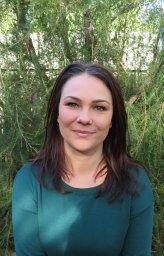 Lydia K. Guja合作论文数Ctr Australian Natl Biodivers Res, Australian Natl Bot Gardens4
 Ben D. Moore合作论文数2
 Maurizio Rossetto合作论文数2
 Hannah Mcpherson合作论文数2Jocelyn Howell合作论文数2Grazyna Paczkowska合作论文数2Ashika Jagdish合作论文数2Jugoslav Ilic合作论文数2Cheryl Edwards合作论文数2Erika Cross合作论文数2Helen Coleman合作论文数2David Cheal合作论文数2Anne Fuchs合作论文数2Caitlan Baxter合作论文数2Genevieve Buckton合作论文数2Doug Frood合作论文数2
 Jarrah Wills合作论文数2Jürgen Kellermann合作论文数2Nicholas Moore合作论文数2James Lawson合作论文数2Dony Indiarto合作论文数2Barbara Rye合作论文数2Bree-Anne Laugier-Kitchener合作论文数2Tara Angevin合作论文数2Áine Nicholson合作论文数2
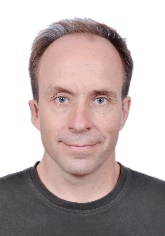 Kyle Warwick Tomlinson合作论文数Xishuangbanna Tropical Botanical Garden, Chinese Academy of Sciences;University of Chinese Academy of Sciences2
 Si-Chong Chen (陈思翀)合作论文数University of Chinese Academy of Sciences;Wuhan Botanical Garden, Chinese Academy of Sciences2Jason G Bragg合作论文数2
 Carlos Fonseca合作论文数2
 Matthew Alfonzetti合作论文数2Guy M Taseski合作论文数2Annette Muir合作论文数Dept Environm Land Water & Planning, Arthur Rylah Inst Environm Res2
 Victoria A. Reynolds合作论文数Sch BioSci, Univ Melbourne2Carolyn Vlasveld合作论文数2
 Emma Fiona Gray合作论文数Department of Biological Sciences, Macquarie University2
 Andrew Baker合作论文数Sch Environm Sci & Engn, Southern Cross Univ2
 Susan E. Everingham合作论文数Sch Biol Earth & Environm Sci, UNSW Sydney2
 Udayangani Liu合作论文数Royal Bot Gardens2
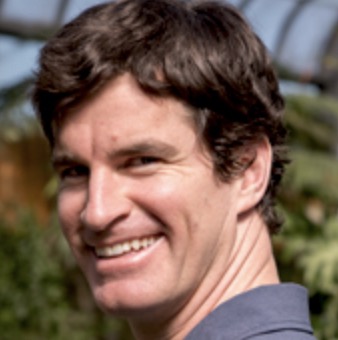 Etienne Laliberté合作论文数Département de sciences biologiques, Faculté des arts et des sciences, Université de Montréal2Stuart Allen合作论文数2
 Timothy L. Staples合作论文数Australian Res Council, Univ Queensland2Felix K. S. Lim合作论文数University of Melbourne2
 Ning Dong合作论文数2Freya Thomas合作论文数2
 Sonya Geange合作论文数Dept Biol Sci, Univ Bergen2
 Ben Sparrow合作论文数Sch Biol Sci, Univ Adelaide2
 Manuel Esperón-Rodríguez合作论文数Univ Nacl Autonoma Mexico, Inst Ciencias Mar & Limnol, Mexico City 04510, DF, Mexico2Lynda D. Prior合作论文数Corresponding author.2
 Elizabeth Wenk合作论文数2




