Quality-diversity (QD) algorithms have exhibited promising results across many domains and applications. However, uncertainty in fitness and behavior estimations of solutions remains a major challenge when QD is used in complex real-world applications. While several approaches have been proposed to improve the performance in uncertain applications, many fail to address a key challenge: determining how to prioritize solutions that perform consistently under uncertainty, in other words, solutions that are reproducible. Most prior methods improve fitness and reproducibility jointly, ignoring the possibility that they could be contradictory objectives. For example, in robotics, solutions may reliably walk at 90% of the maximum velocity in uncertain environments, while solutions that walk faster are also more prone to falling over. As this is a tradeoff, neither one of these two solutions is "better" than the other. Thus, algorithms cannot intrinsically select one solution over the other, but can only enforce given preferences over these two contradictory objectives. In this article, we formalize this problem as the performance-reproducibility tradeoff for uncertain QD (UQD). We propose two new a-priori QD algorithms that find efficient solutions for given preferences over the tradeoffs. We also propose an a-posteriori QD algorithm for when these preferences cannot be defined in advance. Our results show that our approaches successfully find solutions that satisfy given preferences. Importantly, by simply accounting for this tradeoff, our approaches perform better than existing uncertain QD methods. This suggests that considering the performance-reproducibility tradeoff unlocks important stepping stones that are usually missed when only performance is optimized.
Robotic systems are increasingly common in strictly controlled environments (e.g. warehouses), but they have yet to fully integrate into our everyday lives. Everyday scenarios are a challenge for robot controllers due to disturbances that can be caused by unforeseen conditions (e.g., damage, flat tires, or wind gusts) or unexpected usage. In these cases, operators may lose control of their systems, leading to potentially catastrophic outcomes, such as crashes or failed operations. Our method, "Fast Learning-based Adaptation for Immediate Recovery", uses machine learning to counter loss of control by enhancing existing controllers. It rapidly diagnoses and compensates for unseen perturbations by updating an onboard model every 225 milliseconds. Even in a setting with only onboard compute, we show that operators equipped with our method regain control and operate as effectively as in unperturbed conditions across a wide range of perturbations. Other state-of-the-art methods, such as an optimal control and an adaptive control baseline, were found to be half as effective at recovering from perturbations, while an online Deep Reinforcement Learning baseline proved entirely ineffective. In this work, we demonstrate that our online learning method enhances robotic resilience by mitigating the impact of perturbations on system operability.
Many applications in Reinforcement Learning (RL) usually have noise or stochasticity present in the environment. Beyond their impact on learning, these uncertainties lead the exact same policy to perform differently, i.e. yield different return, from one roll-out to another. Common evaluation procedures in RL summarise the consequent return distributions using solely the expected return, which does not account for the spread of the distribution. Our work defines this spread as the policy reproducibility: the ability of a policy to obtain similar performance when rolled out many times, a crucial property in some real-world applications. We highlight that existing procedures that only use the expected return are limited on two fronts: first an infinite number of return distributions with a wide range of performance-reproducibility trade-offs can have the same expected return, limiting its effectiveness when used for comparing policies; second, the expected return metric does not leave any room for practitioners to choose the best trade-off value for considered applications. In this work, we address these limitations by recommending the use of Lower Confidence Bound, a metric taken from Bayesian optimisation that provides the user with a preference parameter to choose a desired performance-reproducibility trade-off. We also formalise and quantify policy reproducibility, and demonstrate the benefit of our metrics using extensive experiments of popular RL algorithms on common uncertain RL tasks.
Quality-Diversity (QD) optimization algorithms are a well-known approach to generate large collections of diverse and high-quality solutions. However, derived from evolutionary computation, QD algorithms are population-based methods which are known to be data-inefficient and requires large amounts of computational resources. This makes QD algorithms slow when used in applications where solution evaluations are computationally costly. A common approach to speed up QD algorithms is to evaluate solutions in parallel, for instance by using physical simulators in robotics. Yet, this approach is limited to several dozen of parallel evaluations as most physics simulators can only be parallelized more with a greater number of CPUs. With recent advances in simulators that run on accelerators, thousands of evaluations can now be performed in parallel on single GPU/TPU. In this paper, we present QDax, an accelerated implementation of MAP-Elites which leverages massive parallelism on accelerators to make QD algorithms more accessible. We show that QD algorithms are ideal candidates to take advantage of progress in hardware acceleration. We demonstrate that QD algorithms can scale with massive parallelism to be run at interactive timescales without any significant effect on the performance. Results across standard optimization functions and four neuroevolution benchmark environments shows that experiment runtimes are reduced by two factors of magnitudes, turning days of computation into minutes. More surprising, we observe that reducing the number of generations by two orders of magnitude, and thus having significantly shorter lineage does not impact the performance of QD algorithms. These results show that QD can now benefit from hardware acceleration, which contributed significantly to the bloom of deep learning.
Quality-Diversity (QD) approaches are a promising direction to develop open-ended processes as they can discover archives of high-quality solutions across diverse niches. While already successful in many applications, QD approaches usually rely on combining only one or two solutions to generate new candidate solutions. As observed in open-ended processes such as technological evolution, wisely combining large diversity of these solutions could lead to more innovative solutions and potentially boost the productivity of QD search. In this work, we propose to exploit the pattern-matching capabilities of generative models to enable such efficient solution combinations. We introduce In-context QD, a framework of techniques that aim to elicit the in-context capabilities of pre-trained Large Language Models (LLMs) to generate interesting solutions using the QD archive as context. Applied to a series of common QD domains, In-context QD displays promising results compared to both QD baselines and similar strategies developed for single-objective optimization. Additionally, this result holds across multiple values of parameter sizes and archive population sizes, as well as across domains with distinct characteristics from BBO functions to policy search. Finally, we perform an extensive ablation that highlights the key prompt design considerations that encourage the generation of promising solutions for QD.
With the development of fast and massively parallel evaluations in many domains, Quality-Diversity (QD) algorithms, that already proved promising in a large range of applications, have seen their potential multiplied. However, we have yet to understand how to best use a large number of evaluations as using them for random variations alone is not always effective. High-dimensional search spaces are a typical situation where random variations struggle to effectively search. Another situation is uncertain settings where solutions can appear better than they truly are and naively evaluating more solutions might mislead QD algorithms. In this work, we propose MAP-Elites-Multi-ES (MEMES), a novel QD algorithm based on Evolution Strategies (ES) designed to exploit fast parallel evaluations more effectively. MEMES maintains multiple (up to ~ 100) simultaneous ES processes, each with its own independent objective and reset mechanism designed for QD optimisation, all on just a single GPU. We show that MEMES outperforms both gradient-based and mutation-based QD algorithms on black-box optimisation and QD-Reinforcement-Learning tasks, demonstrating its benefit across domains. Additionally, our approach outperforms sampling-based QD methods in uncertain domains when given the same evaluation budget. Overall, MEMES generates reproducible solutions that are high-performing and diverse through large-scale ES optimisation on easily accessible hardware.
In real-world environments, robots need to be resilient to damages and robust to unforeseen scenarios. Quality-Diversity (QD) algorithms have been successfully used to make robots adapt to damages in seconds by leveraging a diverse set of learned skills. A high diversity of skills increases the chances of a robot to succeed at overcoming new situations since there are more potential alternatives to solve a new task. However, finding and storing a large behavioural diversity of multiple skills often leads to an increase in computational complexity. Furthermore, robot planning in a large skill space is an additional challenge that arises with an increased number of skills. Hierarchical structures can help to reduce this search and storage complexity by breaking down skills into primitive skills. In this article, we extend the analysis of the Hierarchical Trial and Error algorithm, which uses a hierarchical behavioural repertoire to learn diverse skills and leverages them to make the robot adapt quickly in the physical world. We show that the hierarchical decomposition of skills enables the robot to learn more complex behaviours while keeping the learning of the repertoire tractable. Experiments with a hexapod robot both in simulation and the physical world show that our method solves a maze navigation task with up to, respectively, 20% and 43% less actions than the best baselines while having 78% less complete failures.
Deep Reinforcement Learning (RL) has emerged as a powerful paradigm for training neural policies to solve complex control tasks. However, these policies tend to be overfit to the exact specifications of the task and environment they were trained on, and thus do not perform well when conditions deviate slightly or when composed hierarchically to solve even more complex tasks. Recent work has shown that training a mixture of policies, as opposed to a single one, that are driven to explore different regions of the state-action space can address this shortcoming by generating a diverse set of behaviors, referred to as skills, that can be collectively used to great effect in adaptation tasks or for hierarchical planning. This is typically realized by including a diversity term - often derived from information theory - in the objective function optimized by RL. However these approaches often require careful hyperparameter tuning to be effective. In this work, we demonstrate that less widely-used neuroevolution methods, specifically Quality Diversity (QD), are a competitive alternative to information-theory-augmented RL for skill discovery. Through an extensive empirical evaluation comparing eight state-of-the-art algorithms (four flagship algorithms from each line of work) on the basis of (i) metrics directly evaluating the skills' diversity, (ii) the skills' performance on adaptation tasks, and (iii) the skills' performance when used as primitives for hierarchical planning; QD methods are found to provide equal, and sometimes improved, performance whilst being less sensitive to hyperparameters and more scalable. As no single method is found to provide near-optimal performance across all environments, there is a rich scope for further research which we support by proposing future directions and providing optimized open-source implementations.
Quality-Diversity (QD) algorithms are designed to generate collections of high-performing solutions while maximizing their diversity in a given descriptor space. However, in the presence of unpredictable noise, the fitness and descriptor of the same solution can differ significantly from one evaluation to another, leading to uncertainty in the estimation of such values. Given the elitist nature of QD algorithms, they commonly end up with many degenerate solutions in such noisy settings. In this work, we introduce Archive Reproducibility Improvement Algorithm (ARIA); a plug-and-play approach that improves the reproducibility of the solutions present in an archive. We propose it as a separate optimization module, relying on natural evolution strategies, that can be executed on top of any QD algorithm. Our module mutates solutions to (1) optimize their probability of belonging to their niche, and (2) maximize their fitness. The performance of our method is evaluated on various tasks, including a classical optimization problem and two high-dimensional control tasks in simulated robotic environments. We show that our algorithm enhances the quality and descriptor space coverage of any given archive by at least 50%.
With the development of fast and massively parallel evaluations in many domains, Quality-Diversity (QD) algorithms, that already proved promising in a large range of applications, have seen their potential multiplied. However, we have yet to understand how to best use a large number of evaluations as using them for random variations alone is not always effective. High-dimensional search spaces are a typical situation where random variations struggle to effectively search. Another situation is uncertain settings where solutions can appear better than they truly are and naively evaluating more solutions might mislead QD algorithms. In this work, we propose MAP-Elites-Multi-ES (MEMES), a novel QD algorithm based on Evolution Strategies (ES) designed to exploit fast parallel evaluations more effectively. MEMES maintains multiple (up to 100) simultaneous ES processes, each with its own independent objective and reset mechanism designed for QD optimisation, all on just a single GPU. We show that MEMES outperforms both gradient-based and mutation-based QD algorithms on black-box optimisation and QD-Reinforcement-Learning tasks, demonstrating its benefit across domains. Additionally, our approach outperforms sampling-based QD methods in uncertain domains when given the same evaluation budget. Overall, MEMES generates reproducible solutions that are high-performing and diverse through large-scale ES optimisation on easily accessible hardware.
Data-driven learning based methods have recently been particularly successful at learning robust locomotion controllers for a variety of unstructured terrains. Prior work has shown that incorporating good locomotion priors in the form of trajectory generators (TGs) is effective at efficiently learning complex locomotion skills. However, defining a good, single TG as tasks/environments become increasingly more complex remains a challenging problem as it requires extensive tuning and risks reducing the effectiveness of the prior. In this paper, we present Evolved Environmental Trajectory Generators (EETG), a method that learns a diverse set of specialised locomotion priors using Quality-Diversity algorithms while maintaining a single policy within the Policies Modulating TG (PMTG) architecture. The results demonstrate that EETG enables a quadruped robot to successfully traverse a wide range of environments, such as slopes, stairs, rough terrain, and balance beams. Our experiments show that learning a diverse set of specialized TG priors is significantly (5 times) more efficient than using a single, fixed prior when dealing with a wide range of environments.
Exploration is a key challenge in Reinforcement Learning, especially in long-horizon, deceptive and sparse-reward environments. For such applications, population-based approaches have proven effective. Methods such as Quality-Diversity deals with this by encouraging novel solutions and producing a diversity of behaviours. However, these methods are driven by either undirected sampling (i.e. mutations) or use approximated gradients (i.e. Evolution Strategies) in the parameter space, which makes them highly sample-inefficient. In this paper, we propose a model-based Quality-Diversity approach. It extends existing QD methods to use gradients for efficient exploitation and leverage perturbations in imagination for efficient exploration. Our approach optimizes all members of a population simultaneously to maintain both performance and diversity efficiently by leveraging the effectiveness of QD algorithms as good data generators to train deep models. We demonstrate that it maintains the divergent search capabilities of population-based approaches on tasks with deceptive rewards while significantly improving their sample efficiency and quality of solutions.
In many real-world systems, such as adaptive robotics, achieving a single, optimised solution may be insufficient. Instead, a diverse set of high-performing solutions is often required to adapt to varying contexts and requirements. This is the realm of Quality-Diversity (QD), which aims to discover a collection of high-performing solutions, each with their own unique characteristics. QD methods have recently seen success in many domains, including robotics, where they have been used to discover damage-adaptive locomotion controllers. However, most existing work has focused on single-agent settings, despite many tasks of interest being multi-agent. To this end, we introduce Mix-ME, a novel multi-agent variant of the popular MAP-Elites algorithm that forms new solutions using a crossover-like operator by mixing together agents from different teams. We evaluate the proposed methods on a variety of partially observable continuous control tasks. Our evaluation shows that these multi-agent variants obtained by Mix-ME not only compete with single-agent baselines but also often outperform them in multi-agent settings under partial observability.
Learning algorithms, like Quality-Diversity (QD), can be used to acquire repertoires of diverse robotics skills. This learning is commonly done via computer simulation due to the large number of evaluations required. However, training in a virtual environment generates a gap between simulation and reality. Here, we build upon the Reset-Free QD (RF-QD) algorithm to learn controllers directly on a physical robot. This method uses a dynamics model, learned from interactions between the robot and the environment, to predict the robot's behaviour and improve sample efficiency. A behaviour selection policy filters out uninteresting or unsafe policies predicted by the model. RF-QD also includes a recovery policy that returns the robot to a safe zone when it has walked outside of it, allowing continuous learning. We demonstrate that our method enables a physical quadruped robot to learn a repertoire of behaviours in two hours without human supervision. We successfully test the solution repertoire using a maze navigation task. Finally, we compare our approach to the MAP-Elites algorithm. We show that dynamics awareness and a recovery policy are required for training on a physical robot for optimal archive generation. Video available at https://youtu.be/BgGNvIsRh7Q
The synergies between Quality-Diversity (QD) and Deep Reinforcement Learning (RL) have led to powerful hybrid QD-RL algorithms that have shown tremendous potential, and brings the best of both fields. However, only a single deep RL algorithm (TD3) has been used in prior hybrid methods despite notable progress made by other RL algorithms. Additionally, there are fundamental differences in the optimization procedures between QD and RL which would benefit from a more principled approach. We propose Generalized Actor-Critic QD-RL, a unified modular framework for actor-critic deep RL methods in the QD-RL setting. This framework provides a path to study insights from Deep RL in the QD-RL setting, which is an important and efficient way to make progress in QD-RL. We introduce two new algorithms, PGA-ME (SAC) and PGA-ME (DroQ) which apply recent advancements in Deep RL to the QD-RL setting, and solves the humanoid environment which was not possible using existing QD-RL algorithms. However, we also find that not all insights from Deep RL can be effectively translated to QD-RL. Critically, this work also demonstrates that the actor-critic models in QD-RL are generally insufficiently trained and performance gains can be achieved without any additional environment evaluations.
Quality-Diversity (QD) algorithms are a well-known approach to generate large collections of diverse and high-quality policies. However, QD algorithms are also known to be data-inefficient, requiring large amounts of computational resources and are slow when used in practice for robotics tasks. Policy evaluations are already commonly performed in parallel to speed up QD algorithms but have limited capabilities on a single machine as most physics simulators run on CPUs. With recent advances in simulators that run on accelerators, thousands of evaluations can be performed in parallel on single GPU/TPU. In this paper, we present QDax, an implementation of MAP-Elites which leverages massive parallelism on accelerators to make QD algorithms more accessible. We first demonstrate the improvements on the number of evaluations per second that parallelism using accelerated simulators can offer. More importantly, we show that QD algorithms are ideal candidates and can scale with massive parallelism to be run at interactive timescales. The increase in parallelism does not significantly affect the performance of QD algorithms, while reducing experiment runtimes by two factors of magnitudes, turning days of computation into minutes. These results show that QD can now benefit from hardware acceleration, which contributed significantly to the bloom of deep learning.
Quality-Diversity (QD) algorithms can discover large and complex behavioural repertoires consisting of both diverse and high-performing skills. However, the generation of behavioural repertoires has mainly been limited to simulation environments instead of real-world learning. This is because existing QD algorithms need large numbers of evaluations as well as episodic resets, which require manual human supervision and intervention. This paper proposes Reset-Free QD (RF-QD) as a step towards autonomous learning for robotics in open-ended environments. We build on Dynamics-Aware QD (DA-QD) and introduce a behaviour selection policy that leverages the diversity of the imagined repertoire and environmental information to intelligently select of behaviours that can act as automatic resets. We demonstrate this through a task of learning to walk within defined training zones with obstacles. Our experiments show that we can learn repertoires of locomotion controllers autonomously without manual resets and with high sample efficiency in spite of harsh safety constraints. Finally, using an ablation of different target objectives, we show that it is important for RF-QD to have diverse types solutions available for the behaviour selection policy over solutions optimised with a specific objective. Videos and code available at https://sites.google.com/view/rf-qd.
Quality-Diversity (QD) algorithms are powerful exploration algorithms that allow robots to discover large repertoires of diverse and high-performing skills. However, QD algorithms are sample inefficient and require millions of evaluations. In this paper, we propose Dynamics-Aware Quality-Diversity (DA-QD), a framework to improve the sample efficiency of QD algorithms through the use of dynamics models. We also show how DA-QD can then be used for continual acquisition of new skill repertoires. To do so, we incrementally train a deep dynamics model from experience obtained when performing skill discovery using QD. We can then perform QD exploration in imagination with an imagined skill repertoire. We evaluate our approach on three robotic experiments. First, our experiments show DA-QD is 20 times more sample efficient than existing QD approaches for skill discovery. Second, we demonstrate learning an entirely new skill repertoire in imagination to perform zero-shot learning. Finally, we show how DA-QD is useful and effective for solving a long horizon navigation task and for damage adaptation in the real world. Videos and source code are available at: https://sites.google.com/view/da-qd.
We present a Quality-Diversity benchmark suite for Deep Neuroevolution in Reinforcement Learning domains for robot control. The suite includes the definition of tasks, environments, behavioral descriptors, and fitness. We specify different benchmarks based on the complexity of both the task and the agent controlled by a deep neural network. The benchmark uses standard Quality-Diversity metrics, including coverage, QD-score, maximum fitness, and an archive profile metric to quantify the relation between coverage and fitness. We also present how to quantify the robustness of the solutions with respect to environmental stochasticity by introducing corrected versions of the same metrics. We believe that our benchmark is a valuable tool for the community to compare and improve their findings. The source code is available online: https://github.com/adaptive-intelligent-robotics/QDax
 Antoine Cully合作论文数21
 Manon Flageat合作论文数Adaptive and Intelligent Robotics Lab, Department of Computing, Imperial College London12
 Luca Grillotti合作论文数Department of Computing, Faculty of Engineering, Imperial College London;Adaptive & Intelligent Robotics Lab, Imperial College London6
 Maxime Allard合作论文数Adapt & Intelligent Robot Lab, Imperial Coll London6
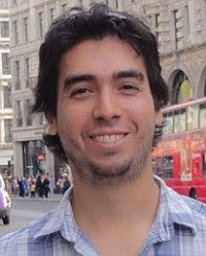 Simon C. Smith合作论文数Institute of Perception, Action and Behaviour, School of Informatics, The University of Edinburgh, Edinburgh, U.K.3
 G Bledt合作论文数2Hannah Janmohamed合作论文数2D. Carballo合作论文数2
 Jared Di Carlo合作论文数Physical Intelligence2
 Sangbae Kim合作论文数Department of Mechanical Engineering, Massachusetts Institute of Technology2Garðar Ingvarsson合作论文数1
 Felix Chalumeau合作论文数InstaDeep Ltd1Shikha Surana合作论文数1Alexander Reichenbach合作论文数1
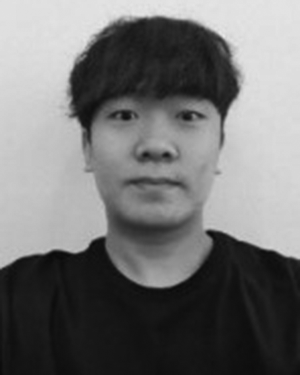 Donghyun Kim合作论文数1Raphael Boige合作论文数1S. Kim合作论文数1
 Theodoros Sechopoulos合作论文数1
 Valentin Macé合作论文数InstaDeep1Lorenzo Bernasconi合作论文数1Thomas Dudzik合作论文数MIT Department of Electrical Engineering and Computer Science Cambridge MA USA1
 Thomas Pierrot合作论文数InstaDeep Ltd1
 Matthew Chignoli合作论文数Dept Mech Engn, MIT1
 Gerardo Bledt合作论文数Apptronik1
 Maria Bauza合作论文数Google DeepMind1
 Konstantinos I Chatzilygeroudis合作论文数INRIA Villers Les Nancy1
 Arthur Flajolet合作论文数InstaDeep Ltd1
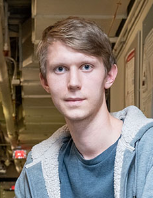 Ben Katz合作论文数Physical Intelligence1
 Simon Ringer合作论文数School of Aerospace, Mechanical and Mechatronic Engineering, The University of Sydney;Australian Centre for Microscopy & Microanalysis, The University of Sydney1
 Xiangyuan Carl Cui合作论文数School of Aerospace, Mechanical and Mechatronic Engineering, Faculty of Engineering, The University of Sydney;Australian Centre for Microscopy & Microanalysis, Faculty of Engineering, The University of Sydney1
 Mikayel Samvelyan合作论文数Google DeepMind1
 Adam R. Miller合作论文数David Geffen School of Medicine, UCLA1
 Tim Rocktäschel合作论文数Department of Computer Science, University College London;Google DeepMind1
 Bruce D. Grundy合作论文数Department of Finance;University of Melbourne1
 Alberto Rodriguez合作论文数Boston Dynamics1
 Patrick Verwijmeren合作论文数Department of Finance;University of Melbourne;Department of Finance, University of Melbourne1




