We introduce a new method for neighbourhood selection in linear structural equation models that improves over classical methods such as best subset selection (BSS) and the Lasso. Our method, called KL-BSS, takes advantage of the existence of underlying structure in SEM-even when this structure is unknown-and is easily implemented using existing solvers. Under weaker eigenvalue conditions compared to BSS and the Lasso, KL-BSS can provably recover the support of linear models with fewer samples. We establish both the pointwise and minimax sample complexity for support recovery, which KL-BSS obtains. Extensive experiments on both real and simulated data confirm the improvements offered by KL-BSS. While it is well-known that the Lasso encounters difficulties under structured dependencies, it is less well-known that even BSS runs into trouble as well, and can be substantially improved. These results have implications for structure learning in graphical models, which often relies on neighbourhood selection as a subroutine.
We provide explicit, finite-sample guarantees for learning causal representations from data with a sublinear number of environments. Causal representation learning seeks to provide a rigourous foundation for the general representation learning problem by bridging causal models with latent factor models in order to learn interpretable representations with causal semantics. Despite a blossoming theory of identifiability in causal representation learning, estimation and finite-sample bounds are less well understood. We show that causal representations can be learned with only a logarithmic number of unknown, multi-node interventions, and that the intervention targets need not be carefully designed in advance. Through a careful perturbation analysis, we provide a new analysis of this problem that guarantees consistent recovery of (a) the latent causal graph, (b) the mixing matrix and representations, and (c) unknown intervention targets.
Recent developments in generative artificial intelligence (AI) rely on machine learning techniques such as deep learning and generative modeling to achieve state-of-the-art performance across wide-ranging domains. These methods' surprising performance is due in part to their ability to learn implicit "representations" of complex, multi-modal data. Unfortunately, deep neural networks are notoriously black boxes that obscure these representations, making them difficult to interpret or analyze. To resolve these difficulties, one approach is to build new interpretable neural network models from the ground up. This is the goal of the emerging field of causal representation learning (CRL) that uses causality as a vector for building flexible, interpretable, and transferable generative AI. CRL can be seen as a synthesis of three intrinsically statistical ideas: (i) latent variable models such as factor analysis; (ii) causal graphical models with latent variables; and (iii) nonparametric statistics and deep learning. This article introduces CRL from a statistical perspective, focusing on connections to classical models as well as statistical and causal identifiability results. We also highlight key application areas, implementation strategies, and open statistical questions. Supplementary materials for this article are available online, including a standardized description of the materials available for reproducing the work.
We establish a fundamental connection between optimal structure learning and optimal conditional independence testing by showing that the minimax optimal rate for structure learning problems is determined by the minimax rate for conditional independence testing in these problems. This is accomplished by establishing a general reduction between these two problems in the case of poly-forests, and demonstrated by deriving optimal rates for several examples, including Bernoulli, Gaussian and nonparametric models. Furthermore, we show that the optimal algorithm in these settings is a suitable modification of the PC algorithm. This theoretical finding provides a unified framework for analyzing the statistical complexity of structure learning through the lens of minimax testing.
Large language models (LLMs) are powerful black-box systems, making it difficult to discern whether their answers reflect stable internal beliefs or superficial pattern matching. We identify cross-contextual consistency as an underutilized behavioral property of LLMs: a credible answer should remain stable when the same task is placed under topic-aligned, content-neutral contextual variation. Building on this intuition, we operationalize Cross-Contextual Consistency (C3) by comparing model generations under original and perturbed prompts. Across 26 models and six benchmarks spanning reasoning, factuality, and code generation, we find that answers with smaller cross-contextual shifts are more likely to be correct or factual. We demonstrate that C3 provides a complementary axis of evaluation and can serve as a benchmark usefulness diagnostic, identifying which portions of a benchmark remain informative even when aggregated scores are widely considered "saturate".
In designing generative models, it is commonly believed that in order to learn useful latent structure, we face a fundamental tension between expressivity and structure. In this paper we challenge this view by proposing a new approach to training arbitrarily expressive generative models that simultaneously learn causally disentangled concepts. This is accomplished by adding a simple context module to an arbitrarily complex black-box model, which learns to process concept information by implicitly inverting linear representations from the model's encoder. Inspired by the notion of intervention in a causal model, our module selectively modifies its architecture during training, allowing it to learn a compact joint model over different contexts. We show how adding this module leads to causally disentangled representations that can be composed for out-of-distribution generation on both real and simulated data. The resulting models can be trained end-to-end or fine-tuned from pre-trained models. To further validate our proposed approach, we prove a new identifiability result that extends existing work on identifying structured representations.
We study the optimal sample complexity of variable selection in linear regression under general design covariance, and show that subset selection is optimal while under standard complexity assumptions, efficient algorithms for this problem do not exist. Specifically, we analyze the variable selection problem and provide the optimal sample complexity with exact dependence on the problem parameters for both known and unknown sparsity settings. Moreover, we establish a sample complexity lower bound for any efficient estimator, highlighting a gap between the statistical efficiency achievable by combinatorial algorithms (such as subset selection) compared to efficient algorithms (such as those based on convex programming). The proofs rely on a finite-sample analysis of an information criterion estimator, which may be of independent interest. Our results emphasize the optimal position of subset selection, the critical role played by restricted eigenvalues, and characterize the statistical-computational trade-off in high-dimensional variable selection.
Existing methods for differentiable structure learning in discrete data typically assume that the data are generated from specific structural equation models. However, these assumptions may not align with the true data-generating process, which limits the general applicability of such methods. Furthermore, current approaches often ignore the complex dependence structure inherent in discrete data and consider only linear effects. We propose a differentiable structure learning framework that is capable of capturing arbitrary dependencies among discrete variables. We show that although general discrete models are unidentifiable from purely observational data, it is possible to characterize the complete set of compatible parameters and structures. Additionally, we establish identifiability up to the Markov equivalence class (MEC) under mild assumptions. We formulate the learning problem as a single differentiable optimization task in the most general form, thereby avoiding the unrealistic simplifications adopted by previous methods. Empirical results demonstrate that our approach effectively captures complex relationships in discrete data.
We show that deep neural networks achieve dimension-independent rates of convergence for learning structured densities such as those arising in image, audio, video, and text applications. More precisely, we demonstrate that neural networks with a simple $L^2$-minimizing loss achieve a rate of $n^{-1/(4+r)}$ in nonparametric density estimation when the underlying density is Markov to a graph whose maximum clique size is at most $r$, and we provide evidence that in the aforementioned applications, this size is typically constant, i.e., $r=O(1)$. We then establish that the optimal rate in $L^1$ is $n^{-1/(2+r)}$ which, compared to the standard nonparametric rate of $n^{-1/(2+d)}$, reveals that the effective dimension of such problems is the size of the largest clique in the Markov random field. These rates are independent of the data's ambient dimension, making them applicable to realistic models of image, sound, video, and text data. Our results provide a novel justification for deep learning's ability to circumvent the curse of dimensionality, demonstrating dimension-independent convergence rates in these contexts.
We develop optimal algorithms for learning undirected Gaussian trees and directed Gaussian polytrees from data. We consider both problems of distribution learning (i.e. in KL distance) and structure learning (i.e. exact recovery). The first approach is based on the Chow-Liu algorithm, and learns an optimal tree-structured distribution efficiently. The second approach is a modification of the PC algorithm for polytrees that uses partial correlation as a conditional independence tester for constraint-based structure learning. We derive explicit finite-sample guarantees for both approaches, and show that both approaches are optimal by deriving matching lower bounds. Additionally, we conduct numerical experiments to compare the performance of various algorithms, providing further insights and empirical evidence.
Despite numerous years of research into the merits and trade-offs of various model selection criteria, obtaining robust results that elucidate the behavior of cross-validation remains a challenging endeavor. In this paper, we highlight the inherent limitations of cross-validation when employed to discern the structure of a Gaussian graphical model. We provide finite-sample bounds on the probability that the Lasso estimator for the neighborhood of a node within a Gaussian graphical model, optimized using a prediction oracle, misidentifies the neighborhood. Our results pertain to both undirected and directed acyclic graphs, encompassing general, sparse covariance structures. To support our theoretical findings, we conduct an empirical investigation of this inconsistency by contrasting our outcomes with other commonly used information criteria through an extensive simulation study. Given that many algorithms designed to learn the structure of graphical models require hyperparameter selection, the precise calibration of this hyperparameter is paramount for accurately estimating the inherent structure. Consequently, our observations shed light on this widely recognized practical challenge.
We consider the linear causal representation learning setting where we observe a linear mixing of $d$ unknown latent factors, which follow a linear structural causal model. Recent work has shown that it is possible to recover the latent factors as well as the underlying structural causal model over them, up to permutation and scaling, provided that we have at least $d$ environments, each of which corresponds to perfect interventions on a single latent node (factor). After this powerful result, a key open problem faced by the community has been to relax these conditions: allow for coarser than perfect single-node interventions, and allow for fewer than $d$ of them, since the number of latent factors $d$ could be very large. In this work, we consider precisely such a setting, where we allow a smaller than $d$ number of environments, and also allow for very coarse interventions that can very coarsely \textit{change the entire causal graph over the latent factors}. On the flip side, we relax what we wish to extract to simply the \textit{list of nodes that have shifted between one or more environments}. We provide a surprising identifiability result that it is indeed possible, under some very mild standard assumptions, to identify the set of shifted nodes. Our identifiability proof moreover is a constructive one: we explicitly provide necessary and sufficient conditions for a node to be a shifted node, and show that we can check these conditions given observed data. Our algorithm lends itself very naturally to the sample setting where instead of just interventional distributions, we are provided datasets of samples from each of these distributions. We corroborate our results on both synthetic experiments as well as an interesting psychometric dataset. The code can be found at https://github.com/TianyuCodings/iLCS.
One of the hallmark achievements of the theory of graphical models and Bayesian model selection is the celebrated greedy equivalence search (GES) algorithm due to Chickering and Meek. GES is known to consistently estimate the structure of directed acyclic graph (DAG) models in various special cases including Gaussian and discrete models, which are in particular curved exponential families. A general theory that covers general nonparametric DAG models, however, is missing. Here, we establish the consistency of greedy equivalence search for general families of DAG models that satisfy smoothness conditions on the Markov factorization, and hence may not be curved exponential families, or even parametric. The proof leverages recent advances in nonparametric Bayes to construct a test for comparing misspecified DAG models that avoids arguments based on the Laplace approximation. Nonetheless, when the Laplace approximation is valid and a consistent scoring function exists, we recover the classical result. As a result, we obtain a general consistency theorem for GES applied to general DAG models.
Existing approaches to differentiable structure learning of directed acyclic graphs (DAGs) rely on strong identifiability assumptions in order to guarantee that global minimizers of the acyclicity-constrained optimization problem identifies the true DAG. Moreover, it has been observed empirically that the optimizer may exploit undesirable artifacts in the loss function. We explain and remedy these issues by studying the behavior of differentiable acyclicity-constrained programs under general likelihoods with multiple global minimizers. By carefully regularizing the likelihood, it is possible to identify the sparsest model in the Markov equivalence class, even in the absence of an identifiable parametrization. We first study the Gaussian case in detail, showing how proper regularization of the likelihood defines a score that identifies the sparsest model. Assuming faithfulness, it also recovers the Markov equivalence class. These results are then generalized to general models and likelihoods, where the same claims hold. These theoretical results are validated empirically, showing how this can be done using standard gradient-based optimizers, thus paving the way for differentiable structure learning under general models and losses.
To build intelligent machine learning systems, there are two broad approaches. One approach is to build inherently interpretable models, as endeavored by the growing field of causal representation learning. The other approach is to build highly-performant foundation models and then invest efforts into understanding how they work. In this work, we relate these two approaches and study how to learn human-interpretable concepts from data. Weaving together ideas from both fields, we formally define a notion of concepts and show that they can be provably recovered from diverse data. Experiments on synthetic data and large language models show the utility of our unified approach.
Large Language Models (LLMs) have the capacity to store and recall facts. Through experimentation with open-source models, we observe that this ability to retrieve facts can be easily manipulated by changing contexts, even without altering their factual meanings. These findings highlight that LLMs might behave like an associative memory model where certain tokens in the contexts serve as clues to retrieving facts. We mathematically explore this property by studying how transformers, the building blocks of LLMs, can complete such memory tasks. We study a simple latent concept association problem with a one-layer transformer and we show theoretically and empirically that the transformer gathers information using self-attention and uses the value matrix for associative memory.
Multivariate distributions often carry latent structures that are difficult to identify and estimate, and which better reflect the data generating mechanism than extrinsic structures exhibited simply by the raw data. In this paper, we propose a model-free approach for estimating such latent structures whenever they are present, without assuming they exist a priori. Given an arbitrary density p_0, we construct a multiscale representation of the density and propose data-driven methods for selecting representative models that capture meaningful discrete structure. Our approach uses a nonparametric maximum likelihood estimator to estimate the latent structure at different scales and we further characterize their asymptotic limits. By carrying out such a multiscale analysis, we obtain coarseto-fine structures inherent in the original distribution, which are integrated via a model selection procedure to yield an interpretable discrete representation of it. As an application, we design a clustering algorithm based on the proposed procedure and demonstrate its effectiveness in capturing a wide range of latent structures.
Factor analysis (FA) is a statistical tool for studying how observed variables with some mutual dependences can be expressed as functions of mutually independent unobserved factors, and it is widely applied throughout the psychological, biological, and physical sciences. We revisit this classic method from the comparatively new perspective given by advancements in causal discovery and deep learning, introducing a framework for Neuro-Causal Factor Analysis (NCFA). Our approach is fully nonparametric: it identifies factors via latent causal discovery methods and then uses a variational autoencoder (VAE) that is constrained to abide by the Markov factorization of the distribution with respect to the learned graph. We evaluate NCFA on real and synthetic data sets, finding that it performs comparably to standard VAEs on data reconstruction tasks but with the advantages of sparser architecture, lower model complexity, and causal interpretability. Unlike traditional FA methods, our proposed NCFA method allows learning and reasoning about the latent factors underlying observed data from a justifiably causal perspective, even when the relations between factors and measurements are highly nonlinear.
 Pradeep Ravikumar合作论文数Machine Learning Department, School of Computer Science, Carnegie Mellon University26
 Eric P. Xing合作论文数Computer Science Department, School of Computer Science, Carnegie Mellon University;Mohamed bin Zayed University of Artificial Intelligence;Petuum13
 Wai Ming Tai合作论文数Booth School of Business, University of Chicago10
 Qing Zhou合作论文数Department of Statistics & Data Science, College of Physical Sciences, University of California, Los Angeles10
 Goutham Rajendran合作论文数Univ Chicago, Comp Sci Dept, Chicago, IL 60637 USA9
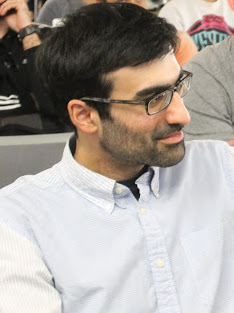 Arash Ali Amini合作论文数Department of Statistics, University of California Los Angeles7
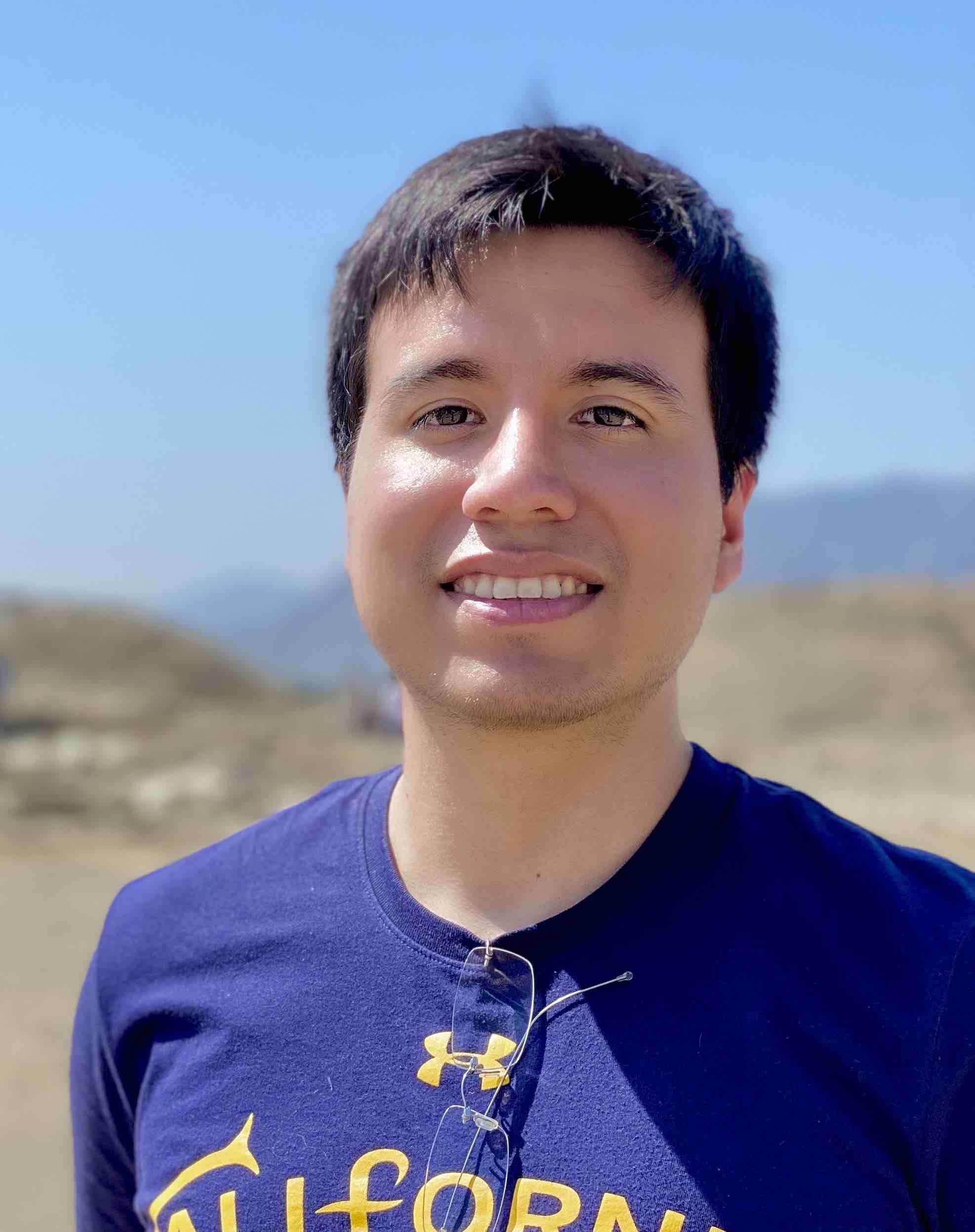 Kevin Bello合作论文数Booth School of Business, University of Chicago;Machine Learning Department, Carnegie Mellon University7
 Chang Deng合作论文数Booth School of Business, University of Chicago6
 Ming Gao (高鸣)合作论文数The Voleon Group6
 Yibo Jiang合作论文数Department of Computer Science, University of Chicago5
 Chen Dan (丹晨)合作论文数Department of Computer Science, Carnegie Mellon University5Bohdan Kivva合作论文数4
 Leqi Liu (刘乐淇)合作论文数Machine Learning Department, School of Computer Science, Carnegie Mellon University4
 Simon Buchholz合作论文数Department for Empirical Inference, Max Planck Institute for Intelligent Systems3
 Ben Lengerich合作论文数Department of Statistics, School of Computer, Data & Information Sciences, University of Wisconsin-Madison;Department of Computer Sciences, School of Computer, Data & Information Sciences, University of Wisconsin-Madison3
 Bernhard Schölkopf合作论文数Department of Computer Science, Eidgenössische Technische Hochschule Zürich;Max Planck Institute for Intelligent Systems;ELLIS Institute Tubingen3
 Haohan Wang (汪浩瀚)合作论文数School of Information Sciences, University of Illinois Urbana-Champaign;Department of Computer Science, University of Illinois Urbana-Champaign;Carl R. Woese Institute for Genomic Biology, University of Illinois Urbana-Champaign;National Center for Supercomputing Applications, University of Illinois Urbana-Champaign3
 Xun Zheng合作论文数Waymo3
 Tianyu Chen合作论文数University of Texas at Austin;Microsoft Research2
 Ruiyi Yang (杨睿逸)合作论文数School of Mathematical Sciences, Shanghai Jiao Tong University;Institute of Natural Sciences, Shanghai Jiao Tong University2
 Alex Markham合作论文数Res Grp Neuroinformat, Univ Vienna2
 Francesco Locatello合作论文数Causal Learning and Artificial Intelligence Lab, Institute of Science and Technology Austria2
 Robert A. Vandermeulen合作论文数Berlin Institute of Technology2
 Victor Veitch合作论文数Department of Statistics, The University of Chicago;Google2
 David I. Inouye合作论文数Elmore Family School of Electrical and Computer Engineering, Purdue University2
 Yuhao Wang (王瑜豪)合作论文数School of Computing, National University of Singapore2
 Liam Solus合作论文数Division of Mathematics of Data and AI, Department of Mathematics, School of Engineering Sciences, KTH Royal Institute of Technology2
 Arnab Bhattacharyya合作论文数Department of Computer Science, The University of Warwick1
 Paul Beaumont合作论文数1
 Francesco Montagna合作论文数Institute of Science and Technology Austria1Nisara Sriwattanaworachai合作论文数1Mingyu Liu合作论文数1
 Roxana Pamfil合作论文数QuantumBlack, London, England1
 Elan Rosenfeld合作论文数Machine Learning Department, Carnegie Mellon University1
 Caleb Ellington合作论文数1
 Shaan Desai合作论文数QuantumBlack, London, England1
 Elias Eulig合作论文数German Canc Res Ctr1
 Jiaying Gu合作论文数Department of Economics, Faculty of Arts and Science, University of Toronto1
 Manolis Kellis (Kamvysselis)合作论文数Computer Science and Artificial Intelligence Laboratory, Massachusetts Institute of Technology1
 Yi Ding合作论文数Elmore Family School of Electrical and Computer Engineering, Purdue University1
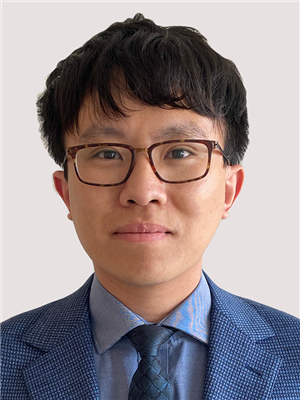 Han Zhao (赵晗)合作论文数Department of Computer Science, The Grainger College of Engineering, University of Illinois at Urbana-Champaign;Department of Electrical and Computer Engineering, University of Illinois at Urbana-Champaign;Amazon1
 Dominik Janzing合作论文数Karlsruhe Institute of Technology;Amazon Development Center1
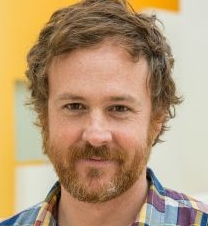 Lorenzo Rosasco合作论文数Dipartimento di Informatica, Bioingegneria, Robotica e Ingegneria dei Sistemi, Universita degli Studi di Genova1
 Atalanti A. Mastakouri合作论文数Amazon Web Services Research1
 Tommi S. Jaakkola合作论文数Department of Electrical Engineering and Computer Science, Schwarzman College of Computing, Massachusetts Institute of Technology;Institute for Data, Systems, and Society, Massachusetts Institute of Technology1
 Konstantinos Georgatzis合作论文数Aalto University1




