We introduce a new method for neighbourhood selection in linear structural equation models that improves over classical methods such as best subset selection (BSS) and the Lasso. Our method, called KL-BSS, takes advantage of the existence of underlying structure in SEM-even when this structure is unknown-and is easily implemented using existing solvers. Under weaker eigenvalue conditions compared to BSS and the Lasso, KL-BSS can provably recover the support of linear models with fewer samples. We establish both the pointwise and minimax sample complexity for support recovery, which KL-BSS obtains. Extensive experiments on both real and simulated data confirm the improvements offered by KL-BSS. While it is well-known that the Lasso encounters difficulties under structured dependencies, it is less well-known that even BSS runs into trouble as well, and can be substantially improved. These results have implications for structure learning in graphical models, which often relies on neighbourhood selection as a subroutine.
This paper studies active regression for single-index models under general ℓ_p-loss with an unknown 1-Lipschitz link function f, formulated as min_f,xf(Ax)-b_p^p with full access to A but coordinate-query access to b. Prior work established upper bounds for known link functions for all p≥ 1 and for unknown link functions only in the p=2 case, together with lower bounds for p≤ 2. This work addresses the more challenging setting of unknown link functions and general p ≥ 1. A non-adaptive sampling algorithm is presented that achieves a (1+ε)-approximation using O(d^p/2∨ 1/ε^p∨ 2polylog(n/ε)) queries. Nearly tight lower bounds are also established for p>2. These results close much of the remaining gap in active ℓ_p-regression for single-index models.
The active regression problem of the single-index model is to solve $\min_x \lVert f(Ax)-b\rVert_p$, where $A$ is fully accessible and $b$ can only be accessed via entry queries, with the goal of minimizing the number of queries to the entries of $b$. When $f$ is Lipschitz, previous results only obtain constant-factor approximations. This work presents the first algorithm that provides a $(1+\varepsilon)$-approximation solution by querying $\tilde{O}(d^{\frac{p}{2}\vee 1}/\varepsilon^{p\vee 2})$ entries of $b$. This query complexity is also shown to be optimal up to logarithmic factors for $p\in [1,2]$ and the $\varepsilon$-dependence of $1/\varepsilon^p$ is shown to be optimal for $p>2$.
We show that deep neural networks achieve dimension-independent rates of convergence for learning structured densities such as those arising in image, audio, video, and text applications. More precisely, we demonstrate that neural networks with a simple $L^2$-minimizing loss achieve a rate of $n^{-1/(4+r)}$ in nonparametric density estimation when the underlying density is Markov to a graph whose maximum clique size is at most $r$, and we provide evidence that in the aforementioned applications, this size is typically constant, i.e., $r=O(1)$. We then establish that the optimal rate in $L^1$ is $n^{-1/(2+r)}$ which, compared to the standard nonparametric rate of $n^{-1/(2+d)}$, reveals that the effective dimension of such problems is the size of the largest clique in the Markov random field. These rates are independent of the data's ambient dimension, making them applicable to realistic models of image, sound, video, and text data. Our results provide a novel justification for deep learning's ability to circumvent the curse of dimensionality, demonstrating dimension-independent convergence rates in these contexts.
We develop optimal algorithms for learning undirected Gaussian trees and directed Gaussian polytrees from data. We consider both problems of distribution learning (i.e. in KL distance) and structure learning (i.e. exact recovery). The first approach is based on the Chow-Liu algorithm, and learns an optimal tree-structured distribution efficiently. The second approach is a modification of the PC algorithm for polytrees that uses partial correlation as a conditional independence tester for constraint-based structure learning. We derive explicit finite-sample guarantees for both approaches, and show that both approaches are optimal by deriving matching lower bounds. Additionally, we conduct numerical experiments to compare the performance of various algorithms, providing further insights and empirical evidence.
Despite numerous years of research into the merits and trade-offs of various model selection criteria, obtaining robust results that elucidate the behavior of cross-validation remains a challenging endeavor. In this paper, we highlight the inherent limitations of cross-validation when employed to discern the structure of a Gaussian graphical model. We provide finite-sample bounds on the probability that the Lasso estimator for the neighborhood of a node within a Gaussian graphical model, optimized using a prediction oracle, misidentifies the neighborhood. Our results pertain to both undirected and directed acyclic graphs, encompassing general, sparse covariance structures. To support our theoretical findings, we conduct an empirical investigation of this inconsistency by contrasting our outcomes with other commonly used information criteria through an extensive simulation study. Given that many algorithms designed to learn the structure of graphical models require hyperparameter selection, the precise calibration of this hyperparameter is paramount for accurately estimating the inherent structure. Consequently, our observations shed light on this widely recognized practical challenge.
We study active learning methods for single index models of the form F(𝐱) = f(⟨𝐰, 𝐱⟩), where f:ℝ→ℝ and 𝐱,𝐰∈ℝ^d. In addition to their theoretical interest as simple examples of non-linear neural networks, single index models have received significant recent attention due to applications in scientific machine learning like surrogate modeling for partial differential equations (PDEs). Such applications require sample-efficient active learning methods that are robust to adversarial noise. I.e., that work even in the challenging agnostic learning setting. We provide two main results on agnostic active learning of single index models. First, when f is known and Lipschitz, we show that Õ(d) samples collected via statistical leverage score sampling are sufficient to learn a near-optimal single index model. Leverage score sampling is simple to implement, efficient, and already widely used for actively learning linear models. Our result requires no assumptions on the data distribution, is optimal up to log factors, and improves quadratically on a recent O(d^2) bound of . Second, we show that Õ(d) samples suffice even in the more difficult setting when f is unknown. Our results leverage tools from high dimensional probability, including Dudley's inequality and dual Sudakov minoration, as well as a novel, distribution-aware discretization of the class of Lipschitz functions.
We consider the problem of estimating a structured multivariate density, subject to Markov conditions implied by an undirected graph. In the worst case, without Markovian assumptions, this problem suffers from the curse of dimensionality. Our main result shows how the curse of dimensionality can be avoided or greatly alleviated under the Markov property, and applies to arbitrary graphs. While existing results along these lines focus on sparsity or manifold assumptions, we introduce a new graphical quantity called ``graph resilience'' and show that it dictates the optimal sample complexity. Surprisingly, although one might expect the sample complexity of this problem to scale with local graph parameters such as the degree, this turns out not to be the case. Through explicit examples, we compute uniform deviation bounds and illustrate how the curse of dimensionality in density estimation can thus be circumvented. Notable examples where the rate improves substantially include sequential, hierarchical, and spatial data.
We show that a constant-size constant-error coreset for polytope distance is simple to maintain under merges of coresets. However, increasing the size cannot improve the error bound significantly beyond that constant.
We study the optimal sample complexity of neighbourhood selection in linear structural equation models, and compare this to best subset selection (BSS) for linear models under general design. We show by example that -- even when the structure is \emph{unknown} -- the existence of underlying structure can reduce the sample complexity of neighbourhood selection. This result is complicated by the possibility of path cancellation, which we study in detail, and show that improvements are still possible in the presence of path cancellation. Finally, we support these theoretical observations with experiments. The proof introduces a modified BSS estimator, called klBSS, and compares its performance to BSS. The analysis of klBSS may also be of independent interest since it applies to arbitrary structured models, not necessarily those induced by a structural equation model. Our results have implications for structure learning in graphical models, which often relies on neighbourhood selection as a subroutine.
We study the problem of learning mixtures of Gaussians with censored data. Statistical learning with censored data is a classical problem, with numerous practical applications, however, finite-sample guarantees for even simple latent variable models such as Gaussian mixtures are missing. Formally, we are given censored data from a mixture of univariate Gaussians $ \sum_{i=1}^k w_i \mathcal{N}(\mu_i,\sigma^2), $ i.e. the sample is observed only if it lies inside a set $S$. The goal is to learn the weights $w_i$ and the means $\mu_i$. We propose an algorithm that takes only $\frac{1}{\varepsilon^{O(k)}}$ samples to estimate the weights $w_i$ and the means $\mu_i$ within $\varepsilon$ error.
We study the problem of learning nonparametric distributions in a finite mixture, and establish tight bounds on the sample complexity for learning the component distributions in such models. Namely, we are given i.i.d. samples from a pdf $f$ where $$ f=w_1f_1+w_2f_2, \quad w_1+w_2=1, \quad w_1,w_2>0 $$ and we are interested in learning each component $f_i$. Without any assumptions on $f_i$, this problem is ill-posed. In order to identify the components $f_i$, we assume that each $f_i$ can be written as a convolution of a Gaussian and a compactly supported density $\nu_i$ with $\text{supp}(\nu_1)\cap \text{supp}(\nu_2)=\emptyset$. Our main result shows that $(\frac{1}{\varepsilon})^{\Omega(\log\log \frac{1}{\varepsilon})}$ samples are required for estimating each $f_i$. The proof relies on a quantitative Tauberian theorem that yields a fast rate of approximation with Gaussians, which may be of independent interest. To show this is tight, we also propose an algorithm that uses $(\frac{1}{\varepsilon})^{O(\log\log \frac{1}{\varepsilon})}$ samples to estimate each $f_i$. Unlike existing approaches to learning latent variable models based on moment-matching and tensor methods, our proof instead involves a delicate analysis of an ill-conditioned linear system via orthogonal functions. Combining these bounds, we conclude that the optimal sample complexity of this problem properly lies in between polynomial and exponential, which is not common in learning theory.
We study the problem of learning nonparametric distributions in a finite mixture, and establish a super-polynomial lower bound on the sample complexity of learning the component distributions in such models. Namely, we are given i.i.d. samples from f where and we are interested in learning each component f i . Without any assumptions on f i , this problem is ill-posed. In order to identify the components f i , we assume that each f i can be written as a convolution of a Gaussian and a compactly supported density ν i with supp( ν i ) ∩ supp( ν j ) = ∅ . Our main result shows that Ω(( 1 ε ) C loglog 1 ε ) samples are required for estimating each f i . The proof relies on a fast rate for approximation with Gaussians, which may be of independent interest. This result has important implications for the hardness of learning more general nonparametric latent variable models that arise in machine learning applications.
We study the optimal sample complexity of learning a Gaussian directed acyclic graph (DAG) from observational data. Our main results establish the minimax optimal sample complexity for learning the structure of a linear Gaussian DAG model in two settings of interest: 1) Under equal variances without knowledge of the true ordering, and 2) For general linear models given knowledge of the ordering. In both cases the sample complexity is $n\asymp q\log(d/q)$, where $q$ is the maximum number of parents and $d$ is the number of nodes. We further make comparisons with the classical problem of learning (undirected) Gaussian graphical models, showing that under the equal variance assumption, these two problems share the same optimal sample complexity. In other words, at least for Gaussian models with equal error variances, learning a directed graphical model is statistically no more difficult than learning an undirected graphical model. Our results also extend to more general identification assumptions as well as subgaussian errors.
Given a point set $P\subset \mathbb{R}^d$, the kernel density estimate of $P$ is defined as \[ \overline{\mathcal{G}}_P(x) = \frac{1}{\left|P\right|}\sum_{p\in P}e^{-\left\lVert x-p \right\rVert^2} \] for any $x\in\mathbb{R}^d$. We study how to construct a small subset $Q$ of $P$ such that the kernel density estimate of $P$ is approximated by the kernel density estimate of $Q$. This subset $Q$ is called a coreset. The main technique in this work is constructing a $\pm 1$ coloring on the point set $P$ by discrepancy theory and we leverage Banaszczyk's Theorem. When $d>1$ is a constant, our construction gives a coreset of size $O\left(\frac{1}{\varepsilon}\right)$ as opposed to the best-known result of $O\left(\frac{1}{\varepsilon}\sqrt{\log\frac{1}{\varepsilon}}\right)$. It is the first result to give a breakthrough on the barrier of $\sqrt{\log}$ factor even when $d=2$.
Given points P = {p₁,...,p_n} subset of ℝ^d, how do we find a point x which approximately maximizes the function 1/n ∑_{p_i ∈ P} e^{-‖p_i-x‖²}? In other words, how do we find an approximate mode of a Gaussian kernel density estimate (KDE) of P? Given the power of KDEs in representing probability distributions and other continuous functions, the basic mode finding problem is widely applicable. However, it is poorly understood algorithmically. We provide fast and provably accurate approximation algorithms for mode finding in both the low and high dimensional settings. For low (constant) dimension, our main contribution is a reduction to solving systems of polynomial inequalities. For high dimension, we prove the first dimensionality reduction result for KDE mode finding. The latter result leverages Johnson-Lindenstrauss projection, Kirszbraun’s classic extension theorem, and perhaps surprisingly, the mean-shift heuristic for mode finding. For constant approximation factor these algorithms run in O(n (log n)^{O(d)}) and O(nd + (log n)^{O(log³ n)}), respectively; these are proven more precisely as a (1+e)-approximation guarantee. Furthermore, for the special case of d = 2, we give a combinatorial algorithm running in O(n log² n) time. We empirically demonstrate that the random projection approach and the 2-dimensional algorithm improves over the state-of-the-art mode-finding heuristics.
We introduce two versions of a new sketch for approximately embedding the Gaussian kernel into Euclidean inner product space. These work by truncating infinite expansions of the Gaussian kernel, and carefully invoking the RecursiveTensorSketch [Ahle et al. SODA 2020]. After providing concentration and approximation properties of these sketches, we use them to approximate the kernel distance between points sets. These sketches yield almost $(1+\varepsilon)$-relative error, but with a small additive $\alpha$ term. In the first variants the dependence on $1/\alpha$ is poly-logarithmic, but has higher degree of polynomial dependence on the original dimension $d$. In the second variant, the dependence on $1/\alpha$ is still poly-logarithmic, but the dependence on $d$ is linear.
We construct near-optimal coresets for kernel density estimates for points in $${\mathbb {R}}^d$$ when the kernel is positive definite. Specifically we provide a polynomial time construction for a coreset of size $$O(\sqrt{d}/\varepsilon \cdot \sqrt{\log 1/\varepsilon } )$$ , and we show a near-matching lower bound of size $$\Omega (\min \{\sqrt{d}/\varepsilon , 1/\varepsilon ^2\})$$ . When $$d\ge 1/\varepsilon ^2$$ , it is known that the size of coreset can be $$O(1/\varepsilon ^2)$$ . The upper bound is a polynomial-in- $$(1/\varepsilon )$$ improvement when $$d \in [3,1/\varepsilon ^2)$$ and the lower bound is the first known lower bound to depend on d for this problem. Moreover, the upper bound restriction that the kernel is positive definite is significant in that it applies to a wide variety of kernels, specifically those most important for machine learning. This includes kernels for information distances and the sinc kernel which can be negative.
Given points $p_1, \dots, p_n$ in $\mathbb{R}^d$, how do we find a point $x$ which maximizes $\frac{1}{n} \sum_{i=1}^n e^{-\|p_i - x\|^2}$? In other words, how do we find the maximizing point, or mode of a Gaussian kernel density estimation (KDE) centered at $p_1, \dots, p_n$? Given the power of KDEs in representing probability distributions and other continuous functions, the basic mode finding problem is widely applicable. However, it is poorly understood algorithmically. Few provable algorithms are known, so practitioners rely on heuristics like the "mean-shift" algorithm, which are not guaranteed to find a global optimum. We address this challenge by providing fast and provably accurate approximation algorithms for mode finding in both the low and high dimensional settings. For low dimension $d$, our main contribution is to reduce the mode finding problem to a solving a small number of systems of polynomial inequalities. For high dimension $d$, we prove the first dimensionality reduction result for KDE mode finding, which allows for reduction to the low dimensional case. Our result leverages Johnson-Lindenstrauss random projection, Kirszbraun's classic extension theorem, and perhaps surprisingly, the mean-shift heuristic for mode finding.
In the dictionary learning (or sparse coding) problem, we are given a collection of signals (vectors in $\mathbb{R}^d$), and the goal is to find a basis in which the signals have a sparse (approximate) representation. The problem has received a lot of attention in signal processing, learning, and theoretical computer science. The problem is formalized as factorizing a matrix $X (d \times n)$ (whose columns are the signals) as $X = AY$, where $A$ has a prescribed number $m$ of columns (typically $m \ll n$), and $Y$ has columns that are $k$-sparse (typically $k \ll d$). Most of the known theoretical results involve assuming that the columns of the unknown $A$ have certain incoherence properties, and that the coefficient matrix $Y$ has random (or partly random) structure. The goal of our work is to understand what can be said in the absence of such assumptions. Can we still find $A$ and $Y$ such that $X \approx AY$? We show that this is possible, if we allow violating the bounds on $m$ and $k$ by appropriate factors that depend on $k$ and the desired approximation. Our results rely on an algorithm for what we call the threshold correlation problem, which turns out to be related to hypercontractive norms of matrices. We also show that our algorithmic ideas apply to a setting in which some of the columns of $X$ are outliers, thus giving similar guarantees even in this challenging setting.
 Bryon Aragam合作论文数Booth School of Business, The University of Chicago9
 Jeff M. Phillips合作论文数School of Computing, University of Utah6
 Christopher Musco合作论文数Department of Computer Science and Engineering, Tandon School of Engineering, New York University3
 Robert A. Vandermeulen合作论文数Berlin Institute of Technology2
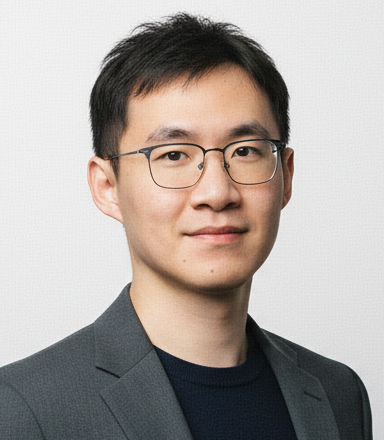 Ming Gao (高鸣)合作论文数The Voleon Group2
 Jasper Lee合作论文数Department of Computer Science, University of California, Davis2
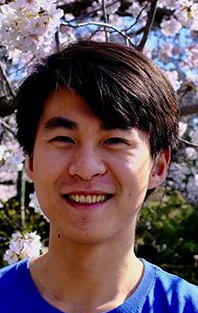 Jerry Li合作论文数Paul G. Allen School of Computer Science and Engineering, College of Engineering, University of Washington2
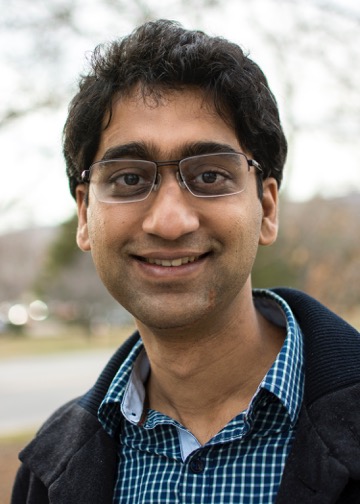 Aditya Bhaskara合作论文数School of Computing, University of Utah;Utah Center for Data Science, University of Utah2
 Arnab Bhattacharyya合作论文数Department of Computer Science, The University of Warwick1
 Xingyu Xu合作论文数Department of Electrical and Computer Engineering, College of Engineering, Carnegie Mellon University1Aarshvi Gajjar合作论文数1
 Yuhao Wang (王瑜豪)合作论文数School of Computing, National University of Singapore1
 Yi Li (李翼)合作论文数College of Computing and Data Science, Nanyang Technological University1
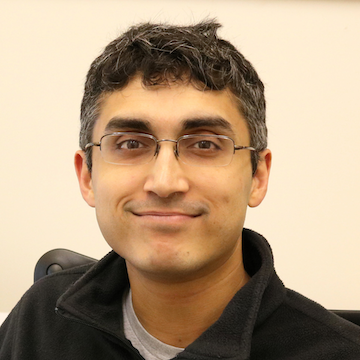 Chinmay Hegde合作论文数Department of Computer Science and Engineering, Tandon School of Engineering, New York University;Department of Electrical and Computer Engineering, Tandon School of Engineering, New York University1
 Mladen Kolar合作论文数Booth School of Business, University of Chicago;Department of Statistics, University of Chicago1
 Benwei Shi (史本伟)合作论文数College of GeoExploration Science and Technology, Jilin University1




