Ecological intensification (EI) provides an important and increasingly adopted pathway for achieving more sustainable agricultural systems. However, the implementation and success of on-farm EI practices may vary depending on landscape context and local management practices. We evaluated how EI interventions, including two different agricultural input regimes (high or low use of synthetic pesticides and fertilizers) and floral border crops, affected local natural enemy biodiversity, pest abundance and crop yield, and how this was influenced by the surrounding landscape context across 12 rice fields on smallholder farms in Puducherry, India. Reducing agricultural inputs positively impacted the overall natural enemy assemblage; however, responses to landscape factors varied. For example, coccinellid beetles were negatively correlated with higher densities of field edges (landscape configuration). In contrast, spiders, the most abundant group surveyed, were not significantly influenced by any landscape metric. Furthermore, pest abundance was greatest in fields with reduced inputs but only at sites where floral border crops were not present. Mean rice grain yield was lower across low-input sites compared with high-input sites and floral border crops had opposing effects across high- and low-input sites. At low-input sites, mean yields were 33% higher where floral border crops were present. At high-input sites, the presence of floral border crops was correlated with a lower mean yield (16%). These findings show that ecological intensification practices can benefit smallholder crop systems but highlight the need to account for variations in landscape context and local management practices for developing effective sustainable management practices.
In the real world, pollinators face multiple interacting pressures, and so response options must be tailored to this. To date, most attention has been on characterising the risks to managed pollinators from single stressors, though recently more attention has been paid to risks from multiple stressors (e.g., pesticides, pathogens and poor nutrition). The PoshBee project has developed a policy brief providing recommendations on options that mitigate against multiple stressors.
Managed bee species provide essential pollination services that contribute to food security worldwide. However, managed bees face a diverse array of threats and anticipating these, and potential opportunities to reduce risks, is essential for the sustainable management of pollination services. We conducted a horizon scanning exercise with 20 experts from across Europe to identify emerging threats and opportunities for managed bees in European agricultural systems. An initial 63 issues were identified, and this was shortlisted to 21 issues through the horizon scanning process. These ranged from local landscape-level management to geopolitical issues on a continental and global scale across seven broad themes-Pesticides & pollutants, Technology, Management practices, Predators & parasites, Environmental stressors, Crop modification, and Political & trade influences. While we conducted this horizon scan within a European context, the opportunities and threats identified will likely be relevant to other regions. A renewed research and policy focus, especially on the highest-ranking issues, is required to maximise the value of these opportunities and mitigate threats to maintain sustainable and healthy managed bee pollinators within agricultural systems.
Abstract Trade in animal‐pollinated crops plays an important role in global food systems: in many low‐income countries, export of pollinated crops such as coffee and cocoa plays a significant role in livelihoods, while food systems in many higher income nations depend on international trade in these crops to satisfy their local demands. Losses of pollination services therefore pose a significant risk to economies beyond the area directly affected. Using a simple extension of a common economic model, we explore which countries are most affected by a loss of pollination services in three case study groups of 25 countries that are vulnerable to different risks: pesticide use, natural disasters and economic debts. In all three cases, large, developed economies such as the United Kingdom, Germany and Japan, are estimated to suffer the greatest economic losses, even if pollinator losses only affect smaller, less‐developed economies. In cases where higher income countries are affected by pollinator losses, there is a significant shift in the value of global pollinated crop production towards other large, unaffected countries. Our findings highlight the need for richer countries to invest in pollinator conservation beyond their own borders to maintain resilient food systems. We provide suggestions for further economic research to better understand and identify system vulnerabilities to pollinator losses. Read the free Plain Language Summary for this article on the Journal blog.
Seventy five percent of the world's food crops benefit from insect pollination. Hence, there has been increased interest in how global change drivers impact this critical ecosystem service. Because standardized data on crop pollination are rarely available, we are limited in our capacity to understand the variation in pollination benefits to crop yield, as well as to anticipate changes in this service, develop predictions, and inform management actions. Here, we present CropPol, a dynamic, open, and global database on crop pollination. It contains measurements recorded from 202 crop studies, covering 3,394 field observations, 2,552 yield measurements (i.e., berry mass, number of fruits, and fruit density [kg/ha], among others), and 47,752 insect records from 48 commercial crops distributed around the globe. CropPol comprises 32 of the 87 leading global crops and commodities that are pollinator dependent. Malus domestica is the most represented crop (32 studies), followed by Brassica napus (22 studies), Vaccinium corymbosum (13 studies), and Citrullus lanatus (12 studies). The most abundant pollinator guilds recorded are honey bees (34.22% counts), bumblebees (19.19%), flies other than Syrphidae and Bombyliidae (13.18%), other wild bees (13.13%), beetles (10.97%), Syrphidae (4.87%), and Bombyliidae (0.05%). Locations comprise 34 countries distributed among Europe (76 studies), North America (60), Latin America and the Caribbean (29), Asia (20), Oceania (10), and Africa (7). Sampling spans three decades and is concentrated on 2001-2005 (21 studies), 2006-2010 (40), 2011-2015 (88), and 2016-2020 (50). This is the most comprehensive open global data set on measurements of crop flower visitors, crop pollinators and pollination to date, and we encourage researchers to add more datasets to this database in the future. This data set is released for non-commercial use only. Credits should be given to this paper (i.e., proper citation), and the products generated with this database should be shared under the same license terms (CC BY-NC-SA).
Insect pollination increases the yield and quality of many crops and therefore, understanding the role of insect pollinators in crop production is necessary to sustainably increase yields. Avocado Persea americana benefits from insect pollination, however, a better understanding of the role of pollinators and their contribution to the production of this globally important crop is needed. In this study, we carried out a systematic literature review and meta‐analysis of studies investigating the pollination ecology of avocado to answer the following questions: (a) Are there any research gaps in terms of geographic location or scientific focus? (b) What is the effect of insect pollinators on avocado pollination and production? (c) Which pollinators are the most abundant and effective and how does this vary across location? (d) How can insect pollination be improved for higher yields? (e) What are the current evidence gaps and what should be the focus of future research? Research from many regions of the globe has been published, however, results showed that there is limited information from key avocado producing countries such as Mexico and the Dominican Republic. In most studies, insects were shown to contribute greatly to pollination, fruit set and yield. Honeybees Apis mellifera were important pollinators in many regions due to their efficiency and high abundance, however, many wild pollinators also visited avocado flowers and were the most frequent visitors in over 50% of studies. This study also highlighted the effectiveness of stingless bees (Meliponini) and blow flies (Calliphoridae) as avocado pollinators although, for the majority of flower visitors, there is a lack of data on pollinator efficiency. For optimal yields, growers should ensure a sufficient abundance of pollinators in their orchards either through increasing honeybee hive density or, for a more sustainable approach, by managing wild pollinators through practices that protect or promote natural habitat.
Protecting, establishing and managing biodiverse semi-natural habitats is one strategy within the concept of ecological intensification of agriculture that supports insect pollinator abundance and diversity in agroecosystems. However, without accounting for species-level relationships between insects, crops and non-crop vegetation, diverse semi-natural habitats may not lead to improved crop pollination, and could create pest reservoirs. Possibly thousands of non-bee insect species contribute to global crop pollination, but research has largely focussed on bees. Thus, key information to best manage habitats that target wider crop pollinator diversity and abundance is lacking. We demonstrate the concept of designing mixed species native plantings (a type of semi-natural habitat) based on plant-insect interactions to increase abundance and diversity of non-bee and bee crop pollinators in an intensively managed agricultural landscape. We used existing refereed and grey literature to identify and anticipate interactions between pollinators, natural enemies and pests with native plants and crop species to design and establish plantings on three farms. We anticipated the designed plantings would support 21 pollinating species, 20 of which were verified in observational surveys 5 years post-establishment. While anticipated bee-plant species interactions were largely confirmed, actual networks of the non-bee pollinators, were larger and more complex than expected, indicating the plantings were particularly effective in supporting these interactions. Most immature life-stages of non-bee pollinators were not directly supported by plantings and separate strategies should consider larval requirements. Presenting the plant-pollinator networks to relevant industries has been a powerful tool for incentivising their support for designed habitats on farms.
Many pollinator species visit multiple crops in multiple regions, yet we know little about their pollination service provisioning at local and regional scales. We investigated the floral visitors (n = 13,200), their effectiveness (n = 1718 single visits) and response to landscape composition across three crops avocado, mango and macadamia within a single growing region (1 year), a single crop (3 years) and across different growing regions in multiple years. In total, eight wild visitor groups were shared across all three crops. The network was dominated by three pollinators, two bees (Apis mellifera and Tetragonula spp.) and a fly, Stomorhina discolor. The visitation network for the three crops was relatively generalised but with the addition of pollen deposition data, specialisation increased. Sixteen managed and wild taxa were consistently present across three years in avocado, yet their contribution to annual network structure varied. Node specialisation (d') analyses indicated many individual orchard sites across each of the networks were significantly more specialised compared to that predicted by null models, suggesting the presence of site-specific factors driving these patterns. Identifying the taxa shared across multiple crops, regions and years will facilitate the development of specific pollinator management strategies to optimize crop pollination services in horticultural systems.
Human land use threatens global biodiversity and compromises multiple ecosystem functions critical to food production. Whether crop yield-related ecosystem services can be maintained by a few dominant species or rely on high richness remains unclear. Using a global database from 89 studies (with 1475 locations), we partition the relative importance of species richness, abundance, and dominance for pollination; biological pest control; and final yields in the context of ongoing land-use change. Pollinator and enemy richness directly supported ecosystem services in addition to and independent of abundance and dominance. Up to 50% of the negative effects of landscape simplification on ecosystem services was due to richness losses of service-providing organisms, with negative consequences for crop yields. Maintaining the biodiversity of ecosystem service providers is therefore vital to sustain the flow of key agroecosystem benefits to society.
The survey of insect flower visitors to crops dependent on their pollination is an essential component in determining their effectiveness as pollinators. In most cases, different survey techniques are required for different crops because of variation in planting design, floral density, spatial distribution of flowers or where additional factors such as the variation in plant vigour are being explored. Here we provide survey techniques that have been, or are currently being employed to survey flower visitors across different crops in New Zealand and Australia. Future studies may consider the use of similar designs that will allow for increased standardisation within and between locations and studies. This will provide opportunities for improved direct comparisons between studies, and the ability to combine data sets to address broader spatial-scale questions regarding insect pollination.
Insect pollinators provide an essential ecosystem service by transferring pollen to crops and native vegetation. The extent to which pollinator communities vary both spatially and temporally has important implications for ecology, conservation and agricultural production. However, understanding the complex interactions that determine pollination service provisioning and production measures over space and time has remained a major challenge. Remote sensing technologies (RST), including satellite, airborne and ground based sensors, are effective tools for measuring the spatial and temporal variability of vegetation health, diversity and productivity within natural and modified systems. Yet while there are synergies between remote sensing science, pollination ecology and agricultural production, research communities have only recently begun to actively connect these research areas. Here, we review the utility of RST in advancing crop pollination research and highlight knowledge gaps and future research priorities. We found that RST are currently used across many different research fields to assess changes in plant health and production (agricultural production) and to monitor and evaluate changes in biodiversity across multiple landscape types (ecology and conservation). In crop pollination research, the use of RST are limited and largely restricted to quantifying remnant habitat use by pollinators by ascertaining the proportion of, and/or isolation from, a given land use type or local variable. Synchronization between research fields is essential to better understand the spatial and temporal variability in pollinator dependent crop production. RST enable these applications to be scaled across much larger areas than is possible with field-based methods and will facilitate large scale ecological changes to be detected and monitored. We advocate greater use of RST to better understand interactions between pollination, plant health and yield spatial variation in pollinator dependent crops. This more holistic approach is necessary for decision-makers to improve strategies toward managing multiple land use types and ecosystem services.
•We propose a new, additional community level property of pollination effectiveness.•This will facilitate connections among pollinators, plants and the environment.•This will require multiple methods and greater integration among research fields.
Small hive beetles (SHBs), Aethina tumida (Coleoptera: Nitidulidae), are parasites and scavengers of honey bee colonies in their endemic range in sub-Saharan Africa as well as in their new distribution range. Even though flowering plants may in principle also serve as a food for SHBs, evidence so far suggest that this beetle is unlikely to visit flowers. However, field data remain scarce calling for more efforts to investigate the potential of flowers as reservoirs for this pest of social bees. Here, we conducted extensive field surveys of flowering plants in Australia. Despite the very large sample size, not a single adult SHB was found on any of the flowers. This is in line with an earlier field survey. Since SHBs were also absent from fruits in another surveys, it appears as if alternative food sources outside of bee colonies are of minor importance only for SHBs.
 Brad G. Howlett合作论文数7
 Romina Rader合作论文数School of Environmental and Rural Science, University of New England7
 Andrew Robson合作论文数Applied Agr Remote Sensing Ctr AARSC, Univ New England4
 Simon Potts合作论文数Department of Sustainable Land Management, University of Reading4
 M. P. D. Garratt合作论文数4
 Jane Stout合作论文数School of Biological Sciences, University of Southampton3
 Lisa J. Evans合作论文数2
 Sam Read合作论文数2
 Davi Ramos合作论文数2
 Brian Cutting合作论文数2
 Pablo Cavigliasso合作论文数Programa Nacional Apícola, Instituto Nacional de Tecnología Agropecuaria2Amber R. Sciligo合作论文数2Carlos Zaragoza-Trello合作论文数Estaci Biol Donana EBD CSIC2Felipe D da Silva E Silva合作论文数2Rebecca Stewart合作论文数2
 Sarah Cusser合作论文数Santa Barbara Botanic Garden2
 Thijs Fijen合作论文数Plant Ecology and Nature Conservation Group, Wageningen University2
 Lovisa Nilsson合作论文数Ctr Environm & Climate Res, Lund Univ2
 Margaret Mayfield合作论文数School of BioSciences, University of Melbourne;Mayfield Community Ecology Lab, University of Melbourne2
 Heather Grab合作论文数School of Integrative Plant Science, College of Agriculture and Life Sciences, Cornell University2
 Jaboury Ghazoul合作论文数Utrecht University;Department of Environmental Systems Science, ETH Zurich2
 Rundlöf Maj合作论文数Dept Biol, Lund Univ2
 Agustin Saez合作论文数Universidad Nacional del Comahue2
 Alexandra Maria Klein合作论文数Faculty of Environment and Natural Resources, Albert-Ludwigs-Universitat Freiburg2
 de Groot G Arjen合作论文数Institute of Environmental Biology, Utrecht University2
 Gagic Vesna合作论文数Department of Ecology, Swedish University of Agricultural Sciences2
 Luisa Gigante Carvalheiro合作论文数Dept Ecol, Univ Brasilia2
 Jeroen Scheper合作论文数Resource Ecol Grp, Wageningen Univ2
 Rachel Mallinger合作论文数Department of Entomology, University of Wisconsin-Madison2
 David Kleijn合作论文数Plant Ecology and Nature Conservation Group, Wageningen University and Research2
 Marcelo A. Aizen合作论文数Centro Regional Universitario Bariloche, National University of Comahue2
 Vincent Bretagnolle合作论文数Centre d'Etudes Biologiques de Chizé, French National Centre for Scientific Research;University La Rochelle2
 Georg K. S. Andersson合作论文数Lund University, Lund University2
 Tom D. Breeze合作论文数School of Agriculture, Policy and Development, University of Reading2
 Antonio Diego de Melo Bezerra合作论文数2
 Alice Classen合作论文数University of Ulm, Goethe University Frankfurt2
 Yi Zou合作论文数2
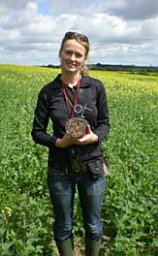 Dara A Stanley合作论文数School of Natural Sciences, Trinity College Dublin;Trinity Centre for Biodiversity Research, Trinity College Dublin;Trinity College Dublin, Trinity College Dublin2
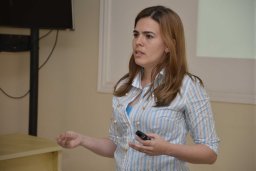 Juliana Hipolito合作论文数2
 Louis Sutter合作论文数2
 Matthias Albrecht合作论文数2
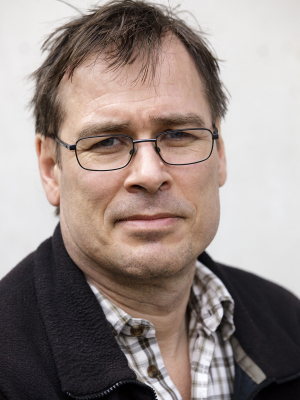 Henrik G. Smith (Henrik Smith)合作论文数Centre for Environmental and Climate Science, Lund University2
 Saul Cunningham合作论文数Fenner School of Environment and Society, Australian National University2
 Teja Tscharntke合作论文数Department of Crop Sciences, Georg-August-Universität Göttingen2
 Ingolf Steffan-Dewenter合作论文数Department of Animal Ecology and Tropical Biology, University of Würzburg2
 Blandina Felipe Viana合作论文数federal university of bahia2
 Breno Magalhaes Freitas合作论文数Departamento de Zootecnia;Universidade Federal do Ceará;Departamento de Zootecnia, Universidade Federal do Ceará2Hisatomo Taki合作论文数2
 FJJA (Felix) Bianchi合作论文数Wageningen University & Research2




