The potential for higher-resolution image generation using pretrained diffusion models is immense. However, these models often struggle with object repetition and structural artifacts especially when scaling to 4K resolution and beyond. Our analysis reveals that causes the problem, a single prompt for the generation of multiple scales provides insufficient efficacy. To address this, we propose HiPrompt, a new tuning-free solution that tackles the above problems by introducing hierarchical prompts. The hierarchical prompts provide both global and local semantic guidance. Specifically, the global prompt captures overall scene semantics from user input, while local guidance comes from patch-wise descriptions generated by MLLMs to refine regional structures and textures. Furthermore, during inverse denoising, noise is decomposed into low- and high-frequency components, each conditioned on different prompt levels, facilitating prompt-guided denoising under hierarchical semantic guidance. It further allows the generation to focus more on local spatial regions and ensures the generated images maintain coherent local and global semantics, structures, and textures with high definition. Extensive experiments demonstrate that HiPrompt outperforms state-of-the-art works in higher-resolution image generation, significantly reducing object repetition and enhancing structural quality. The demo and code can be found on the project website: https://liuxinyv.github.io/HiPrompt/ .
Vehicle motion planning is an essential component of autonomous driving technology. Current rule-based vehicle motion planning methods perform satisfactorily in common scenarios but struggle to generalize to long-tailed situations. Meanwhile, learning-based methods have yet to achieve superior performance over rule-based approaches in large-scale closed-loop scenarios. To address these issues, we propose PlanAgent, the first mid-to-mid planning system based on a Multi-modal Large Language Model (MLLM). MLLM is used as a cognitive agent to introduce human-like knowledge, interpretability, and common-sense reasoning into the closed-loop planning. Specifically, PlanAgent leverages the power of MLLM through three core modules. First, an Environment Transformation module constructs a Bird's Eye View (BEV) map and a lane-graph-based textual description from the environment as inputs. Second, a Reasoning Engine module introduces a hierarchical chain-of-thought from scene understanding to lateral and longitudinal motion instructions, culminating in planner code generation. Last, a Reflection module is integrated to simulate and evaluate the generated planner for reducing MLLM's uncertainty. PlanAgent is endowed with the common-sense reasoning and generalization capability of MLLM, which empowers it to effectively tackle both common and complex long-tailed scenarios. Our proposed PlanAgent is evaluated on the large-scale and challenging nuPlan benchmarks. A comprehensive set of experiments convincingly demonstrates that PlanAgent outperforms the existing state-of-the-art in the closed-loop motion planning task. Codes will be soon released.
In this paper, we propose OccTENS, a generative occupancy world model that enables controllable, high-fidelity long-term occupancy generation while maintaining computational efficiency. Different from visual generation, the occupancy world model must capture the fine-grained 3D geometry and dynamic evolution of the 3D scenes, posing great challenges for the generative models. Recent approaches based on autoregression (AR) have demonstrated the potential to predict vehicle movement and future occupancy scenes simultaneously from historical observations, but they typically suffer from inefficiency, temporal degradation in long-term generation and lack of controllability. To holistically address these issues, we reformulate the occupancy world model as a temporal next-scale prediction (TENS) task, which decomposes the temporal sequence modeling problem into the modeling of spatial scale-by-scale generation and temporal scene-by-scene prediction. With a TensFormer, OccTENS can effectively manage the temporal causality and spatial relationships of occupancy sequences in a flexible and scalable way. To enhance the pose controllability, we further propose a holistic pose aggregation strategy, which features a unified sequence modeling for occupancy and ego-motion. Experiments show that OccTENS outperforms the state-of-the-art method with both higher occupancy quality and faster inference time.
Traffic accidents present complex challenges for autonomous driving, often featuring unpredictable scenarios that hinder accurate system interpretation and responses.Nonetheless, prevailing methodologies fall short in elucidating the causes of accidents and proposing preventive measures due to the paucity of training data specific to accident scenarios.In this work, we introduce AVD2 (Accident Video Diffusion for Accident Video Description), a novel framework that enhances accident scene understanding by generating accident videos that aligned with detailed natural language descriptions and reasoning, resulting in the contributed EMM-AU (Enhanced Multi-Modal Accident Video Understanding) dataset. Empirical results reveal that the integration of the EMM-AU dataset establishes state-of-the-art performance across both automated metrics and human evaluations, markedly advancing the domains of accident analysis and prevention. Project resources are available at https://an-answer-tree.github.io
Recent advancements in autonomous driving (AD) systems have highlighted the potential of world models in achieving robust and generalizable performance across both ordinary and challenging driving conditions. However, a key challenge remains: precise and flexible camera pose control, which is crucial for accurate viewpoint transformation and realistic simulation of scene dynamics. In this paper, we introduce PosePilot, a lightweight yet powerful framework that significantly enhances camera pose controllability in generative world models. Drawing inspiration from self-supervised depth estimation, PosePilot leverages structure-from-motion principles to establish a tight coupling between camera pose and video generation. Specifically, we incorporate self-supervised depth and pose readouts, allowing the model to infer depth and relative camera motion directly from video sequences. These outputs drive pose-aware frame warping, guided by a photometric warping loss that enforces geometric consistency across synthesized frames. To further refine camera pose estimation, we introduce a reverse warping step and a pose regression loss, improving viewpoint precision and adaptability. Extensive experiments on autonomous driving and general-domain video datasets demonstrate that PosePilot significantly enhances structural understanding and motion reasoning in both diffusion-based and auto-regressive world models. By steering camera pose with self-supervised depth, PosePilot sets a new benchmark for pose controllability, enabling physically consistent, reliable viewpoint synthesis in generative world models.
The end-to-end autonomous driving paradigm has recently attracted lots of attention due to its scalability. However, existing methods are constrained by the limited scale of real-world data, which hinders a comprehensive exploration of the scaling laws associated with end-to-end autonomous driving. To address this issue, we collected substantial data from various driving scenarios and behaviors and conducted an extensive study on the scaling laws of existing imitation learning-based end-to-end autonomous driving paradigms. Specifically, approximately 4 million demonstrations from 23 different scenario types were gathered, amounting to over 30,000 hours of driving demonstrations. We performed open-loop evaluations and closed-loop simulation evaluations in 1,400 diverse driving demonstrations (1,300 for open-loop and 100 for closed-loop) under stringent assessment conditions. Through experimental analysis, we discovered that (1) the performance of the driving model exhibits a power-law relationship with the amount of training data; (2) a small increase in the quantity of long-tailed data can significantly improve the performance for the corresponding scenarios; (3) appropriate scaling of data enables the model to achieve combinatorial generalization in novel scenes and actions. Our results highlight the critical role of data scaling in improving the generalizability of models across diverse autonomous driving scenarios, assuring safe deployment in the real world. Project repository: this https URL
End-to-end architectures in autonomous driving (AD) face a significant challenge in interpretability, impeding human-AI trust. Human-friendly natural language has been explored for tasks such as driving explanation and 3D captioning. However, previous works primarily focused on the paradigm of declarative interpretability, where the natural language interpretations are not grounded in the intermediate outputs of AD systems, making the interpretations only declarative. In contrast, aligned interpretability establishes a connection between language and the intermediate outputs of AD systems. Here we introduce Hint-AD, an integrated AD-language system that generates language aligned with the holistic perception-prediction-planning outputs of the AD model. By incorporating the intermediate outputs and a holistic token mixer sub-network for effective feature adaptation, Hint-AD achieves desirable accuracy, achieving state-of-the-art results in driving language tasks including driving explanation, 3D dense captioning, and command prediction. To facilitate further study on driving explanation task on nuScenes, we also introduce a human-labeled dataset, Nu-X. Codes, dataset, and models will be publicly available.
3D dense captioning stands as a cornerstone in achieving a comprehensive understanding of 3D scenes through natural language. It has recently witnessed remarkable achievements, particularly in indoor settings. However, the exploration of 3D dense captioning in outdoor scenes is hindered by two major challenges: 1) the domain gap between indoor and outdoor scenes, such as dynamics and sparse visual inputs, makes it difficult to adapt existing indoor methods directly; 2) the lack of data with comprehensive box-caption pair annotations specifically tailored for outdoor scenes. To this end, we introduce the new task of outdoor 3D dense captioning. As input, we assume a LiDAR point cloud and a set of RGB images captured by the panoramic camera rig. The expected output is a set of object boxes with captions. To tackle this task, we propose the TOD^3Cap network, which leverages the BEV representation to generate object box proposals and integrates Relation Q-Former with LLaMA-Adapter to generate rich captions for these objects. We also introduce the TOD^3Cap dataset, the first million-scale dataset to our knowledge for 3D dense captioning in outdoor scenes, which contains 2.3M descriptions of 64.3K outdoor objects from 850 scenes in nuScenes. Notably, our TOD^3Cap network can effectively localize and caption 3D objects in outdoor scenes, which outperforms baseline methods by a significant margin (+9.6 CiDEr@0.5IoU). Code, dataset and models are publicly available at https://github.com/jxbbb/TOD3Cap .
Monocular Semantic Occupancy Prediction aims to infer the complete 3D geometry and semantic information of scenes from only 2D images. It has garnered significant attention, particularly due to its potential to enhance the 3D perception of autonomous vehicles. However, existing methods rely on a complex cascaded framework with relatively limited information to restore 3D scenes, including a dependency on supervision solely on the whole network's output, single-frame input, and the utilization of a small backbone. These challenges, in turn, hinder the optimization of the framework and yield inferior prediction results, particularly concerning smaller and long-tailed objects. To address these issues, we propose MonoOcc. In particular, we (i) improve the monocular occupancy prediction framework by proposing an auxiliary semantic loss as supervision to the shallow layers of the framework and an image-conditioned cross-attention module to refine voxel features with visual clues, and (ii) employ a distillation module that transfers temporal information and richer knowledge from a larger image backbone to the monocular semantic occupancy prediction framework with low cost of hardware. With these advantages, our method yields state-of-the-art performance on the camera-based SemanticKITTI Scene Completion benchmark. Codes and models can be accessed at https://github.com/ucaszyp/MonoOcc
End-to-end autonomous driving has great potential in the transportation industry. However, the lack of transparency and interpretability of the automatic decision-making process hinders its industrial adoption in practice. There have been some early attempts to use attention maps or cost volume for better model explainability which is difficult for ordinary passengers to understand. To bridge the gap, we propose an end-to-end transformer-based architecture, ADAPT (Action-aware Driving cAPtion Transformer), which provides user-friendly natural language narrations and reasoning for each decision making step of autonomous vehicular control and action. ADAPT jointly trains both the driving caption task and the vehicular control prediction task, through a shared video representation. Experiments on BDD-X (Berkeley DeepDrive eXplanation) dataset demonstrate state-of-the-art performance of the ADAPT framework on both automatic metrics and human evaluation. To illustrate the feasibility of the proposed framework in real-world applications, we build a novel deployable system that takes raw car videos as input and outputs the action narrations and reasoning in real time. The code, models and data are available at https://github.com/jxbbb/ADAPT.
Self-supervised depth estimation draws a lot of attention recently as it can promote the 3D sensing capa-bilities of self-driving vehicles. However, it intrinsically relies upon the photometric consistency assumption, which hardly holds during nighttime. Although various supervised night-time image enhancement methods have been proposed, their generalization performance in challenging driving scenarios is not satisfactory. To this end, we propose the first method that jointly learns a nighttime image enhancer and a depth estimator, without using ground truth for either task. Our method tightly entangles two self-supervised tasks using a newly proposed uncertain pixel masking strategy. This strategy originates from the observation that nighttime images not only suffer from underexposed regions but also from overexposed regions. By fitting a bridge-shaped curve to the illumination map distribution, both regions are suppressed and two tasks are bridged naturally. We benchmark the method on two established datasets: nuScenes and RobotCar and demonstrate state-of-the-art performance on both of them. Detailed ablations also reveal the mechanism of our proposal. Last but not least, to mitigate the problem of sparse ground truth of existing datasets, we provide a new photo-realistically enhanced nighttime dataset based upon CARLA. It brings meaningful new challenges to the community. Codes, data, and models are available at https://github.com/ucaszyp/STEPS.
We address the new problem of language-guided semantic style transfer of 3D indoor scenes. The input is a 3D indoor scene mesh and several phrases that describe the target scene. Firstly, 3D vertex coordinates are mapped to RGB residues by a multi-layer perceptron. Secondly, colored 3D meshes are differentiablly rendered into 2D images, via a viewpoint sampling strategy tailored for indoor scenes. Thirdly, rendered 2D images are compared to phrases, via pre-trained vision-language models. Lastly, errors are back-propagated to the multi-layer perceptron to update vertex colors corresponding to certain semantic categories. We did large-scale qualitative analyses and A/B user tests, with the public ScanNet and SceneNN datasets. We demonstrate: (1) visually pleasing results that are potentially useful for multimedia applications. (2) rendering 3D indoor scenes from viewpoints consistent with human priors is important. (3) incorporating semantics significantly improve style transfer quality. (4) an HSV regularization term leads to results that are more consistent with inputs and generally rated better. Codes and user study toolbox are available at https://github.com/AIR-DISCOVER/LASST.
 Yupeng Zheng合作论文数Institute for AI Industry Research, Tsinghua University7
 Hao Zhao (赵昊)合作论文数7
 Yuhang Zheng (郑宇航)合作论文数School of Computing, National University of Singapore6
 Pengfei Li合作论文数Institute for AI Industry Research, Tsinghua University;Institute of Intelligent Industry, Tsinghua University5
 Huan-ang Gao (高焕昂)合作论文数Department of Computer Science and Technology, Tsinghua University;Institute for AI Industry Research, Tsinghua University;Lumina-Embodied.AI4
 Qichao Zhang (张启超)合作论文数University of Chinese Academy of Sciences;Institute of Automation, Chinese Academy of Sciences4Xinyu Liu合作论文数3
 Xiao-Xiao Long (龙霄潇)合作论文数School of Intelligence Science and Technology, Nanjing University3
 Dongbin Zhao (赵冬斌)合作论文数Institute of Automation, Chinese Academy of Sciences;School of Artificial Intelligence, University of Chinese Academy of Sciences3Kun Zhan合作论文数2Xianpeng Lang合作论文数2
 Guyue Zhou (周谷越)合作论文数Distributed Collaborative Vision and Exponential Robotics Lab, Institute for AI Industry Research, Tsinghua University2
 Xia, Z.合作论文数2Chengliang Zhong合作论文数Tsinghua University2Peng Jia合作论文数1Xueyang Zhang合作论文数1Hengtong Hu合作论文数1Junpeng Jiang合作论文数1Zhenxin Zhu合作论文数1Baihan Yang合作论文数1Weize Li合作论文数1Zhuang, Mingqiao合作论文数1Wang, Yu合作论文数1Liu, Tong合作论文数1Zhou, Keyuan合作论文数1Ling Wang合作论文数1Tong Zhang合作论文数1Cheng Li合作论文数Institute for AI Industry Research, Tsinghua University;Academy of Interdisciplinary Studies, the Hong Kong University of Science and Technology1Sujie Hu合作论文数1Kairui Ding合作论文数1Haiyang Sun合作论文数1
 Zhijie Yan合作论文数AIR, THU;SMEA, Beihang University1Yingqing He合作论文数1Qifeng Liu合作论文数1
 Lanqing Guo (过岚清)合作论文数School of Electrical and Electronic Engineering, Nanyang Technological University1
 Chi-Min Chan (詹棋闵)合作论文数Hong Kong University of Science and Technology1
 TIAN Bei-wen合作论文数Tsinghua University, Tsinghua University1
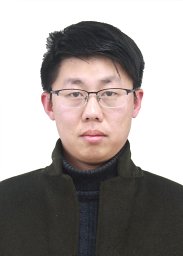 Wei Xue合作论文数Imperial Coll London, Dept Elect & Elect Engn, London, England1Jinwei Zhu合作论文数School of Aerospace Engineering, Tsinghua University1
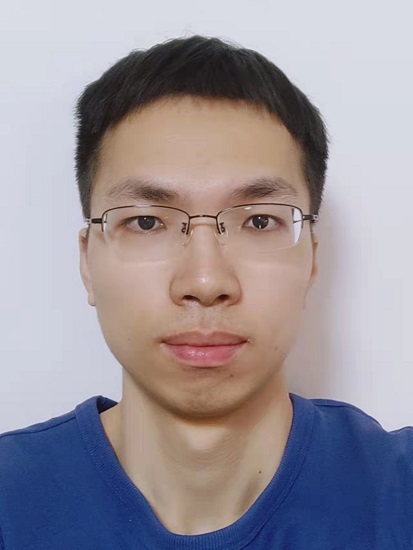 Yilun Chen合作论文数Shanghai Artificial Intelligence Laboratory1
 Xiao-Hui Li合作论文数Huawei1
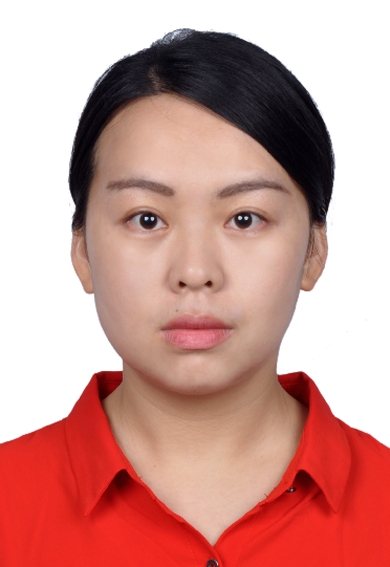 Yaran Chen (陈亚冉)合作论文数Institute of Automation, Chinese Academy of Sciences;School of Artificial Intelligence, University of Chinese Academy of Sciences1
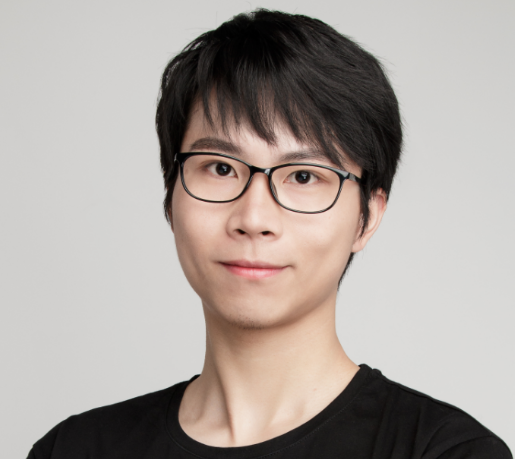 Xiang Li (李翔)合作论文数College of Computer Science, Nankai University1
 Jingjing Liu (刘菁菁)合作论文数Institute for AI Industry Research, Tsinghua University;Computer Science and Artificial Intelligence Laboratory, Tsinghua University1




