Contact-rich manipulation tasks, such as wiping and assembly, require accurate perception of contact forces, friction changes, and state transitions that cannot be reliably inferred from vision alone. Despite growing interest in visuo-tactile manipulation, progress is constrained by two persistent limitations: existing datasets are small in scale and narrow in task coverage, and current methods treat tactile signals as passive observations rather than using them to model contact dynamics or enable closed-loop control explicitly. In this paper, we present OmniViTac, a large-scale visuo-tactile-action dataset comprising 21,000+ trajectories across 86 tasks and 100+ objects, organized into six physics-grounded interaction patterns. Building on this dataset, we propose OmniVTA, a world-model-based visuo-tactile manipulation framework that integrates four tightly coupled modules: a self-supervised tactile encoder, a two-stream visuo-tactile world model for predicting short-horizon contact evolution, a contact-aware fusion policy for action generation, and a 60Hz reflexive controller that corrects deviations between predicted and observed tactile signals in a closed loop. Real-robot experiments across all six interaction categories show that OmniVTA outperforms existing methods and generalizes well to unseen objects and geometric configurations, confirming the value of combining predictive contact modeling with high-frequency tactile feedback for contact-rich manipulation. All data, models, and code will be made publicly available on the project website at https://mrsecant.github.io/OmniVTA.
World action models (WAMs) improve robot control by modeling how observations evolve, but generating future observations at test time incurs substantial latency. Fast-WAM removes this process for efficiency; however, our matched implementations show lower generalization for Fast-WAM than for future-aware alternatives, especially with scarce robot demonstrations and in out-of-distribution scenarios. To bridge this gap, we introduce **LAWA**, a WAM architecture that uses compact latent actions as an operational representation of future intentions, enabling efficient test-time future imagination without generating future observations. Specifically, a discrete tokenizer enhanced by action-free pre-training produces manipulation-centric codebook targets. LAWA jointly denoises a continuous latent state anchored to these targets with executable action chunks while omitting the future-video branch at inference. On RoboCasa, LAWA achieves state-of-the-art average success rates of 65.6
Transparent objects remain notoriously hard for perception systems: refraction, reflection and transmission break the assumptions behind stereo, ToF and purely discriminative monocular depth, causing holes and temporally unstable estimates. Our key observation is that modern video diffusion models already synthesize convincing transparent phenomena, suggesting they have internalized the optical rules. We build TransPhy3D, a synthetic video corpus of transparent/reflective scenes: 11k sequences (1.32M frames) rendered with Blender/Cycles. Scenes are assembled from a curated bank of category-rich static assets and shape-rich procedural assets paired with glass/plastic/metal materials. We render RGB + depth + normals with physically based ray tracing and OptiX denoising. Starting from a large video diffusion model, we learn a video-to-video translator for depth (and normals) via lightweight LoRA adapters. During training we concatenate RGB and (noisy) depth latents in the DiT backbone and co-train on TransPhy3D and existing frame-wise synthetic datasets, yielding temporally consistent predictions for arbitrary-length input videos. The resulting model, DKT, achieves zero-shot SOTA on real and synthetic video benchmarks involving transparency: ClearPose, DREDS (CatKnown/CatNovel), and TransPhy3D-Test. It improves accuracy and temporal consistency over strong image/video baselines (e.g., Depth-Anything-v2, DepthCrafter), and a normal variant (DKT-Normal) sets the best video normal estimation results on ClearPose. A compact 1.3B version runs at ~0.17 s/frame (832×480). Integrated into a grasping stack, DKTs depth boosts success rates across translucent, reflective and diffuse surfaces, outperforming prior estimators. Together, these results support a broader claim: Diffusion knows transparency. Generative video priors can be repurposed, efficiently and label-free, into robust, temporally coherent perception for challenging real-world manipulation.
Recent advances in Vision-Language-Action (VLA) models have opened new avenues for robot manipulation, yet existing methods exhibit limited efficiency and a lack of high-level knowledge and spatial awareness. To address these challenges, we propose PokeVLA, a lightweight yet powerful foundation model for embodied manipulation that effectively infuses vision-language understanding into action learning. Our framework introduces a two-stage training paradigm: first, we pre-train a compact vision-language model (PokeVLM) on a curated multimodal dataset of 2.4M samples encompassing spatial grounding, affordance, and embodied reasoning tasks; second, we inject manipulation-relevant representations into the action space through multi-view goal-aware semantics learning, geometry alignment, and a novel action expert. Extensive experiments demonstrate state-of-the-art performance on the LIBERO-Plus benchmark and in real-world deployment, outperforming comparable baselines in success rate and robustness under diverse perturbations. To foster reproducibility and community progress, we will open-source our code, model weights, and the scripts for the curated pre-training dataset. Project page: https://getterupper.github.io/PokeVLA
Vehicle motion planning is an essential component of autonomous driving technology. Current rule-based vehicle motion planning methods perform satisfactorily in common scenarios but struggle to generalize to long-tailed situations. Meanwhile, learning-based methods have yet to achieve superior performance over rule-based approaches in large-scale closed-loop scenarios. To address these issues, we propose PlanAgent, the first mid-to-mid planning system based on a Multi-modal Large Language Model (MLLM). MLLM is used as a cognitive agent to introduce human-like knowledge, interpretability, and common-sense reasoning into the closed-loop planning. Specifically, PlanAgent leverages the power of MLLM through three core modules. First, an Environment Transformation module constructs a Bird's Eye View (BEV) map and a lane-graph-based textual description from the environment as inputs. Second, a Reasoning Engine module introduces a hierarchical chain-of-thought from scene understanding to lateral and longitudinal motion instructions, culminating in planner code generation. Last, a Reflection module is integrated to simulate and evaluate the generated planner for reducing MLLM's uncertainty. PlanAgent is endowed with the common-sense reasoning and generalization capability of MLLM, which empowers it to effectively tackle both common and complex long-tailed scenarios. Our proposed PlanAgent is evaluated on the large-scale and challenging nuPlan benchmarks. A comprehensive set of experiments convincingly demonstrates that PlanAgent outperforms the existing state-of-the-art in the closed-loop motion planning task. Codes will be soon released.
The end-to-end autonomous driving paradigm has recently attracted lots of attention due to its scalability. However, existing methods are constrained by the limited scale of real-world data, which hinders a comprehensive exploration of the scaling laws associated with end-to-end autonomous driving. To address this issue, we collected substantial data from various driving scenarios and behaviors and conducted an extensive study on the scaling laws of existing imitation learning-based end-to-end autonomous driving paradigms. Specifically, approximately 4 million demonstrations from 23 different scenario types were gathered, amounting to over 30,000 hours of driving demonstrations. We performed open-loop evaluations and closed-loop simulation evaluations in 1,400 diverse driving demonstrations (1,300 for open-loop and 100 for closed-loop) under stringent assessment conditions. Through experimental analysis, we discovered that (1) the performance of the driving model exhibits a power-law relationship with the amount of data, but this is not the case in closed-loop evaluation. The inconsistency between the two assessments shifts our focus toward the distribution of data rather than merely expanding its volume. (2) a small increase in the quantity of long-tailed data can significantly improve the performance for the corresponding scenarios; (3) appropriate scaling of data enables the model to achieve combinatorial generalization in novel scenes and actions. Our results highlight the critical role of data scaling in improving the generalizability of models across diverse autonomous driving scenarios, assuring safe deployment in the real world.
Reliable mobile manipulation in dynamic indoor environments requires a scene representation that remains geometrically consistent, semantically queryable, and computationally bounded as the environment changes. Existing systems often rely on pre-built maps, static-scene assumptions, or highly accurate camera poses, which can lead to stale or misaligned scene information when target objects are relocated or pose estimates are corrected. This paper presents DREAM, a real-robot mobile manipulation framework that integrates perception, memory, localization, navigation, and manipulation in previously unseen indoor environments without a pre-built map. DREAM constructs an online spatio-semantic voxel memory from RGB-D observations registered by a LiDAR-inertial-visual SLAM backend. It further introduces pose-graph-aware Redundancy-Aware Memory Pruning (RMP) to update historical observations after pose corrections while keeping long-horizon observation history bounded. For target localization and reacquisition, DREAM combines language-conditioned 3D retrieval, open-vocabulary image detection, and multimodal large language model based semantic verification. Real-robot experiments in four dynamic indoor laboratory scenes show that DREAM improves long-horizon task success rates from 40
Contact-rich manipulation requires robots to continuously perceive and regulate evolving physical interactions under dynamic contact transitions or complex surface geometries. Recent imitation learning methods improve contact-aware control by incorporating tactile or force feedback, but they rarely model the asymmetric spatiotemporal roles of global force and local tactile sensing. To address this, we propose TacForeSight, a lightweight force-conditioned tactile foresight framework for real-time manipulation. The core component is TacForceWM, a tactile world model that predicts short-horizon tactile latent dynamics from dual-finger tactile observations conditioned on high-frequency wrist force and torque signals. Another key component, the Predictive Tactile-Conditioned Policy, leverages the predicted latents as anticipatory contact priors, models the current-to-future tactile evolution via cross-attention, and adaptively fuses visuo-tactile features through a tactile-guided gating module. By forecasting purely within a compact latent space, TacForeSight enables proactive contact reasoning with efficient real-time inference suitable for high-frequency manipulation control. Real-robot experiments on five representative tasks and three in-process perturbation settings show that TacForeSight consistently outperforms existing baselines, particularly under dynamic contact disturbances. All models and datasets will be made publicly available on the project website at https://tacforesight.github.io/ProjectPage.
Generalizable robot policies typically rely on action-labeled robot demonstrations, which are expensive to collect and difficult to scale. In contrast, large-scale human and robot videos contain rich physical interactions but often lack executable robot action labels. We present WALA, a framework for learning executable latent actions from both action-labeled demonstrations and action-free videos. WALA first pretrains a semantic-geometric latent action model from videos by modeling the evolution between current observations and sparsely sampled future observations. Instead of reconstructing raw pixels, WALA predicts future deltas in the DINOv3 feature space and dense depth space, preserving task-relevant semantic and geometric structure while reducing sensitivity to appearance details. During policy training, the pretrained encoder provides stable latent action targets, and the decoder serves as a trainable latent world model. The latent actions generated by the vision-language backbone are jointly supervised by robot action prediction, latent action target matching, and future dynamics prediction. This enables action-labeled demonstrations to provide executable control supervision, while action-free videos contribute dynamics supervision without requiring robot action annotations. Experiments show that WALA achieves strong performance on RoboTwin, sets a new state-of-the-art result on RoboCasa with 75.2
Vision-language pre-training and predictive world modeling provide robot policies with rich semantic and dynamic visual features, but their native action and visual-prediction objectives may omit critical physical and task structure while retaining control-irrelevant visual redundancy. We call this mismatch between visual richness and control utility the action-sufficiency gap. We investigate whether this gap can be bridged by guiding intermediate features to preserve three control-relevant structure in robotic manipulation: geometry governing motion feasibility, affordance encoding instruction-relevant entities, and goals grounding instructions in task-relevant regions. To this end, we present GIFT (Guided Intermediate Feature Training), an architecture-flexible framework for learning intermediate features that translates these structures into training-time constraints through geometry alignment, affordance prediction, and goal-region reconstruction. We instantiate GIFT in a Vision-Language-Action (VLA) policy, a direct-action World-Action Model (WAM), and an inverse-dynamics WAM while retaining each model's action formulation. Under zero-shot transfer to LIBERO-Plus, GIFT-VLA, GIFT-WAM-Fast, and GIFT-WAM-IDM outperform StarVLA-OFT, Fast-WAM, and Fast-WAM-IDM by 4.6, 12.6, and 5.2 points, reaching 79.6
Contact-rich manipulation requires policies to react to local deformation, pressure, slip, and friction, yet these cues are temporally sparse and often invisible in visual observations. Existing visual-tactile policies usually feed tactile observations directly into action prediction, but rarely model tactile deformation dynamics during action generation. In this paper, we introduce VT-WAM, a Visual-Tactile World Action Model that jointly learns future visual prediction, tactile deformation prediction, and action prediction within a unified flow matching framework. In particular, VT-WAM introduces (1) Asymmetric Mixture-of-Transformers (MoT) attention to bridge a first-frame visual anchor with temporal tactile dynamics, and (2) contact-gated Action-Visual-Tactile Attention Guidance (AVTAG) to encourage action queries to rely on tactile evidence during contact phases. Across six real-world contact-rich manipulation tasks, VT-WAM achieves a 71.67
Recently, end-to-end robotic manipulation models have gained significant attention for their generalizability and scalability. However, they often suffer from limited robustness to camera viewpoint changes when training with a fixed camera. In this paper, we propose VistaBot, a novel framework that integrates feed-forward geometric models with video diffusion models to achieve view-robust closed-loop manipulation without requiring camera calibration at test time. Our approach consists of three key components: 4D geometry estimation, view synthesis latent extraction, and latent action learning. VistaBot is integrated into both action-chunking (ACT) and diffusion-based (pi_0) policies and evaluated across simulation and real-world tasks. We further introduce the View Generalization Score (VGS) as a new metric for comprehensive evaluation of cross-view generalization. Results show that VistaBot improves VGS by 2.79× and 2.63× over ACT and pi_0, respectively, while also achieving high-quality novel view synthesis. Our contributions include a geometry-aware synthesis model, a latent action planner, a new benchmark metric, and extensive validation across diverse environments. The code and models of VistaBot will be open-sourced to facilitate future research on view-robust robotic manipulation.
Modern robotic policies increasingly rely on action chunking to execute complex tasks in the physical world. While action chunking improves temporal consistency at moderate action frequencies, it becomes insufficient when the action frequency is further increased (e.g., to 60~Hz). At such high frequencies, policies often fail to generate actions that are both temporally smooth and spatially consistent. We address this challenge by shifting high-frequency action learning from the action space to a latent space with variational autoencoder (VAE). This formulation significantly improves both temporal and spatial consistency of high-frequency control. To enable smooth real-time execution, we further introduce Reuse-then-Refine, a chunk-level refine strategy that improves continuity between adjacent action chunks under asynchronous inference. As a result, robots controlled by our policy can execute complex contact-rich tasks continuously, with less pauses and jerky motions. Experiments on three real-world contact-rich robotic tasks show that our approach consistently completes tasks with smooth motions.
We introduce World In Your Hands (WIYH), a large-scale open-source ecosystem comprising over 1,000 hours of human manipulation data collected in-the-wild with millimeter-scale motion accuracy. Specifically, WIYH includes (1) the Oracle Suite, a wearable data collection kit with an auto-labeling pipeline for accurate motion capture; (2) the WIYH Dataset, featuring over 1,000 hours of multimodal manipulation data across hundreds of skills in diverse real-world scenarios; and (3) extensive annotations and benchmarks supporting tasks from perception to action. Furthermore, experiments based on the WIYH ecosystem show that integrating WIYH's human-centric data improves robotic manipulation success rates from 8
End-to-end autonomous driving directly generates planning trajectories from raw sensor data, yet it typically relies on costly perception supervision to extract scene information. A critical research challenge arises: constructing an informative driving world model to enable perception annotation-free, end-to-end planning via self-supervised learning. In this paper, we present World4Drive, an end-to-end autonomous driving framework that employs vision foundation models to build latent world models for generating and evaluating multi-modal planning trajectories. Specifically, World4Drive first extracts scene features, including driving intention and world latent representations enriched with spatial-semantic priors provided by vision foundation models. It then generates multi-modal planning trajectories based on current scene features and driving intentions and predicts multiple intention-driven future states within the latent space. Finally, it introduces a world model selector module to evaluate and select the best trajectory. We achieve perception annotation-free, end-to-end planning through self-supervised alignment between actual future observations and predicted observations reconstructed from the latent space. World4Drive achieves state-of-the-art performance without manual perception annotations on both the open-loop nuScenes and closed-loop NavSim benchmarks, demonstrating an 18.1% relative reduction in L2 error, 46.7
Articulated 3D objects play a vital role in realistic simulation and embodied robotics, yet manually constructing such assets remains costly and difficult to scale. In this paper, we present UniArt, a diffusion-based framework that directly synthesizes fully articulated 3D objects from a single image in an end-to-end manner. Unlike prior multi-stage techniques, UniArt establishes a unified latent representation that jointly encodes geometry, texture, part segmentation, and kinematic parameters. We introduce a reversible joint-to-voxel embedding, which spatially aligns articulation features with volumetric geometry, enabling the model to learn coherent motion behaviors alongside structural formation. Furthermore, we formulate articulation type prediction as an open-set problem, removing the need for fixed joint semantics and allowing generalization to novel joint categories and unseen object types. Experiments on the PartNet-Mobility benchmark demonstrate that UniArt achieves state-of-the-art mesh quality and articulation accuracy.
Recently, language foundation models have revolutionized many fields and how they could enable smarter and safer autonomous vehicles remains elusive. We believe one major obstacle is the lack of a comprehensive and standard middleware representation that links perception and planning. We rethink the limitations of existing middleware (e.g., 3D boxes or occupancy) and propose 3\textbf{D} d\textbf{e}n\textbf{s}e capt\textbf{i}onin\textbf{g} beyond \textbf{n}ouns (or abbreviated as DESIGN). For each input scenario, DESIGN refers to a set of 3D bounding boxes with a language description for each. Notably, the \textbf{comprehensive} description involves not only what the box is (noun) but also its attribute (adjective), location (preposition) and moving status (adverb). We design a scalable rule-based auto-labelling methodology to generate DESIGN ground truth, guaranteeing that the middleware is \textbf{standard}. Using this methodology, we construct a large-scale dataset nuDesign based upon nuScenes, which consists of an unprecedented number of 2300k sentences. We also present an extensive benchmarking on nuDesign, featuring a model named DESIGN-former that takes multi-modal inputs and predicts reliable DESIGN outputs. Through qualitative visualizations, we demonstrate that DEISGN, as a novel 3D scene understanding middleware, has good interpretability. We release our code, data and models, hoping this middleware could trigger better autonomous driving algorithms and systems that benefit from the power of language foundation models.
Constructing a 3D scene capable of accommodating open-ended language queries, is a pivotal pursuit, particularly within the domain of robotics. Such technology facilitates robots in executing object manipulations based on human language directives. To tackle this challenge, some research efforts have been dedicated to the development of language-embedded implicit fields. However, implicit fields (e.g. NeRF) encounter limitations due to the necessity of processing a large number of input views for reconstruction, coupled with their inherent inefficiencies in inference. Thus, we present the GaussianGrasper, which utilizes 3D Gaussian Splatting to explicitly represent the scene as a collection of Gaussian primitives. Our approach takes a limited set of RGB-D views and employs a tile-based splatting technique to create a feature field. In particular, we propose an Efficient Feature Distillation (EFD) module that employs contrastive learning to efficiently and accurately distill language embeddings derived from foundational models. With the reconstructed geometry of the Gaussian field, our method enables the pre-trained grasping model to generate collision-free grasp pose candidates. Furthermore, we propose a normal-guided grasp module to select the best grasp pose. Through comprehensive real-world experiments, we demonstrate that GaussianGrasper enables robots to accurately query and grasp objects with language instructions, providing a new solution for language-guided manipulation tasks. Data and codes can be available at https://github.com/MrSecant/GaussianGrasper.
The end-to-end autonomous driving paradigm has recently attracted lots of attention due to its scalability. However, existing methods are constrained by the limited scale of real-world data, which hinders a comprehensive exploration of the scaling laws associated with end-to-end autonomous driving. To address this issue, we collected substantial data from various driving scenarios and behaviors and conducted an extensive study on the scaling laws of existing imitation learning-based end-to-end autonomous driving paradigms. Specifically, approximately 4 million demonstrations from 23 different scenario types were gathered, amounting to over 30,000 hours of driving demonstrations. We performed open-loop evaluations and closed-loop simulation evaluations in 1,400 diverse driving demonstrations (1,300 for open-loop and 100 for closed-loop) under stringent assessment conditions. Through experimental analysis, we discovered that (1) the performance of the driving model exhibits a power-law relationship with the amount of training data; (2) a small increase in the quantity of long-tailed data can significantly improve the performance for the corresponding scenarios; (3) appropriate scaling of data enables the model to achieve combinatorial generalization in novel scenes and actions. Our results highlight the critical role of data scaling in improving the generalizability of models across diverse autonomous driving scenarios, assuring safe deployment in the real world. Project repository: this https URL
 Yupeng Zheng合作论文数Institute for AI Industry Research, Tsinghua University25
 Pengfei Li合作论文数Institute for AI Industry Research, Tsinghua University;Institute of Intelligent Industry, Tsinghua University13
 Hao Zhao (赵昊)合作论文数10
 Qichao Zhang (张启超)合作论文数University of Chinese Academy of Sciences;Institute of Automation, Chinese Academy of Sciences8
 Guyue Zhou (周谷越)合作论文数Distributed Collaborative Vision and Exponential Robotics Lab, Institute for AI Industry Research, Tsinghua University8
 Dongbin Zhao (赵冬斌)合作论文数Institute of Automation, Chinese Academy of Sciences;School of Artificial Intelligence, University of Chinese Academy of Sciences8
 Yilun Chen合作论文数Shanghai Artificial Intelligence Laboratory7Bu Jin合作论文数6
 Xia, Z.合作论文数6
 Wenchao Ding (丁文超)合作论文数College of Intelligent Robotics and Advanced Manufacturing, Fudan University;TARS Robotics6Chengliang Zhong合作论文数Tsinghua University5
 Zhijie Yan合作论文数AIR, THU;SMEA, Beihang University4
 Xiao-Xiao Long (龙霄潇)合作论文数School of Intelligence Science and Technology, Nanjing University4Haoran Li合作论文数State Key Laboratory of Multimodal Artificial Intelligence Systems, Institute of Automation, Chinese Academy of Sciences3Xiaoxue Chen (陈小雪)合作论文数Institute for AI Industry Research, Tsinghua University;Department of Computer Science and Technology, Tsinghua University3
 Yaqin Zhang (张亚勤)合作论文数Department of Computer Science and Technology, Tsinghua University;Institute for Al Industry Research, Tsinghua University3Sujie Hu合作论文数2Kun Zhan合作论文数2Xianpeng Lang合作论文数2Zhengxiao Han合作论文数2Xinyu Liu合作论文数2Shaocong Xu合作论文数2Jinwei Zhu合作论文数School of Aerospace Engineering, Tsinghua University2
 Zuoxu Wang (王佐旭)合作论文数Department of Industrial and Manufacturing Systems Engineering, School of Mechanical Engineering & Automation, Beihang University2
 Xiang Li (李翔)合作论文数College of Computer Science, Nankai University2
 Chao Yang (杨超)合作论文数2
 Shuicheng Yan (颜水成)合作论文数Department of Computer Science, School of Computing, National University of Singapore2XianPeng Lang合作论文数1Peng Jia合作论文数1Teng Zhang合作论文数1Zebin Xing合作论文数1Pengxuan Yang合作论文数1Ling Wang合作论文数1Tong Zhang合作论文数1
 Ce Hao (郝策)合作论文数Zhongguancun Academy1
 Kunyun Wang合作论文数School of Electronic Information and Electrical Engineering, Shanghai Jiao Tong University1
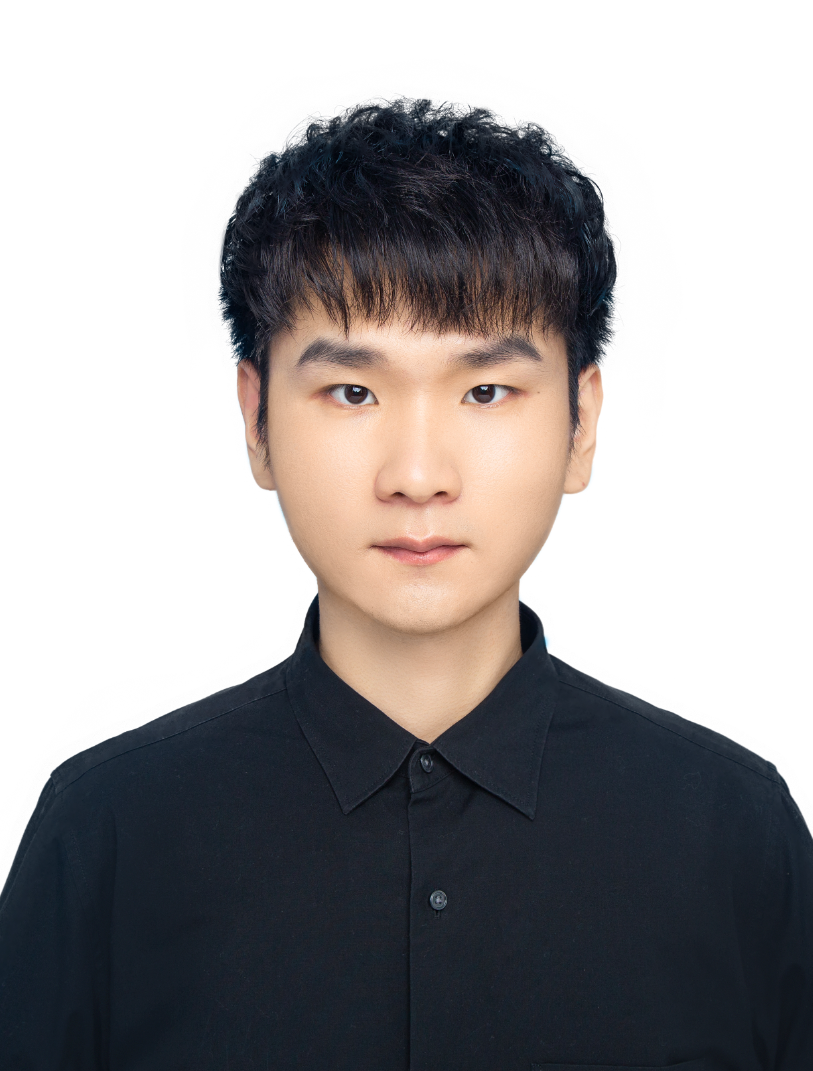 Bohan Li (李博涵)合作论文数Shanghai Jiao Tong University;Eastern Institute for Advanced Study1Songen Gu合作论文数1Haiyang Sun合作论文数1
 Runyi Yang (杨润一)合作论文数1Pengfei Huang合作论文数1Nairui Luo合作论文数1Weize Li合作论文数1
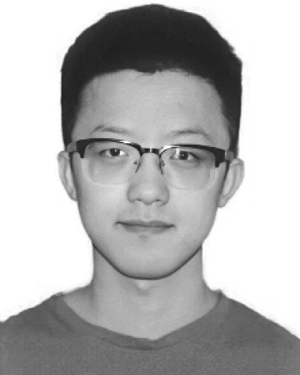 Yinfeng Gao合作论文数1
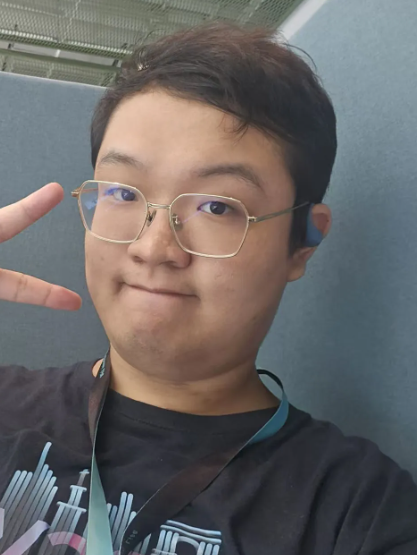 Huan-ang Gao (高焕昂)合作论文数Department of Computer Science and Technology, Tsinghua University;Institute for AI Industry Research, Tsinghua University;Lumina-Embodied.AI1
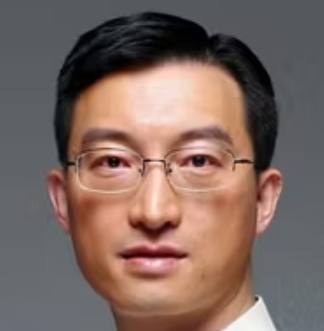 Yurong Chen合作论文数AI Research Lab, Intel Corporation1
 Xiao Shengjie合作论文数1




