Introduction:The phytolith (plant silica) morphotype, Elongate dendritic, is used to indicate the presence of domesticated grasses (cereals) from the Pooideae subfamily, such as wheat and barley, in the archaeological record, but related wild taxa also produce Elongate dendritic that closely resemble those of cereals. By examining the morphometric traits of Elongate dendritic in a diverse set of extant Pooideae taxa, we evaluate its effectiveness as a proxy for cereal domestication and identification. Methods:We investigated the occurrence of Elongate dendritic across a wide range of Pooideae taxa and generated 3D meshes of phytoliths using confocal microscopy. From these meshes, we extracted geometric morphometric and topological traits, which served as input for machine learning (ML) models to assess the taxonomic resolution of Elongate dendritic. Regression models and linear discriminant analyses (LDAs) were applied to test for links between morphometric traits, domestication status, and ploidy level. Results:Our results show that Elongate dendritic occurrence is likely an ancestral trait within Pooideae, with high levels largely confined to Triticeae (wheat, barley, rye) and Avena (oats). Machine learning applied to 3D phytolith traits captured meaningful taxonomic patterns, with more reliable identification at broader taxonomic levels than at finer ones. However, the approach requires further refinement before it can be robustly applied to archaeological samples. Regression models and LDA demonstrated that while domestication significantly influences morphometric variation, ploidy level does not, although further study is warranted. Discussion:These findings offer important guidance for archaeologists and biologists studying crop domestication. By integrating 3D morphometrics, topological data analysis, and ML, this study introduces a new approach to quantitative phytolith identification. Continued expansion of reference datasets, coupled with methodological refinement, will be essential for improving identification at finer taxonomic levels and unlocking the full potential of Elongate dendritic in the study of domestication and 168 cultivation practices.
Background and Aims The absence of a modern plant-based 'dicotyledon' phytolith reference baseline impedes the accurate interpretation of fossil phytolith records in archaeological and palaeoecological research within Northwest (NW) Europe. This study aims to fill this gap by documenting and analysing the phytolith record from modern dicotyledon taxa occurring in this region.Methods Phytoliths were extracted from several plant parts of 117 plant specimens representing 74 species (one or two specimens per species). The study employed light microscopy to examine phytolith production (non-producer, trace, common or abundant) and phytolith assemblage composition. The data were analysed statistically to (1) determine the influence of taxonomy and plant part on phytolith presence (absent/present) using a mixed model, (2) assess phytolith assemblage variation using a permutational multivariate analysis of variance (PerMANOVA) and (3) identify patterns among sample groups including segregation for plant part, life form (forbs vs. shrubs/trees) and order using linear discriminant analyses (LDA).Key Results Morphotype analysis revealed diagnostic morphotypes and features for specific plant families, genera and plant parts. LDA effectively segregated plant parts and life forms, though taxonomic groupings showed limited segregation. Phytolith presence (absent/present) was found to vary, influenced by both plant part and taxonomy. For species examined through two specimens, although phytolith production varied considerably, phytolith assemblage composition was consistent.Conclusions This study establishes a 'dicotyledon' phytolith baseline for NW Europe, showing that the phytolith record can be informative in terms of plant part and life form and that several phytolith morphotypes and/or features are taxonomically diagnostic below 'dicotyledon' level. The findings constitute a foundation upon which future research can build, refining and expanding our knowledge of the NW European region.
PREMISE:Leaf mass per area (LMA) links leaf economic strategies, community assembly, and climate and can be reconstructed from woody non-monocot angiosperm (WNMA) fossils using the petiole metric (PM; petiole width2/leaf area). Reliable interpretation of LMA reconstructed from the fossil record is limited by an incomplete understanding of how PM and LMA are correlated at the community scale and what climatic parameters drive variation of both measured and reconstructed LMA of WNMAs globally. METHODS:A modern, global, community-scale data set of in situ WNMA LMA and PM was compiled to test leading hypotheses for environmental drivers of LMA and quantify LMA-PM relationships. Correlations among PM, LMA, climate (Köppen types and continuous data), and leaf habit were assessed and quantified using several uni- and multivariate methods. RESULTS:Community mean LMA increased under warmer and less seasonal temperatures. Drought-prone communities had the highest LMA variance, likely due to disparity between riparian and non-riparian microhabitats. PM and LMA were correlated for community mean and variance, and their correlations with climate were similar. These patterns indicate that climatic correlatives of modern LMA can inform relative trends in reconstructed fossil LMA. In contrast, matching "absolute" LMA distributions between fossil and modern sites does not allow reliable inference of analogous climate types. CONCLUSIONS:This study furthers our understanding of processes influencing the assembly of WNMA leaf economic strategies in plant communities, highlighting the importance of temperature seasonality and habitat heterogeneity. We also provide a method to reconstruct, and refine the framework to interpret, community-scale LMA in the fossil record.
PREMISE:Grasses support critically important ecosystems, occupy a large portion of Earth's land surface, and provide essential resources, including maize, other cereal crops, and bamboo. Their radiation and global spread have been documented primarily by microfossils and paleosol isotopic studies, whereas reconstruction of phylogenetic relationships has relied primarily on living species. However, hypothetical dates associated with evolutionary events can be tested only by fossils. We report new, dated Pharoideae phytoliths from Ethiopia (21.73 Ma), pushing back the first occurrence of that subfamily in the Old World by 10 million years. We also formally describe a rare Pharoideae leaf impression reported from Kenya (12.6 Ma). We discuss the relevance of the fossils to phylogenetics, paleobiogeography, and paleoecology. METHODS:Phytoliths and the macrofossil were prepared using standard techniques. Fossils were identified by comparison with online, herbarium, and research collections. RESULTS:The phytoliths possess characters exclusive to living Pharoideae. The fossil leaf compares favorably to one species in each of the two living Paleotropical Pharoideae genera, Leptaspis and Scrotochloa. Thus, the subfamily was present in Africa by the early Miocene, improving on previous middle Miocene estimates used to date the Neotropical-Paleotropical crown group split. The fossil sites were forests, indicating that Pharoideae occupied the same niche as today; the broad leaf of the macrofossil is consistent with that of living C3 forest grasses. CONCLUSIONS:Early Miocene (21.73 Ma) Pharoideae phytoliths from Ethiopia provide a new, earlier, first occurrence datum for Poaceae trees. The subfamily occupied a forest niche as it does today.
Abstract Research on silicon (Si) biogeochemistry and its beneficial effects for plants has received significant attention over several decades, but the reasons for the emergence of high-Si plants remain unclear. Here, we combine experimentation, field studies and analysis of existing databases to test the role of temperature on the expression and emergence of silicification in terrestrial plants. We first show that Si is beneficial for rice under high temperature (40 °C), but harmful under low temperature (0 °C), whilst a 2 °C increase results in a 37% increase in leaf Si concentrations. We then find that, globally, the average distribution temperature of high-Si plant clades is 1.2 °C higher than that of low-Si clades. Across China, leaf Si concentrations increase with temperature in high-Si plants (wheat and rice), but not in low-Si plants (weeping willow and winter jasmine). From an evolutionary perspective, 77% of high-Si families (>10 mg Si g−1 DW) originate during warming episodes, while 86% of low-Si families (<1 mg Si g−1 DW) originate during cooling episodes. On average, Earth’s temperature during the emergence of high-Si families is 3 °C higher than that of low-Si families. Taken together, our evidence suggests that plant Si variation is closely related to global and long-term climate change.
PREMISE:The rate of carbon assimilation in leaves (A) is a key trait central to a plant's economic strategy that has downstream impacts on the regional and global cycling of carbon and other nutrients. Most previous paleoecological studies estimate A from nearest living relatives or leaf vein density. METHODS:We present a method for reconstructing A using gas-exchange modeling that requires both measured (stomatal size and density, leaf δ13C) and inferred (e.g., atmospheric CO2 concentration) inputs. We apply this method to ten extant taxa and nine fossil taxa representing common angiosperms of the exquisitely preserved mid-Miocene (~15.9 Ma) flora at Clarkia in northern Idaho, USA. RESULTS:Application to extant taxa produces estimates of A that are near measured values on the same leaves (R2 = 0.89 across all taxa). Median reconstructed A for fossil taxa range from 9.5-21.7 µmol m-2 s-1 with 95% confidence intervals ~+51%/-38% indicating that most species are statistically indistinguishable. Sensitivity tests show that our method is most reliable when CO2 is well-constrained, but when that is impractical, taxa within single sampling horizons (with a presumed fixed CO2 concentration) can be organized by A into a relative rank order with tighter confidence intervals (~+16%/-14%). CONCLUSIONS:Following this relative approach at Clarkia, we reconstruct high A for taxa whose modern relatives are characterized by rapid growth and/or riparian habitats (Castanea and Platanus) and corroborate previous interpretations on the ecology of taxa whose modern relatives are less known (Quercus simulata).
Premise:Pteridophytes-vascular land plants that disperse by spores-are a powerful system for studying plant evolution, particularly with respect to the impact of abiotic factors on evolutionary trajectories through deep time. However, our ability to use pteridophytes to investigate such questions-or to capitalize on the ecological and conservation-related applications of the group-has been impaired by the relative isolation of the neo- and paleobotanical research communities and by the absence of large-scale biodiversity data sources. Methods:Here we present the Pteridophyte Collections Consortium (PCC), an interdisciplinary community uniting neo- and paleobotanists, and the associated PteridoPortal, a publicly accessible online portal that serves over three million pteridophyte records, including herbarium specimens, paleontological museum specimens, and iNaturalist observations. We demonstrate the utility of the PteridoPortal through discussion of three example PteridoPortal-enabled research projects. Results:The data within the PteridoPortal are global in scope and are queryable in a flexible manner. The PteridoPortal contains a taxonomic thesaurus (a digital version of a Linnaean classification) that includes both extant and extinct pteridophytes in a common phylogenetic framework. The PteridoPortal allows applications such as greatly accelerated classic floristics, entirely new "next-generation" floristic approaches, and the study of environmentally mediated evolution of functional morphology across deep time. Discussion:The PCC and PteridoPortal provide a comprehensive resource enabling novel research into plant evolution, ecology, and conservation across deep time, facilitating rapid floristic analyses and other biodiversity-related investigations, and providing new opportunities for education and community engagement.
Reconstructing past vegetation can elucidate the timing, climate forcings, and biotic mechanisms of ecosystem change. Plant macro-and microfossils are traditionally used to study past vegetation but suffer from production and taphonomic biases, such as underrepresentation of important herbaceous vegetation components. Geochemical proxies can fill this gap, but carbon isotopes (delta 13C) in isolation are unable to distinguish between structurally different C3 habitats, such as forests and grasslands. Thus, new geochemical methods to identify grassy C3 ecosystems are necessary. We present n-alkane chain length distributions of 209 plant specimens from two Kenyan C3-dominated ecosystems, representing a wide range of plant functional types (PFTs). We find that C3 PACMAD grasses produce exceptionally high abundances of long chain C33 and C35 n-alkanes (ACL = 32.7, mean C33 + C35 relative abundance = 0.69), unlike other C3 PFTs which produce low abundances of C33 and C35 (ACL = 28.9-30.3, mean C33 + C35 relative abundance = 0.0-0.21). This finding highlights the importance of measuring and reporting the C35 n-alkane. Our data further demonstrate that n-alkane distributions can serve as a proxy for some African C3 PACMAD grasses, offering a new paleoecological tool for distinguishing C3 vegetation types.
The fossil record of the U.S. Pacific Northwest preserves many Middle Miocene floras with potential for revealing long-term climate-vegetation dynamics during the Miocene Climatic Optimum. However, the possibility of strong, eccentricity-paced climate oscillations and concurrent, intense volcanism may obscure the signature of prevailing, long-term Miocene climate change. To test the hypothesis that volcanic disturbance drove Middle Miocene vegetation dynamics, high-resolution, stratigraphic pollen records and other paleobotanical data from nine localities of the Sucker Creek Formation were combined with sedimentological and geochemical evidence of disturbance within an updated chronostratigraphic framework based on new U-Pb zircon ages from tuffs. The new ages establish a refined, minimum temporal extent of the Sucker Creek Formation, ~15.8 to ~14.8 Ma, and greatly revise the local and regional chronostratigraphic correlations of its dispersed outcrop belt. Our paleoecological analysis at one ~15.52 Ma locality reveals two abrupt shifts in pollen spectra coinciding with the deposition of thick ash-flow tuffs, wherein vegetation dominated by Cupressaceae/Taxaceae, probably representing a Glyptostrobus oregonensis swamp, and upland conifers was supplanted by early-successional forests with abundant Alnus and Betula. Another ephemeral shift from Cupressaceae/Taxaceae swamp taxa in favor of upland conifers Pinus and Tsuga correlates with a shift from low-Ti shale to high-Ti claystone, suggesting a link between altered surface hydrology and vegetation. In total, three rapid vegetation shifts coincide with ash-flow tuffs and are attributed to volcanic disturbance. Longer-term variability between localities, spanning ~1 Myr of the Miocene Climatic Optimum, is chiefly attributed to eccentricity-paced climate change. Overall, Succor Creek plant associations changed frequently over ≤105 years timespans, reminiscent of Quaternary vegetation records. Succor Creek stratigraphic palynology suggests that numerous and extensive collection of stratigraphically controlled samples is necessary to understand broader vegetation trends through time.
Estella Leopold passed away in Seattle, Washington, on February 25th, 2024, at the age of 97. In a career spanning over six decades, she gained renown for her paleobotanical research of past environments during the Cenozoic Era (the last 66 million years) and for her unflinching efforts in environmental conservation. Her lifelong commitment to science, her delight in the natural world, and her dedication to conservation sprang from deep roots in her remarkable family and touched many. the youngest daughter of the noted conservationist Aldo Leopold and his wife Estella. At the time of Estella's birth, Aldo was already a highly respected leader in the field of wildlife management and an ardent advocate for wilderness preservation. As a youngster, Estella made many trips with her parents and four older siblings to the family cabin north of Madison to plant trees and restore the highly degraded property. "The Shack" and surrounding lands along the Wisconsin River would eventually become famous in Aldo Leopold's seminal work A Sand County Almanac (1). Thus, from a very early age, Estella was surrounded by many of the ideas that she would enthusiastically embrace throughout her life. Collectively, the Leopold family helped shape the ecological and philosophical ethos that grew into the environmental movement of the 1970s and continues today. Estella's four
Miocene ecosystem change in the Central Andes is not well understood because of a dearth of well-dated fossil sites from the region. The late Middle Miocene (similar to 13-12 Ma) Quebrada Honda Basin (QHB) in southern Bolivia (22 degrees S) helps fill this gap and provide vital insights into Neotropical paleoenvironments. The site is among the best-characterized Middle Miocene terrestrial vertebrate sites of South America and has a robust temporal, spatial, and lithostratigraphic framework for analyzing its sedimentary facies, fossils, and paleoenvironment. Here, we present new plant silica (phytolith) assemblage data from the QHB as well as new analyses of QHB faunal data. Phytolith assemblage data indicate two broad vegetation types: one suggestive of more open habitats (>= 60% presumably open-habitat grasses) and the other of more closed habitats (typically dominated by potential bamboos and other forest indicators). Compositional overlap suggests that these vegetation types represent distinct plant communities within a broader biome that lacks an exact modern analog among studied Neotropical vegetation; however, it was likely akin to modern Neotropical semi-deciduous/dry forest to wooded savanna. No clear temporal or spatial trends in phytolith composition are evident in the QHB, and the same is broadly true for QHB vertebrates based on analyses of 872 identified specimens. Abundances of some mammals (certain rodents, armadillos, turtles, and the notoungulate Hemihegetotherium) vary slightly among well-sampled local areas and stratigraphic intervals, paralleling phytolith assemblage data suggesting local heterogeneity. The new floral and faunal data, combined with previous studies of paleosols, ichnofossils, ectothermic vertebrates, and mammal ecological diversity of the QHB, point to a mosaic landscape in lowland subtropical to tropical conditions that did not change substantially during the preserved interval. These results add critically to our understanding of Neotropical landscape evolution, suggesting that the QHB had not undergone substantial uplift, counter to recent reconstructions of Andean orogeny in the Eastern Cordillera.
Premise: Seed dispersal is a critical process impacting individual plants and their communities. Plants have evolved numerous strategies and structures to disperse their seeds, but the evolutionary drivers of this diversity remain poorly understood in most lineages. We tested the hypothesis that the evolution of wind dispersal traits within the melicgrasses (Poaceae: Meliceae Link ex Endl.) was correlated with occupation of open and disturbed habitats. Methods: To evaluate wind dispersal potential, we collected seed dispersal structures (diaspores) from 24 melicgrass species and measured falling velocity and estimated dispersal distances. Species' affinity for open and disturbed habitats were recorded using georeferenced occurrence records and land cover maps. To test whether habitat preference and dispersal traits were correlated, we used phylogenetically informed multilevel models. Results: Melicgrasses display several distinct morphologies associated with wind dispersal, suggesting likely convergence. Open habitat taxa had slower-falling diaspores, consistent with increased wind dispersal potential. However, their shorter stature meant that dispersal distances, at a given wind speed, were not higher than those of their forest-occupying relatives. Species with affinities for disturbed sites had slower-falling diaspores and greater wind dispersal distances, largely explained by lighter diaspores. Conclusions: Our results are consistent with the hypothesized evolutionary relationship between habitat preference and dispersal strategy. However, phylogenetic inertia and other plant functions (e.g., water conservation) likely shaped dispersal trait evolution in melicgrasses. It remains unclear if dispersal trait changes were precipitated by or predated changing habitat preferences. Nevertheless, our study provides promising results and a framework for disentangling dispersal strategy evolution.
Background and aims Palm fossils are often used as evidence for warm and wet palaeoenvironments, reflecting the affinities of most modern palms. However, several extant palm lineages tolerate cool and/or arid climates, making a clear understanding of the taxonomic composition of ancient palm communities important for reliable palaeoenvironmental inference. However, taxonomically identifiable palm fossils are rare and often confined to specific facies. Although the resolution of taxonomic information they provide remains unclear, phytoliths (microscopic silica bodies) provide a possible solution because of their high preservation potential under conditions where other plant fossils are scarce. We thus evaluate the taxonomic and palaeoenvironmental utility of palm phytoliths.Methods We quantified phytolith morphology of 97 modern palm and other monocot species. Using this dataset, we tested the ability of five common discriminant methods to identify nine major palm clades. We then compiled a dataset of species' climate preferences and tested if they were correlated with phytolith morphology using a phylogenetic comparative approach. Finally, we reconstructed palm communities and palaeoenvironmental conditions at six fossil sites.Key results Best-performing models correctly identified phytoliths to their clade of origin only 59 % of the time. Although palms were generally distinguished from non-palms, few palm clades were highly distinct, and phytolith morphology was weakly correlated with species' environmental preferences. Reconstructions at all fossil sites suggested that palm communities were dominated by Trachycarpeae and Areceae, with warm, equable climates and high, potentially seasonal rainfall. However, fossil site reconstructions had high uncertainty and often conflicted with other climate proxies.Conclusions While phytolith morphology provides some distinction among palm clades, caution is warranted. Unlike prior spatially restricted studies, our geographically and phylogenetically broad study indicates phytolith morphology may not reliably differentiate most palm taxa in deep time. Nevertheless, it reveals distinct clades, including some likely to be palaeoenvironmentally informative.
Living hominoids are distinguished by upright torsos and versatile locomotion. It is hypothesized that these features evolved for feeding on fruit from terminal branches in forests. To investigate the evolutionary context of hominoid adaptive origins, we analyzed multiple paleoenvironmental proxies in conjunction with hominoid fossils from the Moroto II site in Uganda. The data indicate seasonally dry woodlands with the earliest evidence of abundant C4 grasses in Africa based on a confirmed age of 21 million years ago (Ma). We demonstrate that the leaf-eating hominoid Morotopithecus consumed water-stressed vegetation, and postcrania from the site indicate ape-like locomotor adaptations. These findings suggest that the origin of hominoid locomotor versatility is associated with foraging on leaves in heterogeneous, open woodlands rather than forests.
 Matthew J. Kohn合作论文数Department of Geosciences, Boise State University24
 Regan Dunn合作论文数Department of Biology and Burke Museum of Natural History and Culture, University of Washington19
 Nathan Sheldon合作论文数Department of Earth and Environmental Sciences, College of Literature, Science, and the Arts, University of Michigan18
 Selena Smith合作论文数Department of Earth and Environmental Sciences, College of Literature, Science, and the Arts, University of Michigan-Ann Arbor17
 Colin Osborne合作论文数Department of Animal and Plant Sciences, School of Biosciences, University of Sheffield13
 Richard H. Madden合作论文数Department of Anatomy, Duke University Medical Center12
 Stephanie Pau合作论文数Department of Geography, University of California Los Angeles11
 David L. Fox合作论文数San Antonio Orthopaedic Group11
 Christopher J. Still合作论文数Institute for Computational Earth System Science, University of California Santa Barbara11
 Elisha Harris合作论文数Corresponding authors.10
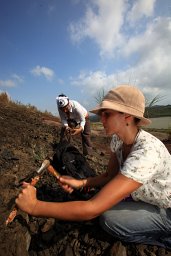 Camilla Crifò合作论文数Burke Museum Nat Hist & Culture, Univ Washington10
 Timothy J Gallaher合作论文数Botany Department, University of Hawaii10
 Alfredo A. Carlini合作论文数Universität Zürich Paläontologisches Institut10
 Alice Novello合作论文数Department of Biology, University of Washington9
 Teodor Gardelli合作论文数8
 David J. Beerling合作论文数School of Biosciences, University of Sheffield;Leverhulme Centre for Climate Change Mitigation, University of Sheffield8
 Mark D. Schmitz (Mark Schmitz)合作论文数Department of Geosciences, Boise State University8
 Ethan G. Hyland合作论文数8William H. Brightly合作论文数7viktor gardelli合作论文数7
 Robin B. Trayler合作论文数Department of Life and Environmental Sciences, University of California7ylva backman合作论文数7José I. Cuitiño合作论文数7
 Caroline Lehmann合作论文数Global Change, School of GeoSciences, The University of Edinburgh7
 Erika Edwards合作论文数Department of Ecology & Evolutionary Biology, Yale University7Lyla Taylor合作论文数School of Biosciences, Faculty of Science, The University of Sheffield7
 M. Susana Bargo合作论文数CONICET and CIC, Argentina7
 Sergio F. Vizcaíno合作论文数Departamento Científico Paleontología de Vertebrados, Museo de La Plata7
 Bonnie Jacobs合作论文数Environmental Science Program;Southern Methodist University;Environmental Science Program, Southern Methodist University7
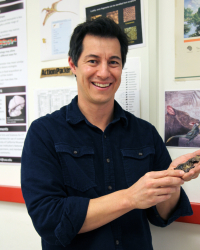 Greg P. Wilson Mantilla合作论文数Department of Biology, University of Washington7asa gardelli合作论文数6
 Alexander J. Lowe合作论文数Dept Biol, Univ Washington6
 Lauren A. Michel合作论文数Earth Sci, Tennessee Technol Univ6
 Richard Frederick Kay合作论文数Department of Evolutionary Anthropology, Trinity College of Arts & Sciences, Duke University6
 William Bond合作论文数Department of Biological Sciences, University of Cape Town6
 Francesca A. Mcinerney合作论文数Department of Geological Sciences, Northwestern University6thomas dillhoff合作论文数5Rahab N. Kinyanjui合作论文数5
 Kevin T. Uno合作论文数Department of Geology and Geophysics, University of Utah;Department of Geology and Geophysics, University of Utah5
 Daniel J. Peppe合作论文数Department of Geosciences, Baylor University5
 Kieran Mcnulty合作论文数Department of Anthropology, University of Minnesota5Lila Leatherman合作论文数4
 Claire Marvet合作论文数4Ashly Senske合作论文数4
 Fan Qiu合作论文数4Samuel R. Phelps合作论文数4
 Seton Bachle合作论文数Div Biol, Kansas State Univ4
 William E. Lukens合作论文数Dept Geol & Environm Sci, James Madison Univ4
 John Kingston合作论文数Department of Anthropology, College of Literature, Science, and the Arts, University of Michigan-Ann Arbor4




