Bots (i.e., automated software programs that perform various tasks) and fraudulent responders pose a growing and costly threat to psychological research as well as affect data integrity. However, few studies have been published on this topic. (a) Describe our experience with bots and fraudulent responders using a case study, (b) present various bot and fraud detection tactics (BFDTs) and identify the number of suspected bot and fraudulent respondents removed, (c) propose a consensus confidence system for eliminating bots and fraudulent responders to determine the number of BFDTs researchers should use, and (d) examine the initial effectiveness of dynamic versus static BFDT protocols. This study is part of a larger 14-day experience sampling method study with trauma-exposed sexual minority cisgender women and transgender and/or nonbinary people. Faced with several bot and fraudulent responder infiltrations during data collection, we developed an evolving BFDT protocol to eliminate bots and fraudulent responders. Throughout this study, we received 24,053 responses on our baseline survey. After applying our BFDT protocols, we eliminated 99.75% of respondents that were likely bots or fraudulent responders. Some BFDTs seemed to be more effective and afford higher confidence than others, dynamic protocols seemed to be more effective than static protocols, and bots and fraudulent responders introduced significant bias in the results. This study advances online psychological research by curating one of the largest samples of bot and fraudulent respondents and pilot testing the largest number of BFDTs to date. Recommendations for future research are provided. (PsycInfo Database Record (c) 2025 APA, all rights reserved).
Sexual minority men seek out mental health treatment at approximately twice the rate of the general population, with minority stress being the most likely explanation for this population's heightened mental and behavioral health concerns and associated treatment seeking. However, little research identifies sexual minority men's mental health treatment goals, thereby potentially hindering tailored treatment development and clinicians' preparation. The present study qualitatively identifies treatment goals among 94 ethnically diverse, majority cisgender sexual minority men who participated in a trial of LGBTQ-affirmative CBT. Analyses identified 44 unique treatment goals across 10 themes (e.g., Increase Affirmation and Acceptance of Sexual Minority Identity, Address Instant Gratification as a Form of Coping). Results highlight the relevance of this population's sexual minority identities and associated stressors to their treatment goals, prepare clinicians to expect to address these goals when working with sexual minority men, extend existing goal taxonomies to consider this population's distinct treatment needs, and highlight the importance of goal-driven evidence-based practice for this population.
Intensive longitudinal designs (e.g., experience sampling methods [ESMs]) hold promise for examining the dynamic interplay between daily adversity, coping strategies, and behavioral and mental health issues among marginalized populations. However, few studies have used intensive longitudinal designs with sexual minority women (SMW), an understudied and at-risk population. We assessed feasibility and acceptability of using once-daily, interval-contingent ESM with 161 trauma-exposed SMW (Mage = 29.1, SD = 7.57); 20.5% nonbinary; 32.3% queer; 52.2% people of color; 14.3% with annual incomes ≤$9,999; and 30.4% in Southern United States (U.S.). SMW completed one comprehensive online baseline assessment and once-daily brief online assessments for 14 days. Daily surveys assessed past-24-hour stressors, stress responses, and behavioral and mental health symptoms. At the end of the 14-day ESM period, SMW answered three open-ended questions about participating in this study and about research with SMW. Regarding feasibility, 151 participants (94.0%) initiated the post-baseline ESM study portion and 72 (45.0%) completed all 14 daily surveys. An average of 11.70 (median = 13, SD = 3.31) daily surveys (83.5%) were completed by those who initiated the ESM. ESM completion level varied by race/ethnicity and U.S. region. Qualitative acceptability data revealed several themes, namely that SMW (1) enjoyed participating and felt positively about the ESM experience, (2) felt supported to reflect on impacts of early and ongoing stressors, (3) appreciated the chance to self-reflect and challenge existing thought patterns and coping behaviors, (4) recognized their capacity to tolerate trauma-related distress, (5) recommended that researchers focus on SMW's diverse stressors and daily experiences, (6) wanted a rationale for providing sensitive information and more space to narrate their experiences, and (7) recognized the need for affirmative treatment and policies. Findings could inform modifications to ESM protocols to improve their feasibility and acceptability among trauma-exposed SMW and promote ongoing utility of this valuable method.
Background Sexual and gender minority (SGM) young people are disproportionately affected by HIV in the United States, and substance use is a major driver of new infections. People who use web-based venues to meet sex partners are more likely to report substance use, sexual risk behaviors, and sexually transmitted infections. To our knowledge, no machine learning (ML) interventions have been developed that use web-based and digital technologies to inform and personalize HIV and substance use prevention efforts for SGM young people. Objective This study aims to test the acceptability, appropriateness, and feasibility of the uTECH intervention, a SMS text messaging intervention using an ML algorithm to promote HIV prevention and substance use harm reduction among SGM people aged 18 to 29 years who have sex with men. This intervention will be compared to the Young Men’s Health Project (YMHP) alone, an existing Centers for Disease Control and Prevention best evidence intervention for young SGM people, which consists of 4 motivational interviewing–based counseling sessions. The YMHP condition will receive YMHP sessions and will be compared to the uTECH+YMHP condition, which includes YMHP sessions as well as uTECH SMS text messages. Methods In a study funded by the National Institutes of Health, we will recruit and enroll SGM participants (aged 18-29 years) in the United States (N=330) to participate in a 12-month, 2-arm randomized comparison trial. All participants will receive 4 counseling sessions conducted over Zoom (Zoom Video Communications, Inc) with a master’s-level social worker. Participants in the uTECH+YMHP condition will receive curated SMS text messages informed by an ML algorithm that seek to promote HIV and substance use risk reduction strategies as well as undergoing YMHP counseling. We hypothesize that the uTECH+YMHP intervention will be considered acceptable, appropriate, and feasible to most participants. We also hypothesize that participants in the combined condition will experience enhanced and more durable reductions in substance use and sexual risk behaviors compared to participants receiving YMHP alone. Appropriate statistical methods, models, and procedures will be selected to evaluate primary hypotheses and behavioral health outcomes in both intervention conditions using an α<.05 significance level, including comparison tests, tests of fixed effects, and growth curve modeling. Results This study was funded in August 2019. As of June 2024, all participants have been enrolled. Data analysis has commenced, and expected results will be published in the fall of 2025. Conclusions This study aims to develop and test the acceptability, appropriateness, and feasibility of uTECH, a novel approach to reduce HIV risk and substance use among SGM young adults. Trial Registration ClinicalTrials.gov NCT04710901; https://clinicaltrials.gov/study/NCT04710901 International Registered Report Identifier (IRRID) DERR1-10.2196/58448
Trauma-exposed sexual minority women (SMW) are at elevated risk of posttraumatic stress disorder (PTSD) and hazardous drinking compared to trauma-exposed heterosexual women. To understand whether these problems might be exacerbated during times of elevated societal stress, we collected data from a New York-based sample of trauma-exposed SMW between April 2020 and August 2020, a period of notable, compounding societal stressors, including: (a) living in or near one of the first epicenters of the coronavirus disease 2019 (COVID-19) epidemic in the United States and (b) living through multiple high-profile occurrences of racism-related police violence and subsequent racial unrest. SMW (n = 68) completed online self-report questionnaires related to trauma, PTSD symptoms, and alcohol use, and a subset (n = 29) completed semi-structured qualitative interviews. PsycINFO was searched with terms related to SMW, PTSD, and alcohol use to identify studies with samples of SMW from articles published within the last 10 years to which we could compare our sample; this produced nine studies. Welch's t-tests and Chi-square analyses revealed that SMW within our sample reported significantly higher PTSD symptom severity, probable PTSD, and hazardous drinking indicators (i.e., alcohol use disorder and heavy episodic drinking) between April 2020 and August 2020 compared to similar samples (i.e., trauma-exposed SMW and general samples of SMW) assessed previously. Qualitative reports also indicated that the societal stressors of 2020 contributed to mental and behavioral health concerns. These results underscore the need for integrated PTSD and alcohol use prevention and intervention efforts for trauma-exposed SMW during times of heightened societal stress. Supplemental data for this article is available online at https://doi.org/10.1080/08964289.2021.2006132 .
OBJECTIVE To remedy the notable gap in evidence-based treatments for sexual minority women, this study tested the efficacy of a minority-stress-focused cognitive-behavioral treatment intended to improve this population's mental and behavioral health. METHOD The intervention, EQuIP (Empowering Queer Identities in Psychotherapy), was adapted from a transdiagnostic cognitive-behavioral treatment as also recently adapted for sexual minority men. Sexual minority women at risk of mental and behavioral health problems (n = 19) and expert providers with this population (n = 12) shaped the treatment's development, including by supporting its primary focus on universal and minority-stress-focused processes underlying this population's disproportionately poor mental and behavioral health. The resulting treatment was then delivered to young adult sexual minority women (n = 60; M age = 25.58; 41.67% racial/ethnic minority; 43.33% transgender/nonbinary) experiencing depression/anxiety and past 90-day heavy alcohol use. RESULTS Compared to waitlist (n = 30), participants randomized to immediately receive EQuIP (n = 30) experienced significantly reduced depression and anxiety (d = 0.85, 0.86, respectively); effects for alcohol use problems were smaller (d = 0.29) and marginally significant. In pre- to post-intervention pooled analyses, effect sizes for minority stress processes (mean d = .25) and universal risk factors (mean d = .48), through which the treatment was expected to work, were small and moderate, respectively, and in the expected direction. CONCLUSIONS This study provides initial support for a minority-stress-focused transdiagnostic cognitive-behavioral treatment for sexual minority women. These first results can launch exploration of other mechanisms and modalities through which to equip this population with evidence-based support. (PsycInfo Database Record (c) 2020 APA, all rights reserved).
 Scheer Jillian R合作论文数4
 Cory J Cascalheira合作论文数Department of Counseling and Educational Psychology, New Mexico State University3
 Tami Sullivan合作论文数Department of Psychiatry, Yale School of Medicine, Yale University3
 Helminen, E.合作论文数3
 Skyler D Jackson合作论文数3
 Abigail W. Batchelder合作论文数3Benjamin K Fetzner合作论文数2
 Thomas J. Shaw合作论文数https://orcid.org/0000–0001-9970–84282
 John Pachankis合作论文数Department of Social and Behavioral Sciences, Yale School of Public Health2Aubriana A Schwarz合作论文数1Luisita Cordero合作论文数1Juan C. Jauregui合作论文数1Elizabeth Wu合作论文数1
 Raiza Beltran合作论文数1
 Lalaine Sevillano合作论文数1
 Mehrab Beikzadeh合作论文数1Kimberly Fuentes合作论文数1
 Erin McConocha合作论文数1
 Kriti Behari合作论文数Dept Social & Behav Sci, Yale Sch Publ Hlth1
 Kimmo Karkkainen合作论文数Department of Computer Science, University of California Los Angeles (UCLA), Los Angeles, CA, USA1
 Zachary Soulliard合作论文数Yale University1
 Audrey Harkness合作论文数School of Nursing and Health Studies, University of Miami1
 Kirsty Clark合作论文数Med Hlth & Soc & Publ Policy Studies, Vanderbilt Univ1
 Melissa Simone合作论文数Department of Psychiatry and Behavioral Sciences, University of Minnesota1
 Ian W. Holloway合作论文数Lesbian, Gay, Bisexual, Transgender and Queer Studies, College of Humanities, University of California1
 Katie Wang合作论文数Social and Behavioral Sciences, Yale School of Public Health, Yale School of Medicine, Yale University1
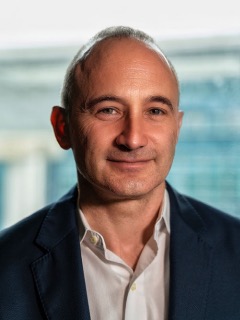 Steven A. Safren合作论文数College of Arts and Sciences, University of Miami;Sylvester Comprehensive Cancer Center, University of Miami1
 Keren Lehavot合作论文数1
 Chenglin Hong合作论文数University of Kansas Lawrence, University of Kansas1
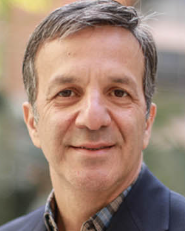 Majid Sarrafzadeh合作论文数eHealth Research Lab, Samueli School of Engineering, University of California, Los Angeles1
 Jeffrey T. Parsons合作论文数Graduate Center, City University of New York1Marc Puccinelli合作论文数1




