T. A. Armstrong, K. N. Barish, S. Batsouli, S. J. Bennett, M. Bertaina, A. Chikanian, S. D. Coe, T. M. Cormier, R. Davies, C. B. Dover, P. Fachini, B. Fadem, L. E. Finch, N. K. George, S. V. Greene, P. Haridas, J. C. Hill, A. S. Hirsch, R. Hoversten, H. Z. Huang, H. Jaradat, B. S. Kumar, T. Lainis, J. G. Lajoie, R. A. Lewis, Q. Li, B. Libby, R. D. Majka, T. E. Miller, M. G. Munhoz, J. L. Nagle, I. A. Pless, J. K. Pope, N. T. Porile, C. A. Pruneau, M. S. Z. Rabin, J. D. Reid, A. Rimai, A. Rose, F. S. Rotondo, J. Sandweiss, R. P. Scharenberg, A. J. Slaughter, G. A. Smith, X. M. L. Tincknell, W. S. Toothacker, G. Van Buren, F. K. Wohn, and Z. Xu
Deuteron coalescence, during relativistic nucleus-nucleus collisions, is carried out in a model incorporating a minimal quantal treatment of the formation of the cluster from its individual nucleons by evaluating the overlap of intial cascading nucleon wave packets with the final deuteron wave function. In one approach the nucleon and deuteron center of mass wave packet sizes are estimated dynamically for each coalescing pair using its past light-cone history in the underlying cascade, a procedure which yields a parameter free determination of the cluster yield. A modified version employing a global estimate of the deuteron formation probability, is identical to a general implementation of the Wigner function formalism but can differ from the most frequent realisation of the latter. Comparison is made both with the extensive existing E802 data for Si+Au at 14.6 GeV/c and with the Wigner formalism. A globally consistent picture of the Si+Au measurements is achieved. In light of the deuteron’s evident fragility, information obtained from this analysis may be useful in establishing freeze-out volumes and help in heralding the presence of high-density phenomena in a baryon-rich environment.
Summary We review theoretical predictions for the mass spectrum of strange dibaryons, with emphasis onS=−2 states. In a version of the Callen-Klebanov model applied to dibaryons, the lowest-lying configuration is anSU(3) flavor {10*} withJ π=0+ and isospinI=1, in contrast to the six-quark (Q 6) bag model, which yields the H dibaryon (flavor {1},J π=0+,I=0) as the lowestS=−2 excitation. Possible experimental consequences of this different level order are discussed. For the H, we discuss formation rates in relativistic heavy-ion collisions. For Brookhaven AGS energies (15 GeV/A), we find a rate of order 10−2 H’s per central collision. Since the H is produced in a high-multiplicity environment in heavy-ion collisions, its detection poses a problem. Several possible detection schemes for the H are investigated. These include studies of weak decays (Σ− p «vees»), diffractive dissociation (Hp→ΛΛp→3p+2π−) and nuclear fragments with anomalous charge/mass ratios.
We present measurements from BNL AGS Experiment E864 of the $^{3}_{\Lambda}H$ invariant multiplicity and of the 90% Confidence Level upper limit on the $^{4}_{\Lambda}H$ yield in central 11.5 A GeV/c Au + Pt collisions. The measurements span a rapidity range from center of mass, $y_{cm}$, to $y_{cm}$+1 and a transverse momentum range of $0.<p_{T}\le 1.5$ GeV/c. We compare these results with E864 measurements of stable light nuclei and particle unstable nuclei yields of the same baryon number. The implications of these results for the coalescence of strange clusters are discussed.
We present measurements from BNL AGS Experiment 864 of the $_{\\ensuremath{\\Lambda}}^{3}\\mathrm{H}$ yield and of an upper limit on the $_{\\ensuremath{\\Lambda}}^{4}\\mathrm{H}$ yield in central $11.5A\\phantom{\\rule{0.3em}{0ex}}\\text{GeV}∕c\\phantom{\\rule{0.3em}{0ex}}\\text{Au}+\\text{Pt}$ collisions. The measurements span a rapidity range from center of mass, ${y}_{\\mathrm{c.m.}}$, to ${y}_{\\mathrm{c.m.}}+1$ and a transverse momentum range of $0l{p}_{t}\\ensuremath{\\leqslant}1.5\\phantom{\\rule{0.3em}{0ex}}\\text{GeV}∕c$. We compare these results with E864 measurements of stable light nuclei and particle unstable nuclei yields of the same baryon number. The implications of these results for the coalescence of strange clusters are discussed.
We report measurements from experiment E864 at the BNL-AGS of the yields of particle unstable light nuclei in central collisions of Au-197 with beam momentum of 11.5A GeV/c on Pt-197. Yields are reported as a function of rapidity for the nuclei H-4, Li-4, He-5, and Li-5 in the rapidity range from y(c.m.) to y(c.m.)+0.8 and in the transverse momentum range of approximately 0.1 less than or equal to p(T)/A less than or equal to 0.4 GeV/c. The yields are compared to previously reported yields and trends for the production of stable light nuclei. The nonobservation of two excited states He-5(16.75 MeV)* and Li-5(16.66 MeV)* is used to set an upper limit on the yields of these states.
We present the final results from Experiment 864 of a search for charged and neutral strange quark matter produced in interactions of 11.5 GeV/c per nucleon Au beams with Pt or Pb targets. Searches were made for strange quark matter with A>4. Approximately 30 billion 10% most central collisions were sampled and no strangelet states with A<100 were observed. We find 90% confidence level upper limits of approximately 10^{-8} per central collision for both charged and neutral strangelets. These limits are for strangelets with proper lifetimes greater than 50 ns. Also limits for H^{0}-d and pineut production are given. The above limits are compared with the predictions of various models. The yields of light nuclei from coalescence are measured and a penalty factor for the addition of one nucleon to the coalescing nucleus is determined. This is useful in gauging the significance of our upper limits and also in planning future searches for strange quark matter.
We report on measurements by the E864 experiment at the BNL-AGS of the yields of light nuclei in collisions of Au(197) with beam momentum of 11.5 A GeV/c on targets of Pb(208) and Pt(197). The yields are reported for nuclei with baryon number A=1 up to A=7, and typically cover a rapidity range from y(cm) to y(cm)+1 and a transverse momentum range of approximately 0.1 < p(T)/A < 0.5 GeV/c. We calculate coalescence scale factors B(A) from which we extract model dependent source dimensions and collective flow velocities. We also examine the dependences of the yields on baryon number, spin, and isospin of the produced nuclei.
We present results from Experiment 864 for antiproton production and antideuteron limits in Au + Pb collisions at 11.5 GeV/c per nucleon. We have measured invariant multiplicities for antiprotons for rapidities 1.4
Light nuclei can be produced in the central reaction zone via coalescence in relativistic heavy ion collisions. E864 at BNL has measured the production of ten light nuclei with nuclear number of A=1 to A=7 at rapidity $y\simeq1.9$ and $p_{T}/A\leq300MeV/c$. Data were taken with a Au beam of momentum of 11.5 A $GeV/c$ on a Pb or Pt target with different experimental settings. The invariant yields show a striking exponential dependence on nuclear number with a penalty factor of about 50 per additional nucleon. Detailed analysis reveals that the production may depend on the spin factor of the nucleus and the nuclear binding energy as well.
Experiment E864 at the Brookhaven AGS accelerator uses a high sensitivity, large acceptance spectrometer, designed to search for strangelets and other novel forms of matter produced in high-energy heavy ion collisions. The spectrometer has excellent acceptance and rate capabilities for measuring the production properties of known particles and nuclei such as p̄, d̄ and 6He. The experiment uses a magnetic spectrometer and employs redundant time of flight and position detectors and a hadronic calorimeter. In this paper we describe the design and performance of the spectrometer.
We present measurements from Brookhaven AGS Experiment 864 of neutron invariant multiplicity in 11.5A GeV/c Au+Pb collisions. The measurements span a rapidity range from center of mass to beam rapidity (y(beam) = 3.2) and are presented as a function of event centrality. The results are compared with E864 measurements of proton invariant multiplicity and an average n/p ratio at hadronic freeze-out of 1.19 +/- .08 is determined for the rapidity range y = 1.6 to y = 2.4. We discuss briefly the implications of this ratio within a simple equilibrium model of the collision system. [S0556-2813(99)02112-3].
We report on a search for metastable positively and negatively charged states of strange quark matter in Au+Pb reactions at 11.6 A GeV/c in experiment E864. We have sampled approximately six billion 10% most central Au+Pb interactions and have observed no strangelet states (baryon number A < 100 droplets of strange quark matter). We thus set upper limits on the production of these exotic states at the level of 1-6 x 10^{-8} per central collision. These limits are the best and most model independent for this colliding system. We discuss the implications of our results on strangelet production mechanisms, and also on the stability question of strange quark matter.
We present the first results from the E864 collaboration on the production of antiprotons in 10% central 11.5 A GeV/c Au+Pb nucleus collisions at the Brookhaven AGS. We report invariant multiplicities for antiproton production in the kinematic region 1.4<y<2.2 and 50<p_T<300 MeV/c, and compare our data with a first collision scaling model and previously published results from the E878 collaboration. The differences between the E864 and E878 antiproton measurements and the implications for antihyperon production are discussed.
We present results of a search for strange quark matter (strangelets) in 11.5 A GeV/c Au+Pb collisions from the 1994 and 1995 runs of experiment E864 at Brookhaven's AGS. We observe no strangelet candidates and set a 90% confidence level upper limit of approximately 3x10**-8 per 10% central interaction for the production of |Z|=1 and |Z|=2 strangelets over a large mass range and with metastable lifetimes of about 50 ns or more. These results place constraints primarily on quark-gluon plasma based production models for strangelets.
We present results of a positively charged strangelet search from 26.5 million central 11.5 A GeV/c Au+Pb collisions from the 1994 run of experiment E864 at the BNL-AGS. We find 90% confidence level upper limits of approximately 1.5×10⁻⁵ and 3.5×10⁻⁶ over a mass range of 10−200 GeV/c2 for charge one and charge two strangelets respectively. The results place severe constraints on the possibility that rarely produced quark gluon plasmas decay into metastable strangelets with lifetimes in excess of 40 ns. 25.75.-q Typeset using REVTEX
We review various aspects of strangeness production in relativistic heavy ion collisions from AGS to CERN energies. The experimental data are briefly summarized and various possible theoretical interpretations of these data are evaluated, such as quark-gluon-plasma (QCP), hadron gas (HG) thermal models, or event generators (cascade models). Some comments on the production of strange clusters are offered.
We investigate the influence of hypernuclear magnetic moments of \ensuremath{\Lambda}-\ensuremath{\Sigma} mixing due to the strong \ensuremath{\Lambda}N\ensuremath{\leftrightarrows}\ensuremath{\Sigma}N interaction. The case of a \ensuremath{\Lambda} coupled to an I=1 nuclear core (example $_{\mathrm{\ensuremath{\Lambda}}}^{15}\mathrm{C}$) is found to be a particularly sensitive probe of this mixing. Qualitative estimates indicate a significant deviation of the magnetic moment from the Schmidt values. The examples of $_{\mathrm{\ensuremath{\Lambda}}}^{3}\mathrm{H}$, $_{\mathrm{\ensuremath{\Lambda}}}^{4}\mathrm{H}$(${1}^{+}$) and $_{\mathrm{\ensuremath{\Lambda}}}^{4}\mathrm{He}$(${1}^{+}$) have also been studied, as well as the influence of \ensuremath{\Lambda}-\ensuremath{\Sigma} mixing on the lifetime associated with the ${1}^{+}$\ensuremath{\rightarrow}${0}^{+}$ electromagnetic transition in the A=4 system. We also mention the ${\mathrm{\ensuremath{\pi}}}^{+}$/${\mathrm{\ensuremath{\pi}}}^{\mathrm{\ensuremath{-}}}$ ratio in hypernuclear weak decay as another probe of the degree of \ensuremath{\Lambda}-\ensuremath{\Sigma} mixing.
 J. Sandweiss合作论文数18f rotondo合作论文数18A. J. Slaughter合作论文数18
 Kenneth N Barish合作论文数Physics and Astronomy Dept, University of California, Riverside18P. Haridas合作论文数18Ga Smith合作论文数17R. D. Majka合作论文数17J. K. Pope合作论文数16a rimai合作论文数16w s toothacker合作论文数16S. D. Coe合作论文数16Ta Armstrong合作论文数16IA PLESS合作论文数16Ra Lewis合作论文数16N. T. Porile合作论文数16Libby Bruce B合作论文数Department of Radiation Oncology, University of Virginia School of Medicine16J David Reid合作论文数16S. Bennett合作论文数16
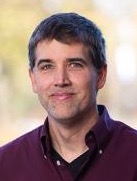 Evan Finch合作论文数Department of Physics, Southern Connecticut State University16B. S. Kumar合作论文数16James Lawrence Nagle合作论文数16F. K. Wohn合作论文数16
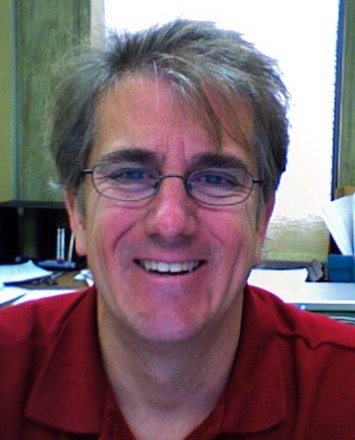 Claude Pruneau合作论文数Department of Physics and Astronomy, College of Liberal Arts and Sciences, Wayne State University16NK George合作论文数16A. Chikanian合作论文数15P. Fachini合作论文数15As Hirsch合作论文数15
 Victoria Greene合作论文数Department of Physics and Astronomy, Vanderbilt University15
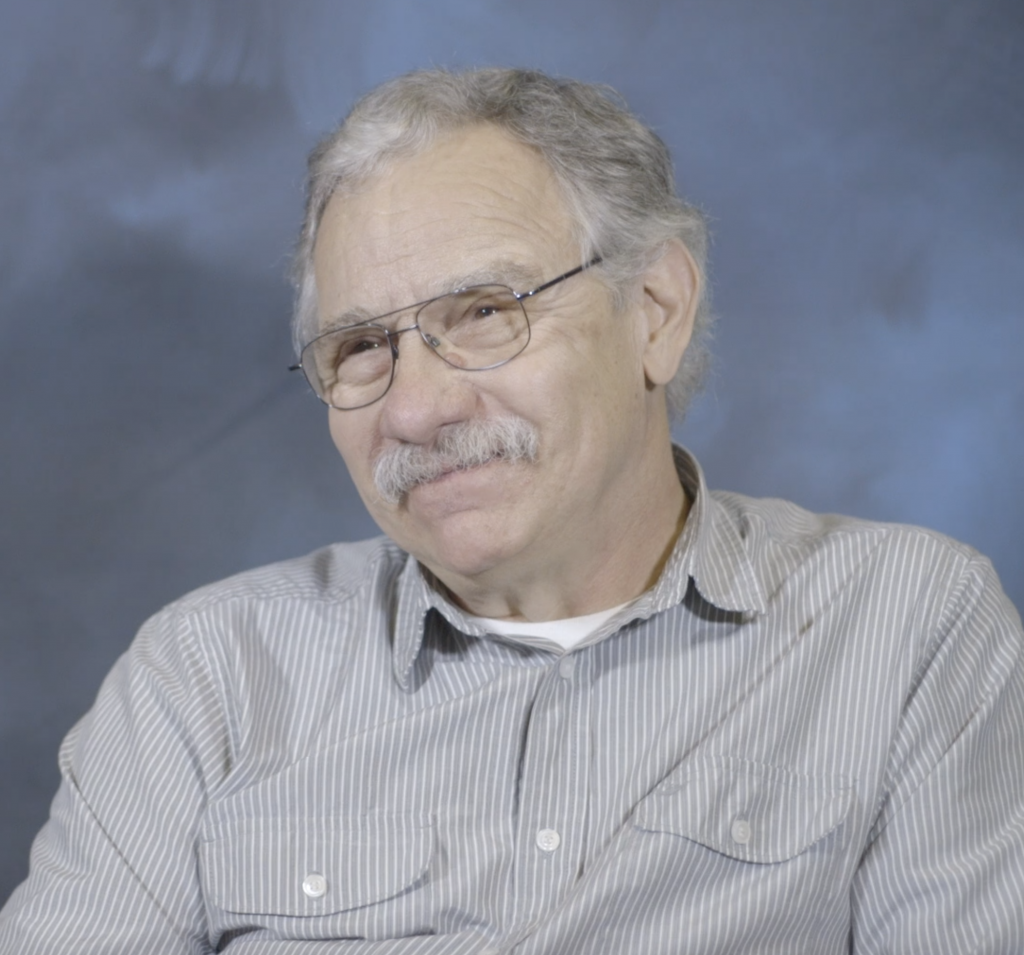 Thomas M. Cormier合作论文数Department of Energy, Oak Ridge National Laboratory;Wayne State University15
 Rolf P. Scharenberg合作论文数Department of Physics and Astronomy, College of Science, Purdue University15
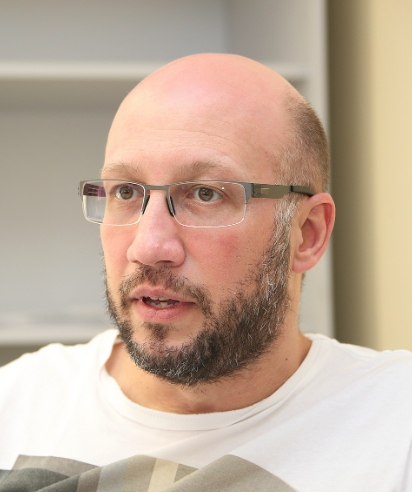 Marcelo Gameiro Munhoz合作论文数Instituto de Física, Universidade de São Paulo;Brookhaven National Laboratory15J. G. Lajoie合作论文数14MSZ Rabin合作论文数13
 Thomas Lainis合作论文数13Rhys Davies合作论文数13
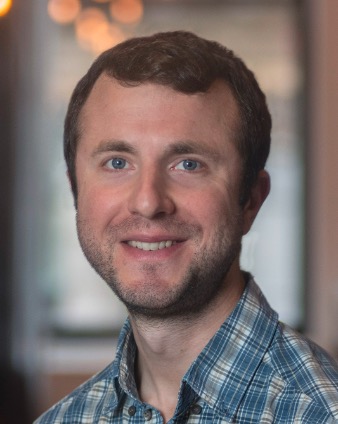 J. Colin Hill合作论文数Department of Physics, Columbia University13Ml Tincknell合作论文数12
 Gene Van Buren合作论文数Physics Department, Brookhaven National Laboratory11R. Hoversten合作论文数10
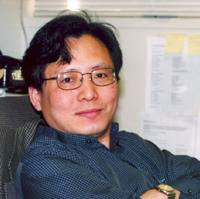 Huan Huang (黄焕中)合作论文数Department of Physics & Astronomy, College of Physical Sciences, University of California, Los Angeles10Sotiria Batsouli合作论文数10Avraham Gal合作论文数10Barbara H Fadem合作论文数10R. H. Lemmer合作论文数Physics Department, Rand Afrikaans University10Ge Diebold合作论文数9
 James Vary合作论文数Department of Physics and Astronomy, College of Liberal Arts and Sciences, Iowa State University9
 Hazim Ahmed Jaradat合作论文数9Q. Li合作论文数8T. Miller合作论文数8




