SimSDP is a rapid prototyping tool designed to provide early estimates of the computation times and energy consumption of SKAO’s future SDP processor pipeline. This paper extends a previous proof-of-concept by: (1) exploring further parallelism through dataflow modeling of spectral parallelism with joint or distributed deconvolution, (2) simulating pipeline behavior on multi-core multi-node CPU architectures for multiscale data, (3) deploying parametric prototype pipelines using real-world data from the NenuFAR instrument. Experimental results show that SimSDP effectively supports design-space exploration by simulating three radio-interferometric imaging algorithms on HPC systems, with simulation uncertainty below $10 \%$.
The Crab Nebula, a historical supernova remnant originating from the explosion recorded in 1054 CE, remains a cornerstone of multiwavelength astrophysical research. Its evolution across the radio, optical, and X-ray domains continues to be studied extensively. At low radio frequencies (<100 MHz), accurate spectral measurements are hindered by strong scintillation effects from the compact central component. However, under favorable space weather and ionospheric conditions, reliable observations of the integrated spectrum become feasible. We present new low-frequency measurements of the Crab Nebula’s integrated radio spectrum, obtained in 2025 using the New Extension in Nançay Upgrading LOFAR (NenuFAR) radio telescope, operating over the range 22–75 MHz. No significant flux decrease is detected between 1963 and 2025 within observational uncertainties. The full low-frequency spectral profile comprises two components: a compact source within the nebula and an extended shell contribution. The shell’s flux density spectrum peaks at 2069 ± 200 Jy near 27.5 ± 0.5 MHz, consistent with a turnover caused by unshocked ejecta. Its spectral index between 50 and 70 MHz is ∼−0.36, following the convention S ν ∝ ν α , while the total spectrum follows a power law with index ∼−0.54. Free–free absorption modeling yields internal parameters of T ≈ 1000 K, ionization state Z ≈ 3.3, and emission measure EM ≈ 38 pc cm −6 . The inferred electron density of the unshocked ejecta is ∼15 cm −3 , corresponding to a mass of ∼ 1.8 4 − 0.30 + 0.46 M ⊙ . These results are complemented by URAN–2 observations at 10.7, 16.7, 20.0, and 25.0 MHz.
Context. Cassiopeia A occupies an important place among supernova remnants (SNRs) in low-frequency radio astronomy. The analysis of its continuum spectrum from low frequency observations reveals the evolution of the SNR absorption properties over time and suggests a method for probing unshocked ejecta and the SNR interaction with the circumstellar medium (CSM). Aims. In this paper we present low-frequency measurements of the integrated spectrum of Cassiopeia A to find the typical values of free-free absorption parameters towards this SNR in the middle of 2023. We also add new results to track its slowly evolving and decreasing integrated flux density. Methods. We used the New Extension in Nan\c{c}ay Upgrading LOFAR (NenuFAR) and the Ukrainian Radio Interferometer of NASU (URAN-2, Poltava) for measuring the continuum spectrum of Cassiopeia A within the frequency range of 8-66 MHz. The radio flux density of Cassiopeia A has been obtained on June-July, 2023 with two sub-arrays for each radio telescope, used as a two-element correlation interferometer. Results. We measured magnitudes of emission measure, electron temperature and an average number of charges of the ions for both internal and external absorbing ionized gas towards Cassiopeia A from its integrated spectrum. Generally, their values are comparable to those presented by Stanislavsky et al. (2023), but their slight changes show the evolution of free-free absorption parameters in this SNR. Based on high accuracy of the measurements, we have detected the SNR-CSM interaction. Conclusions. The integrated flux-density spectrum of Cassiopeia A obtained with the NenuFAR and URAN-2 interferometric observations opens up new possibilities for continuous monitoring the ionized gas properties in and around Cassiopeia A to observe theevolution of unshocked ejecta and the SNR-CSM interaction in future studies.
Data throughput in modern telescopes instrumentation have been steadily increasing over the last decade. The few gigabits per second range is now the lower bound, and bandwidths as high as tens of terabits per second are expected with the Square Kilometer Array. We present a new approach based on DPDK, and its support for GPUDirect recently introduced by Nvidia to perform DMA from Network Interface Controller (NIC) to GPU memory, to answer very high throughput data acquisition in astronomy.
Nançay radio astronomy station teams are involved in several aspects of the Research and Development (R&D) for radio astronomy detectors and systems: i) Microelectronics: Low Noise Amplifiers (LNA), receiver on chip and system in package. The long-term goal is to provide sub-systems for the future Square Kilometer Array and its Pathfinders. A beamformer chip has been integrated in the FP6 SKADS dense aperture array technology demonstrator EMBRACE. Wide band SiGe LNAs are developed, beamformers with in-chip control are studied and more complex integrated receivers are designed for the european Aperture Array Verification Programme demonstrator. ii) Digital signal processing: EMBRACE beamforming has been implemented in the digital backend and RFI-mitigation oriented signal processing has been designed for realtime systems, including work for FP6 SKADS and FP7 PrepSKA. iii) A study of Phased Array Feeds has started in 2008, in order to study the radio electric properties of PAFs at the focus of large F/D telescopes, such as the Nançay Radio Telescope, as well as to test PAF systems in collaboration with the SPP/IRFU and LAL/IN2P3 laboratories. 1 Station de radioastronomie, 18330 Nançay, France 2 GEPI and Station de radioastronomie, Observatoire de Paris, Place Jules Janssen, 92190 Meudon, France 3 LESIA and Station de radioastronomie, Observatoire de Paris, Place Jules Janssen, 92190 Meudon, France 4 Institut PRISME, Université d’Orléans, 12 rue de Blois, BP 6744, 45067 Orléans Cedex 2, France c © EDP Sciences 2009 DOI: (will be inserted later) 2 The Title of this Volume
In radio astronomy, the radio spectrum is used to detect weak emission from celestial sources. By spectral averaging, observation noise is reduced and weak sources can be detected. However, more and more observations are polluted by man-made radio frequency interferences (RFI). The impact of these RFIs on power spectral measurement ranges from total saturation to subtle distortions of the data. To some extent, elimination of artefacts can be achieved by blanking polluted channels in real time. With this aim in view, a complete real-time digital system has been implemented on a set of FPGA and DSP. The current functionalities of the digital system have high dynamic range of 70 dB, bandwidth selection facilities ranging from 875 kHz to 14 MHz, high spectral resolution through a polyphase filter bank with up to 8192 channels with 49 152 coefficients and real-time time-frequency blanking with a robust threshold detector. This receiver has been used to reobserve the IIIWZ35 astronomical source which has been scrambled by a strong satellite RFI for several years.
In radio astronomy, the radio spectrum is used to detect weak emission from celestial sources. By spectral averaging, noise estimation is reduced and weak sources can be detected. However, more and more observations are polluted by man-made radio frequency interferences (RFI). The impact of these RFI on spectral measurement ranges from total saturation to tiny distortions of the data. To some extent, the final spectral estimation can be preserved by blanking infected channels in real time. With this aim in view, a complete real time processing line has been implemented on a set of FPGA and DSP. The current functionalities of the system are high dynamic range (at least 70 dB), band selection facilities (from 875 kHz to 14 MHz), high spectral resolution through polyphase filter bank (up to 8192 channels with 49152 coefficients) and real time time-frequency blanking with a robust threshold detector.
 Philippe Zarka合作论文数CNRS4
 Andree Coffre合作论文数3
 Laurent Denis合作论文数3
 Rodolphe Weber合作论文数Université d'Orléans3Alain Lecacheux合作论文数LESIA, Observatoire de Paris3
 A. A. Konovalenko合作论文数Low-Frequency Radio Astronomy Division, Institute of Radio Astronomy, National Academy of Sciences of Ukraine2Rob Ebert合作论文数1J. Sky合作论文数1Mark Sharlow合作论文数1A. Coffre合作论文数1Philippe Picard合作论文数1carlo rosolen合作论文数1Guy Kenfack合作论文数1Eric Gerard合作论文数1
 J. N. Girard合作论文数USN, Observ Paris1
 Anastasiia Skoryk合作论文数1Elena Agostini合作论文数1
 Corentin Louis合作论文数1
 Alan Loh合作论文数Univ PSL, Sorbonne Univ1
 Serge Yerin合作论文数1Bosse, S.合作论文数1Hiroaki Misawa合作论文数1
 Nicolas André合作论文数Research Institute in Astrophysics and Planetology, French National Centre for Scientific Research1Jacques Pezzani合作论文数1
 José M. Martín合作论文数Facultad de Ciencias, Universidad de Granada1
 Baptiste Cecconi合作论文数Laboratory for Space Studies and Instrumentation in Astrophysics, Observatoire de Paris1Marie-Line Grima合作论文数1
 A. I. Brazhenko合作论文数1Anatolii V. Frantsuzenko合作论文数1Ivan Thomas合作论文数1
 Patrice Renaud合作论文数1
 Laurent Lamy合作论文数Laboratoire d'Etudes Spatiales et d'Instrumentation en Astrophysique, Observatoire de Paris1Pierre Colom合作论文数1
 Glenn Orton合作论文数Jet Propulsion Laboratory, California Institute of Technology1Alain Kerdraon合作论文数1W. B. Greenman合作论文数1
 Philippe Ravier合作论文数University of Orléans1Renaud Savalle合作论文数1
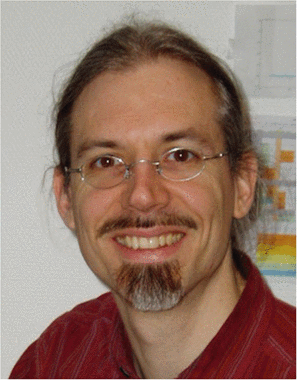 Jean-Mathias Grießmeier合作论文数LPC2E, Université d'Orléans;Centre National de la Recherche Scientifique1
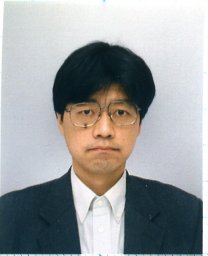 Yasumasa Kasaba合作论文数Planetary Plasma and Atmospheric Research Center, Tohoku University1
 Vincent Genot合作论文数Institut de Recherche en Astrophysique et Planétologie;Université de Toulouse1
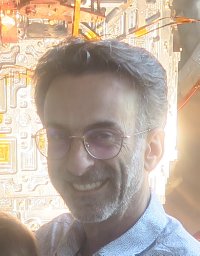 S.A. Torchinsky合作论文数SKADS Project1
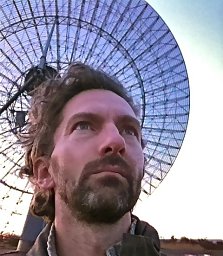 Tobia Carozzi合作论文数Space Science Centre;Sussex University;Space Science Centre, Sussex University1
 Lionel Amiaud合作论文数Laboratoire d’Etude du Rayonnement et de la Matière en Astrophysique, Observatoire de Paris et Université de Cergy Pontoise1
 Fuminori Tsuchiya (土屋史紀)合作论文数Graduate School of Science, Tohoku University1R. Feliachi合作论文数1Wim Van Driel合作论文数1Shing F. Fung合作论文数NASA Goddard Space Flight Center1
 Damien Gratadour合作论文数1




