BACKGROUND: The Lung Volume Reduction Coil Treatment in Patients With Emphysema (RENEW) trial reported improvements in quality of life, pulmonary function, and exercise performance following endobronchial coil treatment. OBJECTIVES: The purpose of this post hoc analysis was to identify baseline predictors, including quantitative CT measures, that identify patients most likely to significantly benefit from endobronchial coil therapy. METHODS: Quantitative CT analysis by an independent radiology laboratory and a qualitative evaluation by five blinded experts of the baseline thoracic CT imaging were performed. Univariate and multivariate logistic regression analyses were performed to elucidate characteristics associated with clinical response. RESULTS: In total, 125 patients underwent coil treatment and had evaluable 12-month follow-up results. Of these, 78 patients received treatment of lobes with the highest emphysematous destruction determined by quantitative CT analysis (quantitative visual match [QVM]+), and 47 received treatment in at least one lobe that was not the most destroyed (QVM-). From the 78 patients with QVM+ treatment, a subgroup of 50 patients (64%) was identified with baseline residual volume > 200% predicted, emphysema score > 20% low attenuation area, and absence of airway disease. In this subgroup, greater lobar residual volume reduction in the treated lobes was achieved, which was associated with significant mean +/- SE improvement in FEV1 (15.2 +/- 3.1%), St. George's Respiratory Questionnaire (-12 +/- 2 points), and residual volume (-0.57 +/- 0.13 L). DISCUSSION: This post hoc analysis found that both significant hyperinflation (residual volume >= 200% predicted) and CT analysis are critical for patient selection and treatment planning for endobronchial coil therapy. Quantitative CT analysis is important to identify optimal lobar treatment and to exclude patients with insufficient emphysema (< 20% low attenuation area), whereas visual assessment identifies patients with signs of airway disease associated with worse outcomes.
Poor esophageal motility and impaired clearance of a swallowed bolus or refluxed gastric contents are risk factors for the development of chronic lung allograft dysfunction (CLAD). A severe motility disorder may render patients with end-stage lung disease ineligible for lung transplantation. Transelectrical stimulation (TES) has been shown to improve the motility of visceral smooth muscle. We hypothesized that the use of TES in patients with end-stage lung disease, either pre- or post-transplant, could result in an objective improvement in esophageal motility.
Purpose The purpose of this study was to determine if thrombocytosis (>450 K/microL) predicted the development of acute rejection or infection on diagnostic bronchoscopy in the first 30 days post lung transplant. Methods and Materials The study was performed at a single center and consisted of a cohort of 333 lung transplant recipients from January 2000 to December 2010. Acute rejection was graded using standard ISHLT criteria. The transbronchial biopsy results taken during the first 30 days post transplant were correlated to the corresponding platelet count. A retrospective chart review at that time also determined if any pulmonary infections were present as evidenced by positive bronchoalveolar lavage, blood cultures, and radiographic abnormalities. Comparisons were made utilizing independent group T test and logistic regression. Results A platelet count greater than 450 K/microL was highly predictive of acute rejection and/ or underlying pneumonia with a p value of Conclusions These results confirm that thrombocytosis acts as acute phase reactant and is a predictor of either acute rejection or infection in the first 30 days post lung transplant. It should hence be used as a predictor for the impending development or occult presence of rejection or infection in this population and prompt further investigation.
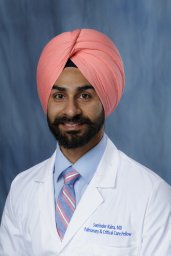 Saminder Kalra合作论文数Div Pulm Crit Care & Sleep7
 Ataya Ali合作论文数7
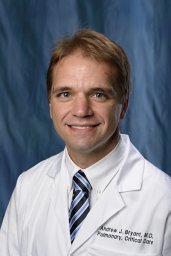 Bryant Andrew J合作论文数Department of Internal Medicine, Vanderbilt University School of Medicine6
 Hassan Alnuaimat合作论文数Department of Internal Medicine, University of Florida5
 Raju Reddy合作论文数Pulm Crit Care & Sleep Med, Univ Florida4S.T. Mitchell合作论文数3
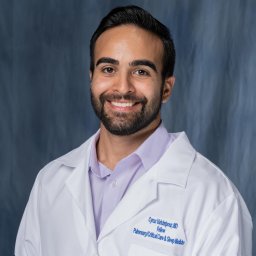 Cyrus Vahdatpour合作论文数3J. Salgado合作论文数2A. Pelaez合作论文数2
 Mark L Brantly合作论文数Department of Molecular Genetics and Microbiology, College of Medicine, University of Florida;Division of Pulmonary, Critical Care & Sleep Medicine, University of Florida2
 Tiago Machuca合作论文数Rede D'Or São Luiz2R. Rice合作论文数1R. Maxfield合作论文数1M. Amaris合作论文数1J. Kanne合作论文数1D Harzheim合作论文数1R. L. Sagana合作论文数1A. Agnew合作论文数1M. Wahidi合作论文数1C. Harden合作论文数1Lauran Zeineddine合作论文数1H. Criner合作论文数1F. N. Rouhani合作论文数1H MERRY合作论文数1S Korzeniewski合作论文数1K. Kovitz合作论文数1G. Krishna合作论文数1K. Shenoy合作论文数1D. Balfe合作论文数1J. Pradelli合作论文数1C. Leheron合作论文数1j c salgado合作论文数1Cesar Trillo合作论文数1James Canfield合作论文数1Justin L Garner合作论文数1F. Almeida合作论文数1S. Rosenberg合作论文数1S. Chandrashekaran合作论文数Division of Pulmonary, Critical Care, and Sleep Medicine, University of Florida1S. Ghandehari合作论文数1L. F. Angel合作论文数1A. Delage合作论文数1
 Sravanthi Nandavaram合作论文数University of Kentucky1C Clary合作论文数1C. T. Gillespie合作论文数1
 Mauricio Pipkin合作论文数1C. Butler合作论文数1N. Marchetti合作论文数1
 Zhiguang Huo合作论文数Univ Florida, Coll Publ Hlth & Hlth Profess, Dept Biostat, Gainesville, FL USA1B. Aulakh合作论文数1




